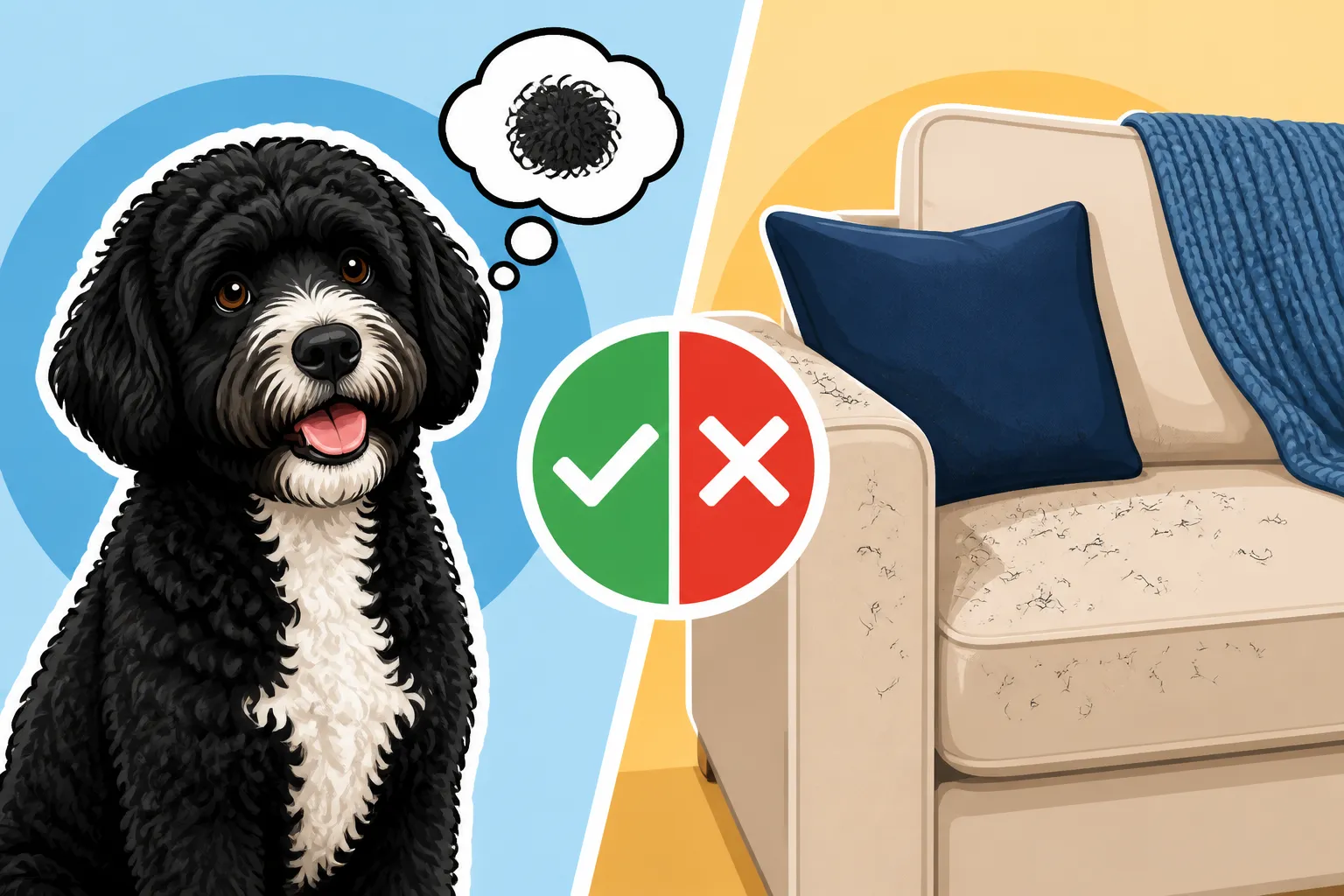
Whether a Portuguese Water Dog’s Hair Shows on Furniture
One of the most common worries new Portuguese Water Dog owners, or those simply considering the breed, have is about hair in their home. You’ve heard they’re "hypoallergenic," which often gets translated in people's minds as "shed-free" or "no hair on my sofa." The truth, as with most things canine, is a little more nuanced than that, and this guide will walk you through exactly what to expect when it comes to Portuguese Water Dog hair showing up on your furniture and how to manage it.
Understanding the Portuguese Water Dog Coat and Its Unique Characteristics
When you first lay eyes on a Portuguese Water Dog, their magnificent, often curly or wavy coat is one of the first things you notice. It's truly a marvel, designed by nature and generations of careful breeding to protect them during long hours in the cold ocean waters off the coast of Portugal. But this unique coat structure is also the key to understanding why they're often described as "hypoallergenic" and what that means for your furniture.
Curly vs. Wavy Coats: What to Expect
Portuguese Water Dogs come in two distinct coat types: curly and wavy. Both are single-coated, meaning they lack an undercoat, which is a major factor in why they don't "shed" in the traditional sense like a Labrador or a German Shepherd. Instead of hair falling out all over your house, any hair that detaches from the follicle tends to get caught within the surrounding dense, textured coat.
The curly coat is tighter, often described as forming compact cylinders or ringlets. It can feel quite coarse to the touch, almost like wool, and is very dense. This density means it's incredibly efficient at trapping loose hair, making it less likely for individual strands to drop onto surfaces. However, this also means it's highly prone to matting if not brushed regularly.
The wavy coat is, as the name suggests, softer and has a more flowing, open wave pattern. It tends to be silkier and shinier than the curly coat. While it might look like it would shed more because the waves are looser, it still functions much like the curly coat in trapping shed hair. It also requires diligent grooming to prevent mats, though perhaps not with the same intensity as the extremely dense curly coat.
Regardless of whether your PWD has a curly or wavy coat, the fundamental principle is the same: the hair doesn't just fall out and float away. It gets tangled in the remaining coat, which is a blessing and a curse. It means less visible hair tumbleweeds around your home, but it also means a higher grooming commitment on your part to remove that trapped hair before it forms painful mats.
The "Shedding" Misconception and How Hair Still Detaches
Here's where the term "hypoallergenic" often leads to confusion. Many people hear it and picture a completely hair-free dog, or at least a dog that never drops a single strand. This simply isn't true for any living creature with hair, including Portuguese Water Dogs. Like humans, all dogs constantly grow new hair and lose old, dead hair. The difference with PWDs is where that shed hair goes.
Instead of falling onto your floor, clothes, or furniture, the dead hair stays entwined within their existing coat. Think of it like a dense wool sweater that catches everything. This is fantastic for allergy sufferers, as the hair (and the dander attached to it) doesn't become airborne as readily. It's also great for keeping your living spaces relatively free of scattered dog hair.
However, this doesn't mean your furniture will be entirely hair-free. When your Portuguese Water Dog rubs against a sofa, jumps on your bed, or settles down on a cushion, some of those trapped, dead hairs will inevitably transfer. It might not be a huge cloud of shedding fur, but you will find individual strands or small clumps where your PWD has been. It’s less like a snowstorm and more like finding a few pine needles after bringing a Christmas tree inside. The amount of hair you find will be directly proportional to how diligently you groom your dog.
Coat Cycles and How They Impact Hair Loss
Like many breeds, Portuguese Water Dogs go through a significant coat change as they mature from puppies to adults. This transition usually happens between 6 and 18 months of age, though it can vary. During this period, their soft, fluffy puppy coat is gradually replaced by the coarser, denser adult coat. This can be a challenging time for owners because the dying puppy hair needs to make way for the new adult hair, and it often gets caught in the burgeoning adult coat, leading to severe matting if not managed. You might notice more hair around the house during this phase as the amount of trapped hair increases. This phase is crucial to navigate with regular, thorough brushing, sometimes daily, to prevent matting and minimize the amount of loose hair that might eventually migrate to your furniture. You can learn more about this transition in When a Portuguese Water Dog's Puppy Coat Changes.
The Reality of "Hypoallergenic" for Your Home and Health
The term "hypoallergenic" is a powerful marketing tool, especially for breeds like the Portuguese Water Dog. But it's crucial to understand what it truly means, not just for the amount of hair you'll see, but for the impact on allergy sufferers in your home. It’s a bit like saying a car is "fuel-efficient" – it doesn't mean it uses no fuel, just less than others.
What "Hypoallergenic" Really Means
A hypoallergenic dog is one that is less likely to cause an allergic reaction in sensitive individuals, not one that is guaranteed not to cause one. For Portuguese Water Dogs, this generally comes down to two main factors related to their coat:
- Reduced Shedding of Allergen-Carrying Hair: As we discussed, their unique coat traps shed hair rather than releasing it into the environment. This means less hair floating around to collect dust and dander, and thus fewer allergens dispersed in the air and on surfaces.
- Less Dander Dispersal: Dander—the microscopic flakes of dead skin that all animals with skin produce—is the primary cause of pet allergies, not the hair itself. However, dander often hitches a ride on shed hair. Because PWDs don't release much hair, they also tend to release less dander into the air compared to heavy-shedding breeds.
So, while a Portuguese Water Dog is an excellent choice for many allergy sufferers, it's not a magic bullet. Some highly sensitive individuals might still react. It's always recommended for prospective owners with allergies to spend time with adult Portuguese Water Dogs (not just puppies, as their dander can differ) before bringing one home.
Dander, Not Just Hair, is the Main Allergen
This is a critical point that often gets overlooked. If you or someone in your household has pet allergies, the enemy isn't just the visible hair; it's the invisible dander that comes with it. All dogs, including Portuguese Water Dogs, produce dander. The "hypoallergenic" quality comes from the way their coat manages this dander and hair.
Because PWDs' coats trap loose hair and dander, these allergens are less likely to become airborne. They tend to stay contained within the dog's coat until they are brushed out or until the dog rubs against something, transferring the hair and dander directly. This is why you might not see massive amounts of hair on your furniture, but you could still find small amounts of dander-carrying hair where your dog has been resting. This also explains why regular grooming isn't just about preventing mats, but also about physically removing these allergens from your home environment.
Consider this: even if your PWD's hair doesn't show on your dark sofa, the dander it carries could still be there. For allergy sufferers, visual absence doesn't always mean allergen absence. Regular cleaning of furniture surfaces, even if you don't see visible hair, is still a good practice in an allergy-conscious home.
Proactive Steps to Minimize Portuguese Water Dog Hair on Furniture
Living with a Portuguese Water Dog means embracing their unique grooming needs. Their coat is a marvel, but it's a high-maintenance marvel. By being proactive, you can significantly reduce the amount of hair (and dander) that makes its way onto your cherished furniture.
Regular and Thorough Grooming is Non-Negotiable
This is the absolute cornerstone of managing Portuguese Water Dog hair in your home. If you slack on grooming, you’re not only risking painful mats for your dog but also increasing the chances of those matted clumps detaching and ending up on your sofa.
- Daily Brushing for Prevention: Ideally, a Portuguese Water Dog should be brushed every day, or at least every other day. This isn't just a quick once-over. You need to line-brush down to the skin, working through the entire coat. Use a good quality slicker brush and a metal comb. The slicker will help remove loose hair and tangles, and the comb will ensure you've reached all the way to the skin, especially in common matting areas like behind the ears, armpits, and groin. Removing this dead hair with a brush means it won't have a chance to fall off onto your furniture later. How Long Brushing a Portuguese Water Dog Takes can give you an idea of the commitment. You can find excellent quality brushes and combs on sites like Chewy or Amazon.
- Routine Baths: Bathing your PWD every 2-4 weeks, depending on their activity level and coat type, is also important. A good bath, followed by thorough drying and brushing, helps to release dead hair and keep the coat clean and healthy. Remember to dry them completely to prevent skin issues and matting. How Often a Portuguese Water Dog Needs a Bath covers this in more detail.
- Force Drying: If your Portuguese Water Dog swims frequently, or even just gets damp, proper drying is crucial. A force dryer helps blow out loose hair and moisture from the coat, preventing mats and reducing the chances of damp hair-clumps ending up on your sofa. This is particularly important for managing hair and preventing that "wet dog" smell.
Professional Grooming Benefits
Even the most dedicated home groomers often find it beneficial to enlist the help of a professional groomer, especially with a breed like the Portuguese Water Dog.
- Expert Mat Removal and Clipping: Professional groomers have the tools and expertise to handle difficult mats that might be beyond what you can safely tackle at home. They can also give your dog a regular clip, which keeps the coat at a manageable length, making daily brushing easier and further reducing the amount of hair that can shed. A shorter "retriever clip" is often chosen by pet owners for this very reason, as it significantly reduces maintenance time compared to the more elaborate "lion clip." The Retriever Clip Is the Coat Most Portuguese Water Dogs Wear provides more insight into this style.
- Scheduled Maintenance: Regular appointments with a groomer (typically every 6-8 weeks) ensure consistent coat management, which in turn leads to less hair around your home. The groomer essentially performs a deep clean and de-shedding of the coat, removing all the trapped dead hair that would otherwise eventually work its way out.
Environmental Management: Making Your Home Hair-Friendly
Beyond grooming your dog, you can also manage your environment to minimize visible hair.
- Designated Dog Spots: Provide comfortable, attractive dog beds or mats in areas where your PWD likes to relax. This encourages them to settle in their own space, containing any shed hair there rather than on your sofa. Look for dog beds with removable, washable covers that you can easily toss in the laundry.
- Furniture Covers: For your most beloved pieces of furniture, consider washable slipcovers or throws. These can be easily removed and laundered, taking any accumulated hair with them. This is a simple, effective barrier that protects your furniture and contains hair.
- Regular Cleaning Schedule: No matter how diligent you are, some hair will find its way onto your furniture. Incorporate regular vacuuming of upholstery and wiping down hard surfaces into your routine. This proactive cleaning schedule will prevent any buildup of hair and dander.
Practical Strategies for a Hair-Free (or Hair-Less) Home
Even with the best intentions and the most rigorous grooming schedule, living with a Portuguese Water Dog means accepting that some amount of their unique hair will be part of your life. The goal isn't necessarily a completely hair-free home, but a hair-managed one.
Essential Cleaning Tools and Habits
Having the right tools at hand makes all the difference when it comes to cleaning up any stray PWD hair.
- Quality Vacuum Cleaner: Invest in a good vacuum cleaner designed for pet hair, ideally one with strong suction and attachments for upholstery. Regular vacuuming of carpets, rugs, and especially furniture will pick up any loose hairs that have settled. I've found that specific pet hair attachments with rotating brushes work wonders on upholstered furniture.
- Lint Rollers and Pet Hair Removers: These are your best friends for quick clean-ups on clothing, smaller cushions, or specific spots on the sofa. Keep them handy by the door, in the car, and near your favorite armchair. You can grab multi-packs of lint rollers on Amazon to ensure you always have one available. There are also reusable pet hair removers that work by gently scraping hair off fabric.
- Microfiber Cloths: Slightly damp microfiber cloths can be surprisingly effective at wiping hair off hard surfaces like wooden furniture or floors, as they tend to attract and hold the hair rather than just pushing it around.
- Designated Laundry Routine: If you use throws or washable covers on your furniture, establish a regular laundry routine for them. Wash them separately to prevent dog hair from transferring to other items. Adding a cup of white vinegar to the rinse cycle can sometimes help loosen pet hair from fabrics.
Choosing Furniture and Fabrics Wisely
When decorating or redecorating, a little foresight can go a long way in minimizing the appearance of Portuguese Water Dog hair.
- Fabric Choices:
- Smooth, tightly woven fabrics like leather, pleather, or certain microfiber upholstery tend to attract less hair and are easier to wipe clean than loosely woven or textured fabrics.
- Avoid fabrics with a high static cling or those that act like magnets for hair, such as velvet, corduroy, or some types of chenille.
- If you love fabric furniture, look for washable slipcovers made from durable, easy-to-clean materials.
- Color Matching (or Contrasting):
- If your PWD has a black or dark brown coat, a light-colored sofa will show every single hair. Conversely, a very light-colored dog on a dark sofa will also make every hair stand out.
- Consider furniture colors that are similar to your dog's coat color to camouflage any stray hairs. If you have a black PWD, a charcoal or dark gray sofa will hide hair better than a cream one.
- Alternatively, choose patterns or mottled fabrics that naturally break up the visual presence of hair, making individual strands less noticeable.
Acknowledging and Embracing Your Furry Family Member
Ultimately, having a dog, even a "hypoallergenic" Portuguese Water Dog, means living with dog hair to some extent. It's a trade-off for the unconditional love, boundless joy, and endless entertainment they bring into our lives.
Think of it this way: the occasional strand of curly PWD hair on your throw pillow is a small testament to the furry companion who shares your life and your home. While we can take many steps to minimize and manage it, perfect hair-freeness is usually an unrealistic expectation for any dog owner.
By prioritizing consistent grooming, utilizing smart cleaning tools, and making thoughtful choices about your home environment, you can enjoy a beautifully coiffed Portuguese Water Dog and a home that remains comfortable and clean for everyone, including those with allergies. And remember, a happy, well-cared-for Portuguese Water Dog is worth every stray hair! Providing a high-quality diet, like those offered by Ollie, can also contribute to a healthy coat, which may shed less overall.
Disclaimer
This article is for general informational purposes only and does not constitute professional advice. Laws, prices and regulations vary by location and change over time. Consult a qualified professional for guidance on your specific situation.