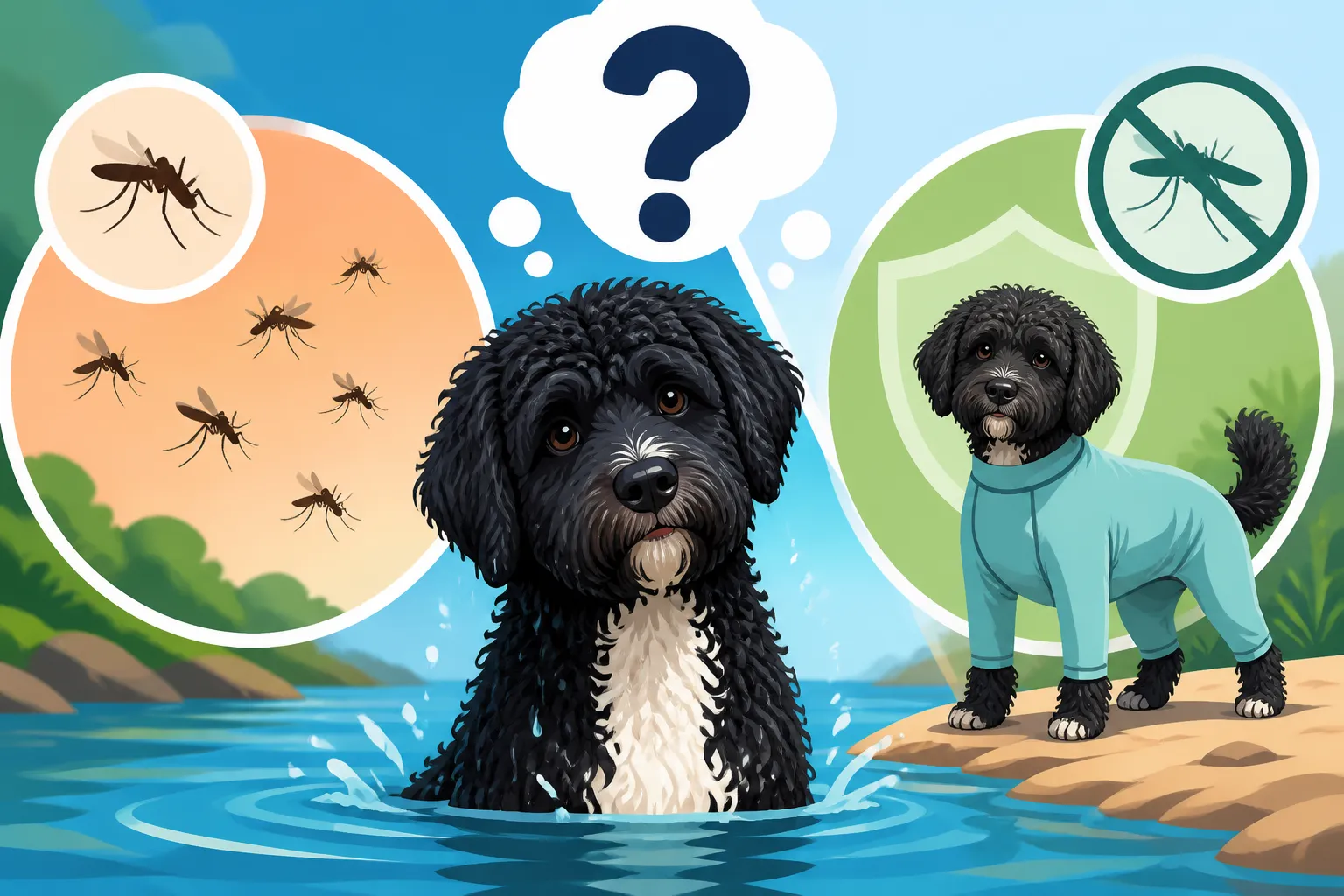
Whether a Swimming Portuguese Water Dog Needs More Mosquito Cover
It's easy to assume that because our beloved Portuguese Water Dogs are built for the water, perhaps their dense coats or aquatic lifestyle somehow grant them immunity from common nuisances like mosquitoes. But if you own one of these magnificent swimmers, you've likely found yourself wondering whether their frequent dips and damp fur actually put them at higher risk for mosquito bites and the serious health issues those bites can transmit. This guide is here to clear up those concerns, helping you keep your water dog safe and healthy, no matter how much they love to splash.
Understanding the Mosquito Threat to Your Swimming Portuguese Water Dog
For a Portuguese Water Dog, water isn't just a fun activity; it's a part of their very being. They're bred for it, thrive in it, and often seek it out. This deep connection to water, however, inadvertently brings them into closer contact with mosquitoes, insects notorious for breeding near and in standing water. It's a critical point for any PWD parent to understand.
The Silent Danger: Why Mosquitoes Are More Than Just Annoying
While a red, itchy welt on your PWD's skin might seem like a minor annoyance, the real danger mosquitoes pose lies beneath the surface. These tiny insects are carriers, vectors for some truly devastating diseases that can severely impact your dog's health, and in some cases, even be fatal. We're talking about more than just a passing itch.
The most notorious threat, and one you've undoubtedly heard about, is heartworm disease. A single bite from an infected mosquito can transmit Dirofilaria immitis larvae into your dog's bloodstream. These larvae mature into adult worms that can grow up to a foot long, taking up residence in the heart, lungs, and associated blood vessels. The damage they cause to these vital organs is cumulative and can lead to severe lung disease, heart failure, and other organ damage. The insidious nature of heartworm is that symptoms often don't appear until the disease is quite advanced, making early detection and consistent prevention absolutely critical.
Beyond heartworm, mosquitoes can also transmit other diseases, though less common in dogs, they are still a concern. These can include certain arboviruses like West Nile Virus or Eastern Equine Encephalitis. While dogs are generally more resistant to these viruses than humans or horses, severe cases can still occur. The key takeaway here is that every mosquito bite is a potential gamble with your PWD's health, and their love for water puts them right in the mosquito's preferred habitat.
How Water-Rich Environments Become Mosquito Hotbeds
Think about where mosquitoes thrive. They need water to complete their life cycle, specifically still or slow-moving water where they can lay their eggs and where larvae can develop. This means that areas near ponds, lakes, marshes, stagnant puddles, or even neglected kiddie pools become prime breeding grounds. For a Portuguese Water Dog, whose natural instinct is to be in or around these very environments, the exposure is significantly amplified.
A PWD diving into a lake or fetching a toy from a pond isn't just enjoying a swim; they're also entering a zone where mosquito populations are often at their densest. After a vigorous swimming session, their thick, often curly or wavy coat, designed to protect them in cold water, can remain damp for a considerable time. This dampness, combined with the dog's body heat, can make them even more attractive to mosquitoes that might be lingering on the shore or in nearby vegetation, waiting for a blood meal. The combination of a natural affinity for mosquito-heavy environments and a coat that retains moisture means we, as PWD owners, need to be extra vigilant.
Debunking the Myth: "Water Dogs" Aren't Immune to Bites
It's a common, if hopeful, misconception that because Portuguese Water Dogs are "water dogs," they somehow have a natural defense against water-borne pests like mosquitoes. Some might think their thick coat acts as an impenetrable barrier, or that being wet constantly deters insects. Unfortunately, this couldn't be further from the truth. In reality, their very nature can increase their vulnerability.
Their dense, often double coat (though considered a single coat for classification, it's very thick and protective) does offer some physical barrier, but it's not foolproof. Mosquitoes are remarkably adept at finding small patches of exposed skin, such as around the ears, eyes, nose, or thin-skinned areas of the belly and inner thighs. Furthermore, a PWD's enthusiasm for water means they're often splashing, resting on wet ground, or drying off in areas where mosquitoes are most prevalent. A dog might lie down at the edge of a pond to cool off, or shake off water near tall grass, creating opportunities for mosquitoes to land and bite. The slow-drying nature of their coat after a swim means they can carry dampness – and thus, a certain allure – for hours, potentially extending their exposure window long after they've left the water itself. Don't let the idea of a "water dog" lull you into a false sense of security; these pups need just as much, if not more, protection from mosquitoes as any other breed.
Evaluating Your Portuguese Water Dog's Mosquito Risk Profile
Understanding the general threat is one thing, but pinpointing the specific risks for your Portuguese Water Dog requires a bit more scrutiny. Every dog, every home, and every region has a unique set of circumstances that influence how susceptible your PWD might be to mosquito-borne illnesses. Being proactive means knowing what to look for and how to assess your situation honestly.
Geographical Location and Seasonal Peaks Matter
The density and types of mosquitoes, and thus the diseases they carry, vary dramatically depending on where you live. If you reside in a region with a warm, humid climate, especially those with plentiful natural wetlands, lakes, or even extensive irrigation, your PWD's risk will be inherently higher. States in the southeastern U.S., for instance, often have year-round mosquito activity and a high incidence of heartworm disease. Conversely, colder, drier climates might experience shorter mosquito seasons, but that doesn't eliminate the risk entirely; it just concentrates it into specific months.
It's crucial to be aware of the mosquito season in your specific area. In many places, this spans from spring through late fall, but in others, it can be a year-round concern. Local public health departments or extension offices often provide "mosquito activity reports" or advise on peak times. Pay attention to these warnings. If your Portuguese Water Dog spends a lot of time outdoors during these periods, particularly around water, their exposure goes up. Even if your region doesn't have a high heartworm prevalence, an unexpected trip to a more mosquito-dense area for a dog show or a vacation can suddenly expose your dog to new risks. Always consider both your home environment and any travel plans when evaluating risk.
The Foundation: Your Current Heartworm Prevention Plan
For any dog, but especially a water-loving breed like the Portuguese Water Dog, a consistent and effective heartworm prevention plan is the cornerstone of protection. Heartworm medication works by killing any heartworm larvae (microfilariae) that your dog may have picked up from a mosquito bite in the preceding month or so, preventing them from maturing into adult worms. It's a critical safety net.
However, many owners mistakenly believe that being on heartworm prevention means their dog doesn't need to worry about mosquito bites. This isn't quite right. While the medication is highly effective at preventing the disease, it doesn't repel mosquitoes or stop your dog from getting bitten. It simply addresses the aftermath of a bite. Missing even a single dose can open a window of vulnerability. It's essential to administer heartworm medication exactly as prescribed by your vet, without fail, year-round, regardless of perceived mosquito activity. Many trusted brands offer various forms of prevention, from monthly chewables to topical solutions or even injections. Your vet will help you choose the best option for your dog's specific needs. When restocking these vital medications, many owners find it convenient to order them through reputable online pet supply retailers like Chewy, often after obtaining a prescription from their veterinarian. Just remember, these medications are a vital part of your dog's overall health strategy, working to prevent internal parasites rather than warding off external biters.
Lifestyle Factors That Increase Mosquito Exposure
Beyond location and medication, your Portuguese Water Dog's daily routine plays a significant role in their mosquito exposure. PWDs are active, intelligent dogs who thrive on exercise and mental stimulation, often involving water. This means they're frequently outdoors, and often in precisely the places mosquitoes like to congregate.
Consider when your PWD is outside. Mosquitoes are most active during dawn and dusk. If your daily walks or swim sessions routinely fall within these hours, your dog's exposure risk is automatically higher. Does your PWD have access to a yard with standing water, even small puddles or bird baths, that aren't regularly emptied? Do they like to nap in shady, damp areas near overgrown bushes after a swim? Any habits that involve prolonged outdoor time, especially near moisture, increase their chances of being bitten. Even simply resting at the edge of a lake after a vigorous game of retrieve can expose them. An active, outdoorsy dog like a Portuguese Water Dog is going to naturally encounter more mosquitoes than a sedentary indoor dog, highlighting the need for comprehensive protective measures. You might find yourself constantly monitoring these situations to keep your adventurous companion safe.
Proactive Measures for Enhanced Mosquito Protection
Knowing the risks is the first step; taking action is the next. For a Portuguese Water Dog, whose joy is so often found in the water, simply keeping them indoors isn't a realistic or fair solution. Instead, a multi-pronged approach that combines targeted repellents, environmental management, and smart scheduling can significantly reduce their risk while still allowing them to live their best, splash-filled lives.
Safe and Effective Topical Repellents for PWDs
While heartworm medication handles the internal threat, topical repellents offer an external line of defense against mosquito bites themselves. However, this is an area where extreme caution is warranted. Never use human mosquito repellents containing ingredients like DEET or permethrin on your dog. These chemicals are highly toxic to canines and can cause severe illness, neurological problems, or even death if ingested or absorbed through the skin. It’s a terrifying mistake to make, so always double-check product labels.
Instead, consult your veterinarian for recommendations on dog-specific, vet-approved mosquito repellents. These products are formulated with ingredients safe for canine use and are designed to effectively deter mosquitoes. They come in various forms, such as sprays, wipes, or spot-on treatments. When applying, pay particular attention to areas where your PWD's coat is thinner or where mosquitoes are likely to land, such as the ears, belly, and inner legs. If your PWD is a frequent swimmer, remember that the effectiveness of topical repellents can be significantly reduced or washed off by water. This means reapplication after swimming sessions might be necessary, adhering strictly to the product's instructions for frequency and dosage. Finding the right product and understanding its limitations, especially for a dog that's constantly getting wet, is key.
Creating a Mosquito-Unfriendly Environment Around Water
The best defense is often a good offense, and that means attacking the mosquito problem at its source: their breeding grounds. This is particularly relevant if your Portuguese Water Dog spends time around your own backyard pool, pond, or even if you live near natural bodies of water. Even small efforts can make a big difference.
Start by eliminating any standing water around your home. This includes regularly emptying kiddie pools, bird baths, clogged gutters, old tires, or any containers that can collect rainwater. If you have a pond or water feature, consider aeration or mosquito dunks (which contain a natural bacterium harmless to pets and wildlife but lethal to mosquito larvae). For those with swimming pools, proper chlorination and filtration are usually sufficient to prevent mosquito breeding. If your PWD plays near natural lakes or rivers, while you can't control those environments, you can ensure your immediate surrounding property isn't adding to the problem.
Additionally, strategic landscaping can help. Keep grass mowed short, and trim back dense bushes or tall weeds, as these provide shady, damp resting spots for adult mosquitoes. Some owners even install outdoor fans in areas where their dogs relax, as mosquitoes are weak flyers and struggle in a breeze. Remember, your Portuguese Water Dog will be drawn to water, so making the areas they frequent less hospitable to mosquitoes is a crucial layer of protection.
Smart Scheduling for Outdoor Activities
Sometimes, the simplest solutions are the most effective. By adjusting when your Portuguese Water Dog engages in their favorite water activities, you can dramatically reduce their exposure to mosquitoes. It's about working with nature's schedule, not against it.
As mentioned, mosquitoes are most active during dawn and dusk. These are their prime feeding times. Therefore, planning your PWD's swims, walks, or extended outdoor play sessions during the middle of the day, when mosquito activity is typically much lower, can be a highly effective strategy. This might mean an early morning walk before the sun is fully up, or a late evening romp after the mosquitoes have settled in for the night, rather than directly at those twilight hours.
Another critical habit for swimming PWDs is thorough drying after every water session. Drying a Portuguese Water Dog After Every Swim isn't just about preventing skin issues; it's also about making them less appealing to mosquitoes. A wet dog is a cooler, slower-moving target with damp fur, an ideal landing strip for a thirsty mosquito. Using a force dryer or even just towel-drying and allowing them to finish air-drying in a breezy, open area, away from dense vegetation, can help. Bringing them indoors once they're sufficiently dried also limits exposure. These small adjustments to your routine can significantly contribute to your PWD's safety.
| Mosquito-Borne Disease | Primary Impact on Portuguese Water Dogs | Key Symptom Considerations | Prevention Strategy |
|---|---|---|---|
| Heartworm Disease | Severe lung disease, heart failure, organ damage | Cough, fatigue, decreased appetite, weight loss, difficulty breathing | Year-round heartworm prevention medication (oral, topical, or injectable) |
| West Nile Virus | Typically mild or asymptomatic; severe cases rare but possible (fever, weakness, neurological signs) | Fever, lethargy, muscle weakness, ataxia, seizures (rare) | Limited exposure to mosquitoes; no specific canine vaccine widely used |
| Eastern Equine Encephalitis (EEE) | Similar to West Nile, generally less common in dogs; severe neurological disease if infected | Fever, weakness, behavioral changes, tremors, seizures (rare) | Limited exposure to mosquitoes; no specific canine vaccine |
A Holistic Approach to Your PWD's Health and Longevity
Protecting your Portuguese Water Dog from mosquitoes is a vital piece of the puzzle, but it's part of a much larger commitment to their overall well-being. A truly healthy PWD, cared for comprehensively, is better equipped to handle any challenge, whether it's an insect bite or a more serious health concern. Their long lives – The Twelve to Fifteen Years a Portuguese Water Dog Gets on average – depend on a full spectrum of care.
Essential Veterinary Care and Regular Screenings
Your veterinarian is your most important partner in ensuring your Portuguese Water Dog's health. Regular check-ups are non-negotiable, providing opportunities to catch potential issues early and keep vaccinations and parasite prevention up to date. For mosquito-borne diseases like heartworm, an annual heartworm test is absolutely essential, even if your dog is on year-round prevention. This test confirms that the prevention has been effective and quickly identifies any breakthrough infections that might have occurred. How Often a Portuguese Water Dog Needs a Wellness Exam is typically at least once a year, and often more frequently for puppies or senior dogs.
During these visits, your vet will also perform a thorough physical examination, looking for any signs of illness, checking their eyes, ears (especially important for Why a Swimming Dog Gets Ear Infections), and assessing their overall condition. They might also recommend routine bloodwork. What a Portuguese Water Dog's Yearly Bloodwork Should Cover often includes screening for various conditions and assessing organ function, which can be critical for monitoring the impact of diseases like heartworm or simply ensuring your dog is thriving. These preventative measures are your first line of defense against many health challenges, not just those carried by mosquitoes.
The Power of Optimal Nutrition and Wellness
A strong immune system is your Portuguese Water Dog's best internal defense against any illness, and that starts with what you put in their bowl. High-quality nutrition, appropriate for their age, activity level, and any specific health needs, provides the building blocks for a robust body and a healthy immune response. Just like humans, a well-fed dog is more resilient.
For an active breed like the PWD, whose lifestyle often involves significant physical exertion from swimming and playing, a diet rich in essential nutrients, protein, and healthy fats is crucial. Feeding an Athletic Portuguese Water Dog means selecting a food that supports their energy demands and promotes muscle health. Brands like Ollie, known for their fresh, human-grade ingredients, or other high-quality kibble options found on sites like Chewy, can provide the optimal nutrition your PWD needs. Beyond food, ensuring they have constant access to fresh, clean water is also vital for overall hydration and organ function. While diet won't directly repel mosquitoes, it contributes to a strong body that can better withstand environmental stressors and recover from illness, should it occur.
Financial Safeguards: Investing in Pet Insurance
Even with the most diligent preventative care, unexpected accidents or illnesses can strike. A severe case of heartworm disease, for instance, can require extensive, costly treatment that involves multiple veterinary visits, medications, and specialized procedures. This is where pet insurance can provide an invaluable financial safety net.
Considering a policy from providers like Healthy Paws or other reputable insurers can offer peace of mind, knowing that you won't have to choose between your PWD's health and your budget. Pet insurance can cover a significant portion of the costs associated with diagnosing and treating various conditions, including life-threatening issues like heartworm, accidents, or other serious illnesses. What Insurance Covers on a Portuguese Water Dog can vary, so it's important to research policies carefully. While most pet insurance plans don't cover pre-existing conditions, getting a policy when your PWD is young and healthy ensures that any future, unexpected illnesses—like a newly diagnosed heartworm infection or even conditions like Whether Insurance Covers a Portuguese Water Dog's Addisons—will be covered, saving you from potentially overwhelming veterinary bills. It's a proactive step that protects both your beloved companion and your wallet.
Disclaimer
This article is for general informational purposes only and does not constitute professional advice. Laws, prices and regulations vary by location and change over time. Consult a qualified professional for guidance on your specific situation.