Whether the Portuguese Water Dog Came From North Africa
It's a fascinating question, isn't it? When you look at a robust, curly-coated Portuguese Water Dog, with their incredible intelligence and undeniable love for the water, you can't help but wonder about their ancient past. We often hear bits and pieces about various dog breeds and their global journeys, and the idea that the Portuguese Water Dog might have roots stretching back to North Africa is certainly one that piques curiosity. Let's dive deep into this theory and see what the historical clues and modern understanding tell us about the true origins of this magnificent breed.
Tracing the Ancient Roots of the Portuguese Water Dog
For many of us who adore Portuguese Water Dogs, their history feels as rich and deep as the oceans they once worked. Understanding where they truly came from helps us appreciate their unique characteristics and why they are the way they are today. The journey of a breed through centuries and continents is rarely a straight line, and the Portuguese Water Dog's story is no exception.
The Iberian Peninsula: A More Accepted Origin Story
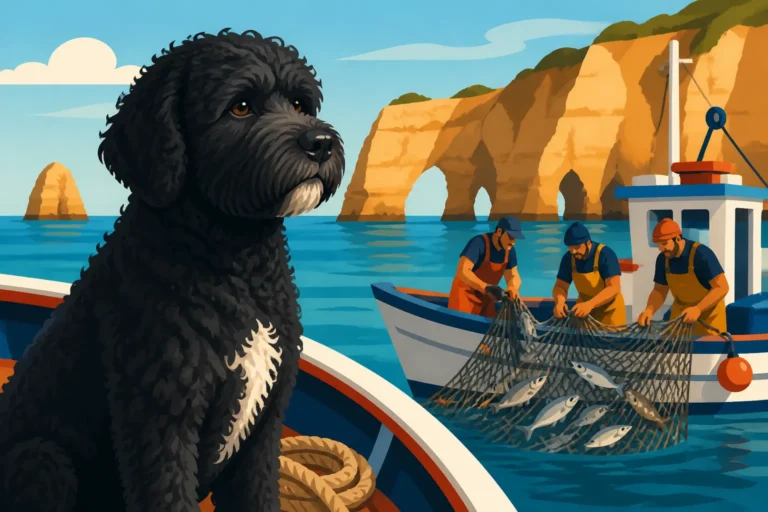
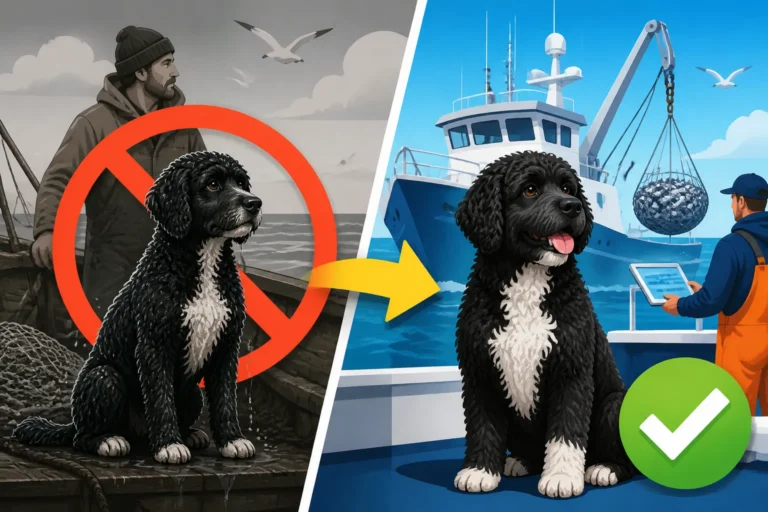
When you talk to most breed historians and enthusiasts, the dominant theory for the Portuguese Water Dog's origin firmly places them within the Iberian Peninsula, specifically Portugal itself. This isn't just because of their name; there's a compelling narrative of their development alongside the local fishing communities along the Algarve coast. For centuries, these dogs were indispensable crew members, working tirelessly on fishing boats, retrieving lost tackle, driving fish into nets, and even carrying messages between vessels.
Think about the environment: the rugged coastline, the need for a resilient dog that could handle both the land and the often-cold, unpredictable Atlantic waters. This shaped their physical traits—their distinctive waterproof coat, their powerful build, and of course, those amazing webbed feet. It's a story of natural selection and human purpose converging to create a truly specialized working dog. The temperament, too, was forged in this demanding role: intelligent, independent, yet eager to please and deeply loyal to their human companions. This long-standing connection to the Portuguese fishing industry makes the Iberian Peninsula the most widely accepted "homeland" for the breed. If you're curious about their historical jobs, you might enjoy reading What a Portuguese Water Dog Was Bred to Do on a Boat.
The "North African Connection": Examining the Theory
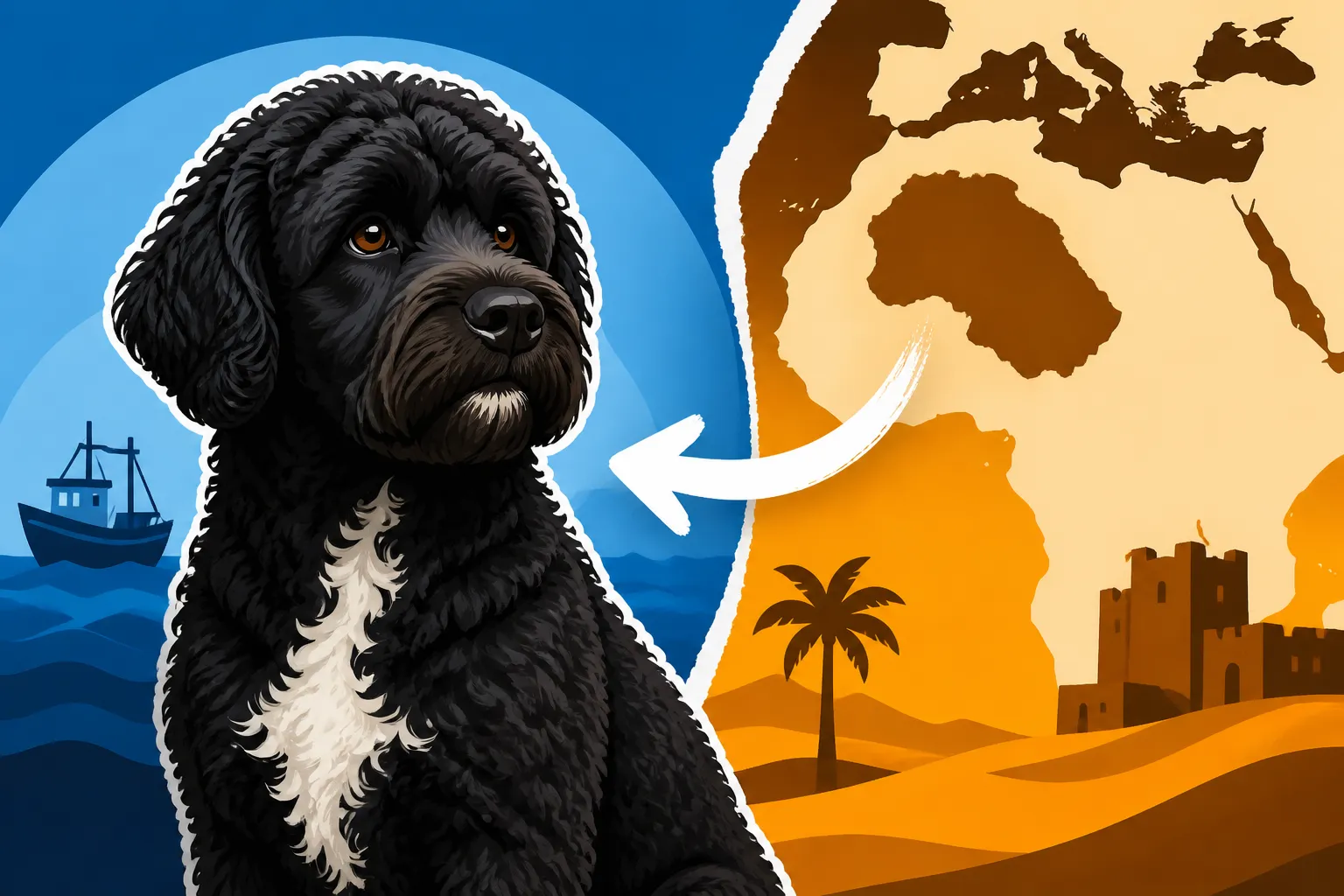
Now, let's talk about the North African theory. This idea suggests that the ancestors of the Portuguese Water Dog might have arrived on the Iberian Peninsula from North Africa, possibly with the Moors during their invasions of the 8th century. It's an intriguing thought, given the historical exchange between the two regions and the geographical proximity. The theory often posits that these North African dogs, possibly early forms of the Barbet (a French water dog), or other ancient water dogs, were brought across the Strait of Gibraltar.
The appeal of this theory lies in the logic of historical migration patterns and the movement of people and their working animals. If these dogs indeed came with the Moors, they would have been introduced to a new environment where their water skills would still have been highly valued by coastal communities. Over centuries, these introduced dogs would then have interbred with any existing local dog populations, eventually evolving into the specific type we recognize as the Portuguese Water Dog. It’s a theory that ties into broader historical narratives of cultural and genetic exchange.
However, direct, definitive proof tying the Portuguese Water Dog specifically to North African ancestors is somewhat scarce. While some general similarities might exist with other ancient water dog types found around the Mediterranean basin, pinning a direct lineage to North Africa specifically, as the primary source of the breed, remains more speculative than the Iberian-centric narrative. When considering Where the Portuguese Water Dog Comes From, most sources emphasize the local development within Portugal.
Exploring the Moorish Influence and Historical Migrations
History is a complex tapestry, and the movement of people, goods, and animals across borders has always played a role in shaping cultures and, yes, even dog breeds. The influence of the Moors on the Iberian Peninsula was profound, affecting everything from architecture to language, and it's not unreasonable to consider if their presence also brought new canine companions.
Trade Routes and Cultural Exchange in Ancient Times
Imagine the ancient world: bustling ports, ships sailing across the Mediterranean, carrying not just spices and silks, but also people and their dogs. The historical trade routes and military movements between North Africa and the Iberian Peninsula were extensive. It's entirely plausible that dogs accompanied travelers and settlers on these journeys. Dogs have always been companions and working animals, vital for hunting, guarding, and herding. Therefore, the idea of various dog types being introduced to new regions through these routes is very much in line with historical patterns.
The Moorish conquest and subsequent rule in parts of the Iberian Peninsula lasted for centuries, creating a rich period of cultural fusion. During this time, dogs from different regions would have undoubtedly met and mixed. If there were particular "water dog" types among the dogs brought from North Africa, their genes could certainly have contributed to the diverse canine gene pool already present in Portugal. The question isn't if dogs traveled with people, but rather the specific impact and lineage contribution these particular dogs had on the development of the Portuguese Water Dog as a distinct breed. The early history of dog breeds is often a murky area, with much reliance on anecdotal evidence and educated guesses rather than documented pedigrees.
Comparing the Portuguese Water Dog to North African Breeds
When we try to draw a direct line to North African origins, we might look for existing breeds in that region that share striking resemblances to the Portuguese Water Dog. However, the most commonly cited comparisons tend to be with other European water dogs, like the Barbet or the Irish Water Spaniel. While there are a handful of ancient dog types found across North Africa, such as the Aïdi or Sloughi, these breeds typically have very different coats, body types, and working histories compared to the Portuguese Water Dog. They are often desert dogs, bred for herding or sighthound qualities, rather than aquatic work.
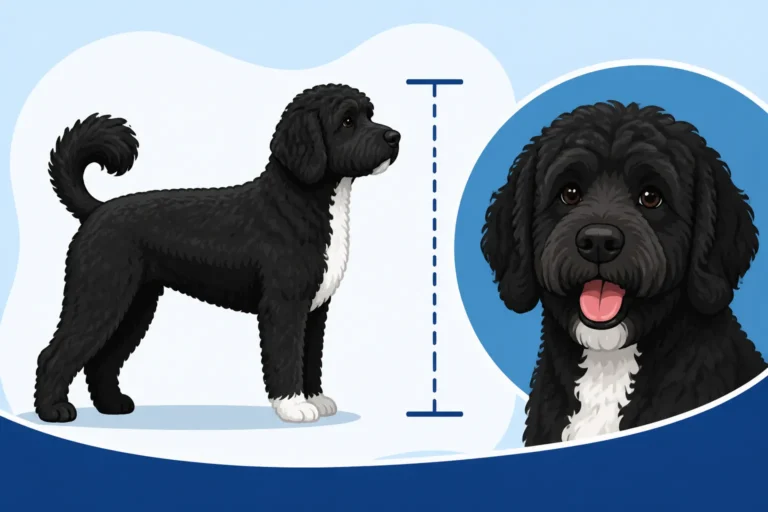
The Portuguese Water Dog's defining characteristics – its curly or wavy single coat, its powerful swimming ability, and its strong retrieving drive – point strongly to a specialized function in water, rather than a desert or arid environment. The physical adaptations like Why a Portuguese Water Dog Has Webbed Feet are perfectly suited for their role as a "cão de água" (dog of water). While a common ancestor might exist far back in time for many European and even North African dog breeds, suggesting a direct ancestral link or primary origin from North Africa for the Portuguese Water Dog itself often lacks compelling comparative evidence with contemporary North African breeds. It's more likely that any shared lineage would be much older, stemming from an ancestral "water dog" type that spread across the Mediterranean basin in various forms.
The Poodle Connection: Another Thread in the Tapestry
Beyond the North African theory, another prominent discussion point in Portuguese Water Dog ancestry often involves the Poodle. This might seem surprising at first, given how different a Poodle looks from a Portuguese Water Dog to the casual observer, especially with their typical show clips. However, when you delve into the history of water dogs, the Poodle's influence often surfaces.
Shared Traits and the Common Ancestor Debate
The most striking similarity between the Portuguese Water Dog and the Standard Poodle (and other curly-coated water breeds like the Barbet) is their non-shedding, often curly or wavy coat. This coat type is highly functional for water work, offering insulation and quick drying properties. Both breeds also share an exceptional intelligence, a high degree of trainability, and a deep love for water. These shared characteristics have led many breed historians to believe that the Portuguese Water Dog, the Poodle, and other European water dogs likely share a very ancient common ancestor.
This shared lineage suggests a divergence many centuries ago, where environmental pressures and human selection then led to distinct breed types. The "Poodle connection" isn't about the Portuguese Water Dog being descended from a modern Poodle, but rather that both breeds evolved from a similar ancient stock of water-retrieving dogs. The key difference in their development is their primary working environment and the cultures that fostered them. The Poodle, while a water retriever, also found roles in entertainment and companionship, leading to more refined lines, while the Portuguese Water Dog remained firmly rooted in its rugged fishing community origins. If this idea fascinates you, delving into Whether the Portuguese Water Dog Shares Ancestors With the Poodle might offer more insights.
Genetic Research: What Science Says (or doesn't say)
In recent years, advancements in genetic research have provided new tools for understanding the relationships between dog breeds. Scientists can now analyze canine DNA to trace lineages and identify common ancestors, offering a more empirical approach to breed history than relying solely on historical documents or breed standards.
What this genetic research largely suggests is a complex web of relationships among many European working dogs, particularly those categorized as water dogs or herding dogs. While specific studies don't often pinpoint a direct North African origin for the Portuguese Water Dog as a singular event, they do reinforce the idea of a shared ancestry with other ancient water breeds. For instance, the Barbet, often considered an ancestor to many European water dogs including the Poodle, does show some genetic relationship to the Portuguese Water Dog. This supports the notion of a broad "water dog" genetic pool from which these distinct breeds emerged. The precise path of migration and admixture across the Mediterranean region, however, can be incredibly difficult to untangle definitively, especially for breeds whose origins predate modern record-keeping by centuries.
What is clear from genetics is that the Portuguese Water Dog is a distinct and ancient breed with a deep history. While it's part of a larger family of water dogs, its specific development was localized and unique. For breeders today, understanding these genetic links is crucial, which is why DNA testing is so vital. It’s part of ensuring the health and integrity of the breed, a responsibility that modern breeders take seriously. Many reliable pet supply retailers, like Chewy, offer a range of products for maintaining a PWD's coat, health, and activity levels, all of which are indirectly supported by our deeper understanding of their breed history and specific needs.
Why Origin Stories Matter for the Breed
Understanding the history of a breed, even the more speculative aspects like the North African theory, isn't just an academic exercise. It helps us appreciate the dog we have today and guide us in their care and preservation.
Understanding Breed Development and Characteristics
The long journey of the Portuguese Water Dog, whether entirely Iberian or with some North African influence, undeniably shaped its very essence. Every characteristic, from its dense, waterproof coat to its intelligent, independent, and tireless nature, is a testament to its working past. Knowing that they were bred for demanding tasks on fishing boats explains why they aren't content with just a stroll around the block; they need a "job," whether it's retrieving, agility, or simply being an active companion.
Their robust health, when carefully bred, also reflects a history where only the strongest and most resilient dogs survived and thrived in a challenging marine environment. Understanding these foundational elements helps new owners set realistic expectations and provide the right kind of environment and stimulation. For instance, if you have a Portuguese Water Dog, you know that their need for exercise goes beyond basic walks. Many enjoy activities like dock diving or water retrieval games, which connect directly to their ancestral tasks. It’s vital to provide toys and gear that can withstand water and enthusiastic play, readily available at places like Chewy. This historical context provides a blueprint for responsible ownership and training, leading to a happier, healthier dog.
Preserving the Legacy of the Portuguese Water Dog
The very fact that we debate their origins speaks to the rich legacy of the Portuguese Water Dog. This breed, which once faced near extinction, was saved by dedicated individuals and has since found a special place in homes and hearts around the world. Preserving their legacy means not only protecting their unique physical traits but also cherishing their remarkable temperament and working drive.
Responsible breeding practices are paramount in continuing this legacy. Breeders focus on health testing for genetic conditions and strive to maintain the breed standard, ensuring that future generations embody the qualities that made the Portuguese Water Dog so special in the first place. You can learn more about this by researching How Narrow the Portuguese Water Dog Founding Stock Was and Who Saved the Portuguese Water Dog. The story of their origins, whether it involved crossing from North Africa or a purely Iberian development, is a reminder of the enduring bond between humans and dogs, and how these incredible animals have adapted and evolved alongside us, serving our needs and enriching our lives.
The debate about the Portuguese Water Dog's exact origins, whether tracing back to North Africa or entirely within the Iberian Peninsula, simply adds to the mystique of this remarkable breed. While the evidence leans heavily towards their development within Portugal, the ancient migratory paths of dogs are rarely simple. What remains certain is that the Portuguese Water Dog is a unique and historically significant breed, forged by centuries of working alongside humans on the water. Their past, however it unfolded, is reflected in the intelligent, athletic, and devoted companions we cherish today.
| Theory of Origin | Key Argument | Evidence | Common Ancestors/Related Breeds |
|---|---|---|---|
| Iberian Peninsula | Developed locally in Portugal alongside fishing communities. | Historical records, consistent role as a fishing dog, geographical isolation for specific breed development. | No direct "ancestor," but evolved from local water dog types. |
| North African | Ancestors brought to Iberia from North Africa, possibly with the Moors. | Historical trade/migration routes between North Africa and Iberia, general similarities with ancient Mediterranean water dogs. | Barbet (as a widespread ancient water dog type), other generalized "water dogs." |
| Poodle Connection | Shares ancient common ancestor with Poodle and other European water dogs. | Similar coat type, intelligence, love for water. Genetic studies showing shared lineage among European water dogs. | Barbet, various European water retrievers. |
This table illustrates the different threads in the discussion, highlighting that while the North African theory is intriguing, the most widely accepted view focuses on their dedicated development within Portugal, potentially from a broader "water dog" lineage that also gave rise to breeds like the Poodle. Regardless of the exact path, their journey has been long and captivating, resulting in the amazing Portuguese Water Dog we know and love. A great resource for all your PWD's needs, from nutrition to toys that stand up to their active lifestyle, is often found at a well-stocked pet supply store like Chewy.
Disclaimer
This article is for general informational purposes only and does not constitute professional advice. Laws, prices and regulations vary by location and change over time. Consult a qualified professional for guidance on your specific situation.