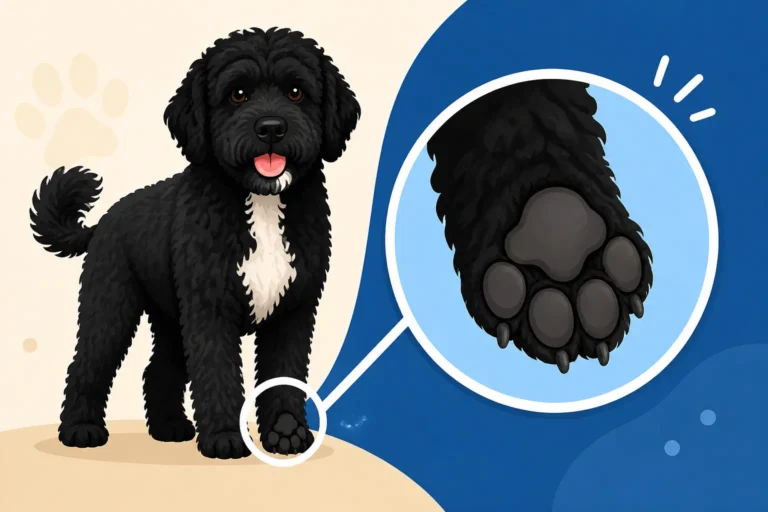
How Narrow the Portuguese Water Dog Founding Stock Was
It's a common misconception that all dog breeds have always been numerous and widespread. The truth for many beloved breeds is far more dramatic: they faced the very real threat of extinction, dwindling to such low numbers that their continued existence hinged on a few dedicated individuals. The Portuguese Water Dog is one such breed, and understanding just how close they came to vanishing helps us appreciate the genetic legacy they carry today. This guide will delve into the astonishingly narrow foundation from which the modern Portuguese Water Dog sprang and explore the ongoing implications for its health and future.
The Brink of Extinction and the Urgent Need for Revival
Imagine a time when the very dogs you cherish were on the verge of disappearing forever. This wasn't a distant, ancient history for the Portuguese Water Dog; it was a reality in the early 20th century. The factors leading to their decline weren't initially a health crisis, but a profound shift in the very industry they served so faithfully.
A Fading Maritime Legacy
For centuries, these robust, intelligent dogs were indispensable companions to Portuguese fishermen. Their roles were varied and crucial: they would retrieve broken nets, herd fish into nets, carry messages between boats, and even guard the catch. They were built for the sea, with their strong swimming abilities, webbed feet, and water-repellent coats. Their partnership with the fishing fleet was a symbiotic relationship that had endured for generations along the coast of Portugal.
However, the dawn of the 20th century brought with it technological advancements that rapidly changed the face of the fishing industry. The introduction of motorized boats, sonar, and more efficient fishing techniques gradually rendered the dogs' specialized skills less necessary. Fishermen, facing economic pressures, found they could operate without the "cão de água" (dog of water). This wasn't a gradual phasing out; it was a swift, almost brutal obsolescence that left the breed without its traditional purpose. As their utility diminished, so did their numbers. It was a classic case of an animal's livelihood disappearing, leading directly to a population crash. The bond was still there, of course, but practicality often won out, and fewer and fewer dogs were bred.
Scarcity and the Search for Remaining Dogs
By the 1930s, the situation was dire. The once-thriving population of Portuguese Water Dogs had plummeted to alarmingly low numbers. Historians and breed enthusiasts refer to this period as the breed's darkest hour, a time when only a handful of dogs, if that, could be found scattered across the country. The breed was literally at the edge of oblivion. To say that finding a purebred Portuguese Water Dog was challenging would be a vast understatement; it was akin to searching for a needle in a haystack, and that haystack was Portugal itself.
The few remaining dogs were often isolated, living in remote fishing villages, perhaps still working with an older generation of fishermen who clung to the old ways. These dogs weren't part of a formal breeding program; they were simply survivors, the last vestiges of a once-proud working line. The imperative wasn't to select for specific traits or diverse bloodlines, but simply to find any living, viable Portuguese Water Dog that could contribute to rebuilding the breed. This desperate search underscores just how narrow the genetic pool had become, forcing those dedicated to the breed's survival to work with whatever meager resources they could uncover. The priority was sheer existence, not genetic breadth. You can read more about this period in The Portuguese Water Dog Was Almost Gone by the 1930s.
The Visionaries and the Foundation Dogs
The survival of the Portuguese Water Dog is a testament to the unwavering dedication of a few individuals who refused to let this magnificent breed disappear. Their efforts, though starting from a critically small base, laid the entire genetic foundation for every Portuguese Water Dog alive today.
Vasco Bensaude's Crucial Role
One name stands out above all others in the story of the Portuguese Water Dog's revival: Dr. Vasco Bensaude. A wealthy Portuguese shipping magnate and dog enthusiast, Bensaude was deeply concerned by the breed's impending extinction. He recognized the historical and cultural significance of the cão de água and took it upon himself to collect the remaining specimens and establish a formal breeding program. This wasn't a hobby for him; it was a mission. He poured his resources, time, and passion into finding these last dogs.
Bensaude traveled extensively throughout Portugal, visiting fishing ports and remote coastal areas, seeking out any dog that still bore the characteristics of the true Portuguese Water Dog. His criteria were rigorous, focusing on working ability, correct physical type, and, crucially, a temperament suitable for the demanding life at sea. He established his famous Algarbiorum kennel, which became the cornerstone of the breed's modern revival. Without Bensaude's relentless pursuit and vision, it is almost certain that the Portuguese Water Dog would be nothing more than a historical footnote today. His meticulous record-keeping and dedication to pure breeding from the scattered survivors provided the essential framework. You can learn more about his pivotal contribution in Who Saved the Portuguese Water Dog.
Leão and the Pillars of the Breed
From Bensaude's dedicated efforts emerged a handful of key dogs that would become the true genetic pillars of the modern Portuguese Water Dog. Among them, one dog, a magnificent male named Leão (meaning 'Lion' in Portuguese), is universally recognized as the foundation sire of the breed. Born in 1931, Leão possessed all the desired traits: intelligence, working drive, a robust physique, and the correct coat and conformation. He was a dominant force in Bensaude's breeding program, and his genes are present in virtually every Portuguese Water Dog alive today.
Leão was not the only dog, of course, but his influence was so profound that he is often cited as the primary male contributor to the breed's resurgence. Other dogs, both males and females, were brought into Bensaude's program, each carefully selected to ensure they represented the authentic type. However, the overall number of these initial foundation dogs was incredibly small – a mere handful that would go on to produce all subsequent generations. This meant that the genetic diversity available for future breeding was inherently limited from the very beginning. The descendants of Leão and these few other dogs were bred selectively, but the "ancestors" remained few. This genetic bottleneck, where a large population passes through a period of extreme reduction, leaves a lasting imprint on the breed's genetic makeup, a fact that modern breeders continue to manage carefully. The fact that Every Portuguese Water Dog Descends From a Few Dogs truly highlights this foundational bottleneck.
The Genetic Ramifications of a Small Beginning
The legacy of such a narrow founding stock is a complex one, presenting both challenges and a profound responsibility for breeders and owners today. While the breed was saved from extinction, it carries a genetic blueprint shaped by those desperate early days.
Understanding Genetic Bottlenecks
A genetic bottleneck occurs when a population undergoes a drastic reduction in size, leading to a loss of genetic variation. Imagine starting with a vast library of books (representing genetic traits) and then having only a single shelf of books remain after a disaster. Even if you copy those remaining books, you're still working with a much smaller, less diverse collection. For the Portuguese Water Dog, the "disaster" was the shift in fishing practices and the subsequent near disappearance of the breed. When Bensaude and others began rebuilding, they had very few "books" to work with.
This limited genetic diversity means that the breed's gene pool is, by definition, less varied than that of breeds with larger, more diverse historical populations. While careful breeding can manage the existing genes, it cannot create new ones. This means that certain genetic traits, both desirable and undesirable, can become more prevalent within the population. It's not necessarily a condemnation of the breed; it's a simple biological reality. Breeders must be acutely aware of this historical context when making breeding decisions, understanding that every choice has a magnified impact due to the breed's foundational history. The question of How Narrow the Portuguese Water Dog Gene Pool Is is really about this specific historical event.
Modern Health Challenges and Management
The primary concern stemming from a narrow gene pool is the potential for increased prevalence of inherited health conditions. When a small number of individuals contribute heavily to a breed's foundation, any genetic predispositions they carry can become widespread. This doesn't mean every Portuguese Water Dog will be unhealthy, but it does mean certain conditions require diligent screening and management.
For the Portuguese Water Dog, common concerns related to inherited conditions include certain eye diseases like Progressive Retinal Atrophy (PRA), heart conditions such as Juvenile Dilated Cardiomyopathy (JDCM), and metabolic disorders like GM1 Gangliosidosis. While these conditions can occur in any breed, the breed's history means that responsible breeders must be particularly vigilant. This is why comprehensive health testing is paramount. Breeders routinely perform DNA tests for known conditions and conduct regular screenings, like eye exams and cardiac evaluations, to identify and mitigate risks. Organizations dedicated to the breed often collaborate to collect and share health data, providing resources for breeders to make informed decisions. Many owners purchasing a Portuguese Water Dog Puppy Starter Kit Costs will realize very quickly that their breeder has already invested heavily in these health tests.
Here's a look at how a narrow gene pool impacts breeding decisions:
| Aspect | Challenge from Narrow Gene Pool | Responsible Breeding Strategy Today |
|---|---|---|
| Genetic Diversity | Limited variation, increasing risk of genetic disease expression. | Utilize diverse lines within the existing gene pool; avoid overuse of popular sires. |
| Inbreeding Coefficient | Higher average inbreeding due to shared ancestors. | Carefully calculate coefficients, prioritize outcrossing where possible to introduce new genes. |
| Disease Prevalence | Higher likelihood of specific inherited conditions becoming common. | Mandatory genetic health testing (DNA, eye, heart, hips); remove affected animals from breeding. |
| Finding Breeding Stock | Limited choice of unrelated, healthy, type-correct individuals. | Extensive networking with other breeders; collaboration; sometimes international searches. |
It's a delicate balance, and Whether Inbreeding Explains Portuguese Water Dog Disease is a question that breeders actively address through science and careful planning.
Ongoing Efforts to Expand and Preserve Diversity
The story of the Portuguese Water Dog's narrow founding stock isn't just a historical footnote; it's a living challenge that continues to shape breeding practices and breed club initiatives today. The collective efforts of dedicated breeders and owners are crucial in safeguarding the breed's future.
The Role of Registries and Health Databases
Modern breed clubs, like the Portuguese Water Dog Club of America, play an indispensable role in promoting responsible breeding and monitoring the breed's health. They encourage, and often mandate, that breeders participate in health screening programs and register their dogs and their test results in centralized databases. These registries act as vital resources, allowing breeders to make informed decisions by accessing information about potential mates' health histories and genetic clearances. This transparency is critical for a breed with a limited genetic foundation.
For example, breed clubs advocate for specific DNA tests for conditions like JDCM, GM1, and PRA. They also track orthopedic health, like hip and elbow scores, and cardiac evaluations. By compiling this data, these organizations help breeders understand the prevalence of certain conditions and identify lines that might be at higher risk. This allows for strategic pairing of dogs to minimize the chances of producing affected offspring and to avoid unknowingly doubling up on recessive genes. When you're looking for a puppy, you should absolutely ask Which Registry Holds Portuguese Water Dog Health Results and request to see them. Many responsible breeders will even provide these results in a digital format or link you directly to their dog's entries on public databases.
Responsible Breeding Practices Today
Given the breed's history, responsible breeding of Portuguese Water Dogs is more than just pairing two healthy, good-looking dogs. It involves a deep understanding of genetics, a commitment to rigorous health testing, and a thoughtful approach to lineage and diversity. Ethical breeders prioritize health and temperament above all else. They meticulously research pedigrees, often going back many generations, to assess genetic risks and identify areas where diversity can be enhanced.
For instance, a responsible breeder will use the genetic tests available to ensure that they do not breed two carriers of a recessive genetic disease together, which could result in affected puppies. This is particularly important for conditions where DNA tests exist, such as for Juvenile Dilated Cardiomyopathy Kills a Portuguese Water Dog Puppy Fast or GM1 Gangliosidosis and the Portuguese Water Dog Puppy That Never Reaches Six Months. They will show you What a Portuguese Water Dog Breeder Should Have Tested and discuss the results transparently. Breeders often consult resources, including online retailers like Chewy, for information on proper nutrition for breeding dogs or specialized grooming tools that can contribute to overall canine health. Tools for home grooming, from specific brushes to specialized shampoos, are readily available on platforms like Chewy, which can help owners maintain their dog's coat between professional grooms.
Furthermore, many breeders strive to introduce genetic diversity by collaborating with other breeders, even internationally, to bring in new bloodlines where appropriate, always ensuring these new lines meet the breed standard and pass all health clearances. This proactive approach helps to slowly, carefully broaden the gene pool and build resilience within the breed for future generations. When you consider purchasing a puppy, understanding How the GM1 Test Changed Portuguese Water Dog Breeding or how the JDCM test has changed Portuguese Water Dog breeding provides invaluable insight into the dedication breeders have to the health of their lines. When selecting appropriate toys for a Portuguese Water Dog that puts everything in its mouth, owners often turn to reputable pet supply sites like Chewy for durable, safe options. New owners purchasing a What a Portuguese Water Dog Puppy Starter Kit Costs will often find great options for crates, food, and toys on Chewy.
The journey of the Portuguese Water Dog from the brink of extinction to a thriving, beloved breed is a remarkable tale of resilience and human dedication. While their narrow founding stock presents ongoing considerations for genetic health, the commitment of breeders and breed organizations to transparency, rigorous health testing, and thoughtful breeding practices ensures that this active, intelligent, and loyal companion will continue to grace our lives for generations to come.
Disclaimer
This article is for general informational purposes only and does not constitute professional advice. Laws, prices and regulations vary by location and change over time. Consult a qualified professional for guidance on your specific situation.