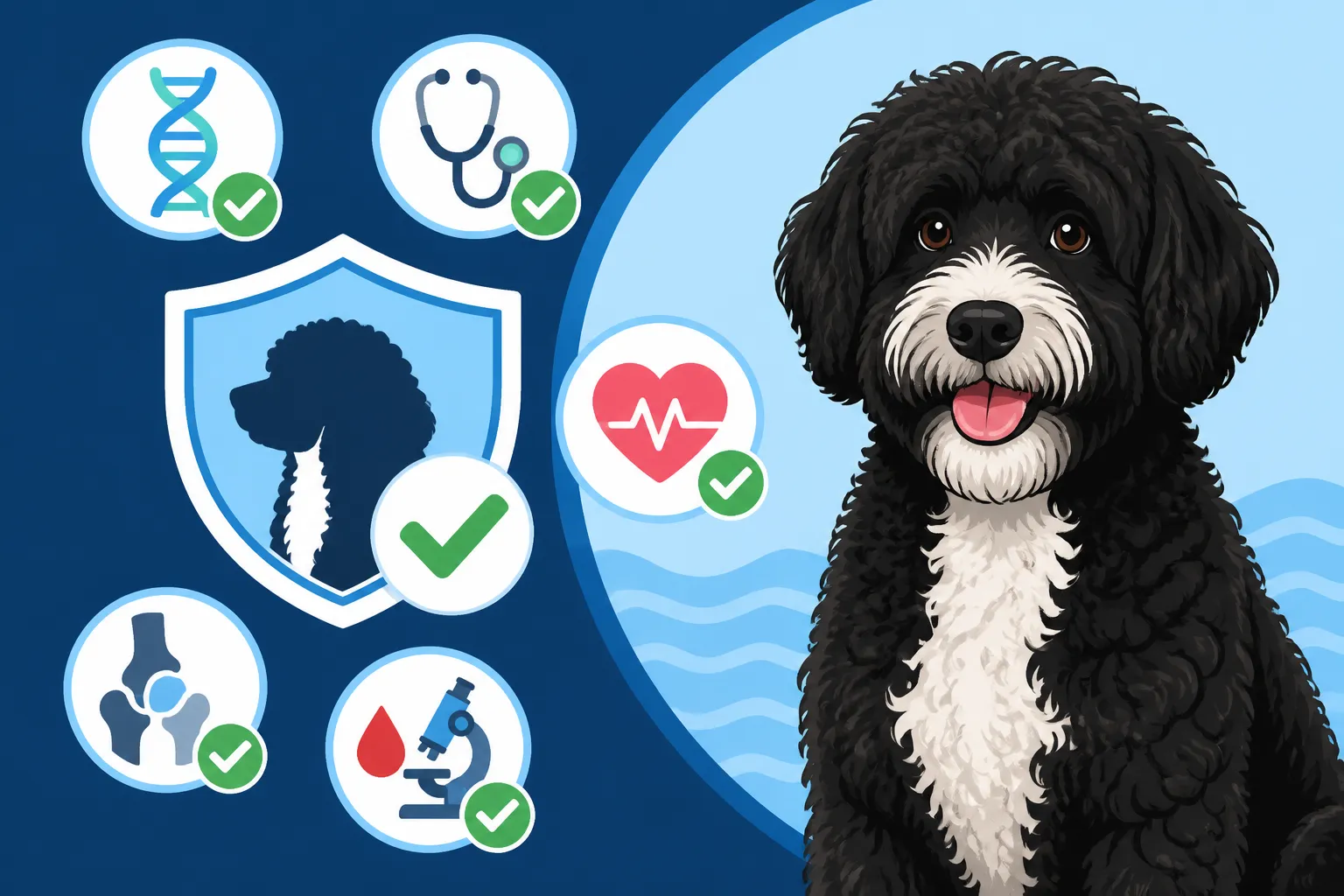
Which Tests a Portuguese Water Dog Breeder Must Show
Bringing a Portuguese Water Dog puppy into your home is an incredibly exciting time, full of dreams of swims, adventures, and endless companionship. But beneath that excitement often lies a gnawing worry: how do you truly know if your future companion is healthy, and what specific health tests should a reputable breeder actually show you to prove it? It's a daunting task to navigate, especially for first-time owners, but understanding these crucial health clearances is paramount to ensuring your new family member has the best start in life and avoids heartache down the road. This guide will walk you through the essential health tests a Portuguese Water Dog breeder must provide, giving you the confidence to make an informed decision.
The Foundation: Why Health Testing Is Non-Negotiable for Portuguese Water Dogs
When you’re looking at a litter of adorable Portuguese Water Dog puppies, it’s easy to get swept away by their fluffy coats and playful antics. What you might not immediately see, however, are the potential genetic conditions lurking beneath the surface. For a breed like the Portuguese Water Dog, which has seen its popularity fluctuate and its gene pool managed carefully over decades, health testing isn't just a good idea – it's an absolute necessity. These dogs are prone to specific hereditary diseases that can drastically impact their quality of life, shorten their lifespan, or lead to significant veterinary expenses.
A responsible breeder understands this deeply. They don't just breed two healthy-looking dogs; they meticulously research pedigrees, analyze genetic test results, and seek to improve the breed's health with every litter. Without proper health testing, you're essentially playing a genetic lottery, and the stakes are incredibly high. Imagine the heartbreak of watching a vibrant puppy succumb to a preventable illness because its parents weren't screened. This isn't about shaming breeders who might unknowingly have carriers, but about empowering prospective owners to demand transparency and accountability.
Understanding the Importance of Genetic Screening
Genetic screening is the bedrock of responsible Portuguese Water Dog breeding. These tests identify specific genes that, when inherited in certain combinations, can lead to severe health issues. The beauty of modern veterinary science is that many of these conditions can now be detected long before a puppy even shows symptoms, allowing breeders to make informed decisions about pairings and prevent affected puppies from being born. It also means you, as a buyer, can verify that your puppy is either clear of these risks or, at the very least, comes from parents whose status is known and responsibly managed.
Think of it like this: if you were buying a car, you’d want to see its service history and a report on its mechanical health, right? A puppy is no different, perhaps even more vital. The genetic health of your puppy impacts not just its first year, but potentially its entire The Twelve to Fifteen Years a Portuguese Water Dog Gets. Ignoring these screenings is a gamble with a living, breathing creature's well-being. A breeder who proudly presents these results is showing you they've invested time, money, and ethical consideration into their breeding program.
Why Breeder Transparency Matters So Much
Transparency isn't just a buzzword; it's a critical indicator of a breeder's integrity. A truly responsible Portuguese Water Dog breeder won't just tell you their dogs are healthy; they'll show you the proof. They'll have a system for tracking results, usually through recognized canine health organizations, and they'll be happy to walk you through what each test means. If a breeder is evasive, makes excuses about tests being too expensive, or claims a vet check is "good enough," consider it a massive red flag.
A transparent breeder will not only provide copies of the parents' health clearances but often those of grandparents or even further back, illustrating a long-term commitment to health within their lines. They should also be able to explain the implications of carrier status versus affected status for any given genetic condition. This level of openness builds trust and ensures that you're not just buying a puppy, but investing in a lifetime companion from a source that genuinely cares about the breed's future.
Unpacking the DNA Panel: Essential Genetic Tests
When it comes to Portuguese Water Dogs, there are a few genetic tests that are absolutely non-negotiable. These are the "must-haves" that any reputable breeder will have run on their breeding stock. These DNA tests look for specific mutations that can cause devastating diseases in the breed. If a breeder can't produce these results for both parents of a litter, you should walk away.
Juvenile Dilated Cardiomyopathy (JDCM)
One of the most terrifying conditions in Portuguese Water Dogs is Juvenile Dilated Cardiomyopathy Kills a Portuguese Water Dog Puppy Fast. This genetic disease affects puppies, typically striking between three weeks and seven months of age. The tragedy of JDCM is that affected puppies often appear perfectly healthy until they suddenly collapse and die, usually from acute heart failure. There's often no warning, no subtle signs leading up to it, which makes it particularly heartbreaking for families.
The good news is that JDCM is inherited in an autosomal recessive manner, meaning a puppy must inherit two copies of the mutated gene (one from each parent) to be affected. If a dog has one copy, it's a carrier but won't develop the disease. A reliable DNA test exists to identify clear, carrier, and affected dogs. A responsible breeder will have both parents tested and should only breed two dogs if at least one of them is "clear" of the JDCM gene. This pairing ensures that no puppy in the litter can inherit two copies of the gene and thus cannot be affected by JDCM. You should always ask to see the official JDCM test results for both the sire and the dam, confirming their status as clear or carrier.
GM1 Gangliosidosis
Another severe, often fatal, neurodegenerative disease in Portuguese Water Dogs is GM1 Gangliosidosis. Similar to JDCM, GM1 is an autosomal recessive condition, meaning both parents must carry the gene for a puppy to be affected. Puppies with GM1 often show signs of neurological issues, such as loss of coordination, tremors, and difficulty walking, typically starting between five and seven months of age. The disease progresses rapidly, leading to severe debilitation and usually euthanasia before the age of 18 months. It’s a truly devastating condition to witness, and for a long time, it was a significant concern for the breed.
Thankfully, like JDCM, a highly accurate DNA test is available for GM1. Breeders can test their dogs to determine if they are clear, carriers, or affected. Ethical breeders will never breed two carriers together, ensuring no affected puppies are produced. The existence of this test has dramatically reduced the incidence of GM1, but it remains a critical screening to verify. When speaking with a breeder, ask for proof of Whether GM1 Still Appears in Portuguese Water Dogs and the genetic status of both parents regarding GM1. Seeing these "clear" or "carrier" designations on official lab reports is non-negotiable.
Progressive Retinal Atrophy (PRA)
Eye health is incredibly important for any dog, and Portuguese Water Dogs are susceptible to a group of inherited eye diseases known as Progressive Retinal Atrophy (PRA). Specifically, two main types are recognized in the breed: prcd-PRA (progressive rod-cone degeneration) and EOPRA (Early Onset PRA). Both forms lead to the degeneration of the retina, resulting in eventual blindness. Two Kinds of Retinal Atrophy in a Portuguese Water Dog can be slow-progressing, making it hard to detect in young dogs without specific testing, or much faster in the case of EOPRA.
Like the other conditions, both prcd-PRA and EOPRA are autosomal recessive, meaning a DNA test can identify carriers and affected individuals. A responsible breeder will test both parents for these conditions. They should provide documentation showing that their breeding dogs are either clear or, if a carrier, are bred only to a dog that is clear, thereby preventing any affected puppies. Losing sight can be a significant challenge for a dog, especially an active, water-loving breed, so ensuring your puppy is genetically clear or at minimal risk from these conditions is vital. Always verify the results for both parents' prcd-PRA and EOPRA status.
Beyond DNA: Orthopedic and Eye Health Clearances
While DNA tests are critical for specific genetic diseases, other health clearances require physical examinations and specialized evaluations by veterinary specialists. These screenings address structural and functional aspects of a Portuguese Water Dog's health that aren't always detectable through a simple cheek swab.
Hip and Elbow Dysplasia Certifications
For an active, medium-to-large breed like the Portuguese Water Dog, joint health is paramount. Hip and elbow dysplasia are common orthopedic conditions that can cause significant pain, lameness, and debilitating arthritis, often leading to costly treatments or surgeries down the line. Hip Dysplasia in a Portuguese Water Dog is a malformation of the hip joint, while elbow dysplasia involves abnormalities in the elbow joint. Both are complex conditions influenced by genetics and environmental factors, but reducing the genetic predisposition is key for breeders.
Reputable breeders will have their breeding dogs' hips and elbows evaluated by a recognized orthopedic foundation, like the Orthopedic Foundation for Animals (OFA) or PennHIP. These organizations provide standardized grading systems for hip and elbow quality based on radiographs (X-rays) taken after the dog reaches a certain age, usually 24 months. You should expect to see official certificates from these organizations for both parents, indicating a passing grade (e.g., "Excellent," "Good," or "Fair" for hips, and "Normal" for elbows). Any breeder who claims their dogs "look fine" or "have never been lame" without providing these official certifications is not meeting the breed standard for health screening. This is a foundational health check for any breed of this size.
Annual Eye Examinations by a Veterinary Ophthalmologist
Beyond the genetic PRA tests, Portuguese Water Dogs should also undergo regular eye examinations by a board-certified veterinary ophthalmologist. These exams screen for a broader range of eye conditions that might not be genetic or might have more complex modes of inheritance. Conditions like cataracts, glaucoma, or distichiasis (extra eyelashes) can develop later in life or sometimes present subtly, and a specialist's eye is crucial for early detection.
The Canine Eye Registry Foundation (CERF), often now part of OFA, maintains a registry of dogs cleared of obvious hereditary eye disease. Breeders should have annual eye exams performed on their breeding stock, and these results should be documented and publicly verifiable through OFA. While an annual exam might not guarantee a puppy will never develop an eye issue, it ensures that the parents were clear at the time of breeding and that the breeder is committed to monitoring ocular health. Ask for the most recent eye exam certificates for both parents. This helps safeguard your puppy's future vision, allowing them to enjoy all their favorite activities like swimming.
More Than Just Puppy Eyes: Cardiac and Other Screenings
While DNA and orthopedic clearances cover some of the most prevalent issues, a truly comprehensive health program for Portuguese Water Dogs extends to other vital areas, ensuring a holistic approach to breed health.
Cardiac Screening by a Veterinary Cardiologist
Heart health is another area where a proactive approach is vital for Portuguese Water Dogs. While JDCM covers a specific, devastating form of heart disease in puppies, adult dogs can be prone to other cardiac conditions, such as subvalvular aortic stenosis (SAS) or other forms of cardiomyopathy. These conditions might not be immediately apparent and can progress silently, impacting a dog's longevity and quality of life.
Responsible breeders will have their breeding dogs examined by a board-certified veterinary cardiologist. This typically involves an echocardiogram (an ultrasound of the heart) and auscultation (listening to the heart with a stethoscope) to check for murmurs or other abnormalities. The results are then submitted to the OFA for certification. While the cardiac screening isn't an annual requirement for the breed in the same way eye exams are, a current cardiac clearance (within the last few years) for breeding stock is a strong indicator of a breeder's commitment to avoiding heart disease in their lines. Ask to see the OFA Cardiac certification for both parents. Whether a Portuguese Water Dog's Heart Needs a Cardiologist and Not a Vet is a common question, and for breeding stock, the answer is definitively a specialist.
Thyroid Function Testing
Hypothyroidism, a condition where the thyroid gland doesn't produce enough hormones, is another health concern that can affect Portuguese Water Dogs. While not immediately life-threatening, untreated hypothyroidism can lead to a range of issues, including lethargy, weight gain, poor coat quality, skin problems, and even behavioral changes. It's often manageable with medication, but breeding affected dogs can perpetuate the condition in the breed.
Breeders committed to holistic health will have their breeding dogs' thyroid function tested, with results submitted to the OFA. These tests typically involve a blood panel measuring various thyroid hormone levels. While it might not be a "make or break" genetic test like JDCM, seeing recent, normal thyroid panels for both parents demonstrates a thorough approach to health screening. This helps ensure your future puppy comes from a line of dogs with healthy endocrine systems, reducing the likelihood of you facing this condition down the road.
Decoding the Documentation: What to Look For in Breeder Records
You've asked for the tests, and the breeder has handed you a stack of papers. Now what? Knowing what documents to expect and how to interpret them is just as important as knowing which tests should be run. A good breeder will not just provide papers; they will explain them to you patiently.
Official Certifications from Registries
The most crucial documents you'll receive are official certifications from recognized canine health registries. For Portuguese Water Dogs in North America, this primarily means the Orthopedic Foundation for Animals (OFA). The OFA maintains a public database of health clearances for various breeds, including hips, elbows, eyes, hearts, and thyroids. When a breeder shows you a certificate, it should have:
- The dog's registered name and registration number: This allows you to cross-reference the information online.
- The dog's date of birth: Important for age-related clearances (e.g., hips and elbows must be done after 24 months).
- The specific test performed and the result: Clearly stating "Normal," "Clear," "Carrier," or the appropriate grade (e.g., "Good" for hips).
- The date the test was performed: Ensuring the results are current.
- The veterinarian's signature or official stamp: Indicating it's a legitimate document.
Many breeders will also provide DNA test results directly from laboratories like Paw Print Genetics or Embark, which specifically test for conditions like JDCM, GM1, and PRA. These reports are usually detailed, showing the dog's name, microchip number, and the clear/carrier/affected status for each gene tested. A breeder should be able to hand over Which DNA Results to Ask a Portuguese Water Dog Breeder For.
Interpreting Clear, Carrier, and Affected Results
Understanding the terminology on genetic test results is key. For autosomal recessive conditions (like JDCM, GM1, and PRA):
- Clear: The dog does not have the gene mutation and cannot pass it on to its offspring. This is the ideal status.
- Carrier: The dog has one copy of the gene mutation but will not develop the disease itself. It can pass the gene on to approximately 50% of its offspring.
- Affected: The dog has two copies of the gene mutation and will develop the disease.
A responsible breeder will never breed two carriers together for any recessive condition with a DNA test, as this carries a 25% risk of producing affected puppies. They might breed a carrier to a clear dog; in this scenario, all puppies will be either clear or carriers, but none will be affected. This strategic breeding helps maintain genetic diversity while preventing disease. Don't be alarmed if one parent is a carrier, as long as the other parent is clear and the breeder can explain this carefully and show you the documentation. You can also refer to Whether Two JDCM Carriers Should Be Bred for more context.
| Test Category | Specific Test | Target Age for Testing | Typical Result Status | Verifying Body (Examples) |
|---|---|---|---|---|
| DNA Tests | Juvenile DCM (JDCM) | Any age (once) | Clear, Carrier, Affected | OFA, Embark, Paw Print |
| GM1 Gangliosidosis | Any age (once) | Clear, Carrier, Affected | OFA, Embark, Paw Print | |
| prcd-PRA | Any age (once) | Clear, Carrier, Affected | OFA, Embark, Paw Print | |
| EOPRA | Any age (once) | Clear, Carrier, Affected | OFA, Embark, Paw Print | |
| Orthopedic Tests | Hip Dysplasia | 24 months+ (once) | Excellent, Good, Fair, Mild, Moderate, Severe | OFA, PennHIP |
| Elbow Dysplasia | 24 months+ (once) | Normal, Grade I, II, III | OFA | |
| Ocular Tests | Eye Exam (CERF/OFA) | Annually | Normal, Affected (specific condition) | OFA (CAER) |
| Cardiac Tests | Basic Cardiac (Auscultation) | 12 months+ (once or periodically) | Normal, Murmur | OFA |
| Advanced Cardiac (Echocardiogram) | 12 months+ (once or periodically) | Normal, Specific findings | OFA | |
| Other Tests | Thyroid Panel | 12 months+ (periodically) | Normal, Autoimmune Thyroiditis | OFA |
What to Do if Results Are Missing or Incomplete
This is where your due diligence becomes crucial. If a breeder cannot provide verifiable health clearances for both parents for all the essential tests listed above, you should proceed with extreme caution, or preferably, not at all. Excuses like "the vet said they're fine" or "we don't believe in all those tests" are simply unacceptable from a responsible breeder. These tests are the bare minimum to ensure the health of a Portuguese Water Dog litter.
Remember that genetic health testing can be costly, but it is an essential part of ethical breeding. A low price for a puppy without health clearances might seem appealing upfront, but it often means you're buying into a much higher risk of expensive veterinary bills and emotional distress later. Investing in a puppy from tested parents helps mitigate these risks significantly. Many owners find peace of mind by having pet insurance with providers like Healthy Paws, but even the best insurance cannot replace preventative health testing by a breeder. Similarly, ensuring proper nutrition with high-quality foods, perhaps even specialized diets from companies like Ollie, can help maintain a dog's health, but it starts with good genetics.
The Importance of Verification and Transparency
The digital age makes it easier than ever to verify a breeder's claims. Don't just take their word for it or accept paper copies at face value. A truly transparent breeder will welcome your verification efforts.
Using Public Databases to Confirm Clearances
The Orthopedic Foundation for Animals (OFA) maintains an extensive public database at OFA.org. If a dog has had its health clearances submitted to the OFA, you can search for its results using its registered name or registration number. This is an invaluable tool for prospective buyers. You can see the actual certificates, the dates of the tests, and the specific results for hips, elbows, eyes, heart, and thyroid. This level of transparency is exactly what you should expect and demand.
For DNA tests, while not all labs have public databases like OFA, a breeder should be able to provide you with a copy of the official lab report that includes the dog's registered name and microchip number (if applicable). This allows you to confirm that the report belongs to the specific breeding dog in question. Any discrepancies or difficulty in verifying these results should be a significant red flag. It's about empowering yourself with information and holding breeders to a high standard.
Questions to Ask the Breeder About Health History
Beyond simply viewing the papers, engage your breeder in a conversation about their health program. Ask probing questions to gauge their depth of knowledge and commitment:
- "Can you explain the genetic conditions common in Portuguese Water Dogs and how your breeding program addresses them?"
- "Have you ever had an affected puppy in your lines, and what steps did you take afterward?"
- "Do you track the health of previous puppies from your litters? What kind of feedback do you get from owners?"
- "What do you do if one of your breeding dogs comes back as a carrier for a specific condition?"
- "Are there any other health concerns you screen for that aren't on the standard panel, based on your specific lines?"
A good breeder will not only answer these questions confidently and knowledgeably but will also likely ask you questions about your lifestyle and expectations, ensuring their puppies go to suitable homes. They are invested in the long-term well-being of their dogs, not just the sale of a puppy. They may even recommend specific products for ongoing health support, perhaps pointing you to trusted retailers like Chewy for certain supplements or specialized foods.
Disclaimer
This article is for general informational purposes only and does not constitute professional advice. Laws, prices and regulations vary by location and change over time. Consult a qualified professional for guidance on your specific situation.