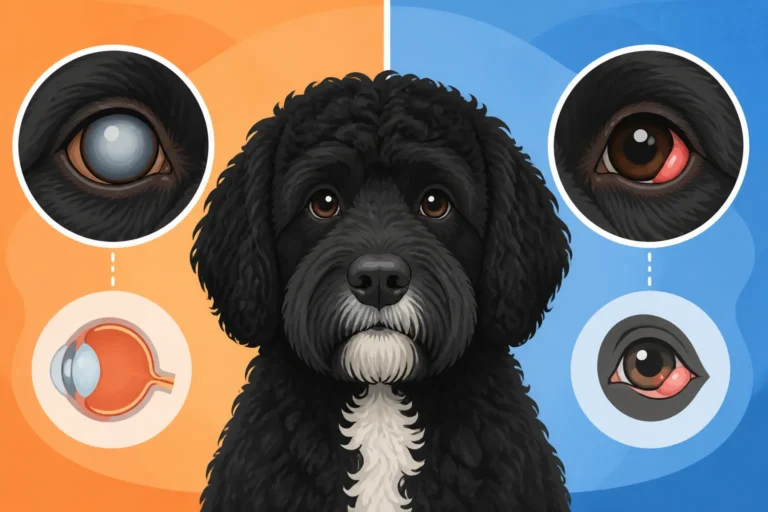
Two Kinds of Retinal Atrophy in a Portuguese Water Dog
It's incredibly distressing for any dog owner to notice their beloved companion struggling with their vision, especially when it seems to be progressing. For Portuguese Water Dog families, the term "retinal atrophy" often brings a knot of worry, specifically because this breed is known to be susceptible to two distinct forms: prcd-PRA and Early Onset PRA. This comprehensive guide will meticulously unravel both conditions, helping you understand their differences, the subtle signs to watch for, the crucial role of genetic testing, and how to best support your PWD should they be affected.
Understanding Progressive Retinal Atrophy PRA in Portuguese Water Dogs
When we talk about Progressive Retinal Atrophy, or PRA, it’s not just one single disease but rather a group of inherited degenerative diseases that affect the retina of the eye. Think of the retina as the film in an old camera – it’s responsible for capturing light and sending those images to the brain. In dogs with PRA, the photoreceptor cells within the retina, specifically the rods and cones, gradually deteriorate. Rods are crucial for vision in low light and detecting movement, while cones are responsible for day vision and color perception.
What is PRA and How It Affects Vision
Initially, the rods are usually the first to be affected, which means one of the earliest signs you might notice is your Portuguese Water Dog becoming more hesitant in dimly lit rooms or at dusk. They might start bumping into furniture that's been moved, or be less confident navigating familiar spaces when the lights are low. This isn't just clumsiness; it's a genuine struggle to see in those conditions. As the disease progresses, the cone cells also begin to degenerate, leading to a complete loss of daytime vision as well. This process is, unfortunately, irreversible, and it almost always leads to complete blindness.
It's a heartbreaking journey for owners, watching their vibrant, active PWD slowly lose their ability to see the world around them. The pace of this deterioration can vary significantly depending on the specific type of PRA, which is why understanding the distinctions is so important for Portuguese Water Dog owners. The good news is that most dogs adapt remarkably well to blindness, especially when their owners are proactive in helping them adjust.
The Genetic Basis of PRA in PWDs
Both forms of PRA found in Portuguese Water Dogs are inherited conditions, meaning they are passed down through the genes from parents to offspring. This is incredibly important for breeders and prospective puppy buyers to understand, as it underscores the necessity of responsible breeding practices. These diseases are autosomal recessive, which means a dog must inherit two copies of the faulty gene (one from each parent) to actually develop the condition.
A dog that inherits only one copy of the faulty gene is called a "carrier." Carriers typically do not show any symptoms of the disease themselves, but they can pass the gene on to their puppies. This silent transmission is what makes genetic testing so vital. Without testing, a breeder might unknowingly mate two carriers, and suddenly, a quarter of their litter could be affected by blindness. This genetic lottery is why reliable breeders are so transparent about their dogs' health clearances. If you're looking for a puppy, always ask what a Portuguese Water Dog breeder should have tested.
Why PWDs Are Particularly Susceptible
The Portuguese Water Dog, like many purebred dogs, has a relatively small gene pool, and certain genetic conditions can become more prevalent within the breed over generations if not carefully managed. The historical development of the breed, including periods where numbers were critically low, has led to a degree of genetic predisposition to specific health issues, including both prcd-PRA and Early Onset PRA.
This susceptibility isn't a fault of the breed itself, but rather a characteristic that requires diligent attention from breeders. Thanks to advances in veterinary genetics, we now have the tools to identify these genetic markers, allowing responsible breeders to make informed decisions that help minimize the risk of producing affected puppies. This commitment to genetic health helps ensure the long-term well-being of the breed. It's truly a testament to dedicated breed clubs and individual breeders who prioritize health.
Delving into prcd-PRA: The More Common Form
Among the two forms of Progressive Retinal Atrophy affecting Portuguese Water Dogs, prcd-PRA is arguably the one most commonly discussed and tested for. The "prcd" stands for "progressive rod-cone degeneration," which very accurately describes the disease's progression – it's a gradual breakdown of the vision cells. It's a condition that creeps up slowly, often making it hard for owners to pinpoint the exact moment vision started to decline.
When prcd-PRA Typically Appears
One of the defining characteristics of prcd-PRA is its late onset. You generally won't see signs of this condition in a young puppy. Instead, the symptoms typically begin to manifest when a Portuguese Water Dog is in its adult years, usually between 3 to 7 years of age. Some dogs might even show initial signs a bit later, around 5 or 6 years old, making it a condition that truly impacts their prime years.
This later onset can be particularly frustrating for owners because their dog has spent years as a perfectly sighted, active companion. The gradual nature means that changes might be so subtle at first that they're easily missed, or attributed to normal aging, especially if the dog is on the older side of that age range. It’s not uncommon for owners to suddenly realize their PWD has been navigating their environment differently for quite some time before connecting the dots to a vision problem. To learn more about this specific form, you can read What prcd PRA Does to a Portuguese Water Dog.
Signs and Progression of prcd-PRA
As mentioned, the very first signs of prcd-PRA often involve reduced night vision. You might notice your Portuguese Water Dog stumbling in the dark, being hesitant to go outside at night, or struggling to find their toys in dimly lit areas. They might be more prone to startle if approached suddenly in low light conditions. As the rod cells continue to deteriorate, this night blindness becomes more pronounced, eventually leading to a complete loss of night vision.
Following the night blindness, the cone cells begin their decline, leading to a loss of daytime vision. This part of the progression is also gradual, meaning your PWD's vision will slowly dim over months or even a few years until they become completely blind. Dogs are incredibly resilient, and they often compensate for their diminishing sight by relying more heavily on their other senses – their superb sense of smell and hearing. You might notice them relying more on familiar routes around the house or sticking closer to you. For a deeper understanding, explore The Age prcd PRA Appears in a Portuguese Water Dog.
Diagnosing prcd-PRA and Genetic Testing
The definitive diagnosis of prcd-PRA in Portuguese Water Dogs involves both a clinical eye examination by a veterinary ophthalmologist and, most importantly, a genetic DNA test. An ophthalmologist can identify characteristic changes in the retina, such as thinning or changes in reflectivity, even before significant vision loss is evident to the owner. They might also perform an electroretinogram (ERG), which measures the electrical responses of the cells in the retina to light. This test can detect retinal degeneration even at very early stages.
However, the genetic DNA test is the gold standard for identifying if a dog is affected, a carrier, or clear of the prcd-PRA gene mutation. This simple swab test, often done at home or by your vet, can provide crucial information for both diagnosis and breeding purposes. Reliable labs like OptiGen offer such tests. If you're considering a PWD puppy, insist on seeing the parents' genetic test results for prcd-PRA. This proactive step helps ensure you're bringing home the healthiest possible companion. It's part of The Four DNA Tests Every Portuguese Water Dog Breeder Runs as a standard.
Exploring Early Onset PRA: A Rapid Deterioration
While prcd-PRA is a slow, insidious creep towards blindness, Early Onset PRA (EO-PRA) in Portuguese Water Dogs is a much more aggressive and heartbreaking condition. As its name suggests, it strikes much earlier in a dog's life, and its progression is swift, leaving owners with little time to adjust to the profound changes their young dog experiences.
The Distinct Nature of Early Onset PRA
Unlike prcd-PRA, which typically becomes noticeable in adult dogs, Early Onset PRA can affect puppies as young as a few months old, often before they even reach their first birthday. This makes it particularly devastating, as these puppies are still very much in their developmental stages, full of youthful exuberance, only to have their world rapidly dim. The genetic mutation responsible for EO-PRA is different from prcd-PRA, resulting in a much faster and more complete degeneration of the retinal photoreceptor cells.
This rapid onset means that there's less opportunity for the dog to gradually adapt to vision loss. A PWD puppy with EO-PRA might go from seeing perfectly well to being completely blind within a matter of months, sometimes even weeks. This can be incredibly disorienting and frightening for the puppy, and equally distressing for their human family who suddenly has to navigate caring for a visually impaired young dog. You can learn more about this particular disease by reading What Early Onset PRA Does to a Portuguese Water Dog.
Early Signs and Accelerated Progression
The early signs of Early Onset PRA often become apparent when the Portuguese Water Dog puppy is between 6 to 12 months old. Owners might first notice clumsiness, particularly in unfamiliar environments or in low light. A puppy that previously navigated obstacles with ease might start bumping into things. Their play might become less confident, or they might struggle to track moving toys. Unlike the subtle night blindness of prcd-PRA, the vision loss with EO-PRA can appear quite dramatic.
The progression from initial signs to complete blindness is typically very fast. Within a few months of the first symptoms appearing, many affected PWDs will be fully blind. This accelerated timeline requires owners to act quickly in adapting their home and training to support their puppy. It emphasizes the importance of early detection and the ethical responsibilities of breeders to prevent such conditions. For specific age ranges, see The Age Early Onset PRA Appears in a Portuguese Water Dog.
Genetic Testing and Breeder Responsibilities for Early Onset PRA
Similar to prcd-PRA, genetic testing is the only way to definitively identify Portuguese Water Dogs that are affected by, carriers of, or clear of the EO-PRA gene mutation. Because of its devastating and rapid nature, it is absolutely paramount that all breeding Portuguese Water Dogs are tested for the EO-PRA gene mutation. This test is a simple buccal swab, and the results are conclusive. Reputable breeders will always provide documentation of these tests for both parents of a litter.
A responsible breeder would never knowingly breed two carriers of the EO-PRA gene, as this significantly increases the risk of producing affected puppies. While carriers are healthy themselves, mating them could lead to heartbreak for puppy buyers. The existence of a reliable genetic test means there is no excuse for breeding dogs without knowing their EO-PRA status. This diligence is a cornerstone of responsible breeding practices and helps protect the breed from these painful conditions. It's a key part of the information you'd find in Which Health Tests a Portuguese Water Dog Breeder Should Run.
Living with a Portuguese Water Dog Losing Its Sight
Discovering that your Portuguese Water Dog is losing its sight to PRA can feel overwhelming, like a punch to the gut. The immediate thoughts often jump to "how will they cope?" and "what do I do now?" But I want to assure you, dogs are incredibly resilient and adaptable. With a little planning, patience, and love, a blind Portuguese Water Dog can still live a full, joyful, and surprisingly normal life. Many PWDs, even those who go fully blind, continue to enjoy their favorite activities, including swimming! You might be surprised to read How a Blind Portuguese Water Dog Still Swims.
Adapting Your Home for a Visually Impaired PWD
The first and most crucial step in helping your Portuguese Water Dog adjust to vision loss is to create a safe and predictable environment within your home. Consistency is key. Try to keep furniture and their food and water bowls in the same place. If you must move something, guide your dog around the new arrangement a few times so they can remap their internal navigation.
Block off stairs with baby gates to prevent accidental falls. Cover sharp corners on furniture with bumpers. Lay down different textures of rugs in key areas (e.g., near the backdoor or food bowl) to provide sensory markers. Consider using scent markers – a drop of essential oil (diluted and dog-safe, like lavender) on a rug near their bed or a doorway can help them orient themselves. When bringing new items into the house, introduce them slowly and let your PWD explore them safely with their nose. Many people wonder Whether a Portuguese Water Dog Goes Fully Blind, and when they do, these adaptations are critical.
Maintaining Quality of Life Through Other Senses
Since their eyes are failing, your Portuguese Water Dog will lean heavily on their other incredible senses – smell, hearing, and touch. This is where you can truly enrich their world and maintain their quality of life. Engage them with scent games: hide treats or their favorite squeaky toy and let them sniff them out. Use verbal cues consistently for everything: "step up," "step down," "wait," "left," "right." Your voice becomes their guiding light.
Invest in toys that make noise or have strong scents. Scent work, even simple sniffing walks in a safe, familiar park, can be incredibly stimulating and fulfilling. Continue regular walks on a leash in familiar areas, talking to them constantly, letting them know what's coming up. Many PWDs, with their incredible webbed feet and love for water, still thrive in safe swimming environments, guided by your voice and their own instincts. Remember, a blind dog isn't broken; they just experience the world differently, and it’s up to us to help them interpret it.
Support Systems and Resources for Owners
You don't have to face this journey alone. There are numerous support systems available for owners of blind dogs. Online forums and social media groups dedicated to blind dogs can be invaluable sources of practical advice, emotional support, and shared experiences. Organizations like the American College of Veterinary Ophthalmologists (ACVO) can help you find a specialist in your area, and they often have resources for owners of visually impaired pets.
Talking openly with your veterinarian and potentially a veterinary behaviorist can also provide tailored strategies for your individual dog. Pet insurance providers like Healthy Paws often cover diagnostic tests and management for conditions like PRA, which can significantly ease the financial burden. Being prepared and knowing your options can make a huge difference in navigating this challenging time with your beloved Portuguese Water Dog. And don't forget to maintain your regular vet check-ups; Caring for a Portuguese Water Dog Past Nine becomes even more important when vision is compromised.
| Feature | prcd-PRA (Progressive Rod-Cone Degeneration) | Early Onset PRA (EO-PRA) |
|---|---|---|
| Typical Onset Age | Usually 3-7 years (adult onset) | Usually 6-12 months (puppy/juvenile onset) |
| Progression Rate | Gradual, slow deterioration over months to a few years | Rapid, swift deterioration over weeks to a few months |
| First Signs | Night blindness, hesitation in low light | Clumsiness, bumping into objects, reluctance to move in new areas (even in light) |
| Genetic Basis | Autosomal recessive inheritance, specific gene mutation | Autosomal recessive inheritance, different specific gene mutation |
| Genetic Test | Available and highly recommended for breeding animals | Available and absolutely essential for breeding animals |
| Visual Outcome | Leads to complete blindness over time | Leads to complete blindness quickly |
| Impact on Dog | More time to adapt to gradual changes | Less time to adapt, more disorienting for young dogs |
The Critical Role of Genetic Testing in Breeding
When it comes to managing inherited diseases like PRA, genetic testing isn't just a recommendation; it's a moral imperative for responsible Portuguese Water Dog breeders. The knowledge gained from these tests empowers breeders to make informed decisions that actively reduce the incidence of these debilitating conditions, protecting future generations of PWDs from the heartbreak of early or progressive blindness.
How DNA Tests Prevent PRA
DNA tests work by identifying specific gene mutations known to cause prcd-PRA and EO-PRA. For each condition, a dog's genetic status can be classified into one of three categories:
- Clear (or Normal): The dog does not carry the gene mutation and cannot pass it on to offspring.
- Carrier: The dog carries one copy of the gene mutation but will not develop the disease itself. It can pass the gene to 50% of its offspring.
- Affected: The dog carries two copies of the gene mutation and will develop the disease. It will pass the gene to 100% of its offspring.
With this information, breeders can strategically plan matings. For instance, a clear dog can be bred with a carrier without producing affected puppies, though some offspring will still be carriers. Breeding two clear dogs ensures all puppies are clear. The critical rule is never to breed two carriers together, as this carries a 25% chance of producing affected puppies, a 50% chance of producing carriers, and only a 25% chance of producing clear puppies. This careful planning prevents the tragic birth of puppies destined for blindness. This is why it's so important that The Four DNA Tests Every Portuguese Water Dog Breeder Runs are truly understood.
Understanding Carrier Status and Breeding Decisions
The concept of a "carrier" is often misunderstood, sometimes leading to the mistaken belief that carrier dogs should be removed from breeding programs entirely. However, responsibly breeding carriers is often essential for maintaining genetic diversity within a breed. If all carriers were immediately removed, especially in a breed with a somewhat limited gene pool like the Portuguese Water Dog, it could severely reduce genetic diversity, potentially leading to an increase in other genetic problems or a general weakening of the breed's health and vigor.
Instead, the responsible approach is to use carriers wisely. A carrier dog, being healthy itself, can be a valuable part of a breeding program if carefully paired with a "clear" mate. This allows desirable traits (temperament, conformation, working ability) from the carrier to be passed on, without producing affected offspring. The puppies from such a mating should then be tested, and any carriers identified would also be used judiciously in future generations, always bred to clear mates. This thoughtful strategy is fundamental to advancing breed health without sacrificing genetic robustness.
What a Portuguese Water Dog Breeder Should Have Tested
When you're looking for a Portuguese Water Dog puppy, knowing what health tests to expect from the breeder is non-negotiable. For both forms of PRA, both parents of a litter should have documented genetic test results. This means you should ask to see evidence of testing for prcd-PRA and EO-PRA. These results should come from reputable veterinary genetics laboratories. The Orthopedic Foundation for Animals (OFA) and the Canine Health Information Center (CHIC) are excellent resources where many breeders register their health clearances.
Beyond these two critical eye conditions, reputable breeders will also have clearances for other common PWD health concerns, such as hip and elbow dysplasia, as well as cardiac evaluations. They should be transparent about these results and be willing to discuss their breeding philosophy and how they use genetic testing to produce healthy puppies. If a breeder is evasive or doesn't have these tests, it's a significant red flag. Always verify these claims, rather than just taking their word for it. It's truly a part of What a Portuguese Water Dog Breeder Should Have Tested.
Navigating Diagnosis and Management with Your Vet
When you first suspect vision changes in your Portuguese Water Dog, the first call should always be to your veterinarian. Early intervention, even if just for diagnosis, is key to understanding the progression and planning for your dog's future needs. Your general practice vet is an essential partner in this journey, but often, the path leads to a specialist.
Initial Veterinary Assessment and Eye Exams
Your regular veterinarian will likely start with a thorough physical examination, including a basic ophthalmic exam. They'll check your dog's reflexes, observe their navigation in the exam room, and use an ophthalmoscope to look at the structures within the eye. They might notice changes in the retina, such as thinning or vascular attenuation, which are tell-tale signs of PRA. They'll ask you detailed questions about when you first noticed the changes, if they're worse at night, and any other behavioral shifts.
Based on their initial findings, your vet will discuss the possibility of PRA and the different forms it can take in Portuguese Water Dogs. They might recommend immediate genetic testing if your dog's status isn't known, which can confirm if one of the PRA mutations is present. This initial consultation is crucial for getting a baseline understanding of what might be happening with your dog's vision.
Specialist Referrals to Veterinary Ophthalmologists
If your general vet suspects PRA, or if they identify any concerning changes during the initial exam, they will almost certainly recommend a referral to a board-certified veterinary ophthalmologist. These specialists have advanced training and equipment to perform more sophisticated diagnostic tests. They can conduct an electroretinogram (ERG), which measures the electrical activity of the retina in response to light, providing a detailed picture of retinal function and confirming the diagnosis of PRA even before overt clinical signs are severe.
The ophthalmologist can also differentiate between the various types of PRA if genetic test results aren't yet available, based on the specific patterns of retinal degeneration and the dog's age. This specialized expertise is invaluable, as it ensures an accurate diagnosis, which is the cornerstone of effective management. They will also be the best resource for discussing the expected progression of the disease and any comfort measures or adaptations you might need to implement. It’s also important to remember Whether a Portuguese Water Dog Needs a Yearly Eye Exam, especially if there are any concerns.
Ongoing Care and Monitoring for PWDs with PRA
Once a diagnosis of PRA is confirmed in your Portuguese Water Dog, ongoing care focuses primarily on maintaining their quality of life and adapting to their progressive vision loss. There is currently no cure or effective treatment to reverse or halt the progression of PRA. However, regular check-ups with your vet and ophthalmologist are still important.
These appointments allow the veterinary team to monitor your dog's overall eye health, check for any secondary complications (like cataracts, which can sometimes occur alongside PRA but aren't caused by it), and provide guidance on environmental adjustments. They can also offer advice on pain management if your dog develops any discomfort, although PRA itself is not usually painful. The focus shifts to enrichment and creating a safe, stimulating world for your blind companion, ensuring they can continue to thrive using their other incredible senses. Pet insurance providers, such as Healthy Paws, often offer coverage for these diagnostic and follow-up visits, which can be a significant help for long-term care.
Dispelling Myths and Setting Realistic Expectations
When faced with a diagnosis of PRA in your Portuguese Water Dog, it's natural to feel a whirlwind of emotions and perhaps jump to worst-case scenarios. However, it's important to dispel common myths and approach the situation with realistic, yet hopeful, expectations. A blind dog's life doesn't end with vision loss; it simply changes, and with our help, it can remain incredibly rich and fulfilling.
Misconceptions About PRA and Blindness
One of the biggest misconceptions is that a blind dog will be constantly sad, helpless, or unable to enjoy life. This simply isn't true. Dogs don't process blindness with the same emotional complexity as humans. While the initial adjustment period can be challenging and a bit disorienting for them, especially with rapid-onset conditions like EO-PRA, most dogs adapt remarkably well, often surprising their owners with their resilience. They live in a world primarily defined by scent and sound, and their loss of sight shifts these other senses into overdrive.
Another myth is that blindness is painful. PRA itself is a degenerative condition of the retina and is not inherently painful. Any discomfort a blind dog might experience is usually due to secondary issues, such as bumping into objects, or other unrelated health problems. It's crucial not to conflate vision loss with suffering; with proper care and environmental adaptations, a blind Portuguese Water Dog is often a happy, active dog.
The Remarkable Adaptability of Blind PWDs
The Portuguese Water Dog is an intelligent, tenacious, and incredibly adaptable breed, traits that serve them well if they lose their sight. Their strong work drive and desire to please their owners mean they are often eager to learn new ways to navigate and interact with their environment. They quickly learn to rely on scent trails, sounds, and familiar textures underfoot.
Owners often report that their blind PWDs become even more bonded and attentive to them, relying on their voice and touch for guidance. Many continue to enjoy walks, play fetch (with a noisy ball!), and even swim, often with just a little extra support and confidence from their human companions. Their ability to adjust is truly inspiring and serves as a powerful reminder that blindness does not equate to a diminished spirit. The difference between the two diseases is important when considering how a dog will adapt; How the Two Portuguese Water Dog Eye Diseases Differ in their speed of progression can impact this.
Future Research and Potential Treatments
While there is currently no cure for prcd-PRA or EO-PRA, and no way to restore lost vision, research in veterinary ophthalmology is continually advancing. Scientists are exploring various avenues, including gene therapy and stem cell therapies, to potentially prevent or even reverse retinal degeneration in the future. These are complex challenges, but the dedication of researchers offers hope for future generations of dogs.
In the meantime, the focus remains on genetic testing for breeders to minimize the incidence of these diseases, and for owners, on providing the best possible quality of life for their visually impaired Portuguese Water Dogs. Staying informed about new research and therapies, and supporting canine health foundations, can contribute to these ongoing efforts to combat inherited eye diseases in our beloved companions.
Disclaimer
This article is intended for informational purposes only and does not constitute veterinary medical advice. Always consult with a qualified veterinarian or veterinary ophthalmologist for any health concerns or before making any decisions about your Portuguese Water Dog's health or treatment.