How a Portuguese Water Dog Drove Fish Toward a Net
Have you ever wondered how a dog, without opposable thumbs or the ability to speak, could possibly help a fisherman with something as complex as herding fish into a net? It sounds almost unbelievable, like something out of a tall tale. Yet, for centuries, this was precisely the daily reality for the magnificent Portuguese Water Dog. These intelligent, athletic canines weren't just companions; they were indispensable crew members, and understanding their unique methods helps us truly appreciate the depth of their working heritage.
A Deep Dive into the Portuguese Water Dog's Historical Role
Before we get into the nitty-gritty of how these incredible dogs managed to round up finned creatures, it's crucial to understand the world they lived in. This wasn't a leisure activity; it was their job, passed down through generations, essential for the livelihood of their human partners. The bond between the Portuguese Water Dog and the fisherman was built on mutual reliance and an almost uncanny understanding.
The Algarve Coast and Its Fishing Heritage
Imagine the rugged, beautiful coastline of Portugal's Algarve region, long before modern trawlers and sophisticated sonar systems. Fishing was a demanding, labor-intensive industry, often carried out from small, open boats by families who depended entirely on their daily catch. These were not recreational outings; they were vital expeditions. The fishermen of the Algarve needed every advantage they could get, and that's where their loyal, skilled canine companions came in. These dogs were literally part of the family and part of the crew, navigating the unpredictable waters and assisting with tasks that humans simply couldn't perform as efficiently. Their lives, and often the lives of their human counterparts, were intrinsically linked to the sea and the bounty it provided. The specific needs of these coastal communities shaped the breed, honing their instincts and physical attributes over centuries. This heritage is so foundational that it's impossible to talk about the breed without honoring The Portuguese Water Dog Worked the Algarve Fishing Fleet.
More Than Just a Pet: Understanding Their Working Instincts
A Portuguese Water Dog wasn't bred to be a pampered lapdog. Far from it! These dogs were developed to be hardy, intelligent, and supremely adaptable working partners. Their instincts weren't just for fetching sticks; they were geared towards problem-solving in a marine environment. Think about what a working dog needs: resilience, focus, immense physical stamina, and a keen ability to read its handler and the situation. The Portuguese Water Dog possessed all of these traits in spades. Their ancestors were likely brought to Portugal centuries ago, evolving alongside the fishing communities and becoming specialists in aquatic tasks. This deep-seated drive to work, especially in water, remains a hallmark of the breed today. Even if your modern PWD has never seen a fishing net, that genetic blueprint for working and retrieving is still there, ready to be channeled into activities like Dock Diving and Water Trials With a Portuguese Water Dog. Many Portuguese Water Dog owners, when purchasing supplies like durable chew toys or high-quality performance food, might turn to a retailer like Chewy, recognizing the need to support their dog's inherent energy and drive.
The Unique Canine "Fishing" Techniques
So, how did they actually do it? It wasn't about teaching them to cast a line or pull up a heavy net directly. Their role was far more nuanced, leveraging their natural behaviors and a highly developed sense of teamwork. It was a ballet of instinct, training, and trust between species.
Barking, Splashing, and Subtlety: How They Communicated with Fish (and Fishermen)
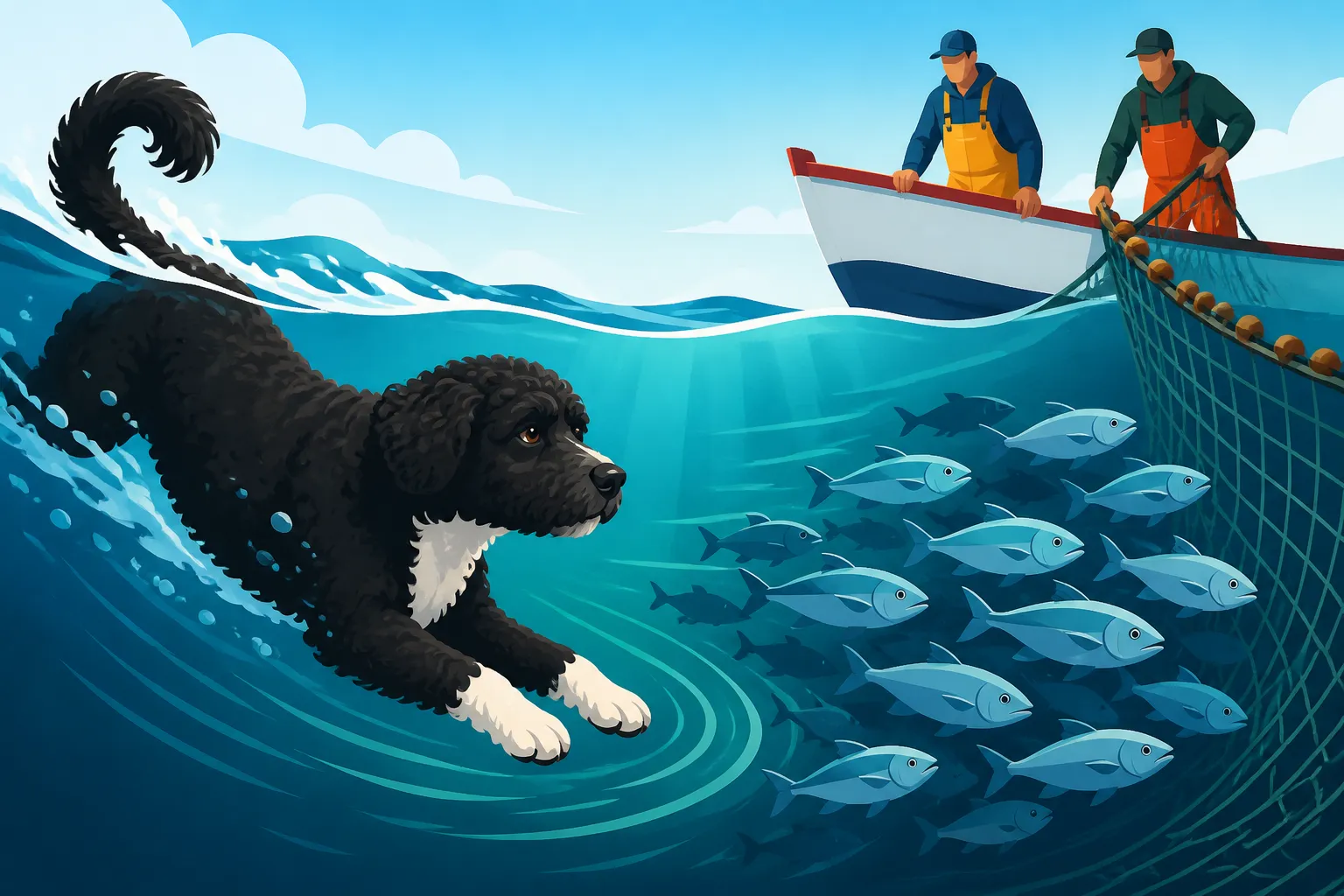
Imagine a fishing boat with a net already cast, but the fish aren't quite where they need to be. This is where the Portuguese Water Dog truly shone. Their primary method of driving fish was a combination of controlled commotion. They would plunge into the water near the open end of the net or an area where fish were trying to escape, using their powerful swimming abilities and distinct barks and splashes to create a "wall" of activity.
It wasn't random chaos, though. Fishermen would direct their dogs with hand signals and vocal commands, guiding them to specific areas. The dog would then use its body—its strong webbed paws creating turbulence, its deep barks echoing over the water—to gently, yet persistently, nudge the fish towards the waiting net. This was an art form; too much aggression, and the fish would scatter; too little, and they wouldn't move. The dogs learned to gauge the right amount of pressure. It was a skill that required incredible intelligence and an understanding of fish behavior, a testament to How a Portuguese Water Dog Worked a Net. Their vocalizations weren't just random noise; they were a key part of their working toolkit.
The Power of the Webbed Paw and Rudder Tail
The physical attributes of the Portuguese Water Dog are not accidental; they are direct results of their historical occupation. Their magnificent, powerful build is perfectly suited for water work.
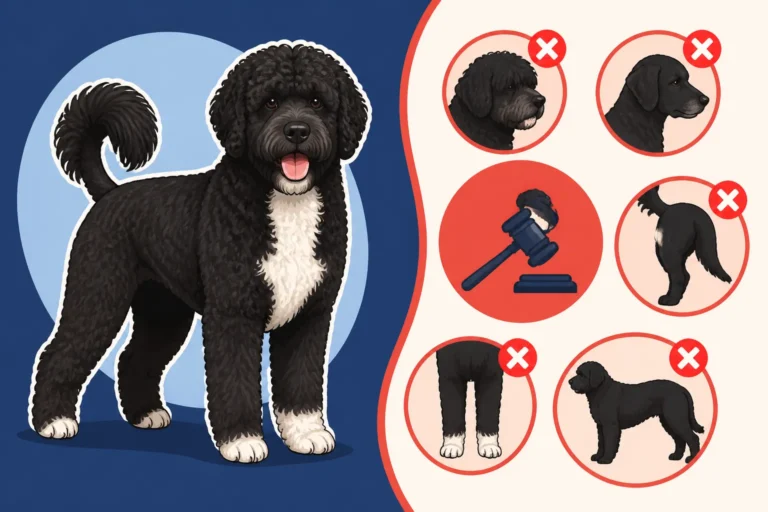
- Webbed Feet: This is perhaps their most defining physical characteristic. Unlike many breeds, the Portuguese Water Dog has prominent webbing between its toes. This isn't just a quirky trait; it's an evolutionary advantage. These webbed paws act like natural flippers, significantly increasing their propulsion in the water. This allows them to swim with incredible speed and agility, making tight turns and maneuvering effortlessly even in choppy conditions. This unique adaptation was vital for their role in the fishing fleet, enabling them to outmaneuver escaping fish and cover large areas of water quickly. Learning about How Much a Portuguese Water Dog's Webbing Adds to Its Speed really highlights this design marvel.
- Rudder Tail: Have you ever noticed how a Portuguese Water Dog's tail is thick at the base and tapers, often carried in a distinctive upward curve when alert or working? This isn't just for show. Their tail functions like a powerful rudder, giving them exceptional control and balance in the water. It allows them to change direction rapidly, brake suddenly, and maintain stability even against strong currents or when making sudden movements to herd fish. This combination of webbed feet and a powerful tail made them unparalleled aquatic athletes, truly masters of their watery domain. Why a Portuguese Water Dog's Tail Works as a Rudder further explains this fascinating adaptation.
Training and Instinct: The Partnership Between Dog and Fisherman
It wasn't enough for a Portuguese Water Dog to simply have the right physical traits and innate instincts; they also needed rigorous training and a strong bond with their human handlers. This partnership was the cornerstone of their success.
Harnessing Natural Drives: How Fishermen Taught and Guided Their Dogs
The training of a Portuguese Water Dog for fishing work began early and was deeply integrated into their daily lives. It wasn't about formal obedience classes in a sterile environment; it was about practical, hands-on learning in real-world scenarios. Fishermen understood the breed's natural retrieve drive and inherent love for water. They didn't have to teach a Portuguese Water Dog to love the water, but rather to channel that enthusiasm effectively.
Puppies would often accompany their mothers on fishing trips, observing and learning by example. Older dogs would mentor the younger ones, demonstrating the specific techniques. Fishermen used consistent commands, hand signals, and whistles to direct their dogs, creating a complex communication system. Positive reinforcement, often in the form of praise, affection, or a retrieved toy, was key. These dogs were intelligent problem-solvers, and harsh corrections would often backfire, stifling their initiative. The goal was to foster a dog that could think for itself when needed, but also respond instantly to commands. This balance between independent thought and cooperative effort is a characteristic that many PWD owners still value today, even in activities far removed from fishing. Finding the right tools for this kind of training, like long lines or floating retrieve toys, can often be done through online pet supplies retailers like Chewy. This kind of mindful approach to working with a dog's natural intelligence is central to Training a Portuguese Water Dog That Was Bred to Think for Itself.
The Enduring Legacy of a Working Breed
Even though the traditional role of the Portuguese Water Dog in fishing has largely faded due to modernization of the industry, their legacy lives on. The traits that made them exceptional fishing partners—their intelligence, boundless energy, love for water, webbed feet, and distinctive coat—are what continue to define the breed today. Modern Portuguese Water Dogs still possess that incredible drive and need for a "job." If they don't have an outlet for their physical and mental energy, they can become bored and destructive. That's why many owners engage them in dog sports like agility, obedience, or, most fittingly, water trials and dock diving.
These dogs thrive when they have a purpose, whether it's retrieving a dummy from a lake, excelling in a competitive sport, or simply being an active, engaged family member. When considering what a Portuguese Water Dog needs every day, remember that deep-seated working heritage. They are happiest when they are challenged, both physically and mentally. This often includes carefully chosen, high-quality dog food to fuel their active lifestyles, which many owners source from reputable providers like Chewy. Their historical role also cemented their place as loyal, deeply bonded companions, a trait that continues to make them beloved members of countless families today.
Here's a quick look at the key elements of their fish-driving technique:
| Method / Adaptation | Description | Purpose |
|---|---|---|
| Barking & Splashing | Creating controlled noise and turbulence at the water's surface. | To startle and herd fish away from escape routes and towards the net. |
| Powerful Swimming | Exceptional speed and agility in water due to strong musculature. | To quickly cover distances and maneuver around fish, responding to cues. |
| Webbed Feet | Natural flipper-like paws with membranes between toes. | Increased propulsion and agility in water, allowing rapid movement. |
| Rudder Tail | Strong, tapering tail used for steering and balance. | Precise control and directional changes while swimming. |
| Retrieving Instinct | Innate drive to fetch objects and bring them back to their handler. | Used for retrieving lost tackle, broken nets, or messages between boats. |
| Intelligence & Focus | High capacity for learning and sustained attention on tasks. | To understand complex commands and work independently on specific tasks. |
The Portuguese Water Dog's ability to drive fish towards a net wasn't just a quirky trick; it was a sophisticated, collaborative effort rooted in centuries of working partnership between dogs and humans. It truly highlights the incredible capabilities and enduring spirit of this remarkable breed.
Disclaimer
This article is for general informational purposes only and does not constitute professional advice. Laws, prices and regulations vary by location and change over time. Consult a qualified professional for guidance on your specific situation.