How a Portuguese Water Dog Worked a Net
When you imagine a Portuguese Water Dog today, you probably picture a beloved family companion, perhaps excelling at dock diving or enjoying a swim in the backyard pool. But cast your mind back a century or two, and you'd find these incredible dogs working tirelessly on the fishing boats of Portugal's rugged coast. It's a fascinating history that speaks volumes about their intelligence and drive, and understanding how they worked a net truly reveals the heart of the breed. This guide dives deep into the specific, often dangerous, tasks these dogs performed, showcasing their invaluable role in a demanding industry and how those ancient instincts still shape the PWDs we know and love today.
A Life at Sea: The Portuguese Water Dog's Place on the Fishing Boat
Imagine the salty spray, the creaking of the wooden hull, and the guttural shouts of fishermen in the early morning fog. This was the world of the Portuguese Water Dog for centuries. They weren't just mascots; they were bona fide, four-legged crew members, essential to the daily survival and success of their human counterparts. Their lives were interwoven with the sea, and their tasks were as vital as any sailor's.
More Than a Pet: An Essential Crew Member
The concept of a "pet" as we know it today was a luxury many working people couldn't afford, especially those living off the unforgiving sea. For the Portuguese fishermen, their dogs were an investment, a tool, and a partner. Each dog had to pull its weight, literally and figuratively. They were expected to be hardy, intelligent, and utterly devoted to their human companions, facing the same dangers and enduring the same hardships.
These dogs were often born and raised on the boats or in small coastal villages, learning the rhythms of the sea from a very young age. They were taught to understand complex commands, often given by whistle or hand signals, amidst the chaos of a busy fishing operation. The bond forged between a fisherman and his Cão de Água was one of deep mutual respect and reliance, built on countless hours of shared work and trust. When they returned to port, these dogs would often guard the catch and equipment, always alert and ready for the next day's work. What a Portuguese Water Dog Was Bred to Do on a Boat
The Fishing Grounds of the Algarve Coast
The primary historical stomping grounds for these aquatic working dogs were along the sun-drenched, yet often tempestuous, coastline of Portugal, particularly the Algarve region. This area, famous now for its stunning beaches and resorts, was once a hub of traditional fishing, with small, sturdy boats venturing out daily to catch sardines, cod, and other local fish.
The waters off the Iberian Peninsula could be treacherous, with strong currents and unpredictable weather shifts. The fishing communities were tight-knit, and survival depended on successful hauls. The techniques employed were often labor-intensive, relying on human strength, skill, and the keen senses of their canine partners. Without modern navigation or communication, the dogs' natural instincts and physical prowess were indispensable assets in these challenging environments.
The Traditional Fishing Methods Requiring Canine Assistance
Many types of fishing nets were used, but the most common for which the Portuguese Water Dog gained renown was the "seine net." This large net is deployed in a wide arc, often encircling a school of fish, and then gradually drawn in, either to the shore or a waiting boat. The challenge was immense: managing a massive net in open water, often with currents pulling against it, and making sure the fish stayed contained until the net could be fully retrieved.
It was in this specific, demanding scenario that the Portuguese Water Dog truly shone. The dogs weren't just there for moral support; they played an active, critical role in maneuvering the nets, herding the fish, and ensuring the success of the catch. The complexity of these tasks required more than just brute strength; it demanded problem-solving abilities and a deep understanding of the fishing process.
Mastering the Net: Driving Fish and Retrieving Lines
The real magic happened when the nets went into the water. This wasn't about a dog playing fetch in a pond; this was about strategic, coordinated effort. The Portuguese Water Dog was bred to be an active participant in the entire fishing process, from driving the fish into the net to retrieving vital equipment. Their contributions directly impacted the livelihood of the fishermen.
The Art of Herding Fish into the Net
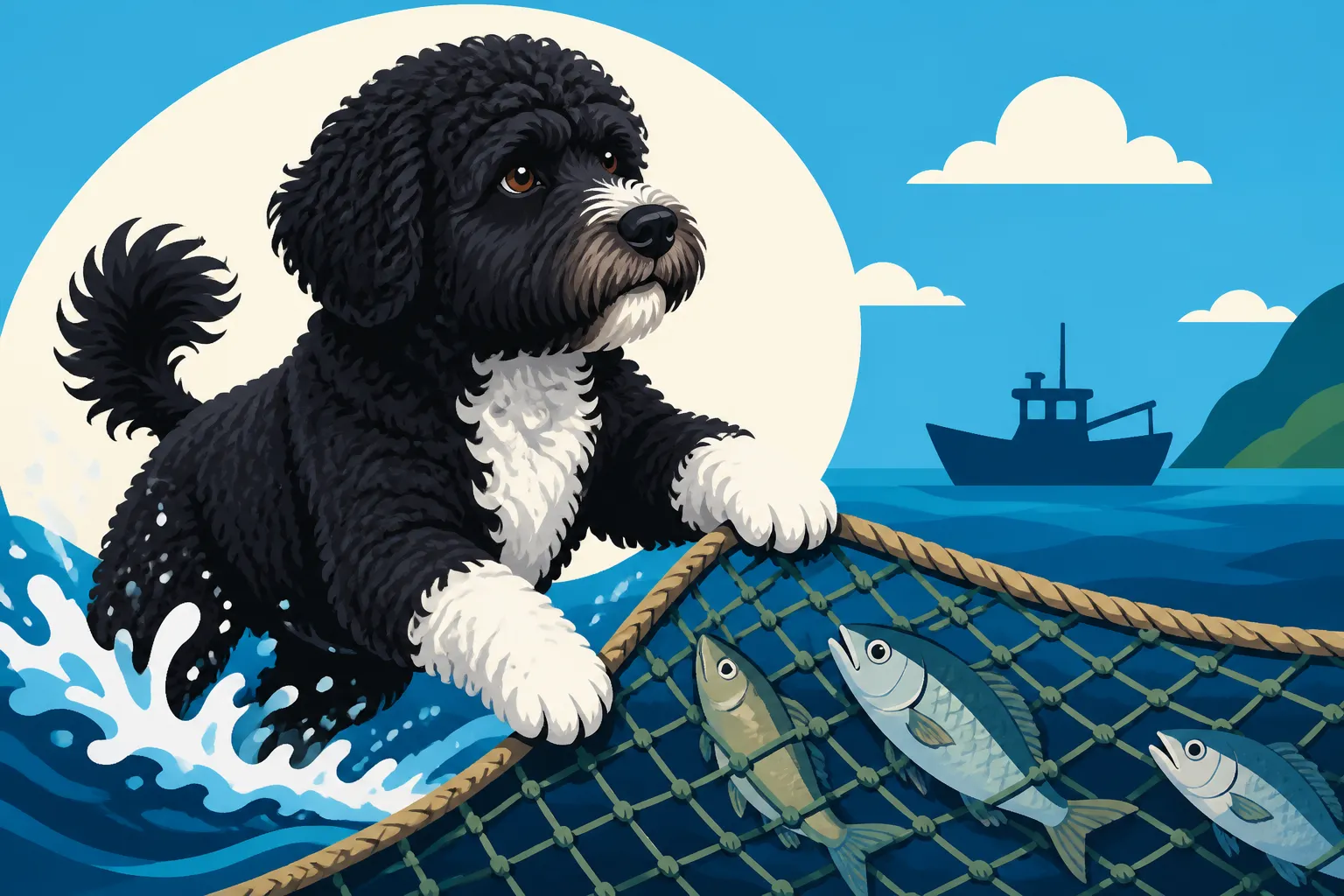
This is perhaps the most iconic and often misunderstood aspect of the Portuguese Water Dog's historical work. When a school of fish was located, and the seine net deployed, the dogs would often be sent out into the water to "herd" the fish towards the net's opening. How did they do this? It wasn't about physically biting or pushing fish, but rather a brilliant combination of sound, movement, and visual intimidation.
The dogs would swim in specific patterns, often in a semi-circle behind the fish, splashing, barking, and even diving briefly. This commotion created an underwater "wall" of sound and motion that would naturally drive the fish to move away from the dogs and, crucially, directly into the waiting net. It was a sophisticated form of aquatic sheepdog work, requiring incredible stamina, intelligence, and the ability to work in sync with the fishermen's signals. Imagine trying to coordinate such a nuanced task with a dog in the vast, open ocean – it speaks volumes about their innate abilities. How a Portuguese Water Dog Drove Fish Into a Net
Retrieving Broken Lines and Lost Gear
Beyond the dramatic act of herding fish, the Portuguese Water Dog also performed countless acts of retrieval that were absolutely vital to the fishermen's operations. In the harsh conditions of the sea, lines could snap, buoys could drift away, and valuable fishing tackle could be lost overboard. For a small fishing crew, losing equipment wasn't just an inconvenience; it could mean a significant financial blow or even an end to the day's work.
This is where the dogs' keen eyesight, excellent memory, and unwavering retrieving instinct came into play. They would often dive into the choppy waters, locate the lost items, and bring them back to the boat. This wasn't always easy; currents could carry items quickly, and visibility underwater could be poor. Their powerful swimming ability and natural tenacity meant they wouldn't give up easily, often retrieving items that would otherwise be permanently lost. This task alone saved fishermen considerable time and money, underscoring their economic value. Whether a Portuguese Water Dog Retrieved Lost Tackle The skill to retrieve from the water is still something modern PWDs enjoy, whether it's a floating toy or a dummy in a water trial. Whether a Portuguese Water Dog Still Retrieves
Guiding the Net Back to Shore or Boat
Once the fish were herded into the net, the work wasn't over. The heavy net, laden with fish, needed to be pulled in. This could be an arduous task, especially if the net was extensive or the sea was rough. The Portuguese Water Dogs would often assist with this, too. They might grasp parts of the net or ropes in their mouths, helping to pull them towards the boat or shore.
They would act as an extra pair of "hands," providing tension or direction as needed. Their presence could also help maintain the net's shape, preventing fish from escaping as it was being hauled. This level of cooperation and understanding between dog and human demonstrates a sophisticated partnership, far beyond what most people associate with canine abilities. They understood the objective and played their part in the team effort, a testament to their deep bond and training.
The Unique Adaptations for a Life at Sea
It wasn't just training and intelligence that made the Portuguese Water Dog an unparalleled asset to the fishing fleet. Their very physical structure and natural instincts were perfectly tailored for a life spent battling the elements and mastering the water. Every aspect of their physiology seemed purpose-built for their aquatic vocation.
The Webbed Paws and Powerful Swimming Ability
Perhaps the most distinctive physical feature of the Portuguese Water Dog, and one that immediately tells you about their heritage, is their magnificently webbed feet. These aren't just slightly joined toes; they are robust, clearly defined webs that act like natural flippers. This adaptation dramatically increases the surface area of their paws, providing incredible propulsion through the water. Imagine trying to swim with regular hands versus a diver's fins – it's a similar principle.
Coupled with these webbed paws are powerful, muscular hindquarters that provide the main driving force in the water. This combination allows them to swim with remarkable speed, agility, and endurance, even in choppy seas. They can dive, turn quickly, and navigate strong currents with a grace that belies their sturdy build. This physical prowess was absolutely essential for swimming long distances, often repeatedly, throughout a day's fishing. How Much a Portuguese Water Dog's Webbing Adds to Its Speed
The Distinctive Coat: Insulation and Buoyancy
The Portuguese Water Dog's coat is another marvel of natural engineering, perfectly suited for its working life in the water. Unlike many double-coated breeds, the PWD possesses a single coat, but it's dense, waterproof, and comes in two distinct textures: curly or wavy. This unique coat doesn't just shed minimally, which is a bonus for allergy sufferers, but it also provides exceptional insulation against the cold ocean waters.
The texture of the coat causes it to trap a thin layer of water against the skin, which then warms to body temperature, creating a natural wetsuit effect. This kept the dogs warm even after prolonged exposure to cold water. Furthermore, the density and structure of the coat provide a degree of buoyancy, making it easier for the dog to stay afloat and conserve energy while working tirelessly in the waves. However, this coat also meant that after a long day of work, or a vigorous swimming session, thorough drying was essential to prevent skin issues. Why a Portuguese Water Dog's Coat Holds Water This is still true for today's PWDs, which is why owners often invest in powerful force dryers, some even found on platforms like Amazon, to get their dogs thoroughly dry after a swim.
Intelligence and Independent Thinking for Complex Tasks
Beyond their physical attributes, the Portuguese Water Dog possessed an exceptional level of intelligence and, crucially, a capacity for independent thought. They weren't just programmed to follow simple commands; they were expected to understand the overall objective and, sometimes, to improvise when conditions changed or unexpected situations arose. A fisherman couldn't always be giving precise instructions amidst the roar of the ocean and the chaos of the catch.
This meant the dogs had to assess situations, make quick decisions, and adapt their actions to best achieve the goal. Whether it was adjusting their swimming pattern to account for a change in current while herding fish or finding a piece of lost gear in murky water, their problem-solving skills were paramount. This independent thinking, combined with their eagerness to please and high trainability, made them indispensable partners rather than mere tools. This trait is still evident in modern PWDs, who often thrive with jobs and intellectual challenges. Training a Portuguese Water Dog That Was Bred to Think for Itself
The Decline of a Working Legacy and Modern Echoes
The world changed, and with it, the traditional role of the Portuguese Water Dog. While their ancestral job may have faded, the incredible spirit, intelligence, and physical prowess they developed over centuries of working the nets remain vibrant in the breed today. Modern PWDs are a living testament to their seafaring ancestors.
The Advent of Technology and the Changing Fishing Industry
The industrial revolution eventually reached the fishing villages of Portugal. The mid-20th century brought significant technological advancements that slowly, but surely, began to render the traditional role of the working water dog obsolete. The introduction of motorized fishing boats meant fishermen could cover more ground faster, no longer relying on sails or oars. These engines also had the power to pull in heavy nets, eliminating the need for canine assistance.
New, stronger synthetic nets replaced the old natural fiber ones, making them more durable and easier to manage mechanically. Furthermore, advancements like sonar and GPS made it easier to locate fish schools and navigate the open waters, reducing the reliance on a dog's keen senses. The efficiency and scale of modern fishing operations simply didn't have a place for a four-legged crew member. It's a sad truth that technological progress often displaces ancient traditions and partnerships. How Engines Ended the Portuguese Water Dog's Job
From Fishing Companion to Cherished Family Member
As their working roles diminished, the breed itself faced a crisis. By the early 20th century, the Portuguese Water Dog was on the brink of extinction, with only a handful of individuals remaining. It was only through the dedicated efforts of enthusiasts and breeders, who recognized the breed's unique qualities and rich history, that the Portuguese Water Dog was saved from vanishing entirely. The Portuguese Water Dog Was Almost Gone by the 1930s
These devoted individuals championed the breed, shifting its focus from a working animal to a cherished companion and sport dog. The intelligence, vigor, and loving nature that made them excellent fishing partners also made them wonderful family pets. Their hypoallergenic coat, though historically important for insulation, became a desirable trait for families with allergies, further solidifying their place in modern homes.
Modern Sports and Activities That Honor Their Heritage
While few Portuguese Water Dogs today will ever herd fish into a net, their powerful instincts and physical capabilities are still celebrated and utilized in a variety of modern dog sports and activities. It's truly inspiring to see how these dogs, once so integral to a demanding profession, have transitioned into excelling at contemporary challenges that tap into their core breed traits.
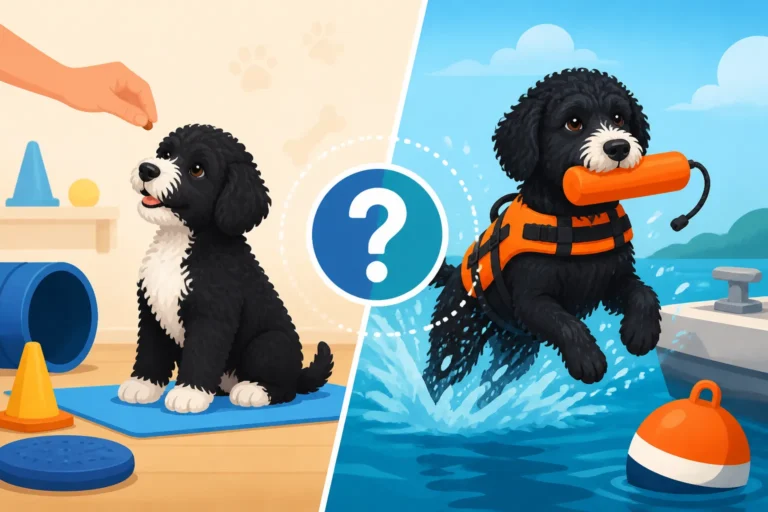
One of the most popular activities is dock diving, where dogs leap off a dock into a pool of water, retrieving a toy. This directly channels their retrieving instinct, powerful swim drive, and love for water. Similarly, water trials are designed to mimic their historical working tasks, requiring dogs to retrieve objects from the water, often from a boat or shore, and deliver them back. These trials are fantastic ways for PWDs to flex their ancestral muscles and for owners to connect with the breed's heritage. Dock Diving and Water Trials With a Portuguese Water Dog The rigorous tasks involved in a master-level water trial, for example, truly test a dog's intelligence, obedience, and aquatic prowess. What a Water Trial Asks of a Portuguese Water Dog
Beyond water sports, their intelligence and biddability make them excellent candidates for agility, obedience, rally, and even scent work. Many PWD owners also engage in hiking, running, or simply long swims, ensuring these active dogs get the physical and mental stimulation they crave. For those looking to channel that incredible intelligence and drive, resources like BAXTER & Bella offer online training programs that can help owners effectively train their Portuguese Water Dog for various activities, embracing their working spirit in a modern context.
Here's a quick look at how their historical work compares to their modern activities:
| Aspect | Traditional Working Role (Fishing Boats) | Modern Activities (Companion & Sport) |
|---|---|---|
| Primary Purpose | Aid fishermen in catching fish, retrieve gear | Companionship, dog sports, family pet |
| Environment | Open ocean, fishing boats, often harsh weather | Homes, dog parks, lakes, pools, competition venues |
| Key Skills Used | Fish herding, retrieving, navigating nets | Dock diving, water trials, agility, obedience |
| Independent Action | High – often worked independently to drive fish | Moderate – follows commands, but retains intelligence |
| Social Structure | Integral part of a small, tight-knit fishing crew | Family member, socializes with other dogs |
| Physical Demands | Extremely high – constant swimming, diving | High – needs consistent exercise and mental stimulation |
| Training Focus | Instinctive work, boat etiquette | Positive reinforcement, specific sport skills |
The history of the Portuguese Water Dog working a net is a remarkable tale of canine intelligence, athleticism, and partnership. It reminds us that these dogs are so much more than just a pretty face; they carry the legacy of centuries of hard work and loyalty in their DNA. Understanding this heritage allows us to appreciate their unique qualities and provide them with the fulfilling lives they deserve today.
Disclaimer
This article is for general informational purposes only and does not constitute professional advice. Laws, prices and regulations vary by location and change over time. Consult a qualified professional for guidance on your specific situation.