What an ACTH Test Costs on a Portuguese Water Dog
It's incredibly stressful when your beloved Portuguese Water Dog isn't acting quite right, and your vet suspects something serious like Addison's disease. The thought of a major illness is overwhelming enough, let alone the worry about the diagnostic process and its costs. This guide will walk you through exactly what an ACTH stimulation test entails for your PWD, why it's so important, and provide a realistic breakdown of the expenses you can expect, helping you prepare for what lies ahead.
Understanding the ACTH Stimulation Test for Your PWD
When your vet suggests an ACTH stimulation test, it's usually because they suspect your Portuguese Water Dog might be suffering from Addison's disease. This isn't a test given lightly, as it's a specific diagnostic tool for a complex condition. Understanding what it is and why it's performed can help alleviate some of the natural anxiety that comes with veterinary procedures.
Why the ACTH Test is Crucial for Suspected Addison's Disease
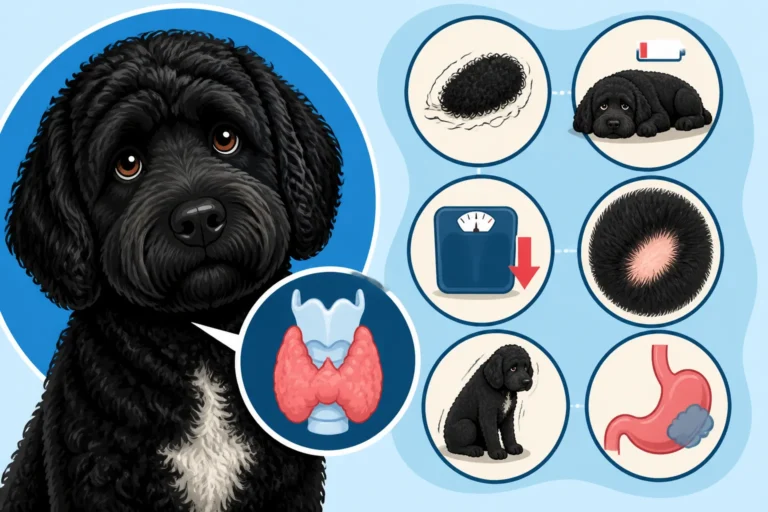
Addison's disease, also known as hypoadrenocorticism, is a condition where your dog's adrenal glands don't produce enough essential hormones, specifically cortisol and aldosterone. What makes Addison's so insidious is that it's often called "Why Addisons Is Called the Great Pretender in a Portuguese Water Dog" because its symptoms are incredibly vague and can mimic so many other common ailments. You might see your Portuguese Water Dog experiencing lethargy, vomiting, diarrhea, a poor appetite, or even just a general "off" feeling that's hard to pinpoint. These are all common issues that could be anything from a stomach bug to something far more serious.
Because the signs are so non-specific, a definitive diagnostic test is absolutely vital. You can't just guess with Addison's. Untreated, it can lead to a life-threatening "Addisonian crisis," where your dog's system collapses, requiring emergency intervention. The ACTH stimulation test is the gold standard for diagnosing this tricky disease because it directly assesses the adrenal glands' ability to produce cortisol in response to a specific signal. This provides a clear, measurable answer, rather than relying on symptom observation alone, which can be misleading given the nature of the disease.
The Mechanics of the ACTH Test Procedure
The ACTH stimulation test itself is a fairly straightforward procedure, though it requires precise timing and attention to detail from your veterinary team. It's not a quick in-and-out visit; your dog will be at the clinic for a few hours.
First, an initial blood sample is drawn from your Portuguese Water Dog. This sample measures their baseline cortisol level, giving a snapshot of how much cortisol their adrenal glands are producing naturally at that moment. This initial reading is important for comparison.
Next, your vet will administer a synthetic form of adrenocorticotropic hormone (ACTH), often called cosyntropin, via injection. This hormone is naturally produced by the pituitary gland and signals the adrenal glands to release cortisol. The injection essentially "stimulates" your dog's adrenal glands, just as their brain would under normal circumstances.
After the injection, there's a waiting period, typically one to two hours, to allow the synthetic ACTH to act on the adrenal glands. During this time, your dog will be monitored by the veterinary staff. Finally, a second blood sample is drawn. This sample measures the cortisol level after the adrenal glands have been stimulated.
By comparing the baseline cortisol level to the post-stimulation level, your vet can determine if your Portuguese Water Dog's adrenal glands responded appropriately. A healthy dog will show a significant increase in cortisol after stimulation, while a dog with Addison's disease will show little to no increase, or abnormally low levels in both samples. This direct comparison is why the test is so accurate in identifying the condition.
Interpreting the Results
Once both blood samples are collected, they are sent to a specialized veterinary laboratory for analysis, which measures the exact concentration of cortisol. The interpretation of these results is critical in determining if your Portuguese Water Dog has Addison's disease.
Generally, if your PWD's adrenal glands are functioning properly, you'll see a clear, robust increase in cortisol levels in the second blood sample compared to the first. Their adrenals responded to the ACTH signal just as they should. However, if your dog has Addison's disease, the post-stimulation cortisol level will remain low, showing very little or no increase from the baseline. This indicates that the adrenal glands are simply unable to produce enough cortisol, even when given the direct signal to do so.
It's important to note that while the ACTH test is highly reliable for diagnosing hypoadrenocorticism, your vet will also consider other factors. They'll look at your dog's overall "Signs a Portuguese Water Dog Has Addisons," the results of preliminary bloodwork (which often show electrolyte imbalances like elevated potassium and low sodium), and your PWD's response to any initial supportive care. Sometimes, further tests like an electrolyte panel or even an ultrasound of the adrenal glands might be performed to get a full picture, especially if the initial results are borderline or other conditions need to be ruled out. This comprehensive approach ensures an accurate diagnosis and appropriate treatment plan.
Breaking Down the Costs of an ACTH Test for Your Portuguese Water Dog
When your Portuguese Water Dog needs an ACTH test, you're not just paying for a single item; you're covering a range of services and materials. The total cost can vary quite a bit depending on where you live, the specific veterinary clinic, and any additional tests deemed necessary. It's helpful to understand the different components that contribute to the final bill so there are no surprises.
Veterinary Consultation and Initial Bloodwork Fees
Before your Portuguese Water Dog even undergoes the ACTH test, there's a whole process of initial assessment. You've likely already had a consultation with your veterinarian to discuss your PWD's symptoms and concerns. This initial exam fee is part of the diagnostic journey. During this visit, your vet will typically recommend a comprehensive blood panel, including a complete blood count (CBC) and a biochemistry profile. These tests are crucial because they can often show signs suggestive of Addison's, such as characteristic electrolyte imbalances (high potassium, low sodium) and sometimes anemia or elevated kidney values, all of which point towards the need for an ACTH test.
These preliminary tests are usually performed to help rule out other conditions and strengthen the suspicion of Addison's disease before proceeding with the more specialized ACTH test. The cost for these initial consultations and routine bloodwork can range from $150 to $400, depending on the extent of the panel and your clinic's pricing. This is an important step in the "How Addisons Is Diagnosed in a Portuguese Water Dog" process and adds to the overall diagnostic expense.
The Cost of the ACTH Hormone Itself
One of the significant components of the ACTH test cost is the synthetic ACTH hormone, or cosyntropin, that is injected into your Portuguese Water Dog. This isn't a widely used medication, so it can be quite expensive. Cosyntropin is often stocked in smaller quantities by veterinary clinics or ordered specifically for the test. The cost can fluctuate based on supply, manufacturer, and your clinic's markup.
You might find that the vial itself costs anywhere from $50 to $150, though some clinics might charge more to cover handling and administration. The actual dosage used is quite small, but the cost is often for the entire vial, or a portion thereof, depending on how your clinic bills for it. It's a critical part of the test, as without the proper stimulation, the results wouldn't be accurate, making it a non-negotiable expense.
Laboratory Fees for Cortisol Measurement
After the two blood samples are collected from your Portuguese Water Dog, they aren't usually processed right in your local vet's office. Instead, they are typically sent to an external, specialized veterinary diagnostic laboratory. These labs have the specific equipment and expertise to accurately measure cortisol levels, which requires precise handling and analysis.
Each blood sample (the baseline and the post-stimulation sample) incurs a separate laboratory fee for cortisol measurement. These fees cover the shipping, handling, and the sophisticated analysis performed by the lab technicians. Depending on the lab and the urgency of the results, you can expect these charges to be in the range of $70 to $150 per sample, meaning the lab fees alone for both samples could total $140 to $300 or more. Your vet clinic will then usually add a small markup to cover their administrative time for packaging and sending out the samples, and then interpreting the results once they return.
Geographic and Clinic-Specific Variations
It's a fact of life that veterinary costs, like most services, aren't uniform across the board. The total cost of an ACTH test for your Portuguese Water Dog can vary significantly based on your geographical location and the type of veterinary clinic you visit. For instance, clinics in large metropolitan areas or affluent suburbs tend to have higher overheads and, consequently, higher prices compared to those in rural regions. A specialty internal medicine practice, with its advanced equipment and board-certified specialists, might charge more than a general practice clinic.
Additionally, some clinics might bundle the costs, offering a single price for the entire ACTH test, while others break down each component. It's always a good idea to ask for an itemized estimate upfront. On average, you can expect the total cost for an ACTH stimulation test for your Portuguese Water Dog, including all blood draws, the hormone, and laboratory fees, to fall within a broad range of $350 to $700. Some areas, particularly major cities like New York or Los Angeles, might see prices closer to $800 or even $1,000, especially if emergency surcharges or additional services are needed during the process if a dog is in an "Whether a Portuguese Water Dog With Addisons Collapses" state.
Here's a quick overview of potential costs:
| Cost Component | Estimated Range (USD) | Notes |
|---|---|---|
| Initial Vet Consultation | $60 – $150 | Your regular exam fee to discuss symptoms and plan diagnostic steps. |
| Preliminary Bloodwork (CBC, Chemistry, Electrolytes) | $150 – $400 | Crucial for ruling out other issues and pointing towards Addison's. |
| ACTH Hormone (Cosyntropin) | $50 – $150 | Cost of the synthetic hormone itself. |
| Blood Draws & Administration Fees (2 samples) | $50 – $100 | For the veterinary technician's time and supplies for drawing blood at two different points. |
| Laboratory Analysis (2 Cortisol Samples) | $140 – $300 | Fees from the external lab for processing and analyzing both baseline and post-stimulation cortisol levels. |
| Total Estimated ACTH Test Cost | $350 – $700 | Excludes initial consultation and preliminary bloodwork, which are typically separate. |
| Total Diagnostic Pathway (including preliminary) | $500 – $1,250+ | This is the full cost from initial suspicion to confirmed diagnosis. |
Please note these are estimates and actual costs may vary.
Beyond the ACTH Test: Related Financial Considerations
Getting a diagnosis for Addison's disease in your Portuguese Water Dog is a crucial first step, but it's important to understand that the financial journey doesn't end there. Addison's is a lifelong condition requiring ongoing management, and the costs associated with confirmation and long-term treatment can be significant.
The Cost of Confirming an Addisonian Diagnosis
Sometimes, the initial ACTH test provides a clear-cut diagnosis, but other times, especially if symptoms are severe or there are other complicating factors, further confirmation might be needed. For instance, the preliminary bloodwork might show electrolyte imbalances that are highly indicative of Addison's (low sodium, high potassium), and your vet might want to re-check these electrolytes after initial stabilization to see if they've corrected.
In some cases, if the ACTH test results are borderline, or if there's a need to differentiate between primary Addison's (adrenal glands failing) and secondary Addison's (pituitary gland failing to stimulate adrenals), other tests might be considered. While less common, these could include an endogenous ACTH measurement, which directly measures the ACTH produced by your dog's own pituitary gland. These additional diagnostic steps, though not always necessary, would naturally add to the overall cost of "Confirming a Portuguese Water Dog's Addisons Costs" before starting treatment. However, the ACTH stimulation test remains the primary and most reliable method.
Long-Term Management and Medication Costs
This is where the real ongoing financial commitment comes in. Once your Portuguese Water Dog is diagnosed with Addison's disease, they will require lifelong medication to replace the hormones their adrenal glands can't produce. The good news is that with proper treatment, most Addisonian dogs live full, happy lives. The main medications are typically a mineralocorticoid (like Percorten-V or Zycortal, which replaces aldosterone) and sometimes a glucocorticoid (like prednisone, which replaces cortisol).
Percorten-V or Zycortal are injectable medications given approximately every 25-30 days. The cost of "What a Portuguese Water Dog's Quarterly Addisons Injection Costs" for these injections can vary but often ranges from $80 to $250 per injection, depending on your dog's size and the clinic's pricing. This translates to an annual cost of $960 to $3,000 just for this one medication. If your PWD also needs daily prednisone, which is a tablet, the "What a Portuguese Water Dog's Monthly Addisons Medication Costs" is generally much lower, perhaps $10 to $50 per month.
Beyond the medication, regular monitoring is crucial. Your vet will need to perform follow-up blood tests, especially electrolyte panels, to ensure the medication dosage is correct and your dog is stable. Initially, these might be frequent, then settling into checks every three to six months. Each blood test and vet visit adds to the "Treating Addisons for the Rest of a Portuguese Water Dog's Life" expense. You can expect these monitoring visits and bloodwork to cost anywhere from $100 to $300 per visit, a few times a year. Overall, living with an Addisonian Portuguese Water Dog means budgeting for thousands of dollars in veterinary care annually for the rest of their life.
The Role of Pet Insurance in Managing Costs
Given the significant costs associated with diagnosing and managing Addison's disease, pet insurance can be an absolute lifesaver. For a chronic condition like Addison's, which requires lifelong medication and regular monitoring, a good pet insurance policy can offset a substantial portion of these expenses.
It's crucial to enroll your Portuguese Water Dog in pet insurance before any symptoms of Addison's appear, as pre-existing conditions are almost universally excluded from coverage. If you've already started the diagnostic process, it's likely too late for Addison's specifically, but insurance can still be beneficial for other unforeseen illnesses or accidents. Many owners wish they had invested in pet insurance earlier, especially when faced with the sticker shock of chronic disease management.
Companies like Healthy Paws offer comprehensive plans that cover accidents and illnesses, which would include the diagnostic tests for Addison's (if not pre-existing) and the ongoing medication and monitoring. Their plans typically reimburse a percentage of your vet bills after you meet a deductible. For a condition that requires regular, expensive injections and bloodwork, having pet insurance like Healthy Paws can literally save you thousands of dollars over your dog's lifetime, making lifelong treatment much more manageable. When researching "What Insurance Covers on a Portuguese Water Dog," it's vital to look for plans with good chronic condition coverage.
Disclaimer
The information provided in this article is for general informational purposes only and does not constitute veterinary advice. Always consult with a qualified veterinarian for any health concerns or before making any decisions about your Portuguese Water Dog's medical care. Costs are estimates and can vary widely based on location, clinic, and individual circumstances.