How a Blind Portuguese Water Dog Still Swims
The thought of your Portuguese Water Dog, a breed so inherently connected to water and known for their boundless energy, losing their sight can be incredibly daunting. Many owners grapple with the fear that blindness might steal away their beloved companion's joy in swimming and retrieving. But here's the reassuring truth: a blind Portuguese Water Dog can absolutely continue to enjoy the water, and this guide will show you how to support them safely and confidently.
The Portuguese Water Dog's Innate Connection to Water
If you've ever owned a Portuguese Water Dog, you know their love for the water isn't just a preference; it's a fundamental part of who they are. These dogs were quite literally bred to work alongside fishermen on the boats off the coast of Portugal, diving into the frigid Atlantic to retrieve lost tackle, herd fish into nets, and even carry messages between boats. This deep-seated instinct means their relationship with water goes far beyond what we might consider a simple pastime.
More Than Just a Swim: Instinct and Breed History
Imagine generations of dogs, their ancestors relying on the ocean for their very purpose. That's the heritage of the Portuguese Water Dog. Their unique physical characteristics — like their powerful hindquarters, muscular build, and famously webbed feet — are all perfectly adapted for aquatic work. But it's not just physical. Their minds are wired for problem-solving in and around water, for navigating currents, and for focusing on a task even in the most chaotic maritime environments. This isn't a dog that just tolerates water; it's a dog that needs water, emotionally and physically. For more on their historical role, you can read about What a Portuguese Water Dog Was Bred to Do on a Boat.
This deep instinct means that even when one sense, like sight, is compromised, the other senses and their ingrained drive often compensate remarkably well. It's not just about seeing the water; it's about feeling it, smelling it, hearing it, and remembering it. Their internal compass, honed over centuries of working in vast open waters, doesn't simply disappear with vision loss. They recall the sensation of the current, the sound of the waves, and the sheer exhilaration of being buoyant.
The Sensory World of a Sighted Water Dog
Before considering blindness, it's helpful to understand how a sighted Portuguese Water Dog experiences the world, particularly around water. While they use their eyes, they're also heavily reliant on a symphony of other senses. The smell of the lake, the sound of a tossed toy splashing, the feel of sand or grass beneath their paws leading to the water's edge – these are all critical cues.
A sighted PWD might spot a duck on the horizon, but they'll also smell the fish in the pond, hear the ripples against the shore, and feel the temperature drop as they near the water. Their whiskers, too, play a subtle role in sensing changes in air currents and nearby objects. When they retrieve a toy, it's not just a visual target; it's an object with a specific scent and texture, located by the sound of its splash and the memory of its trajectory. This rich, multi-sensory engagement forms the foundation for how they adapt when sight fades.
Understanding Blindness in Portuguese Water Dogs
Facing blindness in a beloved pet is a tough journey. It often brings a mix of sadness, fear, and a lot of questions about their quality of life. For a Portuguese Water Dog, whose entire identity seems wrapped up in their ability to see and interact with their watery world, the diagnosis can feel particularly devastating.
Common Causes of Blindness
Portuguese Water Dogs, like many breeds, can be susceptible to several conditions that may lead to partial or complete blindness. It's a heavy topic, but knowing what you might be up against can help you prepare and support your dog. One of the most common culprits is Progressive Retinal Atrophy (PRA), which includes forms like prcd-PRA and Early Onset PRA. These are genetic conditions where the cells in the retina gradually degenerate, leading to night blindness initially and then progressing to total blindness over time. You might find it helpful to learn more about Two Kinds of Retinal Atrophy in a Portuguese Water Dog to understand the nuances of these conditions.
Another common cause is cataracts, where the lens of the eye becomes cloudy, obscuring vision. While some cataracts can be surgically removed, severe cases, or those left untreated, can lead to complete blindness. Glaucoma, a condition characterized by increased pressure within the eye, can also cause irreversible vision loss if not managed quickly and effectively. In older dogs, sudden onset retinal degeneration (SARD) can also occur, causing rapid and complete blindness. Sometimes, blindness can even stem from neurological issues or injuries. It’s always best to consult with your veterinarian and potentially a veterinary ophthalmologist if you notice any changes in your dog's vision or eye appearance.
Adapting to Vision Loss: What Changes, What Doesn't
When a Portuguese Water Dog loses its sight, whether gradually or suddenly, their world shifts dramatically, but it doesn't necessarily crumble. The immediate change you might notice is hesitancy, bumping into furniture, or a reluctance to navigate familiar spaces, especially in new environments or low light. Their confidence can take a hit, and they might become more clingy or anxious. This is a natural response to losing a primary sense.
However, what doesn't change is their incredible resilience and their capacity for joy. Their fundamental personality, their zest for life, and their breed-specific traits remain. Many Portuguese Water Dogs retain their curiosity, their desire to play, and their undeniable love for water. The methods they use to interact with the world simply shift. Their other senses — hearing, smell, and touch — become incredibly heightened. They start to rely more heavily on the spatial memory they've built up over their lives. It's a testament to their adaptability and spirit that they can learn to navigate new challenges with remarkable grace, often surprising their worried owners. They are truly masters of adaptation.
How a Blind Portuguese Water Dog Navigates Water
The idea of a blind dog swimming might seem counterintuitive or even dangerous at first glance. We, as humans, rely so heavily on our vision that it's hard to imagine navigating without it. But for a dog, especially a breed like the Portuguese Water Dog, their primary wayfinding isn't solely visual. Their bodies and brains are wired to process a myriad of other cues that allow them to continue to thrive in aquatic environments.
The Power of Other Senses
When a Portuguese Water Dog loses its sight, its other senses don't just "step up"; they become incredibly finely tuned. Their sense of smell is paramount. Imagine the distinct scent of chlorine in a pool, the earthy aroma of a lake, or the salty tang of the ocean. These aren't just background smells; they become navigation markers. A dog can distinguish the smell of the water's edge from the deeper water, or the scent of a familiar retrieving toy floating nearby.
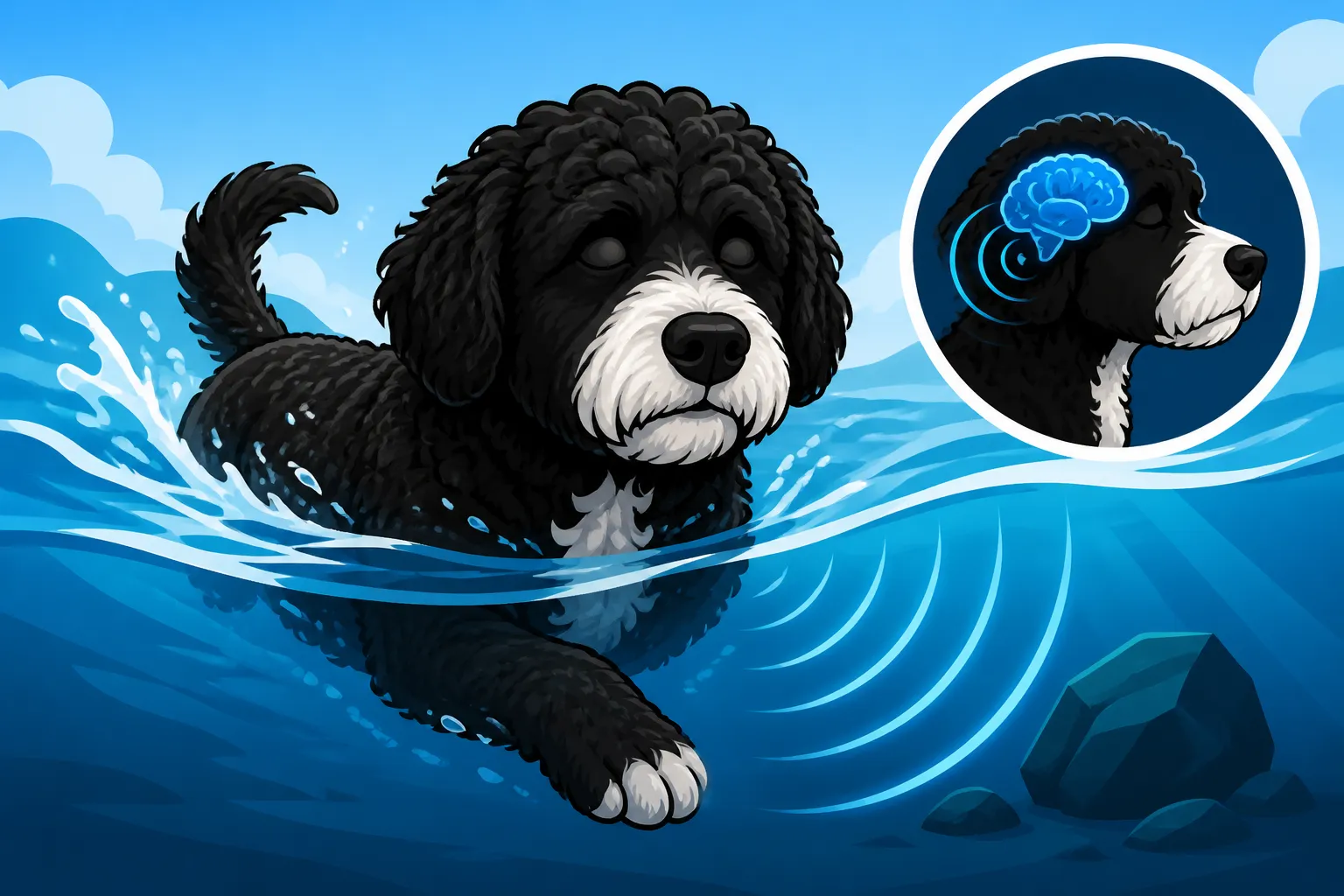
Hearing is equally critical. They use their ears like sonar, listening for the sound of waves lapping against the shore, the splash of a toy, or even the familiar voice of their human calling them back. They can often perceive the subtle echoes and reverberations that help them understand the dimensions of their surroundings, a form of natural echolocation. The feel of the water itself provides a wealth of information: currents, depths, and the texture of the bottom all become tactile cues. Their whiskers also play a role, detecting changes in air pressure and water movement near obstacles. This multi-sensory input allows them to construct a "mental map" of their environment, even without seeing it.
Memory and Familiarity: Building a Mental Map
A significant advantage for a PWD that becomes blind is its powerful memory and the familiarity it has with its favorite swimming spots. Dogs are creatures of habit and routine, and they learn the layout of their world through repeated experiences. If your dog has spent years swimming in the same lake, pool, or ocean cove, they will have built up an extensive internal map of that area.
This mental map includes critical information like:
- Entry and Exit Points: They remember where the slope of the land leads smoothly into the water, or where the steps to the pool are.
- Obstacles: They recall where that large rock is, or where the dock ends.
- Distances: They have a sense of how far they can swim before reaching the other side or needing to turn back.
- Familiar Sounds/Scents: The sound of a specific buoy, the scent of reeds along a certain section of the shore – these become beacons.
When navigating familiar waters, a blind PWD combines these memories with real-time sensory input. They might start cautiously, using their nose and ears to confirm their mental map, but with encouragement and positive reinforcement, they quickly regain confidence. This is why consistency in their swimming locations can be incredibly beneficial. Changing their usual swim spot too frequently can be disorienting and stressful, especially in the initial stages of their vision loss.
Creating a Safe Swimming Environment
The key to a blind Portuguese Water Dog continuing to enjoy swimming is creating an environment where they feel secure and can navigate without fear. This often involves making some adjustments to your chosen swimming location to minimize hazards and maximize their confidence.
Securing the Swimming Area
Safety is always paramount, and for a blind dog, this means thinking proactively about potential risks. If your PWD loves the pool, consider installing a pool alarm that detects entry, or even a fence around the pool perimeter with a gate that you can open for supervised swim times. For natural bodies of water like lakes or ponds, identify clear entry and exit points. Gentle slopes are ideal, as steep banks can be disorienting and dangerous. You can even place textured mats or a distinct scent (like a little vanilla extract) at these points to help your dog orient themselves.
Remove any floating debris or sharp objects from the swimming area. Check for submerged hazards that your dog might bump into. If you have a dock, ensure it has a sturdy ramp or clear, easily identifiable steps for entry and exit. You might also want to tie a rope or place a distinct-smelling marker along the edge of a large body of water that your dog can follow to gauge their proximity to the shore. Think of it like a braille trail for your PWD. Remember, consistency in the environment helps reinforce their mental map and builds their confidence over time.
Structured Swimming Sessions and Supervision
Allowing a blind PWD to swim doesn't mean letting them wander unsupervised. Every swimming session should be structured and fully supervised, especially in the beginning. Start with short sessions in a familiar, calm body of water. Stay close to your dog, talking to them reassuringly and offering vocal cues. Consider using a long line or leash initially in open water, allowing you to gently guide them if they become disoriented.
Establish a clear routine for entering and exiting the water. Always use the same entry point, verbal cue, and exit point. For instance, you might say "Let's go swim!" as you approach the water, guide them to the steps, and then use "All done!" or "Let's go out!" at the exit. Consistency helps them predict what's coming and reduces anxiety. As they gain confidence, they might need less direct guidance, but constant supervision is still essential to ensure their safety and enjoyment. Many owners find peace of mind knowing that pet insurance providers like Healthy Paws can assist with unexpected medical needs should any accident occur during these activities.
Tips and Tools for Supporting a Blind Swimmer
Even with a strong innate ability and careful environmental preparation, your blind Portuguese Water Dog will benefit immensely from your active support. There are specific techniques and tools that can make their swimming experience not just safe, but truly joyful again.
Harnessing Sound and Scent Cues
Since your dog can no longer rely on sight, you become their eyes and their guide. Sound and scent are your most powerful allies.
- Voice Commands: Use clear, consistent verbal cues for direction. "Straight," "left," "right," "turn around," and "come" should be practiced regularly on land first. When in the water, use a bright, encouraging tone. Your voice acts as a beacon.
- Whistles or Clickers: These can be great for recalls or marking locations, as they offer a distinct sound that cuts through environmental noise.
- Floating Scent Markers: Attach a strong, safe scent (like a drop of essential oil diluted in water, or a specific dog-safe spray) to floating retrieve toys. This allows your dog to use their powerful nose to locate their prize.
- Auditory Buoys: Consider placing floating devices in the water that emit a sound or have a distinct texture. These can serve as markers for boundaries or points of interest. You can even use a simple plastic bottle with a few pebbles inside, tied to an anchor, to create a sound buoy.
By consistently pairing these auditory and olfactory cues with actions, your PWD will quickly learn to interpret them, enhancing their independence and confidence in the water. Remember that patience is key; it takes time for them to build new associations.
The Role of Life Jackets and Other Aids
A life jacket is an absolute game-changer for a blind Portuguese Water Dog, regardless of how strong a swimmer they are. Even the most accomplished PWD can become disoriented without sight, and a life jacket provides invaluable buoyancy and peace of mind for you. When selecting a life jacket:
- Ensure a Snug Fit: It should not impede movement but also shouldn't be loose enough to slip off.
- Bright Colors: While your dog can't see it, a bright color makes it easier for you to spot them in the water.
- Handle on Top: This is crucial! A sturdy handle on the back allows you to easily lift or guide your dog if they get into trouble or need help exiting the water.
- Comfort: Look for one with good padding that won't chafe.
In addition to life jackets, other aids can be useful. A retrieve stick or a long-handled scoop can help you guide a floating toy closer to your dog if they're struggling to find it. A textured ramp or specific-colored steps leading into the water can also serve as a helpful tactile cue for entry and exit, further aiding their navigation. Knowing that you've equipped your dog with the best safety gear and have a plan for unexpected events, perhaps supported by pet insurance, can make all the difference. For more insights on water safety, consider reading When a Portuguese Water Dog Needs a Life Jacket.
Maintaining Overall Well-being for Your Blind PWD
Supporting a blind Portuguese Water Dog goes beyond just facilitating their swimming; it encompasses their entire well-being. A happy, healthy dog is a confident dog, and that confidence is crucial for them to thrive and enjoy all aspects of life, including their beloved water activities.
Regular Vet Checks and Health Monitoring
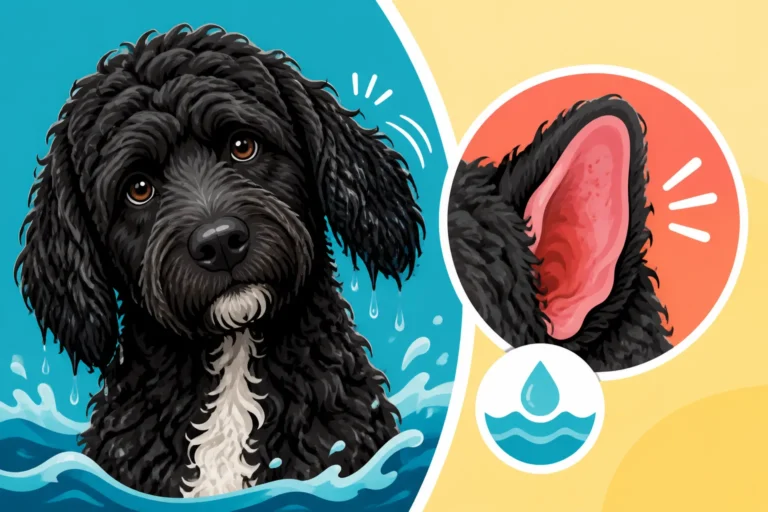
When a dog is blind, regular veterinary care becomes even more critical. It's not just about managing the cause of their blindness (if it's a treatable condition), but also about monitoring their overall health. Your vet can help identify any other underlying conditions that might affect their balance, stamina, or comfort, all of which are essential for safe swimming. This includes routine checks for ear infections, which can be more common in swimming dogs and affect balance. Regular ear cleaning and monitoring are vital, as discussed in How Often a Swimming Portuguese Water Dog Needs Ear Cleaning.
Blood work, physical exams, and dental care are all part of keeping your blind PWD in top shape. Any new aches or pains could easily be misinterpreted as disorientation due to blindness, making it harder to pinpoint the real issue. An active dialogue with your vet, discussing your dog's activity levels, appetite, and any behavioral changes, is key. Many owners find that having pet insurance, such as Healthy Paws, helps them manage the costs associated with these comprehensive health checks and any subsequent treatments, ensuring they can always prioritize their dog's well-being without financial strain.
Emotional Support and Confidence Building
Losing sight can be a traumatic experience for a dog, and they rely heavily on their human companions for reassurance and guidance. Your emotional state directly impacts theirs. If you are anxious or fearful, they will pick up on it. The most important thing you can offer is unwavering patience, positive reinforcement, and a calm, confident demeanor.
Encourage exploration in safe, familiar environments at home, too. Don't rearrange furniture constantly. Use verbal cues consistently for navigating rooms. Provide engaging puzzle toys and scent games to keep their minds sharp and engaged. When it comes to swimming, celebrate every small success, whether it's entering the water confidently or successfully retrieving a floating toy. Keep sessions short, fun, and always end on a positive note. Remember, their sense of joy and purpose is intertwined with their activities, and continuing to swim in a safe, supported way can be a huge boost to their overall happiness and mental health throughout their The Twelve to Fifteen Years a Portuguese Water Dog Gets. Building this confidence isn't just about physical ability; it's about showing them that their world, though changed, is still full of adventure and love.
| Aspect | Considerations for Blind PWD Swimming | Actionable Tips |
|---|---|---|
| Environment | Removing hazards, creating clear boundaries. | – Clear swimming area of debris/sharp objects. – Identify safe, consistent entry/exit points (e.g., gentle slope, pool steps). – Consider fencing, pool alarms, or auditory markers for boundaries. |
| Sensory Cues | Harnessing hearing, smell, and touch for navigation. | – Use consistent verbal commands (e.g., "Left," "Right," "Come"). – Use a whistle for recall. – Attach strong, safe scents to retrieve toys. – Utilize tactile markers at water's edge. |
| Safety Gear | Providing buoyancy and visibility for supervision. | – Always use a well-fitting life jacket with a sturdy handle. – Choose bright colors for easy spotting. – Inspect gear regularly for wear and tear. |
| Supervision & Routine | Constant presence and predictable patterns. | – Never leave a blind PWD unsupervised in or near water. – Maintain a consistent routine for swimming times and locations. – Start with short, positive sessions. – Use a long line initially in open water for gentle guidance. |
| Health & Confidence | Addressing overall well-being and emotional state. | – Regular vet check-ups (eyes, ears, general health). – Maintain a calm, positive attitude. – Celebrate small successes with praise and treats. – Continue scent work and puzzle toys for mental stimulation. |
Disclaimer
This article is for general informational purposes only and does not constitute professional advice. Laws, prices and regulations vary by location and change over time. Consult a qualified professional for guidance on your specific situation.