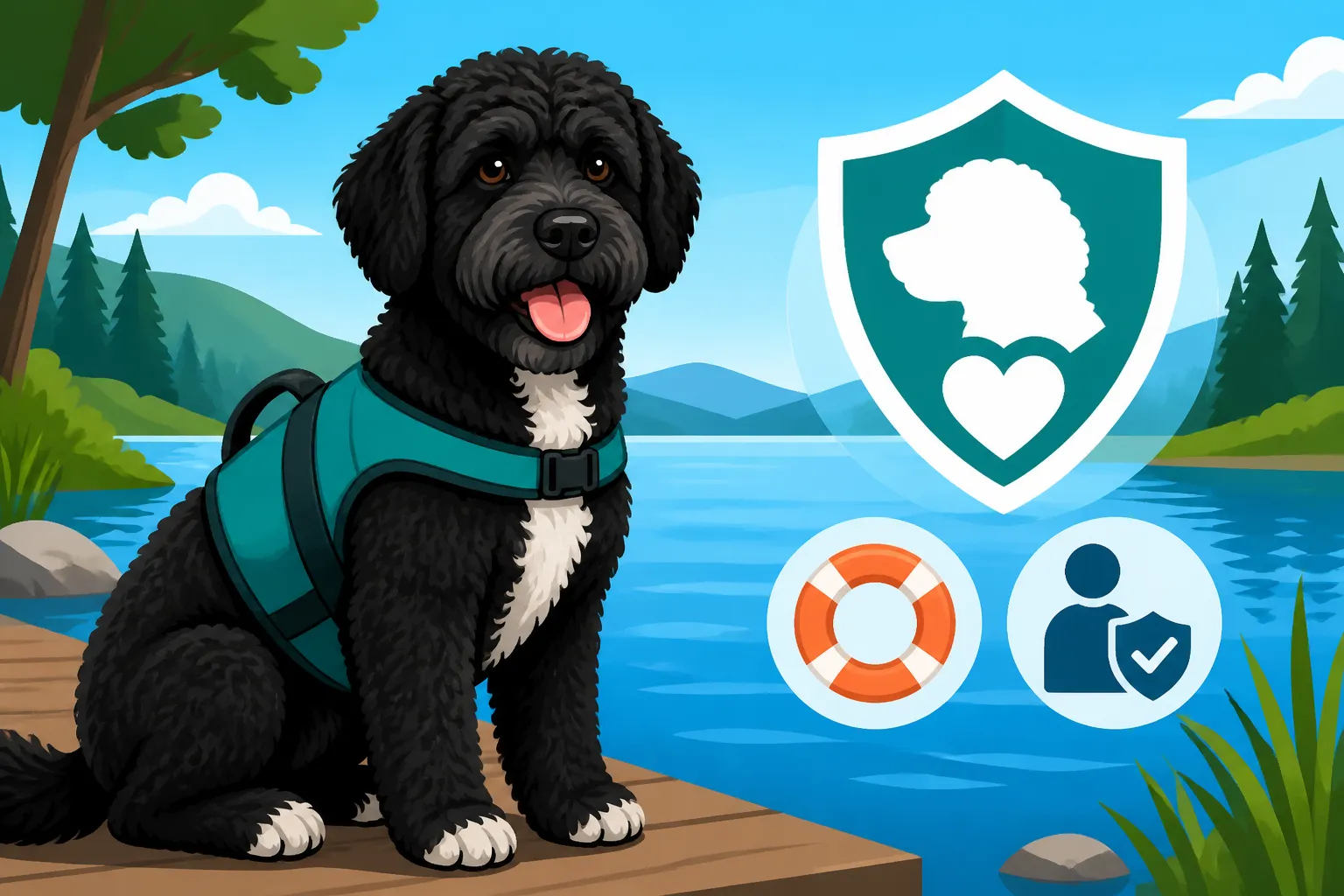
How a Portuguese Water Dog Can Be Trusted Near a Lake
It’s a dream for many Portuguese Water Dog owners: taking your energetic, water-loving companion to a beautiful lake and letting them enjoy the water safely, without constant worry. But let’s be honest, the reality often feels more like a frantic game of chase, a constant tug-of-war, or a never-ending battle with their instincts. You want to give your PWD the joy of the water they were bred for, but you also need to know they’ll be safe and respond when it matters most. This guide is here to walk you through how to build that essential trust and control, transforming those lake trips from a source of stress into pure enjoyment for both of you.
Understanding Your Portuguese Water Dog's Instincts Around Water
Let's face it, your Portuguese Water Dog isn't just "fond" of water; they were made for it. It's in their DNA, their history, and their very being. Expecting them to ignore a lake is like asking a bird not to fly – it goes against every fiber of their existence. Understanding this deep-seated drive is the first step toward managing it effectively, rather than fighting an uphill battle.
The Deep-Seated Drive to Work in Water
For centuries, Portuguese Water Dogs were indispensable crew members on fishing boats along the coast of Portugal. Their job wasn't just to fetch a stick that fell overboard; it was to herd fish into nets, retrieve lost tackle, and even carry messages between boats. They were working dogs, and their livelihood depended on their ability and willingness to be in and around water. This isn't just a cute breed trait; it's a profound instinct.
When your PWD sees a lake, it's not just a body of water; it's a potential "work zone," an invitation to engage their natural retrieving and herding drives. This intense focus on water can make them seem deaf to your commands, as their ancestral programming kicks in. It's a powerful force, and acknowledging its strength helps you approach training and management with the right mindset. You're not battling disobedience so much as redirecting powerful, ancient instincts. You can learn more about their historical role in How a Portuguese Water Dog Worked a Net.
The Challenges of a Natural Swimmer
While their exceptional swimming ability is one of their most charming traits, it also presents unique challenges when it comes to off-leash trust near open water. A Portuguese Water Dog is built like a torpedo, with strong webbed feet and a rudder-like tail, allowing them to navigate water with incredible agility and speed. They can often outpace you in the water, and their sheer joy can make them oblivious to dangers or your commands.
Think about it: most dogs might hesitate at the water's edge, but a PWD often plunges in without a second thought. This fearlessness, coupled with their endurance, means they can quickly venture far from shore or into areas you didn't intend. Their powerful swimming muscles and inherent love for the aquatic environment mean they are not easily deterred once they decide to "go for a swim." This is why a solid foundation of training and consistent management is absolutely non-negotiable for lake visits.
Essential Training for Water Safety and Trust
Building trust and safety around a lake isn't about crushing your PWD's love for water; it's about channeling that enthusiasm into controlled, safe behaviors. This requires consistent, positive reinforcement training, focusing on commands that give you control even when the biggest distraction — the water itself — is present.
Mastering Recall, Even Near the Water
If there's one command you absolutely must master for a Portuguese Water Dog near a lake, it's recall. And I don't mean a fair-weather recall in your backyard; I mean a recall that works when they're halfway to the geese on the far bank or chasing a thrown stick into deep water. This is tough, no doubt, but it's the cornerstone of safety. Start training recall in low-distraction environments, gradually increasing the distractions until you can practice near smaller, calmer bodies of water.
Use high-value rewards – something your PWD absolutely adores, whether it's a special treat, a favorite toy, or exuberant praise and a quick game of tug. Practice frequently and make it the most rewarding thing your dog can do. Don't just call them when you want to leave; call them for a treat, a quick pet, then release them back to play. This prevents them from associating recall with the end of fun. Consider a long line or a high-quality GPS tracker to practice recall near water in a safe, controlled manner. A trusted online training program, like those offered by BAXTER & Bella, can also provide structured guidance on developing a rock-solid recall, breaking down the steps and offering troubleshooting tips for even the most water-obsessed PWD. You might also want to check out Whether a Portuguese Water Dog Recalls Out of Water for more specific tips.
Teaching "Leave It" and "Stay" at the Water's Edge
While recall gets them back to you, "Leave It" and "Stay" are your power tools for preventing unwanted entry into the water or chasing tempting distractions. "Leave It" is crucial for ignoring things in the water (like a tempting duck or a piece of floating debris) or avoiding dangerous areas. "Stay" is vital for waiting patiently on the bank while you prepare, or if you need them to remain put while you retrieve something.
Train these commands with the same high-value rewards and incremental difficulty as recall. Start far from the water, asking for a "stay" for a few seconds, then increasing duration and distance. When you introduce water, begin with short "stays" at the very edge, rewarding heavily before releasing them to play. The goal is for them to understand that your command is more rewarding and important than their immediate desire to plunge into the lake. This helps temper the instinct that pulls a dog toward water (Why a Portuguese Water Dog Pulls Toward Water).
Building Desensitization and Controlled Exposure
One common mistake is only taking your PWD to the lake when you intend for them to swim freely. This builds up immense anticipation and can make control even harder. Instead, incorporate lake visits where swimming isn't the primary goal. Take short walks along the shore on a leash, practicing heel, "leave it," and "stay" without ever letting them enter the water. This teaches them that being near the lake doesn't automatically mean a free-for-all.
Gradually introduce controlled swims, perhaps on a long line or in a designated safe area. Throw a toy only a short distance, and immediately recall them. Make them wait before entering the water, using your "stay" command. The key is to teach them that you dictate when and where the water fun happens, not their instincts. This systematic approach reduces the overwhelming excitement and helps them understand boundaries.
Management Strategies for Lake Environments
Even with excellent training, a Portuguese Water Dog's natural drive can be incredibly strong. This is where smart management strategies come into play, providing an extra layer of safety and control, especially in unpredictable environments like a public lake.
Equipment That Promotes Safety and Control
Having the right gear is not just about convenience; it's about safety. For lakeside excursions, a sturdy, well-fitting harness is essential. Look for a harness that prevents slipping and gives you good control without restricting movement. A long line, ranging from 15 to 50 feet, is invaluable for practicing recall and granting your PWD a sense of freedom while still keeping them tethered. You can find excellent options on Amazon, designed for durability and comfort.
For PWDs that love to swim, a dog-specific life jacket is an absolute must, even for strong swimmers. While your PWD is a natural in the water, a life jacket provides added buoyancy, makes them more visible, and crucially, often includes a handle on the back. This handle can be a lifesaver for grabbing them if they get into trouble, need assistance getting out of the water, or simply if you need to guide them back to shore. When a Portuguese Water Dog Needs a Life Jacket delves deeper into this.
Here’s a quick overview of essential gear and its use:
| Equipment Type | Primary Use Case | Benefit for PWD Near Lake | Example of Use |
|---|---|---|---|
| Sturdy Harness | Leash attachment, control | Prevents slipping, better handling | Walking on leash near crowded areas |
| Long Line | Recall practice, supervised freedom | Allows distance work while maintaining connection | Training recall in open fields near water |
| Life Jacket | Water safety, visibility | Buoyancy, emergency grab handle | Swimming in deep or unpredictable water |
| High-Value Treats/Toys | Reward for obedience | Motivates strong responses to commands | Rewarding "Stay" at the water's edge |
Creating a Routine and Predictability
Dogs, especially intelligent working breeds like PWDs, thrive on routine and predictability. If every trip to the lake is a free-for-all, it reinforces the idea that lakes equal unrestricted fun. Instead, try to establish a consistent pattern. Perhaps certain lake visits are for active swimming, while others are for leashed walks and calm observation.
Before you even get to the water's edge, establish a routine: "sit," "stay," put on the long line or life jacket, then proceed calmly. This signals to your dog what's expected. Similarly, have a clear routine for leaving the water: "come," dry off, leash up, then head home. Consistency in your actions and commands helps your PWD understand the boundaries and expectations, making them a more reliable and trustworthy companion in varying environments. Remember, a Portuguese Water Dog needs a job, and understanding the "rules" of the lake can be their job for the day. What a Portuguese Water Dog Needs Every Day touches on this desire for purpose.
Managing Multiple Dogs and Distractions
A lake can be a highly stimulating environment, especially with other dogs, people, wildlife, and boats. If your PWD is easily overstimulated, it’s crucial to manage these distractions carefully. Try visiting the lake during off-peak hours when fewer people and dogs are around. This allows you to practice control in a calmer setting before tackling the chaos of a busy weekend.
If you have multiple dogs, ensure each one has a solid understanding of basic obedience individually before you attempt group outings near the water. The excitement of one dog can quickly escalate the others. If your PWD has a strong prey drive, the sight of ducks or geese can be an irresistible lure. In these cases, a leash or long line is your best friend, and continued practice with "leave it" is paramount. Remember, your PWD has a keen interest in everything that moves in the water.
Recognizing When Your PWD Is Overstimulated or Fatigued
Even the best-trained Portuguese Water Dog can have an off day, or simply become overwhelmed by the sheer excitement and physical exertion of being at a lake. Learning to read your dog’s subtle cues is crucial for knowing when to step in, redirect, or call it a day, ensuring their safety and preventing potentially dangerous situations.
Reading Their Cues
Your PWD might not tell you directly that they’re getting overstimulated or tired, but their body language will. Look for signs like frantic barking, persistent whining, ignoring commands they usually know, excessive splashing or zooming in the water without a clear purpose, or an inability to settle even briefly on the shore. Sometimes, they might even seem to "zone out," fixated on the water or a distant object, becoming less responsive to your voice.
Conversely, watch for signs of fatigue: slower movements, less enthusiastic retrieves, lagging behind, or seeking shade and wanting to lie down. A PWD can keep going long past when they should, driven by their incredible stamina and love for water work. If you notice these cues, it's a clear signal that it's time to intervene. Don't push them to the point of exhaustion or frantic over-excitement, as this can lead to mistakes or accidents. Understanding How Much Exercise a Portuguese Water Dog Needs can help you gauge their limits.
Knowing When to Call It a Day
The most responsible thing you can do for your Portuguese Water Dog near a lake is to know when to end the fun, even if they seem to want more. An overtired or overstimulated dog is more prone to making poor decisions, ignoring commands, or even putting themselves in danger. If you've been practicing recall near the water and they're consistently blowing you off, it's not time to double down on training; it's time to leash them up and take a break.
Always end on a positive note. Call them, give them a final high-value treat and praise, and then gently transition them away from the water. It’s better to have a slightly shorter, controlled, and successful outing than one that ends with frustration or a risky situation. By consistently recognizing their limits and your own, you reinforce trust and build a stronger bond, ensuring that every lake adventure is a positive and safe experience for your beloved PWD. How Long a Portuguese Water Dog Will Keep Retrieving can give you an idea of their typical endurance for water games.
Disclaimer
This article is for general informational purposes only and does not constitute professional advice. Laws, prices and regulations vary by location and change over time. Consult a qualified professional for guidance on your specific situation.