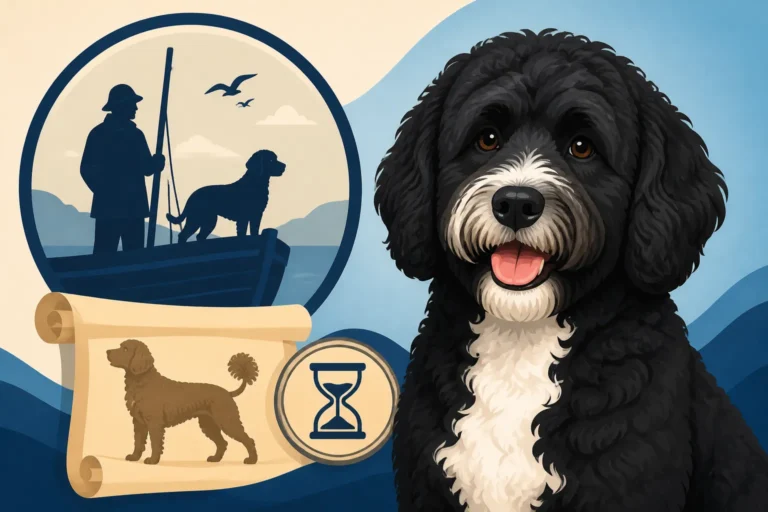
How Close the Portuguese Water Dog Came to Extinction
It’s easy to look at the vibrant, energetic Portuguese Water Dog today and assume they’ve always been a popular fixture in dog-loving homes and competitive rings. But the truth is far more dramatic: this remarkable breed once teetered on the very edge of extinction. If you’re a proud PWD owner, or simply an admirer, you might not realize just how close we came to losing them forever. This guide will take you on a journey through their fascinating history, detailing the circumstances that nearly erased them from existence and the dedicated efforts that brought them back from the brink.
The Golden Age of the Portuguese Water Dog: A Working Mariner's Best Friend
Before they were cherished family companions, Portuguese Water Dogs were indispensable working dogs, bred for a life at sea. Their history is deeply intertwined with the fishing communities of Portugal, particularly along the rugged Algarve coast. These dogs weren't just pets; they were integral members of the crew, earning their keep through a variety of demanding tasks. Their unique physical attributes and keen intelligence made them perfectly suited for the challenging marine environment.
From Ancient Shores to Fishing Boats
The lineage of the Portuguese Water Dog is ancient, with roots stretching back possibly thousands of years, to dogs that traveled with various seafaring peoples. Some theories suggest they arrived with the Visigoths, others with the Moors, or even from the steppes of Central Asia. What’s clear is that these water dogs developed a deep connection with the coastal regions of Portugal, adapting perfectly to the harsh demands of maritime life. They became specialized for the unique challenges of the Atlantic, evolving their distinctive coat and powerful build.
As fishing became a cornerstone of the Portuguese economy, these dogs became more than just companions; they were vital tools. Fishermen relied on their agility, strength, and unwavering loyalty to perform tasks that would be impossible for humans alone. The bond between a fisherman and his Cão de Água was legendary, built on mutual respect and absolute necessity. They weren't just present on the boats; they were partners in every sense of the word.
The Essential Role on the Algarve Coast
Imagine a fishing boat off the coast of Portugal, battling choppy waves and unpredictable weather. That’s where the Portuguese Water Dog truly shone. Their duties were diverse and demanding. They would herd fish into nets, acting as living fences in the water, a task requiring incredible intelligence and responsiveness to their master’s commands. They were fearless retrievers, diving into the frigid Atlantic to snatch lost tackle, broken nets, or even fish that had escaped the lines.
These dogs also served as vital messengers, swimming from boat to boat in the fleet, carrying notes or small supplies. Their strong, rudder-like tails and powerful, webbed feet made them exceptional swimmers, capable of navigating treacherous waters with ease. They were renowned for their stamina, able to spend hours in the water without tiring. Their dense, non-shedding coats provided insulation against the cold, allowing them to perform their duties in all weather conditions. It’s no wonder they were so highly valued; a good Portuguese Water Dog could significantly increase a boat's yield and safety.
The Decline of the Traditional Fishing Industry
The golden age for the Portuguese Water Dog, however, couldn't last forever. As the 20th century progressed, the traditional fishing industry began to undergo significant changes. Modernization brought with it new technologies: powerful engines replaced sails, synthetic nets replaced hand-woven ones, and advanced navigation systems reduced the need for inter-boat communication by canine messengers. These innovations, while beneficial for human efficiency, gradually made the specialized skills of the Portuguese Water Dog less essential.
The role that these dogs had played for centuries slowly diminished. Fishermen, facing economic pressures and adopting newer methods, no longer needed an extra "hand" on board that required feeding and care without performing tasks that machinery could now handle. This shift wasn't sudden, but a gradual erosion of their purpose, leading to fewer puppies being bred and less demand for their unique talents. The very industry that had forged the breed now inadvertently threatened its existence.
The Brink of Oblivion: Why the Numbers Plummeted
The changes in the fishing industry had a profound and devastating impact on the Portuguese Water Dog population. What was once a thriving, working breed found itself with dwindling numbers, facing an uncertain future. The lack of purpose translated directly into a decline in breeding, pushing them dangerously close to disappearing entirely. It was a tragic consequence of progress, where a beloved and ancient working partner became a relic of a bygone era.
Modernization's Unintended Consequence
The advent of steam-powered trawlers and later, diesel engines, was a game-changer for the fishing fleets. These modern vessels could cover more ground, carry larger catches, and operate with greater autonomy. The need for a dog to herd fish or retrieve ropes became obsolete. Why send a dog to swim between boats with a message when a radio could do it faster and more reliably? The specialized skills that had made the Portuguese Water Dog invaluable for centuries suddenly had little practical application in the new maritime landscape.
This wasn't a malicious act; it was simply the tide of technological advancement. Fishermen, who had once celebrated their dogs, now had fewer reasons to keep them. The cost of feeding and caring for a dog that no longer contributed significantly to the daily work became a burden for many struggling families. As a result, fewer puppies were bred, and the existing population slowly aged out without replacements. The breed that had once been synonymous with Portuguese fishing culture began to fade from view, a silent casualty of the industrial revolution at sea.
The Vanishing Workforce
By the early 20th century, particularly around the 1930s, the situation for the Portuguese Water Dog became critical. Their numbers plummeted to alarmingly low levels. It's hard to put an exact figure on how few there were, but estimates suggest only a handful of genuine working dogs remained, scattered across remote coastal villages. How Many Portuguese Water Dogs Were Left in the 1930s is a question that highlights just how dire the situation had become. They were no longer being bred with any consistency, and their unique characteristics, honed by centuries of selective breeding for water work, were at risk of being lost forever.
Many of the dogs still around were aging, and the younger generations were simply not being produced at a rate to sustain the breed. Without the functional purpose that had driven their breeding for so long, the incentive to maintain the breed standard or even to continue breeding them at all vanished for many. It wasn't just a decline in numbers; it was a decline in the purpose that defined the breed, making their revival seem like an insurmountable challenge.
A Fading Breed in Its Homeland
The decline was particularly poignant in Portugal itself, the very place where the breed had originated and thrived. What was once a common sight along the coast became a rare glimpse. The children of fishermen grew up without the same connection to these dogs, as their fathers and grandfathers no longer relied on them. The Cão de Água, once a symbol of Portuguese maritime heritage, was fading into obscurity, becoming a distant memory rather than a living, breathing part of the culture.
This near-extinction was not due to disease or a natural disaster, but a slow, creeping obsolescence. It's a stark reminder of how deeply tied working breeds are to the human activities they support. When those activities change, the dogs are often the first to feel the impact. For the Portuguese Water Dog, this meant a loss of identity, a loss of purpose, and a loss of their very existence in the land they called home.
The Rescuers: Dedicated Individuals Who Stepped Up
Just when all seemed lost for the Portuguese Water Dog, a few dedicated individuals recognized the imminent danger and stepped forward. These were not fishermen, but passionate dog enthusiasts, breeders, and conservationists who understood the historical and genetic value of the breed. Their unwavering commitment became the lifeline that pulled the Portuguese Water Dog back from the edge of extinction, paving the way for its eventual resurgence.
Vasco Bensaude's Vision and the Algarbiorum Kennel
One of the most pivotal figures in the breed's salvation was Dr. Vasco Bensaude, a wealthy Portuguese shipping magnate and dog fancier. In the 1930s, Bensaude became acutely aware of the breed's dwindling numbers and decided he couldn't let such a magnificent piece of Portuguese heritage disappear. He embarked on a mission to find and collect the remaining authentic specimens of the Portuguese Water Dog, often traveling to remote fishing villages to locate them.
Bensaude established the Algarbiorum Kennel, which became the cornerstone of the breed's revival. His goal was not merely to accumulate dogs, but to meticulously breed them according to their original working characteristics and physical standard. He understood that these dogs needed to retain the traits that made them exceptional water workers. His efforts provided a safe haven and a structured breeding program that was crucial for consolidating the remaining genetic material. You can read more about Who Vasco Bensaude Was to the Portuguese Water Dog and how his dedication saved the breed.
Early Enthusiasts and the Foundation Stock
While Bensaude led the charge, he was not alone. Other enthusiasts, both in Portugal and later abroad, joined the effort. These individuals sought out and acquired dogs from the working lines, carefully assessing their health, temperament, and adherence to the breed's historical type. They understood that the genetic pool was incredibly narrow, making every healthy, well-tempered individual precious. How Narrow the Portuguese Water Dog Founding Stock Was truly underscores the challenge they faced; they were working with a very limited number of dogs to rebuild an entire breed.
The foundation stock collected by Bensaude and these early pioneers became the ancestors of virtually all Portuguese Water Dogs alive today. Without their foresight and commitment, the breed would undoubtedly have vanished. They meticulously recorded pedigrees, shared their knowledge, and collaborated to ensure genetic diversity, as much as was possible given the circumstances. Their passion laid the groundwork for the breed's future.
Preserving the Essence of the Breed
The challenge wasn't just about increasing numbers; it was about preserving the essence of the Portuguese Water Dog. These rescuers were committed to maintaining the breed's intelligence, working drive, unique coat, and robust health. They understood that a Portuguese Water Dog that couldn't work water was not a true Portuguese Water Dog. Therefore, selection for breeding focused on dogs that still displayed strong instincts for retrieving, swimming, and interacting with people in a working capacity.
They studied old photographs, consulted with elderly fishermen, and referred to what sparse written records existed to guide their breeding decisions. This dedication ensured that the dogs being bred were not just physically similar, but possessed the same spirit and capabilities that had made them so vital to the Algarve fishermen. It was a painstaking, long-term commitment that demanded deep understanding and love for the breed.
Rebuilding from the Edge: The Long Road to Recovery
Saving the Portuguese Water Dog from extinction was just the first step; the true recovery lay in meticulously rebuilding the breed. This meant establishing formal structures, expanding the gene pool, and eventually introducing these magnificent dogs to new enthusiasts beyond Portugal's shores. It was a journey of careful planning, international collaboration, and a shared vision for the breed's future.
Establishing Breed Standards and Registries
A crucial part of rebuilding any breed from near extinction is the establishment of clear breed standards and official registries. These documents define what a Portuguese Water Dog should look like, how it should behave, and what physical characteristics are essential. This provided a common goal for all breeders and ensured consistency as the population grew. Breeders worked tirelessly to document the lineage of every dog, creating a comprehensive database that tracked health, temperament, and conformation.
This systematic approach helped prevent haphazard breeding that could dilute the breed's unique traits or introduce undesirable genetic issues. The formal recognition by national kennel clubs, initially in Portugal and later internationally, gave the breed legitimacy and a platform for structured development. It allowed for the controlled expansion of the gene pool while maintaining the integrity of the original working dog.
| Era | Key Event | Impact on Breed |
|---|---|---|
| Ancient Origins | Development as working dog | Specialized for water, loyal, intelligent |
| Early 20th Century | Modernization of fishing industry | Decline in practical use, numbers plummet |
| 1930s | Dr. Vasco Bensaude begins preservation efforts | Foundation of Algarbiorum Kennel, consolidation of stock |
| Mid-20th Century | Breed standards formalized, international interest | Structured breeding, broader appeal, slow growth |
| 1960s-70s | Introduction to North America | New breeding populations, increased diversity |
| Late 20th Century | Growth in popularity, AKC recognition | Stable numbers, recognized as a companion and sport dog |
Crossing the Atlantic: The Breed Comes to America
The mid-20th century marked another significant turning point: the Portuguese Water Dog began its journey beyond Portugal. In the 1960s, American enthusiasts discovered the breed, recognizing its unique qualities and potential as a versatile companion and performance dog. Individuals like Deyanne and Herbert Miller were instrumental in importing some of the first Portuguese Water Dogs to the United States. When the Portuguese Water Dog Reached America marks a pivotal moment, opening new avenues for the breed's survival and growth.
Establishing a new breeding population in North America was vital. It created a separate, yet connected, gene pool, providing a safeguard against potential disasters or localized issues that could threaten the entire breed if it remained concentrated in one region. These new breeders faced the same challenges as their Portuguese counterparts – working with limited stock and making careful, ethical breeding choices to ensure the health and vitality of the growing American population.
The Power of Community: Clubs and Breeders
The true backbone of the breed's recovery and sustained health has been the dedicated community of breeders and enthusiasts. The formation of breed clubs, such as the Portuguese Water Dog Club of America, provided a centralized hub for sharing knowledge, promoting responsible breeding, and supporting new owners. These clubs are instrumental in organizing events, educating the public, and maintaining health registries.
Responsible breeders are the custodians of the breed. They invest countless hours in health testing, temperament evaluation, and careful pedigree analysis to produce healthy, well-adjusted puppies. They work to ensure that the puppies they produce will live long, fulfilling lives with their new families, often referring new owners to resources like Chewy for all their puppy supply needs, from high-quality food to durable training toys. This collaborative spirit, both within and across continents, has been fundamental to the Portuguese Water Dog's comeback and its thriving presence today.
Looking Back and Moving Forward: Lessons from Near Extinction
The story of the Portuguese Water Dog's near-extinction and subsequent revival is more than just a historical anecdote; it's a powerful lesson in conservation and responsible animal husbandry. It highlights the fragility of even the most robust breeds and the critical importance of human intervention and dedication. For current and future owners, understanding this history provides valuable insight into the breed's resilience and the ongoing responsibility we share in its future.
The Importance of Responsible Breeding Practices
One of the most profound lessons learned from the Portuguese Water Dog's brush with extinction is the absolute necessity of responsible breeding. With a very narrow gene pool from which to rebuild, early breeders had to be incredibly diligent to avoid compounding genetic issues. Today, this translates to comprehensive health testing for conditions like hip and elbow dysplasia, eye diseases (like progressive retinal atrophy), GM1 Gangliosidosis, and Juvenile Dilated Cardiomyopathy. The Four DNA Tests Every Portuguese Water Dog Breeder Runs is a testament to this commitment, ensuring the health and longevity of each generation.
Responsible breeders don't just breed for looks; they prioritize health, temperament, and genetic diversity within the existing lines. They aim to produce dogs that are not only beautiful but are also robust, intelligent, and true to the working spirit of their ancestors. This careful stewardship protects the breed from succumbing to the very challenges that almost wiped it out in the past. Always look for a breeder who is transparent about their health testing and pedigree records.
Celebrating the Breed's Resilience
The Portuguese Water Dog is a testament to resilience, both as a breed and as individuals. From nearly disappearing entirely, they have bounced back to become cherished companions worldwide, known for their spirited nature and intelligence. This journey of survival imbues the breed with a special quality, a testament to the strength and adaptability that runs in their blood. Every time a Portuguese Water Dog enthusiastically dives into the water, retrieves a toy, or gazes intently at its owner, it’s a living reminder of the centuries of purpose and the dedicated efforts that saved them.
Their story is one of enduring spirit against challenging odds. It reminds us that behind every breed there is a history, and often, a story of human commitment. The fact that they survived, and indeed thrived, is a cause for celebration and a tribute to those who believed in their future. Whether the Portuguese Water Dog Is a Healthy Breed is a question that can be answered positively largely due to the rigorous standards adopted by the breeding community.
Ensuring a Secure Future for the Portuguese Water Dog
Looking forward, the responsibility of ensuring the Portuguese Water Dog's secure future rests with all of us who love and admire them. This includes supporting reputable breeders who adhere to strict health and ethical standards, educating prospective owners about the breed's unique needs (such as their high energy levels and grooming requirements, and even their preference for tough, stimulating toys from places like Chewy), and participating in breed-specific activities. Understanding What a Portuguese Water Dog Needs Every Day is crucial for any potential owner.
It also means being mindful of the history of the breed – recognizing that their past struggles inform their present health and future well-being. By continuing to prioritize health, genetic diversity, and the preservation of their working instincts, we can honor the legacy of those who saved them. The Portuguese Water Dog's journey from the brink of extinction to a beloved modern breed is a powerful narrative, one that we must continue to write with care, commitment, and a deep appreciation for these extraordinary dogs.
Disclaimer
This article is for general informational purposes only and does not constitute professional advice. Laws, prices and regulations vary by location and change over time. Consult a qualified professional for guidance on your specific situation.