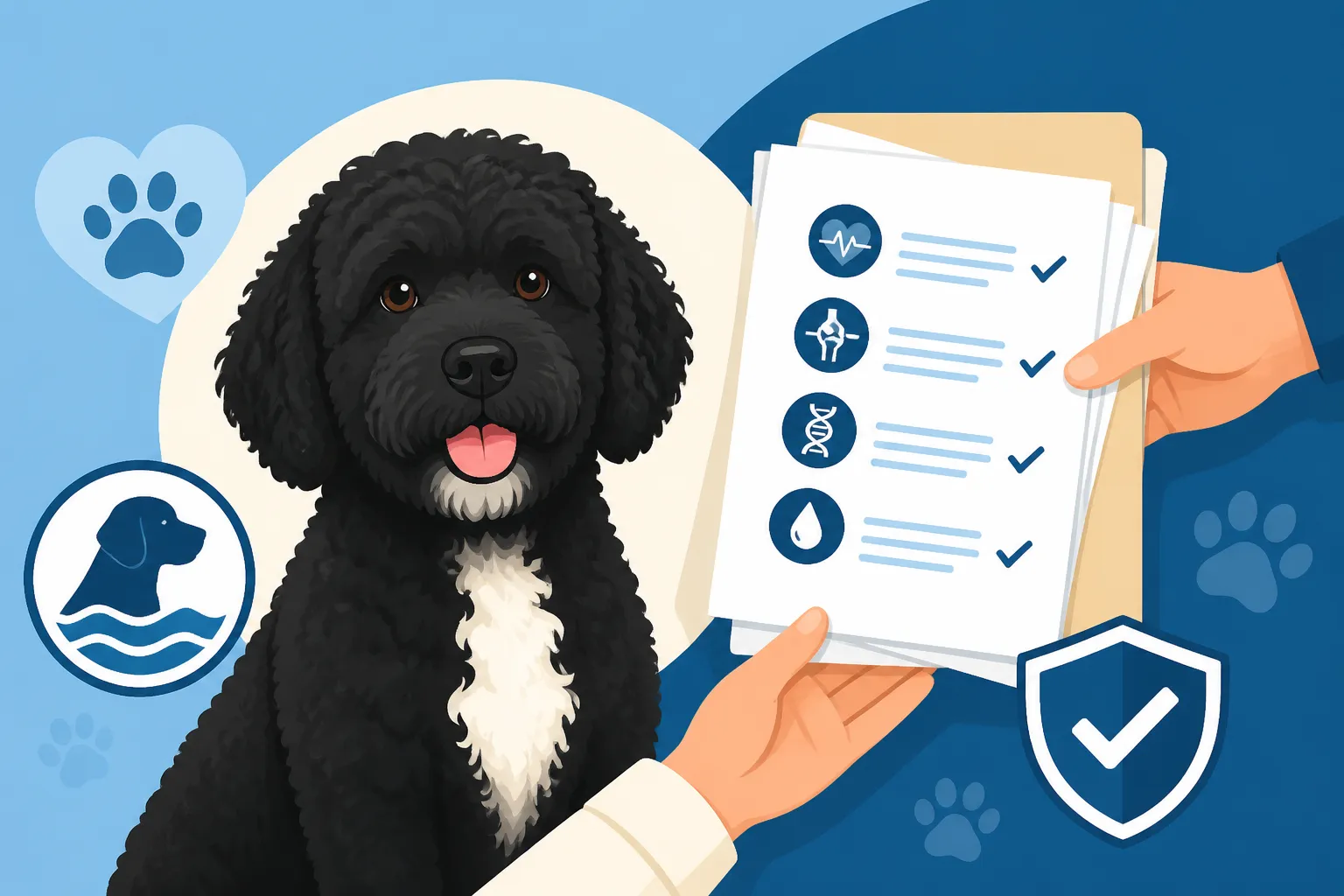
What Health Results a Portuguese Water Dog Breeder Should Hand Over
Bringing a new Portuguese Water Dog puppy into your home is such an exciting time, but it can also be overwhelming, especially when you start looking into responsible breeders. One of the biggest worries I hear from prospective owners is how to know if a puppy is truly healthy and if the breeder has done their due diligence. This guide will walk you through the essential health results and documentation a reputable Portuguese Water Dog breeder should provide you with, giving you peace of mind and confidence in your new furry family member.
The Pillars of Genetic Health: Essential DNA Test Results
When you're looking for a Portuguese Water Dog puppy, understanding the genetic landscape of the breed is paramount. These aren't just fancy acronyms; they represent serious conditions that can dramatically impact your dog's life and your wallet. A truly responsible breeder doesn't just breed dogs; they breed for the future health of the breed, and that starts with thorough DNA testing. They should be transparent and proactive in sharing these results with you, not just if you ask, but as part of their standard practice.
Juvenile Dilated Cardiomyopathy (JDCM)
This is one of the most heartbreaking conditions in Portuguese Water Dogs because it strikes puppies so young and so suddenly. Juvenile Dilated Cardiomyopathy is a genetic heart disease that, without warning, can cause sudden death in puppies, usually between 4 weeks and 7 months of age. Imagine falling completely in love with a vibrant, playful puppy, only for it to succumb to heart failure in a matter of hours or days. It's devastating, and it’s why JDCM testing is non-negotiable.
A reputable breeder will have tested both parent dogs for the JDCM gene. The results will typically be "Normal/Clear," "Carrier," or "Affected." A responsible breeder will never breed two carriers together, as that pairing has a 25% chance of producing affected puppies. You should receive documentation showing that both parents are "Normal/Clear" or, if one parent is a "Carrier," that the other parent is "Normal/Clear," ensuring no affected puppies will be produced. They should provide physical or digital copies of these genetic certificates. Knowing How Quickly a Portuguese Water Dog Puppy Dies of JDCM underscores the critical importance of these tests. This information isn't just for breeders; it's vital for you as an owner to understand the risk factors.
GM1 Gangliosidosis
Another severe, early-onset genetic disease, GM1 Gangliosidosis is a neurological disorder that affects a Portuguese Water Dog puppy's brain and nervous system. Puppies with GM1 typically start showing signs like loss of coordination, tremors, and difficulty walking before they are six months old. It's a progressive and ultimately fatal condition, leading to a drastically shortened lifespan and immense suffering. The thought of watching a puppy decline like this is truly gut-wrenching, and it’s completely avoidable with proper testing.
Like JDCM, GM1 is inherited in an autosomal recessive pattern. This means a puppy must inherit two copies of the affected gene (one from each parent) to develop the disease. A good breeder will test both parent dogs to ensure they are not carriers, or that at least one parent is clear if the other is a carrier. This again guarantees that no affected puppies will be born in that litter. You should expect to see DNA test results clearly stating the GM1 status of both the sire and dam. These results are often provided by specialized labs like OptiGen or other reputable canine genetic testing companies. When asking Whether GM1 Still Appears in Portuguese Water Dogs, a breeder should be able to present their test results as proof that they are actively working to keep this devastating disease out of their lines.
Progressive Retinal Atrophy (PRA)
When we talk about Progressive Retinal Atrophy in Portuguese Water Dogs, we're actually often referring to two distinct genetic forms: prcd-PRA (progressive rod-cone degeneration) and EOPRA (Early Onset PRA). Both lead to degeneration of the retina and eventual blindness, but they tend to manifest at different ages. prcd-PRA usually appears later in life, often between 3 to 5 years of age or even later, while EOPRA can show symptoms as early as 1 to 2 years old. Imagine your active, water-loving dog slowly losing its sight, navigating your home with increasing difficulty, and perhaps even struggling with its favorite water games. It’s a profound change for both dog and owner.
Responsible breeders understand the importance of testing for both types of PRA. They will have DNA test results for both parents, indicating whether they are clear, carriers, or affected for prcd-PRA and EOPRA. Similar to the other recessive conditions, a reputable breeder will only breed a carrier to a clear dog to prevent affected offspring. You should be given copies of these eye health clearances, typically from a genetics lab. This ensures that the risk of your future companion developing one of these debilitating conditions is minimized. It's crucial to understand How the Two Portuguese Water Dog Eye Diseases Differ so you can properly assess the breeder's commitment to eye health.
Improper Coat (IC)
While not a life-threatening health condition, Improper Coat is a genetic trait that significantly impacts the Portuguese Water Dog's defining characteristic: its coat. A Portuguese Water Dog with an improper coat will have a soft, open, shedding coat, more akin to a Golden Retriever or Labrador, rather than the non-shedding, water-resistant curly or wavy coat characteristic of the breed. This isn't just about aesthetics; the proper coat is integral to their historical function as water dogs, protecting them in the water.
A good breeder will test for the Improper Coat (IC) gene because it’s a disqualifying fault in the show ring, and it doesn't align with the breed standard. More importantly, many families choose a Portuguese Water Dog precisely because of its low-shedding qualities, which an improper coat does not possess. You should receive documentation confirming the IC status of both parents. If one parent is a carrier, the other should be clear to avoid producing puppies with improper coats. You can learn more about What Improper Coat Means in a Portuguese Water Dog to fully grasp why this test is important, even if it's not a health crisis.
Beyond DNA: Orthopedic, Cardiac, and Ocular Clearances
While DNA tests give us a window into genetic predispositions, a comprehensive health screening program for Portuguese Water Dogs extends much further. These tests assess structural integrity and organ function, providing a more complete picture of the parent dogs' overall health. These are often evaluations performed by veterinary specialists and certified by national organizations.
Hip and Elbow Dysplasia Clearances
Hip and elbow dysplasia are unfortunately common orthopedic conditions in many medium to large breed dogs, including Portuguese Water Dogs. These conditions involve abnormal development of the hip or elbow joints, which can lead to arthritis, pain, and lameness, sometimes requiring expensive surgery or lifelong pain management. No one wants to see their dog struggling to walk or play due to joint pain, especially a breed as active as the PWD.
Reputable breeders will have both parent dogs evaluated for hip and elbow dysplasia by organizations like the Orthopedic Foundation for Animals (OFA) or PennHIP. These evaluations are typically done when the dogs are two years of age or older. For OFA, hips are graded as Excellent, Good, Fair (all considered passing), or Borderline, Mild, Moderate, or Severe Dysplasia (all non-passing). Elbows are graded as Normal or affected with Grade I, II, or III dysplasia. You should receive certificates clearly stating the OFA or PennHIP results for both parents, with passing grades. You can delve deeper into Hips and Joints in a Portuguese Water Dog to understand the nuances of these conditions and their impact. Many veterinarians recommend waiting to spay or neuter a Portuguese Water Dog until after their growth plates have closed, which also ties into healthy joint development.
Eye Examination by a Board-Certified Veterinary Ophthalmologist (CERF/OFA Eye Exam)
While DNA tests cover genetic forms of PRA, a thorough eye examination by a specialist looks for a wider range of ocular conditions that might not be genetic or are caused by different genes. This includes conditions like cataracts, distichiasis (extra eyelashes rubbing the eye), entropion (eyelids rolling inward), and other structural abnormalities. Even seemingly minor eye issues can cause chronic discomfort or lead to serious vision problems if left unaddressed.
A responsible breeder will have the parent dogs undergo regular eye examinations by a board-certified veterinary ophthalmologist. These results are then registered with the OFA's Companion Eye Registry (formerly CERF). These exams should ideally be performed annually, as some conditions can develop over time. You should receive a copy of the most recent OFA Eye Certification Form for both parents, showing them to be "Normal" or "Clear" of observable eye disease. This annual check is important, even for dogs that have passed DNA tests.
Cardiac Evaluation by a Board-Certified Veterinary Cardiologist
Beyond the specific genetic test for JDCM, a comprehensive cardiac evaluation by a specialist is crucial for ruling out other structural or functional heart abnormalities that can affect Portuguese Water Dogs. These can include murmurs, valve issues, or other forms of cardiomyopathy that might not be detected by a general vet check-up.
For Portuguese Water Dogs, a breeder should have the parent dogs examined by a board-certified veterinary cardiologist. This typically involves an echocardiogram (an ultrasound of the heart) to assess heart structure and function, and often a consultation with the specialist. The cardiologist will certify the dog as "Normal" or identify any abnormalities. These results are also often registered with the OFA. This is a testament to a breeder's commitment to ensuring the foundational health of their breeding stock, going beyond what a general vet might detect.
What to Expect in Terms of Documentation
When you choose to work with a dedicated Portuguese Water Dog breeder, they won't just tell you about the tests; they will show you. Transparency is key, and you should feel completely comfortable asking for proof of all health screenings.
Understanding the Certificates
Each health test comes with a unique certificate from the testing laboratory or certifying organization (like OFA, PennHIP, OptiGen, etc.). These certificates will clearly list the dog's registered name, registration number, microchip number (often), date of birth, and the results of the specific test.
Example of what a health certificate might look like:
| Test Name | Parent Dog 1 (Sire) | Parent Dog 2 (Dam) | What it Means (Clear/Normal) |
|---|---|---|---|
| DNA Genetic Tests | |||
| JDCM | Normal/Clear | Normal/Clear | Puppy will not be affected |
| GM1 Gangliosidosis | Normal/Clear | Normal/Clear | Puppy will not be affected |
| prcd-PRA | Normal/Clear | Normal/Clear | Puppy will not develop this form of PRA |
| EOPRA | Normal/Clear | Normal/Clear | Puppy will not develop this form of PRA |
| Improper Coat (IC) | Normal/Clear | Normal/Clear | Puppy will have the correct PWD coat type |
| Orthopedic Clearances | |||
| OFA Hips | Good | Excellent | Low risk of hip dysplasia in offspring |
| OFA Elbows | Normal | Normal | Low risk of elbow dysplasia in offspring |
| Ocular Clearances | |||
| OFA Eye Exam (ACVO) | Normal | Normal | No observable inherited eye diseases |
| Cardiac Clearances | |||
| OFA Cardiac (Cardiologist) | Normal | Normal | No observable inherited cardiac diseases |
(Note: In cases where one parent is a carrier for a recessive DNA condition, the other parent MUST be clear for the litter to be unaffected. A responsible breeder will explain this thoroughly.)
How to Verify the Results
Don't be shy about verifying these results! Most reputable registries, like the Orthopedic Foundation for Animals (OFA), have public databases where you can look up a dog's health clearances by their registered name or registration number. This is an excellent way to cross-reference the certificates the breeder provides. If a breeder is hesitant or refuses to share these documents or allow you to verify them, consider that a major red flag. They should be proud of their health testing protocols and eager to share the proof. It's a key part of What a Portuguese Water Dog Breeder Should Have Tested.
The Importance of the Health Guarantee
Beyond individual test results, a reputable Portuguese Water Dog breeder will also offer a health guarantee as part of their puppy contract. This guarantee outlines their responsibilities should a genetic or congenital health issue arise in your puppy within a specified timeframe (often 1-2 years, sometimes longer for certain conditions).
What a Health Guarantee Should Cover
A good health guarantee will explicitly cover conditions like JDCM, GM1, and severe forms of hip or elbow dysplasia that manifest early in life. It won't cover every sniffle or minor issue, but it should cover the major, debilitating genetic health concerns that comprehensive testing aims to prevent. For instance, if despite all precautions, a puppy were to develop a covered condition, the guarantee might offer a replacement puppy, a partial refund, or assistance with veterinary costs.
It’s crucial to read this contract carefully and ask questions. Understand the terms, the timeframe, and what steps you would need to take if a problem arose. This guarantee isn't a substitute for parental health testing, but rather a final layer of protection and a demonstration of the breeder's ethical commitment. Even with all the best breeding practices, unforeseen health issues can sometimes arise, and that's when a solid pet insurance policy, like those offered by Healthy Paws, can become invaluable. They can help cushion the financial blow of unexpected veterinary care.
The Role of a Vet Check-Up
Your health guarantee will almost certainly require you to take your new Portuguese Water Dog puppy to your own veterinarian for a check-up within a few days of bringing them home. This is standard practice. Your vet will perform a general physical exam to ensure the puppy appears healthy and confirm things like vaccination status and deworming. This initial vet visit is not only a crucial part of your health guarantee but also an important first step in establishing care for your new family member. Your vet can provide guidance on nutrition, exercise, and preventative care. For instance, if your vet recommends specific joint supplements or a particular diet to support growth, you might find a wide selection of brands and formulations on sites like Chewy or even specialized, fresh dog food options from companies such as Ollie.
Why All This Documentation Matters to You
For many, the cost of a Portuguese Water Dog puppy is a significant investment. But beyond the financial aspect, it's about the emotional investment you make in your new companion. A puppy that comes from extensively health-tested parents and a breeder who provides clear documentation is more likely to live a long, healthy, and happy life. This translates to fewer heartaches, fewer unexpected vet bills down the line, and more joy shared with your beloved Portuguese Water Dog. You'll gain peace of mind knowing you've done your part to choose a healthy puppy, allowing you to focus on training, socialization, and all the wonderful adventures ahead, like discovering What a Portuguese Water Dog Was Bred to Do on a Boat or teaching them Teaching a Portuguese Water Dog to Swim on Cue.
Always remember: a responsible breeder is not just selling a puppy; they are placing a family member. Their dedication to health testing and transparency in providing these results is a direct reflection of their commitment to the welfare of the breed and the puppies they produce. Don't settle for anything less when bringing a Portuguese Water Dog into your life.
Disclaimer
This article is for general informational purposes only and does not constitute professional advice. Laws, prices and regulations vary by location and change over time. Consult a qualified professional for guidance on your specific situation.