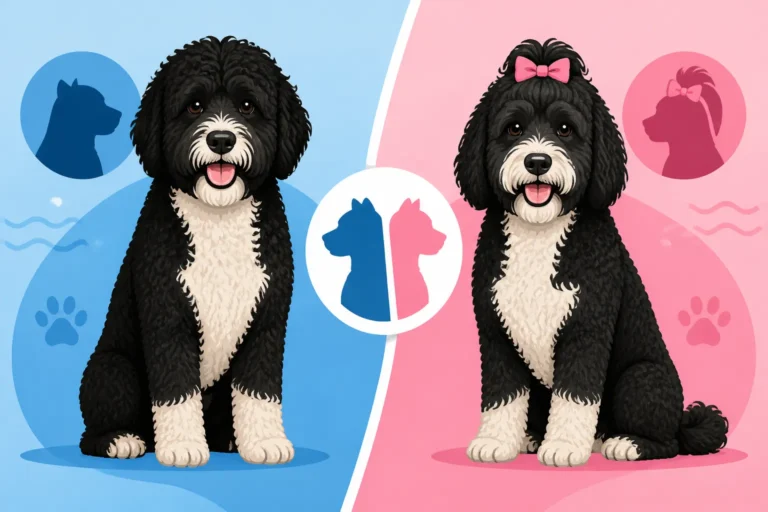
Whether the Portuguese Water Dog Appears in Film
A Portuguese Water Dog can look made for the screen: expressive, energetic, and wrapped in a distinctive curly or wavy coat. Yet the breed does not have a widely recognized starring role in a major feature film. This guide explains what is known, why shaggy screen dogs are easy to misidentify, and how to check a claimed appearance.
Does the Portuguese Water Dog appear in movies
The breed has no famous, unmistakable film character
There is no widely recognized feature-film character that has made the Portuguese Water Dog a household name in the way certain other breeds became associated with memorable movie roles. Individual Portuguese Water Dogs may have appeared in productions, but a dog’s breed is often not identified in a film’s credits or publicity. That makes it difficult to confirm a sighting based only on a quick glimpse of a curly-coated dog on screen.
So the fairest answer is not that a Portuguese Water Dog has never appeared in any film. It is that the breed has no especially famous, reliably documented movie role that viewers commonly point to. A dog may be visible in a scene without being named, credited, or described by breed, and production materials do not always preserve that information.
This distinction matters if you are trying to settle a family debate or identify a dog you saw in a trailer. A black, shaggy dog with a beard and floppy ears might resemble a Portuguese Water Dog, but appearance alone is not proof. Similar coats and outlines occur in several breeds and crossbreeds.
Public recognition is often confused with film appearances
The Portuguese Water Dog received substantial public attention when Bo joined the Obama family at the White House, followed later by Sunny. Their appearances in photographs, news coverage, and public events introduced many people to the breed. Those appearances were not the same as starring in a feature film, though the distinction can blur in online searches and casual conversation. For background, see Who Bo the Portuguese Water Dog Was and The Year Bo the Portuguese Water Dog Arrived at the White House.
Bo and Sunny were real dogs in a highly visible public setting, not movie characters performing in a fictional story. A news clip, a documentary segment, or a televised event may look like a screen appearance in a broad sense, but it is different from a scripted film role. If someone says, “I saw one in a movie,” it is worth asking whether they mean a feature film, a television program, an advertisement, or footage of a public figure’s dog.
The White House attention also helped make the breed easier to recognize. That does not mean every curly black dog in a film is a Portuguese Water Dog, or that the breed became a regular casting choice. Whether Bo Made the Breed More Popular explores how public exposure and actual breed popularity are related without treating them as the same thing.
Why movie dogs are often misidentified
A curly coat is not a reliable breed identifier
From a distance, a Portuguese Water Dog can be mistaken for a Standard Poodle, a Spanish Water Dog, a Barbet, an Irish Water Spaniel, or a mixed-breed dog with a similar coat. Film lighting, editing, grooming, and camera angles can hide the details that help distinguish one breed from another. A quick shot of a dark, curly dog may show little more than its silhouette.
The coat itself can add to the confusion. Portuguese Water Dogs can have either a curly or wavy coat, and they may be shown in different trims. A long, untrimmed coat may read as “doodle-like” to a viewer, while a close trim can change the dog’s outline substantially. Even breed enthusiasts may hesitate to name a dog from a brief scene unless there is supporting information.
A good comparison starts with more than coat texture. Look at the dog’s proportions, head shape, ears, tail, movement, and build, while remembering that grooming can alter what is visible. Curly or Wavy, Black or Brown: What a Portuguese Water Dog Looks Like gives an overview of the breed’s appearance, and How a Portuguese Water Dog Differs From a Standard Poodle helps explain why similar-looking dogs are not necessarily the same breed.
Film styling can change the dog’s appearance
A dog on a set may be groomed to suit a character, scene, or production requirement rather than to reflect a breed’s typical presentation. Long hair can be trimmed, a coat can be brushed out, and the camera may show the dog only from one angle. Costume pieces, harnesses, wet fur, or muddy scenes can make identification even less dependable.
The dog’s behavior can also lead viewers to assume a breed. A dog swimming, retrieving, or moving confidently around boats might bring a Portuguese Water Dog to mind because of the breed’s working history. But many dogs can perform those actions with training, and a scene does not establish a dog’s ancestry. Learn more about that background in What a Portuguese Water Dog Did for a Fishing Crew.
When a claimed breed identification comes from a fan page or a short social media clip, look for a more direct statement from the film’s production team, trainer, or a reputable breed organization. If none exists, it is sensible to describe the dog as “Portuguese Water Dog-like” rather than state its breed as fact. That small distinction keeps a fun observation from turning into an unsupported claim.
How to check a Portuguese Water Dog film claim
Start with the film’s credits and production information
If you have a title in mind, begin with the end credits and official production materials. A dog may be listed under animal trainers, animal actors, or a similar credit rather than identified by breed. The trainer or production company may also have shared behind-the-scenes information that names the dog or explains how the animal was selected.
Search for the exact film title alongside terms such as “dog,” “animal trainer,” or “animal cast.” Then compare the results rather than relying on one image caption. A page may repeat an unverified claim from another page, and repeated wording does not necessarily mean the identification has been confirmed.
If the film gives a dog a character name, distinguish that fictional name from the animal’s real name. A character description might say the dog is a “water dog” or simply call it a pet, which is not the same as confirming a Portuguese Water Dog. In a close case, the strongest evidence is a clear identification from someone directly involved in the production.
Separate films from television, advertising, and online clips
People use “movie” loosely. They may mean a feature film, a made-for-television movie, a series episode, a commercial, or a short viral video. A Portuguese Water Dog could appear in any of these formats without having a notable film credit. Clarifying the format often resolves the question quickly.
It also helps to separate fiction from real-life footage. Bo and Sunny appeared in widely circulated public footage, while other Portuguese Water Dogs may be featured in breed documentaries, interviews, or event coverage. Those appearances are worth enjoying, but they do not establish a starring role in a scripted movie.
| What you saw | What it can tell you | What it does not prove |
|---|---|---|
| A curly-coated dog in a scene | The dog has a coat that resembles several breeds | That it is a Portuguese Water Dog |
| A dog credited with an animal trainer | The production used a trained animal | The dog’s breed, unless stated elsewhere |
| A news clip featuring Bo or Sunny | A Portuguese Water Dog appeared in public media | That the dog appeared in a feature film |
| A production note naming the breed | There is direct support for the identification | That the breed played a major role in the story |
| A fan post naming the dog | Someone believes the dog is a Portuguese Water Dog | That the claim has been independently confirmed |
What the breed’s screen image can and cannot tell you
A charming movie dog is not a complete guide to ownership
Seeing a Portuguese Water Dog on screen can spark interest in the breed, but a film usually shows only a narrow slice of life with a dog. It cannot demonstrate the daily brushing, regular coat care, training, exercise, and supervision that a real dog needs. A polished scene may make the breed look effortlessly ready for an adventure, while the work that prepares a dog for that moment happens off camera.
That gap matters for families who are deciding whether the breed fits their home. Portuguese Water Dogs are active, intelligent dogs bred for working alongside people. Their needs do not disappear because a particular dog looks calm in a scene or spends a few minutes swimming on screen. Before falling in love with a movie-like image, consider the breed’s history, temperament, and routine. The Household a Portuguese Water Dog Was Built For offers useful context for thinking about the kind of home that suits the breed.
A film can be a starting point for learning, not a substitute for it. Read about grooming, exercise, health testing, and training, and speak with knowledgeable owners or breed organizations. If your interest came from a specific dog in a film, try to verify the dog’s identity before using that appearance to form expectations about the breed.
Let movie inspiration lead to practical research
If a film has made you curious about owning a Portuguese Water Dog, write down the questions it raised. Does your household have time for coat maintenance? Can you provide regular activity and training? Is there a safe way to enjoy water if your dog likes swimming? Those questions are more useful than assuming every dog of the breed will behave exactly like a trained animal actor.
For grooming, look at the tools and routine involved before buying supplies. A retailer such as Chewy may be one place to browse brushes, combs, and bathing products, but the right choice depends on the individual dog’s coat and your grooming plan. A knowledgeable groomer can help explain what is practical for a pet trim and how to prevent painful mats.
The same careful approach applies to toys and travel gear. If you are planning for a future dog, compare products based on safety, fit, and the dog’s needs rather than buying everything suggested by a film-inspired shopping list. Chewy is one possible place to look for enrichment toys or basic dog supplies, but a purchase cannot replace training, supervision, or advice from your veterinarian. If your dog will be around water, choose equipment appropriate for the dog and setting; a retailer such as Chewy may offer options to compare, but fit and safe use matter more than the brand name.
For many viewers, the most accurate takeaway is simple: the Portuguese Water Dog is recognizable and has appeared in public media, but it does not have a famous, widely established feature-film role. When a curly-coated dog appears on screen, enjoy the scene, then check the credits or production information before naming the breed.
Disclaimer
This article is for general informational purposes only and does not constitute professional advice. Laws, prices and regulations vary by location and change over time. Consult a qualified professional for guidance on your specific situation.