How a Portuguese Water Dog Can Learn to Dive for Objects
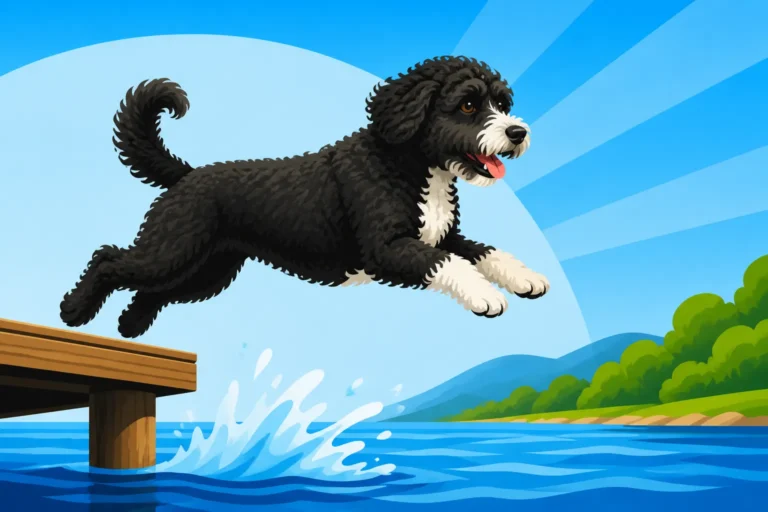
Many Portuguese Water Dog owners dream of seeing their agile, water-loving companions dive gracefully beneath the surface to retrieve a cherished toy. While these dogs are born swimmers and natural retrievers, the leap from fetching on the water to actively diving under it for objects isn't always instinctive. This comprehensive guide will walk you through the steps to cultivate this advanced skill, celebrating every splash and successful grab along the way, helping your PWD become the underwater adventurer you know they can be.
Understanding Your Portuguese Water Dog's Natural Instincts for Water Work
It’s easy to look at a Portuguese Water Dog, with their webbed feet and rudder-like tail, and assume they're just automatically ready for any kind of aquatic adventure. They are built for water, it’s true, but there's a difference between a dog who loves to splash and swim and one who confidently submerges their head, or even their whole body, to bring back a sunken treasure. Understanding this distinction is the first step in successful training.
The Difference Between Swimming and Diving for Objects
Your Portuguese Water Dog's ancestors were incredible working dogs, navigating the cold Atlantic waters off the coast of Portugal. They drove fish into nets, retrieved lost tackle, and even carried messages between boats. This historical context highlights their natural inclination for water and retrieving. However, their traditional "retrieving" was almost always about objects floating on the surface. Think about it: a lost net or a floating piece of wood. The dog would swim out, grab it, and bring it back. The act of fully submerging their head or diving deep for something invisible from the surface wasn't typically part of their historical job description.
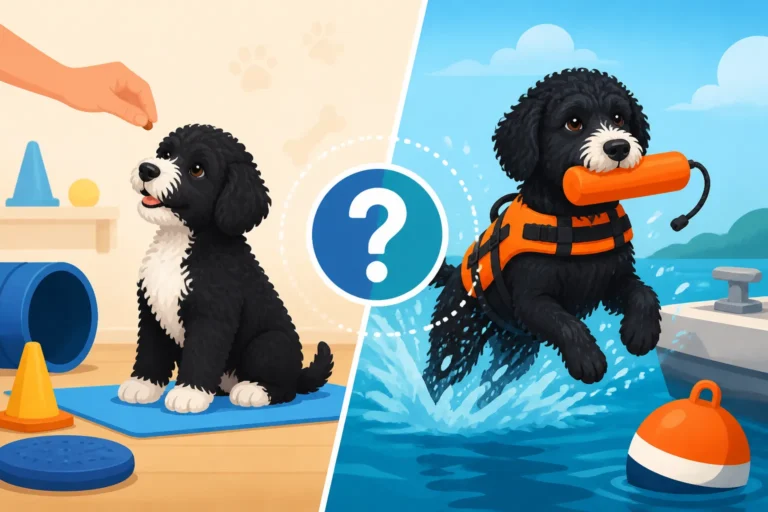
So, while your PWD might jump in with gusto, paddle like a champion, and retrieve a floating ball with boundless enthusiasm, asking them to dive for a sinking object introduces a whole new set of mental and physical challenges. It requires a different level of confidence, comfort with pressure changes, and a willingness to explore an unfamiliar underwater world. It's less about instinct and more about learned behavior, built on a strong foundation of trust and positive reinforcement. Their incredible prey drive and desire to please will be your biggest assets here.
Building Foundational Water Confidence
Before you even think about tossing something to the bottom of the pool, your Portuguese Water Dog needs to be absolutely, unequivocally comfortable in the water. We're talking about more than just tolerating a bath; we mean genuinely enjoying being submerged, paddling, and playing. If your PWD is still a bit hesitant about deeper water, or only goes in if you do, that's your first training goal.
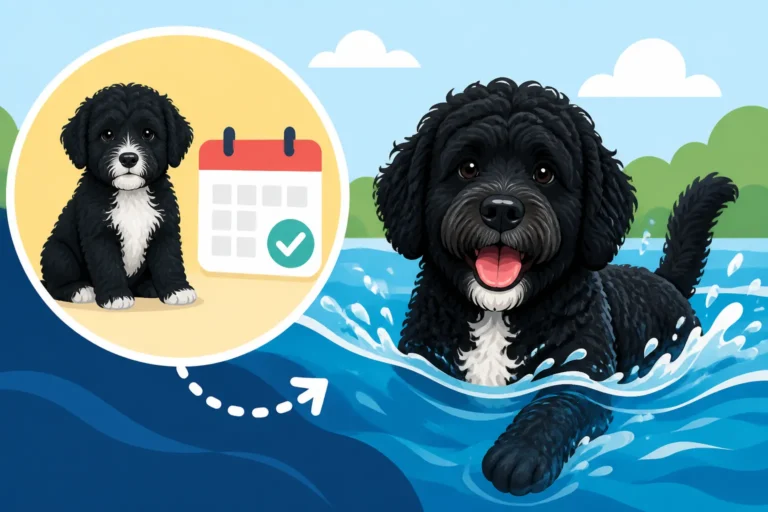
Start with very positive, low-pressure introductions. A shallow kiddie pool can be a great place for a puppy to get its feet wet. Toss in some floating toys and let them splash and retrieve at their own pace. As they grow more comfortable, move to slightly deeper, calm water like a quiet lake shore or a shallow entry pool. The key is to make every water experience a joyful one, full of praise, treats, and fun. Never force your dog into the water, as this can create a negative association that’s incredibly hard to overcome. You want them to associate water with pure happiness and the thrill of the chase. You can read more about Teaching a Portuguese Water Dog Puppy to Enter Water for detailed steps on this crucial first stage. Remember, a confident swimmer is a good candidate for learning advanced water skills. Some Portuguese Water Dogs are natural-born mer-dogs, eager to swim from day one, but others need a gentler nudge. This foundational confidence is paramount before asking them to hold their breath and plunge.
Step-by-Step Guide to Introducing Underwater Retrieval
Once your Portuguese Water Dog is a confident and joyful swimmer, you can start the exciting journey of teaching them to dive for objects. This isn't a race; it's a gradual process that builds on small successes. Patience and positive reinforcement are your best friends.
Starting with Shallow Water and Visible Sinking Toys
The trick here is to make the transition from surface retrieval to underwater retrieval as seamless and easy as possible for your dog. Forget deep ends for now. Find a spot where the water is only as deep as your dog's shoulders, or even shallower.
Now, for the toys: You need something that sinks, but not too fast, and is highly visible underwater. Brightly colored rubber diving sticks or weighted fetch toys are perfect. You can find a great selection of these on Amazon or at specialized pet stores. The key is that the toy is easily seen against the bottom, so your dog's natural curiosity can kick in.
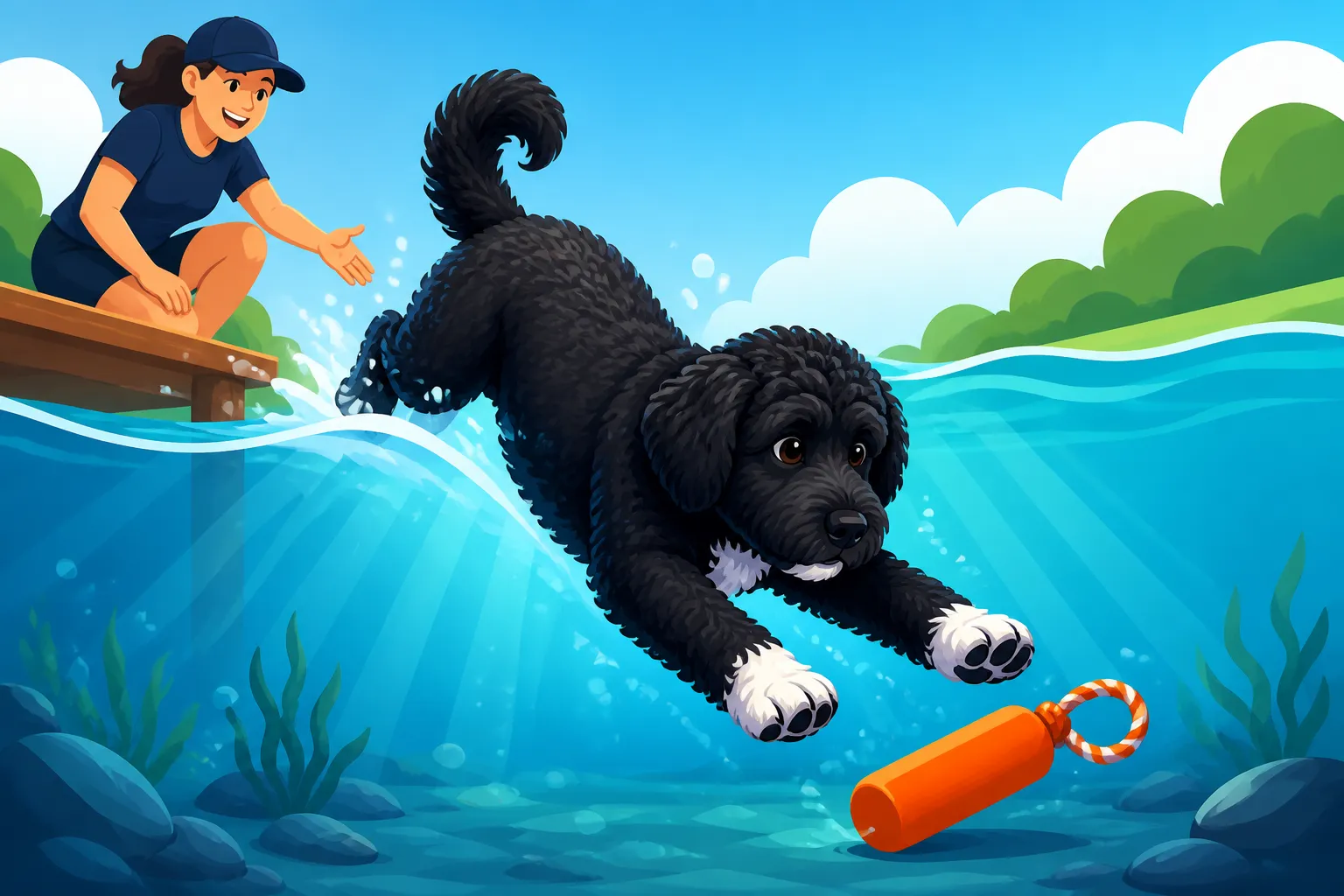
Start by standing in the shallow water with your dog. Show them the toy, get them excited about it, then gently drop it just a few inches in front of their nose, where they can still see it clearly sitting on the bottom. Encourage them to "get it!" Most Portuguese Water Dogs will instinctively lower their heads and try to grab it with their mouths. The moment their nose goes under, even for a second, shower them with enthusiastic praise: "Good boy/girl! Get it! Yes!" When they bring it up, give them a high-value treat and lots of excited petting. Repeat this many times. The goal is to make the act of putting their face underwater a positive, rewarding experience.
Gradually Increasing Depth and Encouraging Submersion
Once your dog is confidently retrieving toys from just under the surface in shallow water, it's time to slowly increase the challenge. Inch by inch, move to slightly deeper water. Don't make a huge jump; maybe the water is now chest deep, then shoulder deep. Always ensure the toy is still clearly visible on the bottom.
Here are a few techniques to encourage more submersion:
- The "Out of Reach" Toss: Instead of dropping the toy right in front of them, toss it a short distance away in slightly deeper water. This makes them extend their neck and perhaps even paddle their front paws to get to it, naturally leading to a bit more submersion.
- The "Hold and Release": Hold the sinking toy just under the surface and let your dog try to grab it. As they mouth it, release it, letting them complete the retrieve. This helps them get used to the feeling of their head being underwater with a toy in their mouth.
- Use a Retrieve Line: For some dogs, a long, thin retrieve line tied to a sinking toy can be helpful. You can guide the toy slightly, or even pull it back towards the surface if your dog is struggling, preventing frustration. This is especially useful for encouraging a shy dog to commit to the dive.
As you progress, the amount of time they keep their head underwater will increase. Celebrate every little victory! Even if it's just their eyes going under for a moment, that's progress. Think about Which Toy a Portuguese Water Dog Will Work Hardest For – using their absolute favorite, highest-value toy for this training can make a huge difference in their motivation. Persistence and fun are the keys.
Reinforcing and Celebrating Success
This cannot be stressed enough: positive reinforcement is absolutely critical. Portuguese Water Dogs are sensitive and intelligent; they thrive on praise and connection with their people. Every time your dog even attempts to put their head underwater for a toy, let them know they are the most brilliant dog in the world.
- Verbal Praise: Use an enthusiastic, happy tone. "Yes! Good find! What a clever dog!"
- Treats: High-value treats, small and easy to swallow, given immediately upon successful retrieval.
- Play: A quick game of tug or a toss of another favorite floating toy can be a great reward.
- Excitement: Your energy is contagious. If you're excited about them diving, they'll be excited too.
Consistency in your praise helps them understand exactly what behavior you're rewarding. If they're struggling, don't get frustrated. Simply go back a step or two to where they were successful and build confidence there again. The goal is to create a dog who wants to dive because it's a fun, rewarding game they play with you, not because they feel pressured to perform.
Advanced Diving Techniques and Troubleshooting Challenges
As your Portuguese Water Dog gains confidence, you can refine their diving skills and address any hurdles that might arise. This is where you really start to see their incredible aquatic abilities shine.
Using Hand Signals and Verbal Cues
Once your PWD is consistently diving for objects on cue, you can start to associate a specific verbal command and hand signal with the action. This is similar to teaching any other command.
- Choose Your Cues: Pick a clear, concise verbal cue like "Dive!" or "Underwater!" and a distinct hand signal, perhaps a pointing motion downwards.
- Pairing the Cues: As you toss the toy and your dog is about to dive, say your verbal cue, then immediately give the hand signal. When they dive and retrieve, reward enthusiastically. Repeat this many times.
- Fading the Lure: Over time, your dog will associate the cue with the action. Eventually, you should be able to give the cue before you even toss the toy, and they'll anticipate the dive. Test this by giving the cue first, then immediately tossing the toy as they show willingness to dive.
Consistency is paramount here. Always use the same cues and reward generously for correct responses. This is how you develop a truly responsive working dog who understands what you're asking.
Addressing Common Hesitations and Fears
Not every Portuguese Water Dog will be an immediate natural. Some might show hesitation, especially as the water gets deeper or the toy becomes less visible. It’s important to address these gently and patiently.
- Revisit Earlier Steps: If your dog hesitates, don't push them. Go back to a depth where they were comfortable and build their confidence again. Sometimes, a step back makes two steps forward possible.
- Toy Visibility and Sinking Speed: Ensure the toy is still highly visible. If it's sinking too fast, consider a slightly slower-sinking option. The idea is to keep it within their "search and retrieve" comfort zone.
- Water Temperature: Pay attention to the water temperature. While Portuguese Water Dogs are hearty, very cold water can be a deterrent. You can learn more about What Temperature Water Is Too Cold for a Portuguese Water Dog to ensure conditions are always comfortable for your companion.
- Consider Structured Training: If you're hitting a wall, sometimes an outside perspective can help. While diving isn't a standard obedience class, the principles of positive reinforcement and breaking down complex behaviors taught by programs like BAXTER & Bella can be applied. A good dog trainer specializing in positive reinforcement can help you troubleshoot specific hesitations your dog might have, or even refine your communication.
- Make it a Game: If your dog seems bored or disengaged, switch things up. Introduce a new, exciting toy, or try a different water location. The more fun it is, the more motivated your PWD will be.
Remember, a PWD's intelligence also means they can get bored if the task isn't engaging enough or too frustrating. Keep it fun, keep it positive, and always end on a success.
Maintaining Safety During Underwater Play
Safety should always be your top priority when training your dog, especially in and around water.
- Supervision is Non-Negotiable: Never, ever leave your dog unsupervised in or near water, especially when they are actively diving. Accidents can happen quickly.
- Clear Water: Train in clear water where you can easily see the bottom and your dog can spot the toy without difficulty. Murky water increases the risk of them swallowing something unsafe or getting disoriented.
- Safe Objects Only: Only use toys specifically designed for water play and retrieval. Avoid sticks that can splinter or rocks that can cause dental damage. Ensure toys are appropriately sized to prevent choking.
- Easy Exit Points: Always ensure there are clear, easy-to-access exit points from the water. Ramps or shallow entries are ideal. This prevents exhaustion or panic if they can't get out.
- Watch for Fatigue: Diving is tiring! Even though PWDs are athletic, watch for signs of fatigue. Short, frequent training sessions are better than one long, exhausting one. If you see them struggling, take a break.
- Life Jackets: For initial training in deeper, unfamiliar waters, or if your dog is still building confidence, a dog life jacket is a wise investment. While PWDs are strong swimmers, a life jacket can provide an extra layer of safety and confidence, especially when they are focused on a task. Explore options like When a Portuguese Water Dog Needs a Life Jacket for more details on choosing the right one.
- Rinse After Swimming: After any water activity, especially in pools or saltwater, rinse your dog thoroughly to protect their coat and skin. And don't forget to dry their ears to prevent infections!
By following these safety guidelines, you can ensure that teaching your Portuguese Water Dog to dive is a safe, enjoyable, and rewarding experience for both of you.
Essential Gear and Environment for Diving Practice
Having the right tools and choosing the ideal location can make all the difference in your Portuguese Water Dog's diving success. Don't underestimate the impact of comfortable and safe training conditions.
Choosing the Right Diving Toys
The toy you choose is almost as important as your training technique. It needs to be safe, visible, and enticing. Here’s what to look for:
- Sinking Ability: Obviously, it needs to sink! But consider the rate. A slower sinking toy might be better for beginners, allowing your dog more time to react before it settles.
- Visibility: Bright colors are key. Neon yellow, orange, or blue stand out well against many underwater backgrounds.
- Material and Durability: Opt for sturdy rubber or silicone. Avoid anything that can break apart, splinter, or be easily chewed into small pieces that could be ingested. The texture should also be easy for your dog to grip with their mouth.
- Size and Shape: Choose a size appropriate for your PWD's mouth – not so small it's a choking hazard, and not so large they can't easily retrieve it. Shapes like sticks, rings, or small dumbbells are often good.
Here's a quick comparison of popular diving toy characteristics:
| Toy Type | Sinking Speed | Visibility Underwater | Durability | Ideal for |
|---|---|---|---|---|
| Rubber Diving Sticks | Medium | High (bright colors) | High | Beginners & progression, easy grip |
| Weighted Rings | Fast | Medium | Medium-High | More experienced divers |
| Silicone Fish/Creatures | Medium-Slow | Medium-High | Medium | Novelty, varied textures |
| Kong Aqua (weighted version) | Medium-Fast | High (orange/yellow) | Very High | Strong chewers, good for focused retrieve |
When you're shopping for toys, think about what your dog typically likes to retrieve. Some PWDs have a strong preference for a certain feel or texture, and catering to that can increase their motivation.
Ideal Training Locations
The environment where you train plays a huge role in your dog's comfort and your success.
- Swimming Pools:
- Pros: Often have clear water, controlled environment, consistent depth, easy entry/exit with steps or ramps.
- Cons: Can be cold, chlorine can irritate eyes/skin/coat (always rinse!). Some dogs may be hesitant in an artificial environment initially. Pool Chlorine Hurts a Portuguese Water Dog.
- Lakes/Ponds:
- Pros: Natural environment, often good for building general water confidence.
- Cons: Water clarity can vary greatly, muddy bottoms can make finding toys hard, potential for submerged hazards (sticks, rocks, fishing lines), wildlife. Always check for algal blooms or water quality warnings.
- Ocean/Sea:
- Pros: Exciting, vast, natural for the PWD.
- Cons: Waves can make it difficult for diving, strong currents are a safety risk, saltwater can irritate and dry out skin/coat (immediate rinse is a must!). Sand can also be tricky for their eyes and ears.
- Shallow Rivers/Streams:
- Pros: Gently flowing water can add a fun element to retrieval.
- Cons: Currents can carry toys away, rocks and uneven bottoms can be hazards, water quality can be variable.
For initial diving training, a clear, calm swimming pool with a gradual entry is often the best choice. It removes variables like currents and murky water, allowing your dog to focus solely on the task of going underwater for the toy. As they gain confidence and skill, you can then introduce them to more varied natural environments, always prioritizing safety and clear water conditions. Remember, the cleaner the water, the easier it will be for your dog to spot their prize and feel safe going after it!
Disclaimer
This article is for general informational purposes only and does not constitute professional advice. Laws, prices and regulations vary by location and change over time. Consult a qualified professional for guidance on your specific situation.