Whether an Improper Coated Portuguese Water Dog Is Clipped Differently
Bringing home a Portuguese Water Dog puppy is often filled with dreams of that iconic curly or wavy, non-shedding coat. But what happens when your puppy's coat starts to look a little… different? Many owners find themselves confused or concerned when their PWD develops what's known as an "improper coat," wondering if it impacts their dog's health or, more immediately, how on earth they're supposed to groom it. This guide is here to unravel the mystery of the improper coat and give you a comprehensive understanding of how to care for your unique Portuguese Water Dog, especially when it comes to clipping.
What Exactly Is an "Improper Coat" in a Portuguese Water Dog?
The term "improper coat" can sound a bit harsh, almost like a judgment, but it's really just a descriptor within the breed standard. It refers to a specific genetic trait that results in a coat texture and density that deviates from the traditionally recognized curly or wavy, dense, waterproof coat that defines the Portuguese Water Dog. It's not a health issue, but it certainly changes the grooming routine.
The Genetic Basis of the Improper Coat
An improper coat in a Portuguese Water Dog is purely a genetic matter. It’s caused by a recessive gene, often referred to as the IC gene. This means that a puppy needs to inherit a copy of this gene from both parents to display an improper coat. If a puppy inherits one copy, it will be a carrier of the gene but will have a proper coat itself. If it inherits two copies, it will have the improper coat. This is why two Portuguese Water Dogs with perfectly correct coats can still produce a puppy with an improper coat, as long as both parents are carriers. Responsible breeders will often DNA test their breeding stock for this gene to avoid producing improper-coated puppies, but sometimes, a carrier might be unknowingly bred, or a breeder might make an informed decision to breed a carrier to a non-carrier for other desirable traits. Understanding Which Gene Causes Improper Coat in a Portuguese Water Dog is a crucial step for any responsible breeder or owner researching their dog's lineage.
The improper coat gene isn't about health; it's about aesthetics and functionality in the context of the breed's historical working role. The dense, water-resistant coat was vital for dogs working in the frigid waters off the coast of Portugal. While a dog with an improper coat might not have the same thermal protection or water resistance, for most modern pet homes, this distinction is largely irrelevant. It's more about managing a different kind of fur.
Visual Characteristics and Breed Standard
So, what does an improper coat actually look like? Well, imagine a PWD that doesn't quite have the characteristic tight curls or defined waves. Instead, an improper coat often appears much flatter, thinner, and can sometimes be noticeably softer or even fluffy. It might have some waviness, but it lacks the overall density, coarseness, and waterproofing qualities that are hallmarks of the breed. It also tends to be a single coat, meaning it doesn't have the protective undercoat that contributes to the typical PWD's water resistance and non-shedding qualities.
Because it lacks that dense, protective texture, an improper coated PWD might appear less substantial than its properly coated counterparts. The hair often lies flatter against the body, and it doesn't form the distinct ringlets or cylinders of a curly coat, or the deep, flowing waves of a wavy coat. You can get a clearer picture by looking into What an Improper Coated Portuguese Water Dog Looks Like. From a breed standard perspective, an improper coat is considered a fault, which is why dogs exhibiting this trait are typically not shown in conformation events. They simply don't fit the visual criteria established for the breed.
Health Implications (or Lack Thereof)
This is perhaps the most important point to emphasize: an improper coat does not mean your Portuguese Water Dog is unhealthy. It is purely a cosmetic trait. Your dog will be just as vibrant, intelligent, and full of life as any other PWD. The "improper" label applies solely to its conformity to the breed's aesthetic standard, not its physical well-being. There's no inherent health risk associated with having this coat type.
Owners often worry that if the coat is "improper," it must signify some underlying weakness or illness. Rest assured, that's simply not the case. Your improper coated PWD will still need the same vaccinations, quality nutrition (perhaps from brands like Ollie, which focuses on fresh, healthy dog food), and regular vet check-ups as any other dog. The main difference lies in how you approach grooming, not in managing health conditions. You can read more about Whether an Improper Coated Portuguese Water Dog Is Healthy to put any lingering health fears to rest.
The Universal Grooming Needs of Any Portuguese Water Dog
Before we dive into the specifics of an improper coat, it’s important to remember that all Portuguese Water Dogs, regardless of their coat type, require dedicated grooming. This is a breed with a unique coat designed for water work, and it demands attention. Even if your PWD has an improper coat, certain fundamentals remain true for their care.
Essential Tools for Coat Care
Grooming a Portuguese Water Dog, whether proper or improper coated, means investing in the right tools. You can't just pick up a basic brush and expect to keep their coat in top condition. For a proper coat, you'd be battling mats, but even an improper coat needs specific tools to look its best and stay healthy. A good quality slicker brush is indispensable for getting down to the skin, though with an improper coat, you might find you don't need to work as hard to prevent tangles. A metal comb with both fine and wide teeth is also essential for checking for any nascent matting and ensuring thorough detangling, particularly in feathering or areas that might still hold some texture.
High-quality clippers are a must for any PWD owner who plans to do their grooming at home. Look for professional-grade clippers that can handle dense or challenging coats, even if your improper coat is less dense, you want something reliable. A good set of grooming scissors for tidying up ears, feet, and sanitary areas is also crucial. And don't forget a force dryer! Even an improper coat can take a while to air dry, and a force dryer dramatically speeds up the process while helping to straighten and fluff the coat, making it easier to brush and clip. Many of these tools, from clippers to brushes and combs, are readily available on platforms like Amazon or Chewy, making it easy to equip your home grooming station.
The Importance of Regular Brushing and Bathing
Regardless of whether your PWD has a curly, wavy, or improper coat, regular brushing is non-negotiable. For proper coats, it prevents matting that can lead to skin issues and discomfort. For an improper coat, while matting might be less of an issue, brushing still helps to remove loose hair, distribute natural oils, and keep the skin healthy. Because an improper coat might shed more than a traditional PWD coat (which is famous for its very low shedding), regular brushing becomes even more important for managing hair in your home. You should aim to brush your PWD several times a week, especially if they are active outdoors. You can learn more about How Often a Portuguese Water Dog Needs Brushing and How Long Brushing a Portuguese Water Dog Takes.
Bathing is also a regular part of PWD care. How often depends on their activity level and how dirty they get. If your PWD loves to swim in lakes or oceans, more frequent rinses and baths will be necessary. Even with an improper coat, you'll want to use a good quality dog shampoo and conditioner to keep their skin and coat hydrated. Always make sure to thoroughly dry your PWD after bathing or swimming to prevent skin irritation, especially in warmer, humid climates. What a Portuguese Water Dog's Coat Is Made Of explains the unique texture that benefits from this consistent care.
How Grooming an Improper Coated Portuguese Water Dog Differs
Now, let's get to the heart of the matter: how clipping an improper coated Portuguese Water Dog is different from grooming one with a proper coat. While the basic principles remain, the texture and density of an improper coat introduce some unique considerations that can actually make grooming a bit easier in some aspects.
Clipping Techniques and Blade Choices
The most significant difference when clipping an improper coated PWD lies in the feel of the coat and how it responds to the clippers. A proper PWD coat, whether curly or wavy, is dense and often somewhat coarse or wiry, designed to repel water. This density can sometimes be challenging for clippers, requiring powerful motors and sharp blades. An improper coat, being generally thinner and often softer, may allow clippers to glide through more easily.
You might find that you can achieve a desired length with a slightly different blade size. Because the hair is less dense, a longer blade might still give a relatively short look, whereas with a dense curly coat, you'd need a much shorter blade to get a similar appearance. For example, if you typically use a #7F blade for a body length on a proper coat, you might find a #5F or even a #4F gives a similar functional length on an improper coat, simply because there's less hair to stand up. However, the lack of density also means there's less "cushion," so you need to be mindful of not clipping too close and exposing the skin to sunburn or cold. A gentler hand and a focus on evenness are always key.
Reduced Matting and Drying Times
One of the big reliefs for owners of improper coated PWDs is the significantly reduced likelihood of matting. The dense, curly or wavy texture of a proper coat is prone to tangling and matting if not brushed regularly, especially during coat change periods or after swimming. The looser, less dense structure of an improper coat means fewer opportunities for hairs to intertwine and form tight mats. This doesn't mean it won't mat at all, especially in friction areas like behind the ears or under a harness, but it will be a much less frequent and severe problem. This reduced matting means less time spent on rigorous brushing sessions, freeing up your schedule for more fun activities with your dog.
Similarly, drying times are often considerably shorter for an improper coated PWD. A proper PWD coat is designed to be waterproof and hold water against the skin for insulation, making it notoriously slow to dry, even with a force dryer. An improper coat, lacking this density and water-repelling quality, will absorb less water and dry much faster. This is a huge practical benefit, especially if your dog loves to swim frequently. You might not need the extended sessions with the force dryer, though using one is still recommended to ensure the skin is completely dry and to help fluff the coat for a neat appearance. You'll still want to make sure your PWD is completely dry to prevent skin issues, but the process will be far less arduous. Consider how Whether a Portuguese Water Dog Tolerates a Dryer can impact your daily routine.
Popular Clips and the Improper Coat
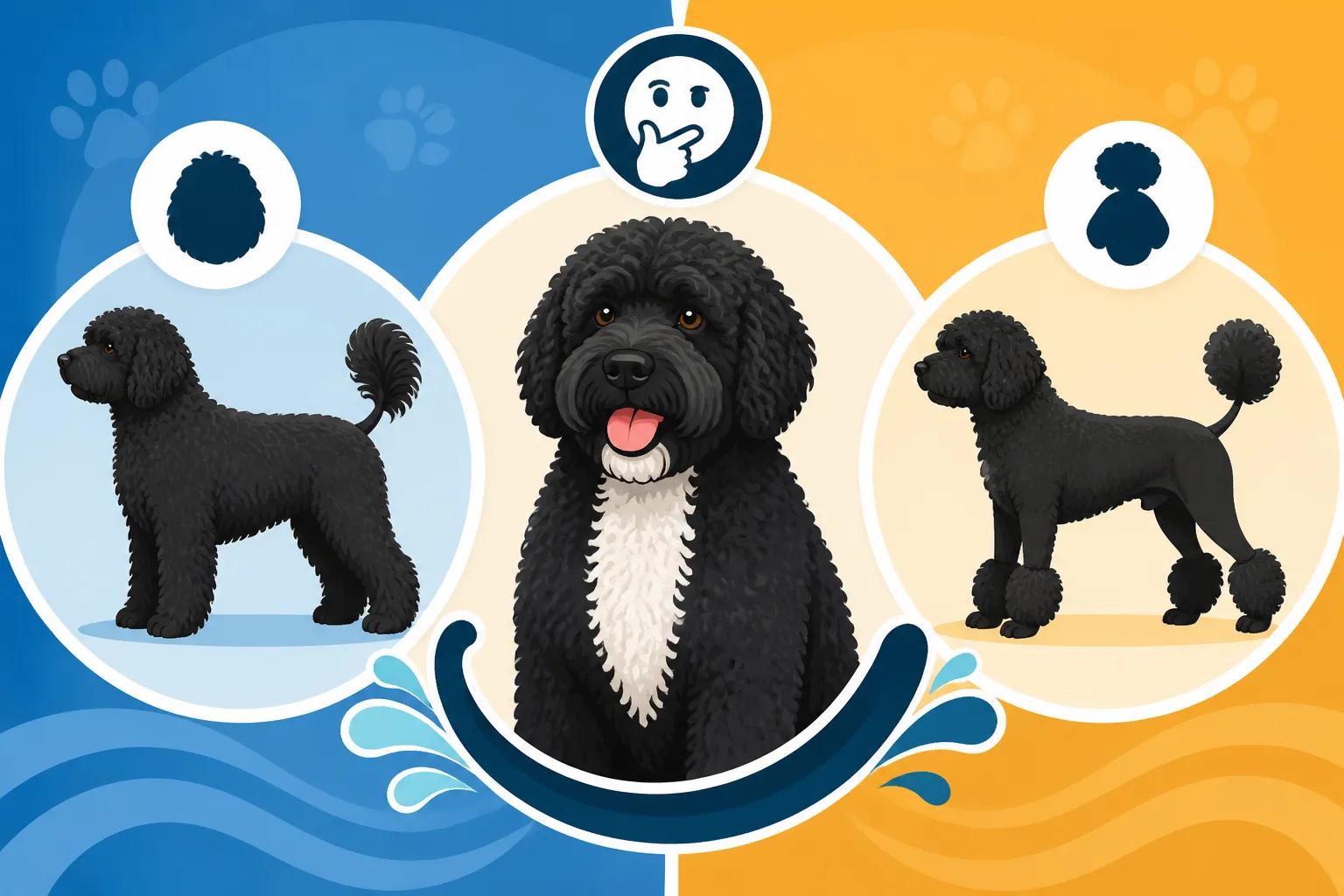
The Portuguese Water Dog is known for a few specific clips, primarily the "Retriever Clip" and the more elaborate "Lion Clip." While these clips can technically be attempted on an improper coat, their appearance will naturally differ.
-
The Retriever Clip: This is the most common clip for pet PWDs, leaving the coat at a moderate, even length all over the body. On an improper coat, a Retriever Clip will simply look smoother and flatter. The coat won't have the same robust, dense appearance, nor will it create the illusion of volume that a curly or wavy coat does. It's often the most practical choice for an improper coat, as it's low maintenance and easy to achieve. You can learn about What the Retriever Clip Leaves and What It Takes and adjust your blade choice accordingly for an improper coat, perhaps using a slightly longer blade to maintain some body.
-
The Lion Clip: This is the traditional, historical working clip, where the hindquarters and muzzle are shaved short, while the front body, head, and tail plume are left longer. This clip really highlights the density and texture of a proper coat. On an improper coat, the contrast might not be as dramatic. The "mane" and "plume" won't be as full or impressive, and the shaved areas might look sparser. While you can technically apply a Lion Clip to an improper coated PWD, it won't achieve the same iconic look and is rarely done outside of novelty, as improper coats are not typically shown anyway.
Here's a quick comparison of grooming aspects between proper and improper coats:
| Feature | Proper Coat (Curly/Wavy) | Improper Coat |
|---|---|---|
| Density | Very dense, thick | Thinner, less dense |
| Texture | Coarse, wiry, tightly curled or distinctly wavy | Softer, flatter, sometimes sparse, little curl/wave |
| Shedding | Very low (hair is caught in the curls) | Can shed noticeably more than proper coats |
| Matting Risk | High, especially without regular brushing/drying | Much lower risk, but not impossible |
| Drying Time | Long, requires force dryer for thorough drying | Shorter, dries faster |
| Clipping Effort | Can be challenging due to density; requires powerful clippers | Generally easier, clippers glide more readily |
| Volume/Body | High volume, holds shape well | Lower volume, lies flatter against the body |
| Water Repellency | High, designed for water work | Lower, absorbs more water |
| Show Ring | Required for conformation shows | Disqualified from conformation shows |
Embracing and Caring for Your Improper Coated PWD
Owning a Portuguese Water Dog with an improper coat is a unique experience. While it deviates from the breed standard, it doesn't diminish the dog's character, health, or potential as a loving family member. In many ways, it can simplify the day-to-day care, which is a welcome surprise for many owners.
Practical Benefits of the Improper Coat
Perhaps the biggest practical benefit of an improper coat is the reduced grooming burden. As we've discussed, the likelihood of severe matting is significantly lower, and drying times are much quicker. This means less time spent wrestling with brushes and dryers, and more time for walks, training, or simply cuddling on the couch. For busy families or those new to grooming a breed with such specific coat needs, an improper coat can be a blessing. While a proper PWD coat is often lauded as "hypoallergenic" due to its non-shedding nature, an improper coat, while potentially shedding a bit more, still tends to produce less dander and hair than many other breeds, which can still be a plus for those with milder allergies. For more on this, you might explore Whether a Portuguese Water Dog Sheds.
The softer, less dense coat might also be perceived as more pleasant to the touch for some owners, inviting more petting and close interaction. Plus, you won't have to worry about the cost or expertise required for complex show clips; a simple, practical clip will suit your dog perfectly and look great.
Showing and the Improper Coat
It's important to be realistic about showing an improper coated Portuguese Water Dog. As mentioned, the improper coat is considered a serious fault within the breed standard. This means that an improper coated PWD cannot compete in conformation shows, where dogs are judged on how closely they conform to the ideal appearance of the breed. If your goal is to breed or show your dog in conformation, an improper coat means it won't meet those criteria.
However, this absolutely does not mean your dog can't excel in other venues! Portuguese Water Dogs are incredibly intelligent, athletic, and eager to please, making them fantastic candidates for performance events. An improper coated PWD can compete and earn titles in obedience, rally, agility, dock diving, tracking, and, of course, water work trials. Their coat type has no bearing on their ability to perform these tasks, and in some cases, the lighter, quicker-drying coat might even be an advantage in certain sports. If you're interested in competitive dog sports, your improper coated PWD can be a true champion in its own right. So, while Whether an Improper Coated Portuguese Water Dog Can Be Shown in conformation is a clear "no," there's a whole world of activities open to them.
Ultimately, an improper coated Portuguese Water Dog is still every bit a PWD in spirit and ability. Their unique coat simply calls for a slightly different approach to grooming, often one that's a bit less demanding than their properly coated cousins. Embrace their individuality, adjust your grooming routine accordingly, and enjoy the wonderful companion you have.
Disclaimer
This article is for general informational purposes only and does not constitute professional advice. Laws, prices and regulations vary by location and change over time. Consult a qualified professional for guidance on your specific situation.