Which Gene Causes Improper Coat in a Portuguese Water Dog
Bringing a Portuguese Water Dog into your life is an incredible adventure, full of splashing, playful energy, and a distinctive coat that's as unique as their personality. But nothing feels quite as baffling or even a little disappointing as discovering your beloved puppy has an "improper coat." It’s not a medical condition, yet it deviates from the breed standard and often leaves owners wondering what happened and what it means for their furry friend. This guide delves deep into the fascinating genetics behind the Portuguese Water Dog’s distinctive coat, specifically uncovering which gene causes the improper coat and what this truly means for owners and breeders alike.
Understanding the Improper Coat Phenomenon
When you picture a Portuguese Water Dog, you probably envision a dog with either a dense, harsh curly coat, or a soft, flowing wavy coat. Both are hallmark features, and both require quite a bit of dedicated grooming to keep them looking their best and prevent matting. However, sometimes a puppy comes along that doesn't quite fit either description, sporting a coat that's often described as longer, softer, or even "shaggy." This is what we refer to as an improper coat, and while it might look endearing, it’s a significant deviation from the established breed type.
What Exactly Is an Improper Coat?
An improper coat in a Portuguese Water Dog is characterized by hair that is noticeably longer and often softer than the standard curly or wavy coat. Instead of forming tight curls or distinct waves, the hair might appear straighter, finer, or have a fluffy texture, particularly on the legs, head, and body. It might even resemble the coat of some other long-haired breeds, rather than the water-resistant, robust coat typical of the PWD. This longer, softer hair often doesn't have the same protective qualities, and can be more prone to collecting debris or becoming matted if not carefully maintained.
It’s crucial to understand that an improper coat is purely a cosmetic trait. It doesn't cause any pain or discomfort for the dog, nor does it inherently lead to any health problems. A dog with an improper coat is just as healthy, happy, and capable of being a wonderful companion as one with a proper coat. The concern surrounding it primarily stems from breed standards and expectations, especially within the show ring or for breeders aiming to preserve the distinct look of the Portuguese Water Dog. For a more detailed look at the physical attributes, you might want to read our article on What an Improper Coated Portuguese Water Dog Looks Like.
Why It's a Concern for Breeders and Owners
For dedicated Portuguese Water Dog breeders, the appearance of an improper coat in a litter is a serious matter. The breed standard, meticulously crafted over generations, explicitly describes the two acceptable coat types. An improper coat disqualifies a dog from being shown in conformation events, which can impact a breeder's reputation and their ability to campaign a dog for championship titles. It signals that certain genetic lines might carry the gene for improper coats, requiring careful consideration in future breeding decisions to maintain the integrity of the breed.
For pet owners, discovering their puppy has an improper coat can initially be confusing. While many will adore their dog regardless, some might have specifically chosen a Portuguese Water Dog for its low-shedding qualities or unique appearance. The improper coat, being softer and often longer, might feel different to groom, or it might not shed as "minimally" as expected, though PWDs are generally considered low-shedding. It’s important for breeders to be transparent about the possibility of improper coats and to educate prospective owners on what this entails, both in terms of appearance and care. Ultimately, the dog's health and temperament should always be the priority, and thankfully, the improper coat has no bearing on these vital aspects, as detailed in Improper Coat in a Portuguese Water Dog Is Genetic, Not Illness.
The Genetic Culprit: FGF5 Gene
To truly understand why some Portuguese Water Dogs develop an improper coat, we need to dive into the fascinating world of genetics. It's not some random anomaly or a mistake in puppy development; it's all coded within their DNA, specifically by a gene known for its role in determining hair length across many dog breeds.
Introducing the FGF5 Gene and Its Role in Coat Length
The Fibroblast Growth Factor 5, or FGF5, gene is a major player in determining hair length in dogs. Think of it as a switch that dictates how long individual hairs are allowed to grow before they stop. In most dog breeds, variations, or alleles, of the FGF5 gene control whether a dog has short hair, medium hair, or long hair. For example, a dog might inherit two copies of the "short hair" allele and have a sleek, close-lying coat, or two copies of the "long hair" allele and sport flowing locks like an Afghan Hound.
What makes the Portuguese Water Dog's situation interesting is that their "proper" coat (curly or wavy) is genetically coded to be of a medium length. It's not meant to be excessively long, nor is it meant to be extremely short. The FGF5 gene is key to maintaining this specific, functional coat length that historically served these working dogs so well in the water.
How the Specific Mutation Leads to an Improper Coat in PWDs
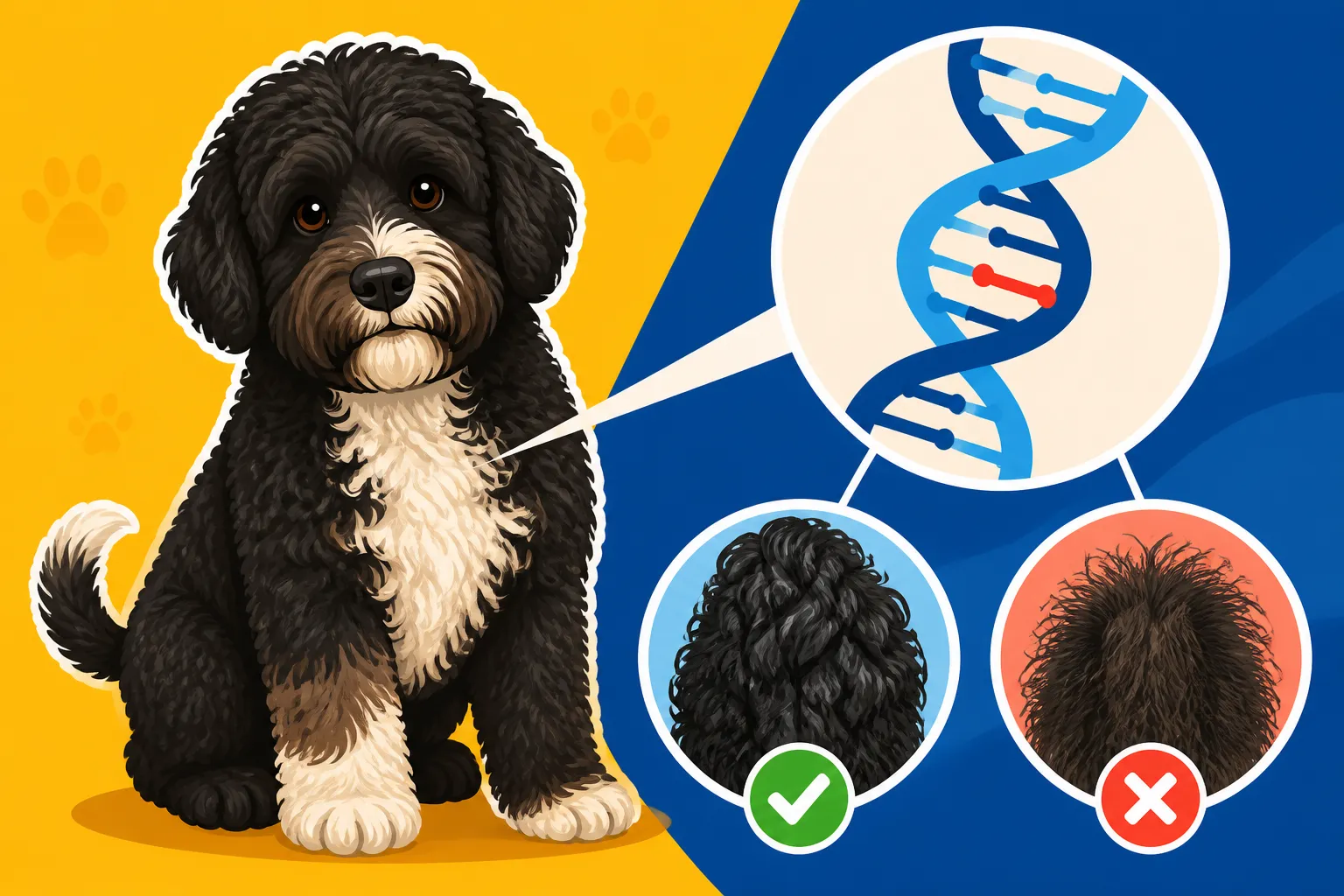
In the Portuguese Water Dog, the improper coat is caused by a specific mutation within the FGF5 gene, often referred to as the L-allele (for long hair) when present in a homozygous state (meaning two copies of this allele). While this L-allele typically leads to visibly long hair in breeds that normally have short hair, in the PWD, it interacts with the breed’s natural coat genetics to produce what we call an "improper" coat.
Essentially, PWDs are genetically predisposed to have a medium-length coat. When a dog inherits two copies of the specific variant of the FGF5 gene that is associated with longer hair (often designated as 'l/l' in genetic testing results, where 'l' represents the improper coat allele and 'L' represents the proper coat allele), their hair growth is allowed to continue past the desired medium length. This results in the characteristic longer, softer, and often straighter coat that doesn’t form the tight curls or distinct waves expected of the breed. It’s a direct consequence of this particular genetic instruction to grow hair longer than the breed standard dictates for a proper working coat.
Inheritance Patterns of the Improper Coat Gene
Understanding the genetic underpinnings is one thing, but knowing how these traits are passed down through generations is crucial for breeders and future puppy owners. The improper coat gene follows a very specific and common pattern of inheritance in dogs: autosomal recessive.
Autosomal Recessive Inheritance Explained
Autosomal recessive inheritance means two key things. First, "autosomal" refers to the fact that the gene is located on a non-sex chromosome, meaning it affects males and females equally. Second, "recessive" is the critical part: a dog must inherit two copies of the improper coat gene, one from each parent, to actually express the trait and have an improper coat.
If a dog inherits only one copy of the gene, they are considered a "carrier." Carriers do not display the improper coat themselves; their own coat looks completely normal and falls within the breed standard. However, they carry the hidden gene and can pass it on to their offspring. It's a bit like having a silent partner in the genetics game – you don't see it, but its presence can influence future generations. This is why genetic testing is so vital for responsible breeding, as simply looking at a dog won't tell you if it's a carrier.
What It Means for Carrier and Affected Dogs
Let's break down the different scenarios based on a dog's genetic status for the improper coat gene:
- Clear (L/L): A "clear" dog has two copies of the normal, proper coat allele. They will have a proper Portuguese Water Dog coat and cannot pass the improper coat gene to their offspring.
- Carrier (L/l): A "carrier" dog has one copy of the proper coat allele and one copy of the improper coat allele. They will have a normal, proper Portuguese Water Dog coat. However, when bred, they have a 50% chance of passing the improper coat allele to each puppy. If two carriers are bred together, there's a 25% chance for each puppy to inherit two copies of the improper coat gene and be affected. This concept is explored further in Whether Two Carriers Produce an Improper Coat.
- Affected (l/l): An "affected" dog has two copies of the improper coat allele. They will exhibit the longer, softer, improper coat. Every one of their offspring will inherit at least one copy of the improper coat allele from them.
This clear understanding of inheritance patterns empowers breeders to make informed decisions. By knowing the genetic status of their breeding stock, they can strategically plan pairings to minimize or even eliminate the production of puppies with improper coats, contributing to the breed's health and adherence to standard.
Identifying the Improper Coat: Beyond Appearance
While the ultimate confirmation of the improper coat gene's presence comes from genetic testing, observant owners and breeders can often spot visual clues, especially as a puppy grows. Recognizing these signs and understanding the role of DNA testing are both vital steps in managing this trait within the Portuguese Water Dog community.
Visual Signs and Early Detection
When a Portuguese Water Dog puppy is very young, it can be quite challenging to definitively tell if they will develop an improper coat. Puppy coats, regardless of future type, are often softer and fluffier. However, as puppies grow, typically between 8 to 16 weeks of age, differences can start to emerge. Puppies destined for an improper coat may begin to show hair that seems to grow faster and longer than their littermates, particularly around the muzzle, ears, and legs. The characteristic tight curls or defined waves might simply not form, or they might appear much looser and less dense.
Instead of developing the sturdy, water-resistant texture, the coat might feel noticeably silkier or cotton-like. Sometimes, the improper coat is most evident when comparing it directly to a properly coated littermate or adult Portuguese Water Dog. The lack of the classic "crush" or springiness in the coat is often a giveaway. While these visual cues can raise suspicions, they are not 100% conclusive, as some proper coats can go through awkward stages. This is where modern science truly shines.
The Importance of DNA Testing
The most definitive way to determine if a Portuguese Water Dog carries or is affected by the improper coat gene is through DNA testing. This simple, non-invasive test, usually involving a cheek swab, can accurately identify a dog's genetic status (clear, carrier, or affected) for the FGF5 gene mutation responsible for the improper coat. This is an invaluable tool for both breeders and prospective owners.
For breeders, pre-breeding genetic testing is paramount. It allows them to choose breeding pairs wisely, ensuring they don't accidentally produce an entire litter of improper-coated puppies by breeding two carriers together. Many reputable breeders will test all their breeding stock for a panel of genetic conditions, including improper coat, GM1 Gangliosidosis, and Juvenile Dilated Cardiomyopathy. The article The Four DNA Tests Every Portuguese Water Dog Breeder Runs provides more detail on these essential screenings. Knowing the genetic status helps preserve the breed’s characteristics while maintaining genetic diversity. While improper coat itself isn't a health emergency, responsible breeders use DNA tests like these to ensure the overall health of their lines, minimizing risks for more serious conditions that could lead to unexpected vet bills. This comprehensive approach gives new owners peace of mind, knowing their puppy comes from a well-screened lineage, helping them plan for a healthy life journey, potentially with robust pet insurance like Healthy Paws to cover any truly unforeseen medical issues.
For prospective puppy owners, asking to see the genetic test results of both parents for improper coat (along with other crucial health tests) is a vital step. It ensures transparency and gives you a clear understanding of what kind of coat your puppy is genetically programmed to have. Many reputable DNA testing companies, such as OptiGen, Embark, and Canine Health Check, offer specific tests for the FGF5 gene in Portuguese Water Dogs, making it easy and accessible to gain this critical information.
Implications for Breeding and the Breed Standard
The improper coat gene presents a unique challenge and responsibility for Portuguese Water Dog breeders. While it’s not a health crisis, it directly impacts the breed's physical characteristics and adherence to its long-standing standard. Responsible breeding practices are key to navigating this genetic trait effectively.
Breeding Strategies for Avoiding Improper Coats
For breeders committed to preserving the Portuguese Water Dog's distinct characteristics, managing the improper coat gene requires careful planning. The most straightforward strategy is to only breed dogs that are "clear" (L/L) of the improper coat gene. This guarantees that none of their offspring will ever have an improper coat, nor will they be carriers. However, this approach, if followed too strictly, could inadvertently narrow the gene pool, potentially increasing the prevalence of other undesirable traits or reducing overall genetic diversity.
A more balanced and common strategy involves carefully breeding "carrier" (L/l) dogs, but only when paired with a "clear" (L/L) mate. When an L/l dog is bred to an L/L dog, statistically, 50% of the puppies will be clear (L/L) and 50% will be carriers (L/l). Importantly, none of the puppies will express an improper coat. This allows breeders to utilize valuable dogs that might be carriers but possess other exceptional qualities, such as excellent health, temperament, or conformation, without producing affected offspring. It's an ethical way to manage the gene while maintaining genetic diversity. Regardless of the strategy, comprehensive health testing for all breeding stock, covering conditions beyond just coat type, is an absolute must, as discussed in What a Portuguese Water Dog Breeder Should Have Tested.
Impact on Show Dogs and the Breed's Future
The breed standard for the Portuguese Water Dog is quite clear about the acceptable coat types: either curly or wavy. A dog with an improper coat, due to its longer and often softer texture, does not meet this standard and is therefore disqualified from competing in conformation shows. This means that even if a dog with an improper coat possesses an otherwise perfect structure, movement, and temperament, it cannot earn championship titles in the show ring. This is a significant consideration for breeders who participate in showing their dogs and use titles to validate their breeding program.
Table: FGF5 Gene Alleles and Portuguese Water Dog Coat Types
| Genetic Status (FGF5) | Inherited Alleles | Phenotype (Coat Appearance) | Breeding Outcome (if paired with L/L) | Show Ring Eligibility |
|---|---|---|---|---|
| Clear | L/L | Proper (Curly or Wavy) | All L/L | Eligible |
| Carrier | L/l | Proper (Curly or Wavy) | 50% L/L, 50% L/l | Eligible |
| Affected | l/l | Improper (Long, Soft) | All L/l (Carriers) | Disqualified |
Note: 'L' represents the proper coat allele; 'l' represents the improper coat allele.
Beyond the show ring, the responsible management of the improper coat gene is crucial for the breed's future. While it doesn't cause health issues, allowing the gene to become widespread could dilute the distinctive appearance of the Portuguese Water Dog. Breeders play a pivotal role in ensuring that future generations maintain the characteristics that define the breed. By prioritizing genetic testing and ethical breeding practices, they safeguard the unique heritage of these wonderful dogs. Choosing a puppy from a breeder who prioritizes genetic testing for all known conditions demonstrates a commitment to the breed's future health. This careful selection process helps ensure puppies are free from preventable genetic diseases that might require extensive veterinary care, where a reliable pet insurance provider like Healthy Paws could offer crucial support. For instance, an improper coat is one reason a dog might not be shown, as explained in Whether an Improper Coated Portuguese Water Dog Can Be Shown.
Living with a Portuguese Water Dog with an Improper Coat
So, your beloved Portuguese Water Dog has an improper coat. What now? The good news is that it doesn't change the essence of who your dog is. They are still that fun-loving, energetic, and intelligent companion you fell in love with. However, there are a few practical considerations, primarily regarding grooming, that you’ll want to be aware of.
Grooming Considerations for Different Coat Types
The primary difference you’ll notice with an improper coat is in its texture and length. While proper curly and wavy coats tend to be dense and repel water, an improper coat often grows longer and can be softer, making it more prone to matting if not managed correctly. This means your grooming routine might need a slight adjustment compared to a dog with a standard coat.
You might find that brushing needs to be more frequent, possibly daily, especially in areas prone to friction like behind the ears, under the harness, and on the legs. A good slicker brush and a sturdy metal comb will be your best friends. These tools help you get down to the skin to ensure no mats are forming underneath the longer, softer top layer. Regular trims are also essential to keep the coat at a manageable length, preventing it from dragging or collecting too much debris. While the goal isn't to make it look like a standard PWD coat, keeping it tidy will improve your dog's comfort and cleanliness. Some owners might even prefer a shorter trim all over to minimize grooming time, which is perfectly fine for a pet dog.
Health and Temperament: Is an Improper Coat Healthy?
Let's put this worry to rest right away: an improper coat absolutely does not impact your Portuguese Water Dog's health or temperament. A dog with an improper coat is just as robust, active, and full of life as any other PWD. They will still possess that iconic intelligence, eagerness to please, and boundless energy that makes the breed so captivating. You won't find them suffering from any related skin conditions, allergies, or internal health problems directly due to their coat type. The scientific consensus is clear: Whether an Improper Coated Portuguese Water Dog Is Healthy is an easy "yes."
Your improper-coated PWD will still love to swim, play fetch, and be right by your side, ready for any adventure. Their personality and joyful spirit remain entirely intact. The only 'impact' is purely aesthetic and logistical, related to grooming. So, if you have an improper-coated Portuguese Water Dog, embrace their unique look! Focus on providing them with the best care, training, and love, just as you would any other dog. Even though an improper coat doesn't impact a dog's health or require specialized medical care, life with any active dog, especially a PWD, can bring unexpected bumps and scrapes. Having a comprehensive pet insurance plan, such as those offered by Healthy Paws, can provide financial security for unforeseen accidents or illnesses, allowing you to focus on giving your PWD the best possible care, regardless of their coat type.
Disclaimer
Please remember that the information provided in this guide is intended for educational and informational purposes only and is not a substitute for professional veterinary advice. Always consult with a qualified veterinarian or canine geneticist for any health concerns or breeding decisions related to your Portuguese Water Dog.