What a Portuguese Water Dog’s Coat Is Made Of
One of the biggest questions new Portuguese Water Dog owners, and even those just admiring the breed, often have is about that incredible, distinctive coat. It's not just hair; it's a marvel of canine evolution, perfectly adapted for a life on the water. But understanding what it's truly made of, and why it behaves the way it does, is key to appreciating its unique beauty and managing its care. This guide will dive deep into the very fibers of the Portuguese Water Dog's coat, explaining its composition, types, and the secrets behind its famed qualities.
The Unique Genetic Blueprint of the PWD Coat
The Portuguese Water Dog's coat is truly a marvel of natural engineering, meticulously developed over centuries to protect these working dogs from the harsh elements of the sea. Unlike many other breeds, particularly those with thick, insulating double coats, the PWD sports a single coat. This isn't just a minor difference; it's fundamental to its entire function and feel. This single-layer construction means there's no soft, downy undercoat that sheds profusely seasonally, which is a major factor in why so many people with allergies find PWDs tolerable.
A Single Layer Designed for the Water
You see, most dogs have a double coat: a soft, insulating undercoat for warmth and a coarser, protective topcoat to repel water and dirt. Think of breeds like Huskies or Golden Retrievers, whose fur seems to fly out in clouds during shedding season. The PWD, however, has evolved differently. Its coat consists solely of what would be considered the topcoat in other breeds, but it's much denser and uniquely structured. This dense, single layer acts almost like a natural wetsuit, offering insulation without trapping excessive water or creating a heavy, waterlogged mass that would hinder a dog's swimming ability.
The absence of an undercoat means a different shedding pattern, which we'll explore shortly. But more importantly, it means the hair itself is designed to be water-repellent and to dry relatively quickly, even when completely saturated. The individual hairs have a texture that resists deep penetration by water, allowing it to bead off to some extent, and the tight curls or waves prevent water from reaching the skin directly. This is why you'll often see a PWD shake off, and a surprising amount of water simply flies away, leaving them damp rather than drenched. Why a Portuguese Water Dog's Coat Holds Water dives into this in more detail.
The Hypoallergenic Misconception and Reality
When people talk about a "hypoallergenic" dog, they're often thinking of a PWD, a Poodle, or perhaps a Bichon Frise. But the term is a bit of a misnomer, and it’s a frustration for many who desperately want a dog but suffer from allergies. No dog is truly 100% hypoallergenic, as all dogs produce dander, saliva, and urine, which are the main culprits for allergic reactions. However, the Portuguese Water Dog's unique coat significantly reduces the amount of allergens dispersed into the environment.
The key lies in its shedding pattern and coat structure. Because it doesn't have an undercoat and its hair grows continuously, similar to human hair, it sheds far less than double-coated breeds. The hair that does shed tends to get caught within the dense, curly or wavy outer coat rather than falling out onto furniture and floors. This trapped hair, along with the dander clinging to it, is then removed through regular brushing, preventing it from becoming airborne. For allergy sufferers, this means fewer allergens floating around their home. How Portuguese Water Dog Is Hypoallergenic explains this process in depth, and Whether a Portuguese Water Dog Suits an Allergy Household explores if this breed is right for you. It's not a magic bullet, but for many, it makes living with a canine companion a real possibility.
The Two Distinct Coat Textures: Curly and Wavy
The Portuguese Water Dog breed standard recognizes two distinct coat types: curly and wavy. While both are single coats and share the same core genetic makeup that makes them non-shedding in the traditional sense, they present quite differently in appearance and sometimes in maintenance needs. Understanding these differences is crucial for any PWD owner, as it influences everything from grooming routine to how your dog looks after a swim.
The Delightful Curl: A Tight and Spiraled Look
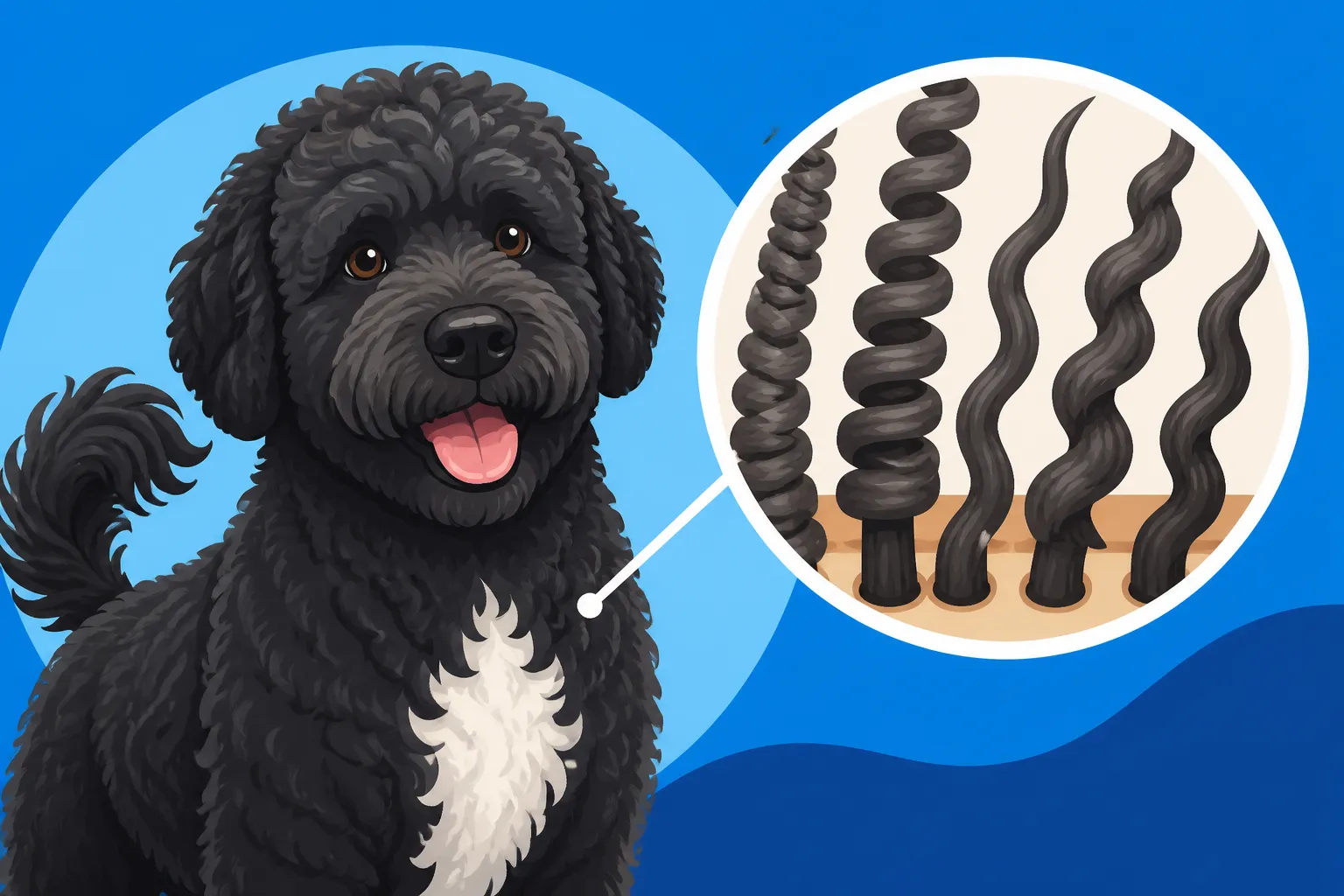
The curly coat is often described as resembling astrakhan or ringlets. The individual hairs are typically quite strong, forming tight, cylindrical curls that can range from a more open ringlet to a very tight, compact curl. When groomed correctly, this coat should have a uniform, somewhat spongy feel. The curls lie close to the body, giving the dog a dense, compact appearance. From a distance, a well-brushed curly-coated PWD can almost look like it's covered in soft, miniature springs.
Maintaining a curly coat requires consistent attention. While the curls are fantastic at trapping shed hair and dander, they are also prone to matting if not regularly brushed and combed down to the skin. The tight nature of the curls means that any loose hair quickly intertwines with the growing hair, forming knots that can become painful if neglected. Owners of curly-coated PWDs often find that a firm slicker brush followed by a metal comb is essential to get through those dense spirals. How a Curly Coat Differs From a Wavy Coat further elaborates on the nuances of each.
The Flowing Wave: A Softer, Looser Appearance
The wavy coat, in contrast, presents a much softer and often more flowing appearance. The hair is generally longer and hangs in loose waves, sometimes with a slight sheen. Rather than tight ringlets, you'll see more of a ripple effect throughout the coat. The individual hairs are usually finer than those in a curly coat, contributing to its softer texture. Many people describe the wavy coat as having a more "shaggy" or tousled look when it's allowed to grow out.
While the wavy coat might appear more forgiving, it has its own set of grooming challenges. The longer, finer hairs can still mat, particularly in areas of friction like behind the ears, under the collar, or in the armpits. Because the waves are less defined than tight curls, it can sometimes be harder to feel mats forming underneath the surface until they've become quite established. Regular, thorough line brushing is just as critical for a wavy coat to prevent problems, perhaps even more so because of the illusion of looseness. Both Curly or Wavy: the Two Portuguese Water Dog Coats cover these distinctions, helping prospective owners understand what to expect.
| Feature | Curly Coat | Wavy Coat |
|---|---|---|
| Appearance | Tight, cylindrical ringlets, astrakhan-like | Loose waves, softer, more flowing |
| Texture | Firmer, more dense, spongy | Finer, softer, often shaggier |
| Matting Risk | High, due to tight interlocking curls | High, due to longer, finer hairs tangling |
| Drying Time | Can feel damp longer due to density | May dry slightly faster due to looser texture |
| Grooming Feel | Requires thorough brushing to skin to prevent matting | Requires thorough brushing to skin, can hide mats |
| Visual Appeal | Distinct, uniform, compact | Tousled, shaggy, natural |
How the PWD Coat Adapts and Protects
Beyond its aesthetic appeal, the Portuguese Water Dog's coat is a functional masterpiece, perfectly designed for its original purpose: working alongside fishermen in the often-chilly waters off the Iberian Peninsula. Every aspect of its composition and growth pattern contributes to its ability to protect the dog in aquatic environments, making it far more than just "hair."
Natural Insulation and Water Resistance
Imagine jumping into cold ocean water hour after hour. Without proper protection, hypothermia would quickly set in. The PWD's dense, single coat provides remarkable insulation, even when wet. The sheer volume and tightness of the hair create a barrier that traps a layer of warm air close to the dog's skin, which acts as an insulating layer. This is why, even in quite cold temperatures, a properly conditioned Portuguese Water Dog can enjoy a swim without undue risk.
The individual hairs themselves are also naturally water-resistant. While not truly waterproof like a duck's feathers, the coat's texture and density cause water to bead up and run off, rather than soaking straight through to the skin immediately. This reduces the amount of water the dog has to carry, making them more efficient swimmers. When they emerge from the water and give that characteristic full-body shake, much of the remaining water is expelled, allowing them to dry surprisingly quickly compared to breeds with absorbent double coats. Why a Portuguese Water Dog's Coat Holds Water further explains this unique trait, vital for their historical role.
Protection from Sun and Scrapes
It's not just cold water the coat protects against. Out on the fishing boats, and even today during dock diving or water trials, PWDs are exposed to direct sunlight for extended periods. The dense coat provides a natural barrier against harmful UV rays, protecting their skin from sunburn, especially for dogs with lighter-colored coats or white markings. This is particularly important for areas that might be less pigmented.
Furthermore, the robust nature of the coat offers a degree of physical protection against minor scrapes and abrasions that can occur when navigating rocky shorelines, retrieving objects from rough terrain, or even just playing vigorously. The thick padding of hair can prevent superficial cuts and scratches that might otherwise affect a short-coated or fine-haired dog. While not impenetrable armor, it certainly adds a layer of resilience to their active lives.
The Coat's Journey: From Puppy Fluff to Senior Wisdom
A Portuguese Water Dog's coat isn't static; it undergoes several significant transformations throughout its life, starting from the moment they're born right through their senior years. These changes are natural and expected, but they can sometimes present grooming challenges or raise questions for owners unfamiliar with the breed's unique coat development.
The Adorable Puppy Coat Transformation
When you bring home a Portuguese Water Dog puppy, their coat is likely soft, fluffy, and generally manageable. It might be wavy, curly, or a mix, but it lacks the density and often the definitive texture of an adult coat. This "puppy fluff" is delightful, but it's a temporary stage. Sometime between 6 to 18 months, often coinciding with adolescence, the puppy coat begins to shed out and is replaced by the much denser, coarser, and more textured adult coat. This is known as "blowing coat."
The puppy coat change can be a challenging time for grooming. The shedding puppy hair gets easily tangled and matted with the incoming adult coat, creating a perfect storm for knots. During this period, diligent daily brushing and combing are absolutely essential to prevent severe matting, which can be painful for the puppy and require extensive dematting or even shaving. Many owners are caught off guard by the intensity of this transition, but understanding that it's a normal part of their development helps manage expectations and care. When a Portuguese Water Dog's Puppy Coat Changes and How Long a Portuguese Water Dog's Coat Change Runs offer detailed insights into this important phase.
Lifelong Growth and the Impact of Hormones
Unlike many breeds, a Portuguese Water Dog's hair grows continuously throughout its life. This is why regular clipping is necessary, as the coat would otherwise grow indefinitely and become an unmanageable, matted mess. This continuous growth also contributes to the breed's low-shedding quality; instead of falling out, the dead hair remains entangled in the growing coat, waiting to be brushed out.
Hormones, particularly those related to spaying or neutering, can also influence the texture and density of a PWD's coat. After spaying or neutering, some Portuguese Water Dogs may develop a softer, thicker, and sometimes cottonier coat. This change can make the coat more prone to matting and require more frequent grooming. While not every PWD experiences this, it's a common enough phenomenon that owners should be aware of the possibility. Whether a Spayed Portuguese Water Dog's Coat Changes delves into this hormonal effect and its implications for grooming.
The Subtle Changes of an Aging Coat
As a Portuguese Water Dog enters its senior years, typically around the age of 8 or 9, its coat can undergo further subtle changes. You might notice the coat becoming slightly thinner in places, or perhaps developing a softer, finer texture. Just like humans, dogs can develop graying hair, especially around the muzzle and eyes, and sometimes throughout the coat, which can make a black PWD appear more grizzled or a brown one more faded.
The overall density of the coat might decrease, and some older dogs might be less tolerant of extensive grooming sessions due to arthritis or other age-related discomforts. It's important to continue regular grooming, perhaps adapting the tools or frequency to suit their comfort level. For example, a senior PWD might benefit from more frequent, shorter grooming sessions rather than one long, arduous one. What an Aging Portuguese Water Dog's Coat Looks Like provides guidance on what to expect and how to adapt care for your senior companion.
Grooming for Coat Health: Beyond the Brush
Understanding what your Portuguese Water Dog's coat is made of naturally leads to understanding how best to care for it. It's not just about aesthetics; proper grooming is fundamental to the dog's comfort, hygiene, and overall health. Neglecting the coat can lead to painful matting, skin infections, and discomfort, especially for a breed that loves to swim.
The Essential Tools of the Trade
To properly maintain a Portuguese Water Dog's coat, you need the right tools. A standard bristle brush or a flimsy slicker simply won't cut it. You'll need:
- A sturdy slicker brush: This is your primary weapon against mats. Choose one with long, firm pins that can reach down to the skin, not just glide over the top of the coat. Brands available on Amazon or Chewy offer various options, from basic slickers to more ergonomic designs.
- A metal comb: Essential for checking your work after brushing. A greyhound comb with both wide and fine teeth is ideal. You should be able to comb through the coat from skin to tip with no resistance.
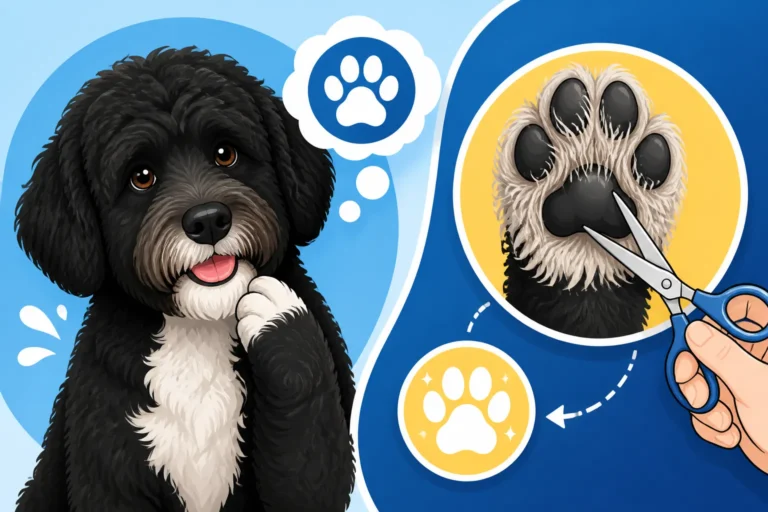
- Blunt-nosed scissors: For carefully cutting out very small, stubborn mats that cannot be brushed or combed out, or for tidying up around the eyes and paws.
- Quality clippers: For keeping the coat at a manageable length. Professional-grade clippers with various blade sizes will make home grooming much easier and prevent "clipper burn."
- A force dryer: While not strictly essential for every owner, a force dryer is a game-changer for thoroughly drying a PWD after baths or swims, preventing skin issues and making grooming much easier. How Long a Portuguese Water Dog Takes to Dry highlights the importance of thorough drying.
- Shampoo and Conditioner: Formulated for dogs, especially those with dense coats. A good quality shampoo will clean without stripping natural oils, and a conditioner can help detangle and moisturize. Some pet supply stores, like Chewy, carry specific products designed for curly or long-coated breeds.
Regular and thorough brushing, ideally several times a week, is the cornerstone of PWD coat care. It not only removes trapped shed hair and prevents mats but also distributes natural skin oils, promoting a healthy, shiny coat.
Baths, Drying, and Professional Grooming
Bathing your Portuguese Water Dog should be done as needed, typically every 2-4 weeks, or after particularly messy adventures. It's crucial to thoroughly wet the coat, work the shampoo down to the skin, and rinse completely. Any residual shampoo can irritate the skin and lead to flaking or itching. After bathing, towel dry as much as possible, then use a force dryer to get the coat completely dry. A damp coat, especially in a dog as dense as a PWD, is an invitation for hot spots and skin infections. Drying a Portuguese Water Dog After Every Swim is a must-read for all owners.
Even with diligent home grooming, many PWD owners opt for professional grooming every 6-8 weeks. A professional groomer has the tools, experience, and often specialized drying equipment to properly clip, bathe, and dry the coat. They can also spot skin issues or mats you might have missed. Whether you prefer the functional retriever clip or the distinctive lion clip, a professional can execute it flawlessly. The Retriever Clip Is the Coat Most Portuguese Water Dogs Wear and The Lion Clip Costs a Portuguese Water Dog Owner Daily Brushing provide more details on these styles.
Addressing Common Coat Challenges
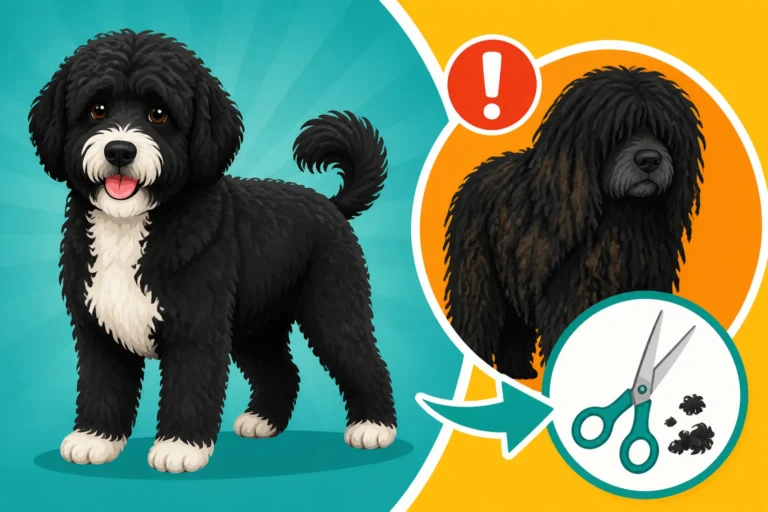
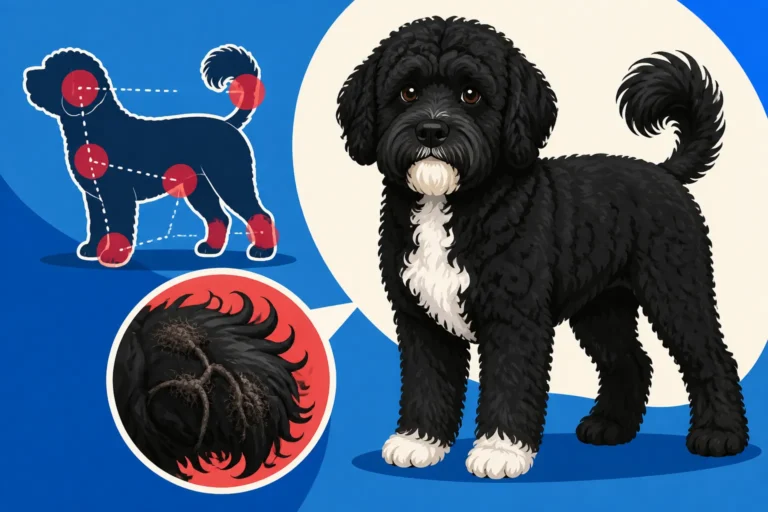
- Matting: The number one enemy of the PWD coat. Mats are painful, pull on the skin, and can hide infections. Prevention through consistent brushing is key. If mats develop, try to work them out carefully with a comb and detangling spray. For severe matting, a professional groomer or vet visit is necessary, as shaving might be the only humane option.
- Dry Skin/Coat: Can be caused by harsh shampoos, insufficient rinsing, or environmental factors. Ensure you're using a good quality, moisturizing shampoo and conditioner. A diet rich in omega fatty acids, perhaps from supplements or specialized foods available from providers like Ollie, can also contribute to skin and coat health.
- Fading: Some PWDs, particularly those with black or brown coats, may experience sun-induced fading, turning their coats a reddish or brownish hue over time. This is mostly aesthetic and doesn't impact health.
The Portuguese Water Dog's coat is a significant part of its identity and requires a commitment to regular, thorough care. But with the right understanding and tools, it can be a source of pride and comfort for both you and your remarkable companion.
Disclaimer
This article is for general informational purposes only and does not constitute professional advice. Laws, prices and regulations vary by location and change over time. Consult a qualified professional for guidance on your specific situation.