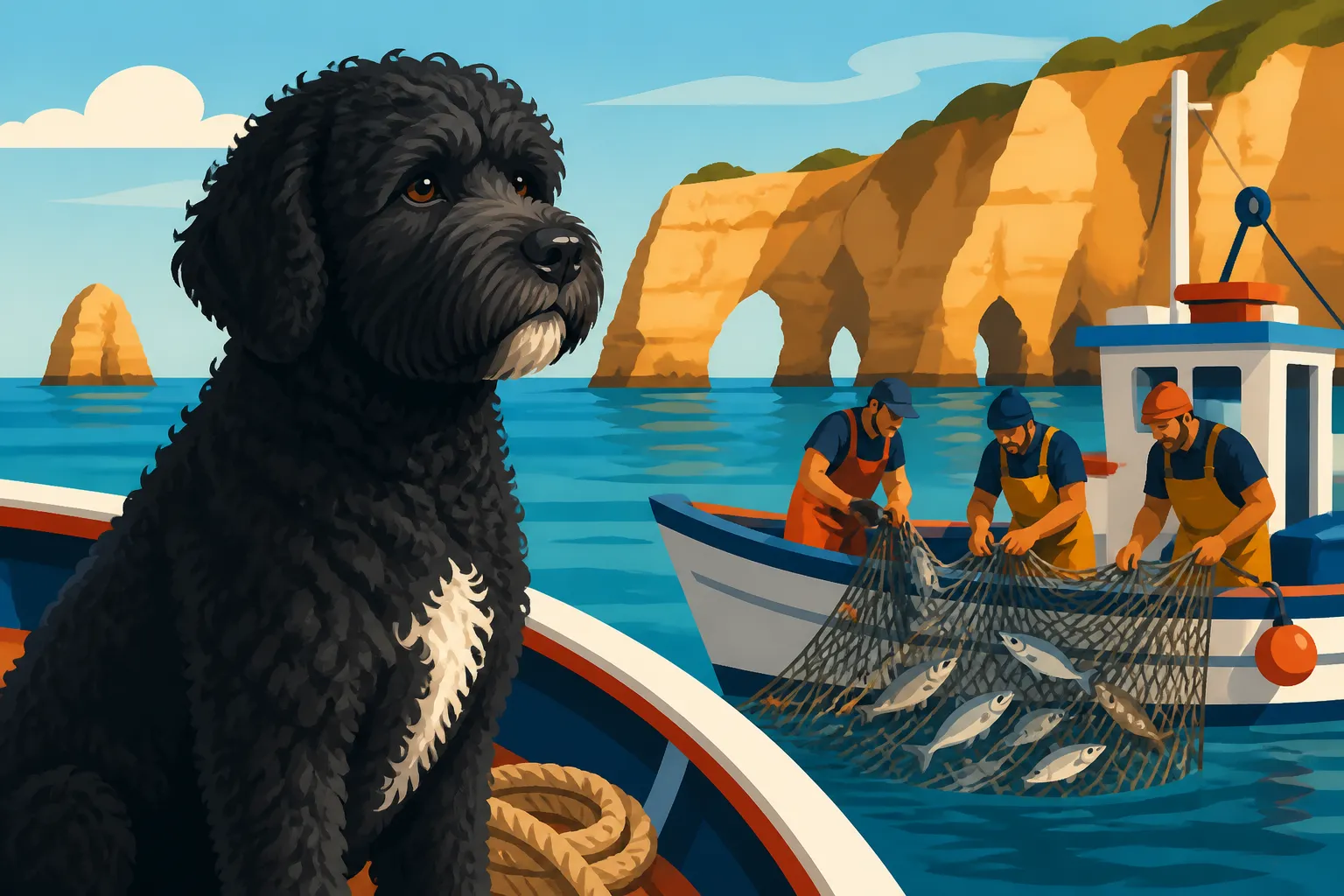
The Portuguese Water Dog Worked the Algarve Fishing Fleet
For generations, the idea of a dog having a "job" might bring to mind a shepherd herding sheep or a retriever fetching ducks. But imagine a dog working on a fishing boat, day in and day out, as an indispensable part of the crew. That's the incredible story of the Portuguese Water Dog, a breed whose very existence was forged by the rough seas and the hardy fishermen of Portugal's Algarve coast. This guide will take you on a journey to explore the fascinating history of these loyal, intelligent canines and their vital role in an industry that depended on their unique abilities.
The Ancient Mariner: Unpacking the Portuguese Water Dog's Origins
When you look at a Portuguese Water Dog today, with their buoyant, confident stride and intelligent gaze, it’s easy to see the echoes of their seafaring past. But how did such a specialized breed come to be? Their story is deeply woven into the fabric of Portugal’s maritime history, a testament to centuries of selective breeding for intelligence, athleticism, and an unparalleled love for water.
Tracing the Breed's Ancestry to the Iberian Peninsula
The exact origins of the Portuguese Water Dog are, like many ancient breeds, a bit of a mystery, shrouded in the mists of time and oral tradition. What we do know is that their lineage is incredibly old, with some theories suggesting they trace back thousands of years to dogs brought by migrating tribes or invaders across the Iberian Peninsula. There’s a strong belief that their ancestors were robust, shaggy-coated dogs that adapted over generations to the rugged coastal environments and the demands of working alongside humans in and around the water. These early dogs weren't just companions; they were tools, partners whose abilities were essential for survival and prosperity in the fishing communities along Portugal's long coastline. Their genetic ties are sometimes linked to other ancient water dogs, like the Spanish Water Dog, suggesting a shared ancestry in this region, all developed for similar purposes in an aquatic environment.
The Enigmatic "Cao de Agua" and Its Historical Roots
In Portugal, the breed is often referred to as "Cão de Água Português," which directly translates to "Portuguese Water Dog." This simple name speaks volumes about their historical purpose. They weren't just any water dog; they were the water dog of Portugal. Historical accounts and anecdotal evidence paint a picture of these dogs being present on fishing vessels for centuries, perhaps even predating many modern breeds we recognize today. They were so integrated into the lives of the fishermen that their presence was simply a given, much like the nets or the boats themselves. These dogs were not confined to a single role but were true all-rounders, capable of performing a variety of demanding tasks in harsh conditions. Their thick, waterproof coats and powerful swimming abilities were perfectly suited to the cold Atlantic waters, making them indispensable members of the fishing communities. Where the Portuguese Water Dog Comes From gives a deeper dive into their geographical roots, highlighting the specific regions that shaped them.
Life Aboard: The Portuguese Water Dog's Role in the Fishing Fleet
Imagine the rough and tumble life on a small fishing boat in the Atlantic Ocean, far from shore. Space was tight, conditions were often brutal, and every single soul aboard, human or canine, had to pull their weight. The Portuguese Water Dog wasn’t a mascot; it was an active, working member of the crew, earning its keep every single day.
The All-Around Deckhand: Retrieving, Herding, and Guarding
These dogs truly were the Swiss Army knives of the fishing fleet. Their intelligence and versatility meant they could turn their paw to almost any task required on a boat. Retrieving objects that fell overboard was a primary function, saving valuable equipment from being lost to the depths. But their duties extended far beyond simply fetching. They were natural herders, using their unique swimming style to drive fish into nets, a skill that sounds almost unbelievable but was incredibly effective. Picture a dog, paddling furiously, creating a disturbance in the water that encouraged shoals of fish to move in the desired direction. On top of that, they served as vigilant watchdogs, alerting the crew to approaching boats or potential dangers. Their presence offered both practical assistance and a profound sense of security in the isolation of the open sea. What a Portuguese Water Dog Did for a Fishing Crew delves into these diverse responsibilities in more detail.
More Than Just a Pet: An Essential Member of the Crew
It’s hard to overstate just how critical these dogs were to the fishermen’s livelihoods. They weren't just furry companions to be petted; they were colleagues, trusted partners whose absence would have made the job infinitely harder, and in some cases, impossible. A fisherman's success, and sometimes even his safety, depended on the capabilities of his PWD. In an era before advanced technology, these dogs filled a technological gap, acting as living sonar, retriever, and herder all rolled into one. They were bred for problem-solving, often taking initiative when a human command wasn't immediately clear or possible in the chaos of a storm. This bred a dog that was not only obedient but also inherently independent and quick-witted, capable of making decisions on its own. Their contribution to the fishing industry was so significant that it’s no exaggeration to say the prosperity of many coastal communities relied, in part, on the strong backs and sharp minds of these incredible dogs.
Working the Waters: Specific Tasks and Unique Adaptations
The Portuguese Water Dog isn't just a good swimmer; it's a finely tuned aquatic athlete, perfectly adapted by centuries of work to thrive in challenging marine environments. Every aspect of their physical and mental makeup points back to their life at sea.
Driving Fish into Nets: The Intelligent Herding Instinct
One of the most remarkable tasks performed by the PWD was actively participating in the fishing process itself. They would be sent into the water, often a good distance from the boat, to create a commotion that would guide schools of fish toward the waiting nets. This wasn't just aimless splashing; it required an incredible understanding of their handler's signals and the movement of the fish. They essentially acted as living fences or shepherds in the water, a truly unique form of canine herding. This job wasn't about brute force but about intelligence, agility, and the ability to work in concert with humans. It highlights their problem-solving skills and their keen perception of their environment, demonstrating why they were so valued by the fishermen. To perform this, they needed exceptional stamina and a coat that could protect them from the cold and the elements, enabling them to stay in the water for extended periods. You can learn more about this incredible skill in How a Portuguese Water Dog Drove Fish Toward a Net.
Retrieving Lost Gear and Messages: A Lifeline in the Open Sea
Picture a rough sea, a sudden gust of wind, and a valuable piece of tackle, perhaps a net float or a line, going overboard. In the days before advanced navigation and retrieval tools, losing equipment could be a significant setback, even a disaster. This is where the Portuguese Water Dog truly shone. Their powerful swimming ability and natural retrieving instincts made them perfect for diving into the water, even in choppy conditions, to recover lost items. They also acted as maritime messengers, swimming from boat to boat with notes or small parcels, a critical function for communicating between vessels that needed to maintain some distance. This required not just physical prowess but also incredible focus and obedience, even when faced with the distractions of the open ocean. These tasks often involved swimming considerable distances, sometimes in adverse weather, making their endurance and dedication truly legendary.
The Lion Clip: Form, Function, and Cold Water Protection
If you've ever seen a Portuguese Water Dog, you might have noticed their distinctive "lion clip" – shaved close on the hindquarters and muzzle, with a full coat on the chest and forequarters, and a plume on the tail. This isn't just for aesthetics or show; it’s a direct holdover from their working days. The lion clip served a very practical purpose. The longer hair on the front of the body and chest provided insulation and protection for vital organs in the cold Atlantic waters, while the shaved hindquarters and muzzle reduced drag, allowing for more efficient swimming and unimpeded breathing and vision. The tail plume served as a rudder in the water, aiding in navigation, and also helped the fishermen spot their dogs in the waves. This clip was a testament to the breed's functional design, a visual reminder of their demanding job. You can explore Why the Portuguese Water Dog Lion Clip Exists for even more historical context on this iconic grooming style.
A Partnership Built on Trust: The Bond Between Fishermen and Their Dogs
The relationship between the Portuguese Water Dog and the Algarve fisherman was not merely one of owner and animal. It was a profound partnership, born of mutual reliance, shared hardship, and deep affection. This bond was forged in the unique crucible of life at sea.
Sleeping Aboard: The Dog's Place in the Fishermen's Lives
These dogs weren't left on shore when the boats sailed. They were integral members of the crew, and that meant they lived, slept, and ate alongside the fishermen. Space on a traditional fishing vessel was incredibly limited, so the fact that these dogs were always present speaks volumes about their value. They often curled up near their human companions for warmth and security, becoming a comforting presence during long, lonely nights at sea. This constant proximity created an unbreakable bond, a silent understanding between man and dog that went beyond words. They shared meals, endured storms, and celebrated good catches together. This intimate cohabitation reinforced their status as working partners, not just property, fostering an unparalleled level of loyalty and devotion.
The Shared Dangers of the Sea: Loyalty Beyond Measure
Life on the fishing boats was perilous. Storms could erupt suddenly, equipment could fail, and the sea itself was an unpredictable force. In these moments of danger, the Portuguese Water Dog was not only a companion but often a potential rescuer. Stories abound of these dogs helping fishermen who had fallen overboard, either by retrieving them or swimming for help. Their innate loyalty and bravery, honed by generations of trust and reliance, meant they would face danger without hesitation to aid their human partners. This shared experience of facing the elements together created an emotional connection that transcended mere utility. The fishermen understood that their dogs were literally saving lives and livelihoods, leading to a profound respect and love that shaped the breed's temperament—loyal, courageous, and fiercely devoted to their families.
The Decline of a Working Breed: Why the Fisherman's Dog Faded
While the Portuguese Water Dog once thrived along the coast, its numbers began to dwindle dramatically as the world changed. The very industry that created and sustained the breed eventually contributed to its decline. It’s a sad but common tale for many working breeds facing modernization.
The Rise of Mechanization: Engines Replace Canine Labor
The advent of engine-powered boats marked the beginning of the end for the Portuguese Water Dog's traditional role. Suddenly, retrieving lost gear became less critical with more robust equipment and better navigation. Herding fish could be done more efficiently with mechanical methods or larger nets. The need for a dog to carry messages between boats vanished with two-way radios. As technology advanced, the unique skills that made the PWD indispensable slowly became redundant. Fishermen, facing increasing economic pressures, could no longer justify feeding and caring for an animal whose primary jobs were now performed by machines. This shift didn't happen overnight, but gradually, boat by boat, the dogs were phased out. It's a testament to progress, but also a poignant reminder of the loss of a living tradition. How Engines Ended the Portuguese Water Dog's Job offers a closer look at this historical turning point.
Economic Hardship and the Vanishing Fleet
Beyond technological advancements, economic hardship played a significant role in the breed's decline. The fishing industry itself faced challenges, leading to smaller fleets and fewer opportunities for traditional fishing methods. As the livelihoods of the fishermen became more precarious, supporting a working dog, even one as valuable as the PWD once was, became a luxury many simply couldn't afford. Breeding programs dwindled, and the knowledge of these working lines began to fade. By the early 20th century, the breed was on the brink of extinction, its numbers critically low. It was a stark reality that without their traditional job and the communities that supported them, these incredible dogs were on the verge of disappearing entirely, becoming a forgotten relic of Portugal's past. How Many Portuguese Water Dogs Were Left in the 1930s paints a sobering picture of their near disappearance.
From Obscurity to Revival: Saving the Portuguese Water Dog
Just when it seemed the Portuguese Water Dog might be lost to history, a handful of dedicated enthusiasts stepped in, recognizing the immense value and unique qualities of this ancient breed. Their efforts, often against significant odds, pulled the PWD back from the brink.
The Dedicated Efforts of Breed Enthusiasts
The survival of the Portuguese Water Dog is a story of passion and tireless commitment. A small group of individuals, both in Portugal and later internationally, began to seek out the last remaining examples of the working dogs. They understood that these weren't just "dogs," but living historical artifacts, embodying centuries of cultural heritage and genetic excellence. These enthusiasts embarked on a painstaking process of identifying, documenting, and carefully breeding the few dogs they could find. They were driven by a desire to preserve not just the physical characteristics but also the intelligence, working drive, and unique temperament that defined the breed. This was often a labor of love, requiring significant personal resources and unwavering dedication. Without these individuals, the Portuguese Water Dog would almost certainly be extinct today.
The Role of Key Individuals in Preserving the Lineage
One name that stands out in the breed's revival is Dr. Vasco Bensaude. A prominent Portuguese shipping magnate and dog fancier, he began searching for the few remaining specimens in the 1930s. He established the Algarbiorum Kennel, a pivotal point in the breed's history, and his efforts were instrumental in collecting and breeding the foundation stock from which most modern PWDs descend. His vision was to preserve the breed as it was, a robust working dog. Later, in the 1960s, American enthusiasts, particularly the Herbert and Dey families, discovered the breed and brought them to the United States. Their efforts, and those of others who followed, established the breed in North America and further solidified its future. This international collaboration ensured that the gene pool, though narrow, was carefully managed and expanded. These individuals didn't just save a breed; they saved a piece of living history. Who Vasco Bensaude Was to the Portuguese Water Dog highlights his critical contributions.
Here's a quick look at the journey from working dog to beloved companion:
| Era | Role on Fishing Boats | Status in Portugal | Global Presence |
|---|---|---|---|
| Ancient – 19th C | All-around deckhand, retriever, fish herder, guard | Common | Limited |
| Early 20th C | Declining due to mechanization and economic shifts | Critically endangered | Almost unknown |
| Mid 20th C | Revival efforts by Dr. Bensaude and others begin | Endangered, but stable | Slowly growing |
| Late 20th C | Gaining recognition as a distinct breed | Recovering | Spreading |
| 21st C | Beloved family companion, active in dog sports | Popular | Well-known |
Legacy of the Algarve: How Ancient Instincts Shape Today's PWD
Even though the Portuguese Water Dog no longer routinely works the fishing fleets of the Algarve, their historical roles have profoundly shaped the breed we know and love today. Their instincts and characteristics are a direct legacy of their working heritage.
Modern PWDs: Water Lovers with a Purpose
Today's Portuguese Water Dog might be a family pet, but they are far from couch potatoes. They are still incredibly intelligent, energetic, and, above all, water-loving dogs. That deep-seated drive to work and interact with water hasn't diminished. Many PWD owners find their dogs are happiest when they have a job to do, whether it's retrieving toys from a lake, excelling at dock diving, or participating in water trials that simulate their historical tasks. They thrive on mental and physical stimulation, and a bored PWD can quickly become a destructive one. Their strong will and clever minds require consistent training and engagement to channel their ancestral instincts positively. Providing them with opportunities to swim, fetch, and learn new things is key to a happy and well-adjusted PWD. A sturdy, waterproof toy from a place like Chewy can be a great way to engage these natural retrieving instincts, whether in the pool or at the park. Teaching a Portuguese Water Dog to Swim on Cue can help you understand how to harness this natural love for water.
Understanding the Breed's Heritage for Responsible Ownership
For anyone considering bringing a Portuguese Water Dog into their home, understanding their history is absolutely vital. This isn't a breed for a sedentary lifestyle or for someone who wants a dog that will be content with a short walk around the block. Their intelligence means they need mental challenges; their energy demands significant exercise; and their strong bond with humans means they thrive on interaction. Their heritage explains their stubborn streak—they were bred to make independent decisions, not just follow commands blindly. It explains their mouthing behavior—they used their mouths to retrieve and work nets. It explains their desire to be with you, because they were once always by a fisherman's side. Responsible ownership means appreciating these traits and providing an environment where a PWD can be their authentic, historical self, even if that means a fun game of fetch with a durable toy from Chewy instead of herding fish into nets. If you provide them with purpose and plenty of activity, they are incredibly rewarding companions, echoing the deep partnership they once shared with the fishermen of Portugal.
Daily Life: What a Portuguese Water Dog Needs to Thrive
To truly flourish, a Portuguese Water Dog needs more than just food and shelter; they need an environment that respects and engages their historical instincts. This means understanding their physical and mental requirements on a daily basis.
Exercise: Keeping the Engine Running
These dogs are high-energy animals, a direct consequence of generations spent working actively on boats and in the water. They need substantial daily exercise, far beyond a quick stroll. Think long walks, vigorous play sessions, and ideally, regular swimming. A minimum of an hour to two hours of dedicated, robust activity is usually necessary for an adult PWD. This isn't just about burning off calories; it's about satisfying their need for movement and engagement. An under-exercised Portuguese Water Dog is likely to become bored, anxious, and potentially destructive, channeling their pent-up energy into undesirable behaviors. Off-leash play in secure areas, hikes, runs, and plenty of opportunities to use their bodies are crucial. Consider activities like Dock Diving and Water Trials With a Portuguese Water Dog if you have access to appropriate facilities, as these sports directly tap into their ancestral skill set.
Mental Stimulation: A Brain Built for Problem-Solving
Just as important as physical exercise is mental stimulation. The PWD was bred to think, to solve problems independently, and to interpret complex cues. This means they need more than just rote obedience training. Puzzle toys, interactive games, advanced obedience, agility, rally, or scent work are all excellent ways to keep their sharp minds engaged. They excel at learning new tricks and enjoy the challenge of figuring things out. Without sufficient mental challenge, these intelligent dogs can quickly become bored, leading to frustration for both dog and owner. Think of them as intellectual athletes; their minds need a workout just as much as their bodies. Products designed for enrichment, available at stores like Chewy, can be very helpful in providing this mental outlet.
Grooming: The Working Coat's Demands
The Portuguese Water Dog's distinctive coat, whether curly or wavy, is a marvel of natural engineering, designed to be waterproof and insulating. However, this non-shedding, single coat demands significant grooming attention. Unlike shedding breeds, their hair continues to grow, and without regular brushing and clipping, it will quickly mat. Mats are not just unsightly; they can be painful, pull on the skin, and lead to skin infections. Regular bathing and thorough drying are also crucial, especially for a dog that loves to swim. Many owners opt for professional grooming every 4-8 weeks, or dedicate significant time to home grooming. The "retriever clip," which is a shorter, all-over clip, is a popular choice for pet owners as it's easier to maintain than the more stylized lion clip. Regardless of the style, consistent grooming is a non-negotiable part of PWD ownership. The Retriever Clip Is the Coat Most Portuguese Water Dogs Wear offers practical insights into coat care.
Companionship: The Heart of the Portuguese Water Dog
Beyond their physical needs and working heritage, the Portuguese Water Dog thrives on companionship. Their history dictates a profound need for close human connection, making them deeply loyal and affectionate family members.
The Strong Bond: A Dog That Wants to Be With You
Generations of working side-by-side with fishermen, enduring the isolation of the sea, created a breed that forms incredibly strong bonds with its human family. Portuguese Water Dogs are not content to be left alone for long periods. They want to be where the action is, participating in family life, and following you from room to room. This isn't clinginess in an unhealthy sense; it's a deep-seated desire for connection and purpose within their "pack." They are often described as "velcro dogs," preferring to be physically close to their people. This makes them wonderful companions for active families who can integrate their dog into most of their daily activities.
Children and Other Pets: A Family-Oriented Breed
Generally, Portuguese Water Dogs are excellent with children, provided both the dog and the children are taught appropriate boundaries and respectful interaction. Their playful nature and sturdy build make them good companions for active kids. However, their herding instinct might manifest as playful nipping or nudging, so early training and supervision are key. With other dogs, PWDs typically get along well, especially if socialized from a young age. Many PWD owners find that their dogs enjoy the companionship of another canine, especially if they are equally energetic. Their intelligence and desire to please also extend to interactions with other household pets, though introductions should always be managed carefully. Their innate loyalty means they often see the entire family, including other animals, as their beloved crew.
The Portuguese Water Dog in an Apartment: Possible, but Challenging
While not impossible, keeping a Portuguese Water Dog in an apartment presents significant challenges. Their high energy levels and need for extensive exercise mean that apartment living requires an extraordinary commitment from their owners to ensure they receive ample outdoor activity, mental stimulation, and regular swims. Without a yard, daily park visits, long walks, and trips to dog-friendly water bodies become even more critical. It’s also important to consider their bark; while not incessant, they can be vocal, which might be an issue in close quarters. Ultimately, the success of a PWD in an apartment hinges entirely on the owner's dedication to meeting the breed's substantial needs for physical and mental engagement, embodying the spirit of their ancestral working life even within urban constraints. Whether a Portuguese Water Dog Suits an Apartment further explores this dynamic.
Disclaimer
This article is for general informational purposes only and does not constitute professional advice. Laws, prices and regulations vary by location and change over time. Consult a qualified professional for guidance on your specific situation.