Whether a Portuguese Water Dog’s Coat Type Is Judged Against Color
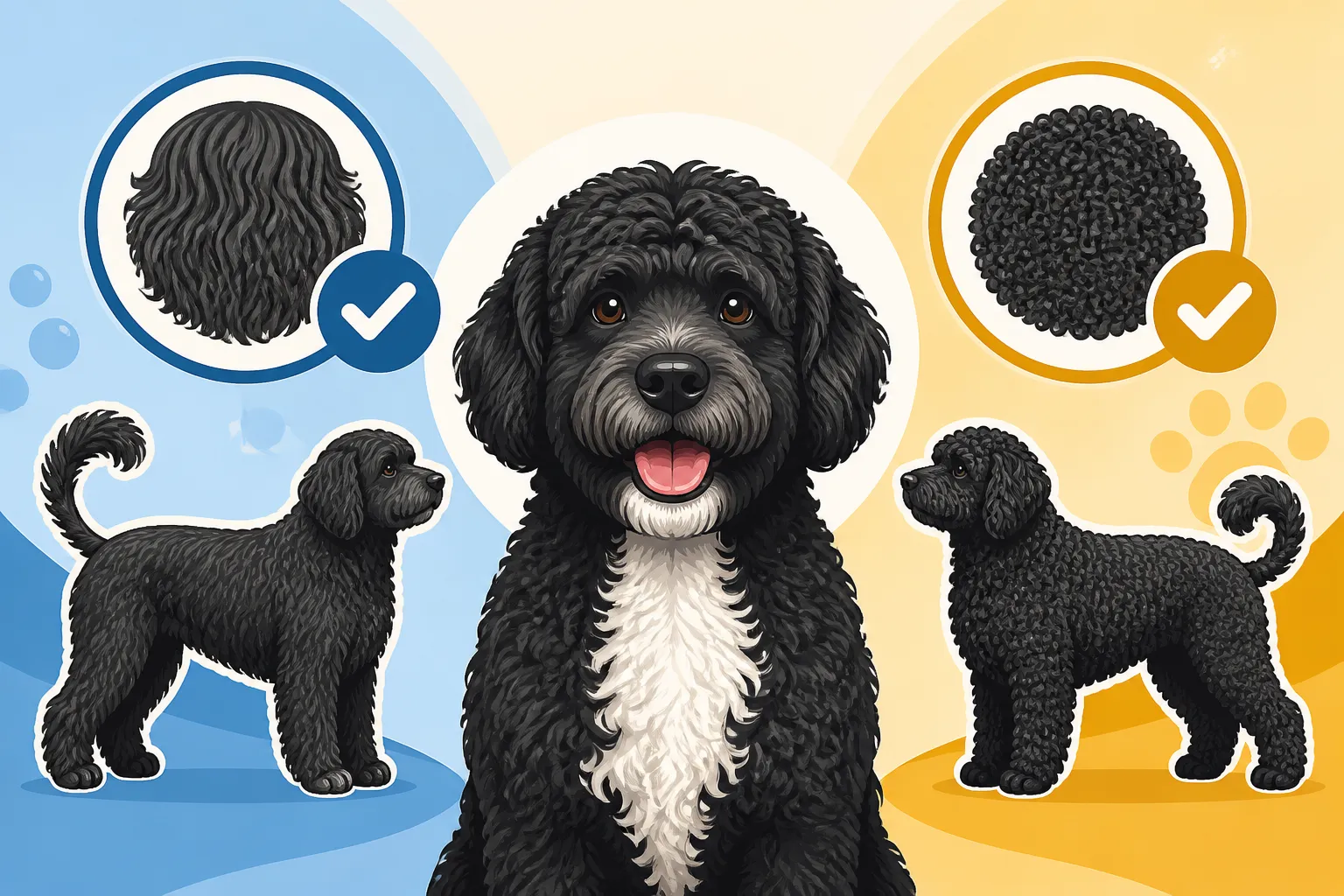
A Portuguese Water Dog’s coat can be curly or wavy, and it can come in several accepted colors. If you’re wondering whether a judge favors one texture only when it appears in a particular color, the short answer is no: coat type and color are separate characteristics. This guide explains how they’re assessed in the show ring and what can affect the impression a coat makes.
How judges assess Portuguese Water Dog coat type and color
Coat texture and color are separate traits
In the American show-ring context, Portuguese Water Dogs may have either a curly coat or a wavy coat. Neither texture is meant to earn preference simply because of its appearance. The breed standard describes acceptable coat forms and colors as distinct features, rather than a package deal in which one texture is reserved for one color.
That means a black curly coat isn’t automatically favored over a brown wavy coat, or vice versa. A white dog is not expected to have a different texture from a black dog, either. Judges assess whether the coat fits the standard, then consider it as part of the dog’s overall presentation. For a closer look at the two textures, see Which Coat Types a Portuguese Water Dog Comes In.
Color choices are also considered independently. Portuguese Water Dogs are seen in black, white, shades of brown, and combinations such as black and white or brown and white. The accepted possibilities are described in Which Colors a Portuguese Water Dog Comes In. A dog’s color does not change what counts as curly or wavy.
No color-and-texture pairing earns a built-in advantage
It’s easy to assume that a particular color must be the “show color” for a particular coat. That idea often comes from what people see most often in photographs or at local events. A striking black dog with a neat curl pattern may become a familiar image, but familiarity is not the same thing as a judging preference.
A judge is not meant to award extra credit for black curls or penalize brown waves just because one combination catches the eye. The relevant questions are whether the coat is a recognized type, whether it is in suitable condition, and how the dog compares overall. Whether a Curly Portuguese Water Dog Is Preferred explores why neither coat type should be treated as the automatic winner.
This distinction matters when comparing puppies, too. Coat color and texture can be appealing, but they are not a substitute for evaluating health, temperament, structure, and responsible breeding. If you’re choosing a companion, a particular color-and-coat combination may be your personal favorite; it shouldn’t be mistaken for proof that the puppy is more correct or more likely to succeed in the ring.
What coat and color details can matter in the ring
A judge does not look at a dog as a coat sample alone. The dog is assessed as a whole, including its build, balance, movement, condition, and breed character. Coat type and color contribute to the overall picture, but they do not cancel out other qualities. What a Correct Portuguese Water Dog's Outline Looks Like is useful context for understanding why the dog’s overall shape matters alongside its coat.
Color may have details that are relevant under the applicable standard. For example, the standard may describe permitted combinations or pigmentation expectations. Those details are about whether the dog’s coloring meets the stated requirements, not about whether a curly coat is more acceptable in black than in brown. Always check the standard used by the specific registry or show organization, since wording and judging rules can differ.
| Feature | What the judge considers | What it does not mean |
|---|---|---|
| Coat texture | Whether the coat is curly or wavy and fits the standard | One texture is not preferred because of its color |
| Coat color | Whether the color or combination is accepted under the applicable standard | A color does not make a coat type more correct |
| Coat condition | Whether the coat is clean, maintained, and presented appropriately | Excellent grooming cannot replace sound structure |
| Overall dog | The dog’s balance, movement, condition, and breed character | Coat and color are not judged in isolation |
Why a dog’s coat can look different from one show to another
Grooming can change the visual impression
Even when two dogs have similar coats, grooming can make them look quite different. Coat length, shaping, cleanliness, and the way the hair sits can affect whether a texture is immediately obvious. A freshly groomed coat may show its curl or wave more clearly than a coat that is overgrown, tangled, or flattened from daily wear.
That difference can lead to confusion when people compare show photographs. Lighting, camera angle, coat length, and grooming can make a wavy coat appear more sculpted or a curly coat look looser than it does in person. A photo is a snapshot of presentation, not a dependable way to decide that one color or texture is preferred.
Portuguese Water Dogs may be shown in recognized trims, and the chosen trim affects the dog’s silhouette and the amount of coat visible in different areas. The trim does not change the dog’s underlying color or coat type. For more on show presentation, see Whether Both Portuguese Water Dog Clips Are Allowed in the Ring.
Coat condition can distract from texture
A coat that is dirty, matted, or unevenly maintained can be harder to assess. Mats may hide the natural texture, while excessive brushing or styling can make the coat look unlike its usual condition. That is a practical presentation issue, not evidence that the dog’s natural coat type is wrong.
This is one reason regular coat care matters, even for owners who never plan to enter a show. A comb and suitable brush help you find tangles before they tighten, especially behind the ears, under a collar or harness, and in areas where the legs rub against the body. If you’re assembling basic grooming supplies, Chewy is one place owners may look for tools such as combs and brushes; the important part is choosing tools that suit your dog’s coat and learning to use them gently.
Bathing and drying can also affect how the coat looks. A damp coat may lie differently from a fully dried one, and residue or incomplete drying can leave it less tidy. For show preparation, handlers generally aim for a clean, well-maintained coat that allows the judge to see the dog clearly—not a transformation that disguises its natural texture.
Color can affect upkeep without affecting judging preference
Color may change the kind of day-to-day mess an owner notices. Dust and pale debris may stand out on a dark coat, while stains may be more visible on white areas. Those are grooming realities, not reasons for a judge to prefer one color. A white patch does not make a wave more acceptable, and a dark coat does not make curls more valuable.
If you are preparing a dog for a show, avoid assuming that a color needs a special cosmetic treatment to become competitive. Keep the coat clean and healthy, use products appropriate for dogs, and follow the show organization’s rules. Chewy and other pet-supply retailers may carry shampoos and coat-care basics, but a product’s marketing claims do not change the breed standard. If your dog has persistent skin irritation or coat problems, ask your veterinarian rather than trying to solve the issue with repeated product changes.
The breed standard’s accepted color descriptions are the right place to check whether a color or pattern is permitted. Which Colors the Portuguese Water Dog Standard Accepts can help separate the question “Is this color allowed?” from “Is this coat texture preferred?” They are related because both describe the breed, but they are not the same judging question.
What prospective owners and exhibitors should take from the standard
Choose a coat you like, not a supposed winning combination
If you’re choosing a puppy, it’s reasonable to have a preference for curly or wavy coats, or for a particular color. Those preferences can help you picture the dog you hope to live with. Just keep them in perspective: a preferred appearance does not automatically predict temperament, health, grooming ease, or show potential.
Ask the breeder how the adult coats in their lines tend to develop, and what grooming the puppies will need as they mature. Coat texture can be difficult to judge with confidence in a very young puppy, and the coat may change as the puppy grows. A responsible breeder should be able to discuss the dogs in the line without presenting one color-and-texture pairing as a guaranteed advantage.
It is also worth considering your own routine. A Portuguese Water Dog’s coat needs ongoing care regardless of whether it is curly or wavy. If you want a pet trim that is practical for your household, Which Clip Suits a Pet Portuguese Water Dog offers a useful starting point for thinking about coat length and maintenance.
Ask clear questions if you plan to show
If you’re buying with the intention of showing, ask the breeder which organization’s rules apply and how the puppy’s coat is likely to be presented. A breeder or experienced handler can explain how the standard is interpreted in that show context. This is more useful than relying on online photos, where styling and lighting can make coat differences look dramatic.
You can ask whether the puppy’s parents have curly or wavy coats, how their coats look when grown, and what grooming routine the breeder follows. You can also ask how color is described in the relevant standard. Those questions help you understand the dog in front of you without treating color as a shortcut for predicting quality.
Chewy may be useful for sourcing everyday grooming items, but show-specific grooming advice is best discussed with a breeder, mentor, or handler familiar with the rules and presentation expected in your venue. A retailer can help you find supplies; it cannot tell you how a judge will evaluate your particular dog.
Check the standard that applies to your event
Breed standards are written by organizations, and requirements can vary by registry or country. If you are entering a show outside the United States, don’t assume that the wording or interpretation is identical to the American standard. Consult the rules for the event you plan to attend and ask the show organizer or breed club if a detail is unclear.
This is especially helpful when a question concerns color markings, pigmentation, or permitted presentation. A general discussion can explain the principle—coat type and color are separate traits—but the actual standard determines the details for a particular ring. Keep a copy of the applicable standard and use its language rather than relying on secondhand claims such as “judges always like this color.”
For owners who are not showing, the standard can still be a helpful guide to understanding the breed’s recognized appearance. It does not mean that a dog with a less familiar look is unhealthy or less lovable. Appearance, grooming needs, and show eligibility are separate questions. If you’re concerned that your dog’s coat differs significantly from what you expected, a breeder or veterinarian can help you understand whether it is ordinary variation or something that needs attention.
The practical answer for the show ring
A Portuguese Water Dog’s coat type is not judged against its color as though certain combinations receive extra points. Curly and wavy coats are both recognized, and accepted colors are evaluated according to the applicable breed standard. Judges consider coat condition and presentation along with the dog’s overall structure and movement.
So if you see a black curly dog and a brown wavy dog in the ring, neither combination is inherently more correct. The coat should be assessed for its own qualities, the color for its own requirements, and the dog as a whole. Good grooming can make the coat easier to evaluate, but it cannot turn an unaccepted color into an accepted one—or make one texture preferable just because of the shade.
Disclaimer
This article is for general informational purposes only and does not constitute professional advice. Laws, prices and regulations vary by location and change over time. Consult a qualified professional for guidance on your specific situation.