Whether a Curly Portuguese Water Dog Is Preferred
A curly Portuguese Water Dog can look especially plush and dramatic, so it is easy to assume that curls are the preferred coat. In practice, both curly and wavy coats are recognized, and neither is automatically better for a family or a show dog. This guide explains how preference depends on the standard, grooming routine, and the look you personally enjoy.
Is a curly Portuguese Water Dog preferred in the show ring
Both coat types are accepted
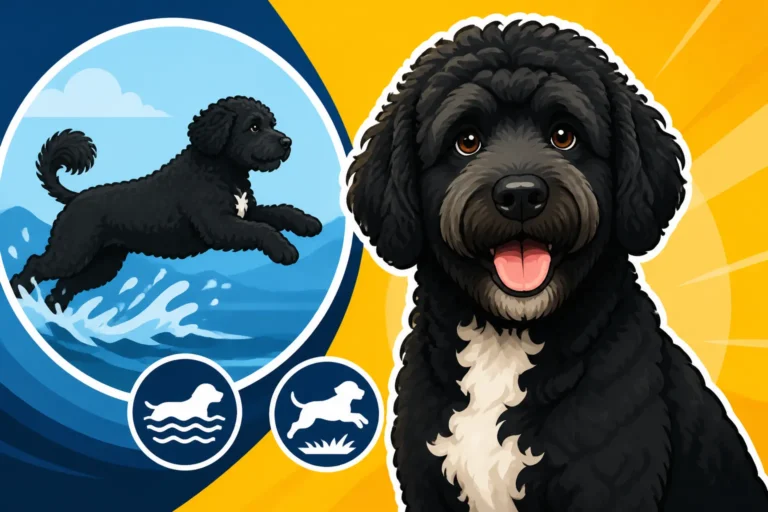
In the United States, the Portuguese Water Dog breed standard recognizes two coat types: curly and wavy. A curly coat usually forms compact curls, while a wavy coat falls in looser waves. Both are normal expressions of the breed’s coat, rather than one being a desirable version and the other a lesser one.
That means a curly Portuguese Water Dog is not automatically preferred simply because the curls may look striking or distinctive. A dog’s overall structure, movement, condition, and temperament matter too. Coat type is one part of the picture, not a shortcut to deciding which dog is superior.
The breed has a single coat rather than the layered coat many people picture when they hear “water dog.” If you are still getting familiar with the difference between the two textures, Which Coat Types a Portuguese Water Dog Comes In offers a useful overview. You can also compare the details in How a Curly Coat Differs From a Wavy Coat.
What matters more than curliness
When a Portuguese Water Dog is being evaluated, the question is not simply whether the coat has tight curls. The coat should fit the breed’s overall description and be presented in a healthy, cared-for condition. A beautiful curl pattern cannot make up for unrelated concerns such as poor structure or an unsound gait.
It also helps to separate the words “preferred” and “popular.” Some people love the compact, plush look of a curly coat; others prefer the looser, more flowing appearance of a wavy one. Personal taste can influence which dogs catch someone’s eye, but popularity does not mean one coat type is more correct.
If you are considering showing a dog, ask a knowledgeable breeder or breed-club mentor to explain the standard and how coats are presented in the ring. For a broader look at appearance, Curly or Wavy, Black or Brown: What a Portuguese Water Dog Looks Like explains how coat texture sits alongside other features of the breed.
How curly and wavy coats compare in everyday life
Appearance is only one difference
A curly coat often looks denser and more sculpted, especially when it is kept at a shorter, even length. A wavy coat can appear softer or shaggier, with the hair lying in waves rather than forming tight curls. But the individual dog’s coat length, grooming, age, and texture all affect the final look.
A puppy’s coat can also change as it matures. So a young dog that looks especially curly may not keep exactly the same texture through adulthood. If you are choosing a puppy, ask what the breeder has observed in the parents and earlier litters, while remembering that coat appearance is not a guarantee of future texture.
Coat type can vary among dogs from the same litter. That is one reason it is better to discuss the actual puppy and its parents than to assume every curly-coated dog will look or feel alike. The article Whether Curly and Wavy Portuguese Water Dogs Share a Litter explores that question in more detail.
Neither coat type removes the grooming commitment
Both coat types need regular care. Portuguese Water Dog hair can tangle and mat when it is left unattended, particularly in friction areas such as behind the ears, under a harness, around the legs, and between the toes. A curly coat is not a “wash-and-go” option, and a wavy coat is not automatically low maintenance.
The practical difference often comes down to the particular dog’s coat density, length, lifestyle, and the style you choose. A dog that swims frequently may need careful rinsing, drying, and combing regardless of whether its coat is curly or wavy. If loose hair is left damp and tangled, mats can tighten and become uncomfortable.
A good routine usually includes checking the coat down to the skin, not just brushing the visible surface. A slicker brush can fluff the coat, but a comb helps you find tangles that the brush may pass over. For guidance on where trouble tends to start, see Where a Portuguese Water Dog Mats First and How Often a Portuguese Water Dog Needs Brushing.
| What you are comparing | Curly coat | Wavy coat |
|---|---|---|
| Typical appearance | Compact curls with a plush look | Looser waves with a softer, flowing look |
| Breed status | Recognized coat type | Recognized coat type |
| Grooming needs | Regular brushing, combing, bathing, and trimming | Regular brushing, combing, bathing, and trimming |
| Is it automatically preferred | No | No |
| Best reason to choose it | You enjoy the look and can keep up with its care | You enjoy the look and can keep up with its care |
Choosing the coat that suits your household
Think about maintenance before choosing a look
If you are drawn to curls because they seem tidy, ask what that means in practice. A short trim may make either coat easier to manage, but it does not eliminate brushing or the need to check for mats. A longer coat can be beautiful, but it takes more time to keep clean and combed through, especially after outdoor activity.
Picture an ordinary week rather than a perfect grooming day. Your dog has been out in wet grass, worn a harness, and then curled up on the sofa. Can you make time to dry and check the coat? Would you be comfortable learning to comb carefully, or would you rather book a professional groomer on a regular schedule? Those answers matter more than whether the coat looks especially curly in puppy photos.
If you are shopping for grooming basics, a retailer such as Chewy may be one place to compare brushes, combs, and dog shampoos. Choose tools that suit your dog’s coat and ask a groomer to demonstrate how to use them without scraping or irritating the skin. For a closer look at coat care, Which Brush a Portuguese Water Dog Needs is a helpful next read.
Consider the coat alongside the dog’s temperament and health
Coat texture should not be the main reason to choose a Portuguese Water Dog. These are energetic, people-oriented working dogs that need time, training, and engagement. A curly puppy is not necessarily calmer, more trainable, or more suited to your home than a wavy puppy. Ask about the parents’ temperaments and the breeder’s approach to raising and matching puppies.
Health and responsible breeding deserve more attention than a coat preference. Ask what health screening has been completed, what the results mean, and whether you can review the documentation. A breeder should be willing to talk about the health and temperament of the line, not just the puppies’ colors or coat textures.
Coat type is also different from coat quality. A coat that looks attractive in a photograph may still need regular care, and a dog with a texture you did not initially prefer may be a wonderful match. If health questions are part of your decision, The Portuguese Water Dog Club's Health Program Covers and What a Portuguese Water Dog Breeder Should Have Tested can help you prepare for a conversation with a breeder.
Questions to ask before deciding
Ask about the real grooming routine
Ask the breeder how the adult dogs in their home are groomed and how often they are brushed, bathed, and clipped. Find out whether the coat mats easily in the places where your dog is likely to wear a collar or harness. It is useful to hear what the routine looks like on a normal workday, not only how a freshly groomed dog looks at a show.
If you plan to use a professional groomer, ask whether local groomers are comfortable working with Portuguese Water Dogs. Bring photos of the clip you like and explain how much coat care you can manage at home. Chewy can help you compare general grooming supplies, but a groomer can show you how the coat behaves in person and what tools make sense for your dog.
You might also ask the breeder whether puppies in previous litters developed noticeably different coat textures as they matured. That conversation can set realistic expectations. No description or photograph can promise precisely how a puppy’s adult coat will look or feel.
Make the decision based on fit, not a supposed ranking
A curly Portuguese Water Dog is not universally preferred over a wavy one. Both coat types are accepted, both need care, and the best choice is the dog whose overall needs and temperament fit your household. If curls are your favorite, it is perfectly reasonable to say so; just avoid treating curliness as proof of better quality or easier maintenance.
Before committing, be honest about the time and expense of grooming, exercise, training, and routine veterinary care. Ask clear questions, review the breeder’s health information, and spend time with adult dogs if you can. If you are comparing coat styles and home-care needs, Which Clip Suits a Pet Portuguese Water Dog can help you think beyond texture alone.
For grooming supplies, Chewy may be a convenient place to look for basic tools, but the right setup depends on your dog’s coat, chosen trim, and comfort with grooming. A breeder or experienced groomer can help you avoid buying equipment that is poorly suited to your routine. In the end, choose the coat you genuinely enjoy caring for—not the one you have been told is automatically “best.”
Disclaimer
This article is for general informational purposes only and does not constitute professional advice. Laws, prices and regulations vary by location and change over time. Consult a qualified professional for guidance on your specific situation.