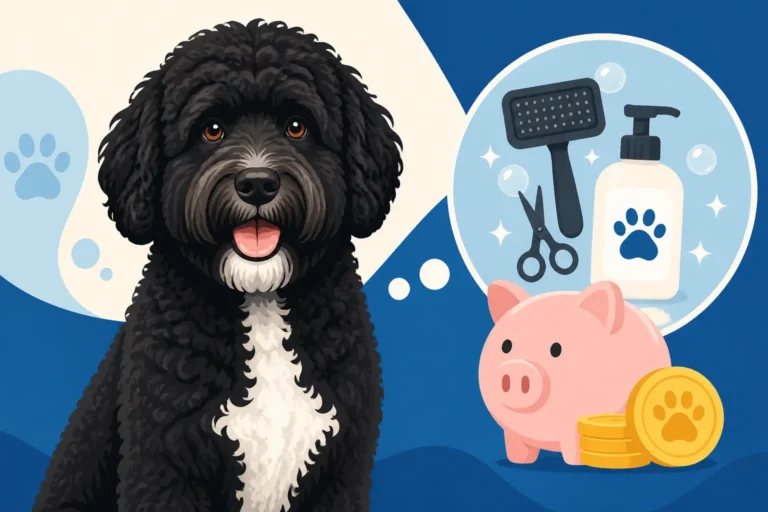
Why a Portuguese Water Dog’s Lion Clip Costs More
It can be quite a shock when you first start looking into professional grooming for your Portuguese Water Dog and discover the vast difference in pricing between different styles, especially when you consider the dramatic flair of a full lion clip. Many new PWD owners are taken aback by the premium charged for this specific look. This guide is here to break down exactly why a Portuguese Water Dog's lion clip commands a higher price tag compared to other, more common grooming styles.
Understanding the Portuguese Water Dog's Unique Coat and Grooming Needs
Before we even dive into the specifics of the lion clip, it's crucial to understand the very foundation of a Portuguese Water Dog's grooming requirements: their distinctive, high-maintenance coat. This isn't your average dog hair; it's a specialized, functional coat that demands attention regardless of the chosen style.
The Double-Edged Sword of a Non-Shedding Coat
One of the most appealing traits of a Portuguese Water Dog for many families is their non-shedding, hypoallergenic coat. However, this blessing comes with a very specific grooming challenge: if the hair doesn't fall out, it continues to grow, and it will inevitably mat. Mats aren't just a cosmetic issue; they can be incredibly painful for your dog, pulling at their skin, trapping moisture, and potentially leading to skin infections. This means that regular, thorough brushing is not just recommended, it's absolutely essential to prevent severe matting, even if you keep your dog in a very short clip. Without diligent at-home care, any professional grooming appointment, especially for a complex style like the lion clip, becomes significantly more difficult and time-consuming for the groomer, which translates directly into higher costs. This consistent maintenance is a part of What a Portuguese Water Dog's Coat Is Made Of.
Curly vs. Wavy: Subtle Differences, Big Grooming Impact
Portuguese Water Dogs come in two distinct coat types: curly and wavy. While both are single-coated and non-shedding, their textures present different challenges for grooming. The curly coat is dense, forming tight, cylindrical curls that can quickly felt together if not brushed regularly, almost like wool. The wavy coat, on the other hand, is softer, with more open, flowing waves, but it can also be prone to matting, particularly in areas of friction like behind the ears, under the harness, or in the armpits. A groomer approaching a lion clip needs to understand these subtle differences in coat texture. For instance, achieving crisp lines on a tightly curled coat requires a different technique and more careful scissor work than on a wavy coat, where blending might be slightly easier but still demands precision. Each coat type impacts how the hair behaves under clippers and shears, adding layers of complexity to a detailed clip.
Beyond Basic Brushing: The Foundation for Any Clip
No matter which style you're aiming for, a Portuguese Water Dog's coat needs meticulous preparation before any clipping can begin. This isn't just a quick wash and dry. First, the dog must be thoroughly brushed and completely free of tangles and mats. Any mat left in the coat will snag clipper blades, causing discomfort to the dog and potentially damaging expensive equipment. Next, a thorough bath with appropriate shampoo and conditioner is vital to get the coat clean. After the bath, the drying process is perhaps the most critical step for a PWD. Their dense, water-resistant coats retain moisture, and improper drying can lead to skin issues and a poor-quality cut. A professional force dryer is usually employed to blast water out of the coat and straighten the hair, which helps achieve an even, smooth finish when clipping. This extensive prep work, which is part of How Long a Portuguese Water Dog Takes to Dry, alone adds significant time to any grooming session, but it is absolutely non-negotiable for a pristine lion clip.
The Artistry and Intricacy of the Lion Clip
The lion clip isn't just a haircut; it's a traditional statement, deeply rooted in the Portuguese Water Dog's history and functional origins. This isn't a universally applied pet trim, and its execution requires a blend of historical understanding, artistic vision, and significant technical skill.
What Exactly is the Lion Clip? A Historical Perspective
The lion clip is the breed's traditional working clip, a style that harks back to the days when these dogs worked alongside fishermen on the boats of Portugal's coast. The primary purpose of the clip was practical: to protect vital organs and joints in cold water while allowing maximum agility and freedom of movement for their powerful hindquarters for swimming and retrieving. In a lion clip, the hindquarters, muzzle, and a portion of the tail are clipped very short, sometimes down to the skin, resembling a poodle's continental clip in its bareness. However, the chest, forelegs, and the tip of the tail (called the "plume") are left full and natural, creating a striking contrast that gives the dog its "lion-like" appearance. This distinctive look means the groomer isn't just shaving; they're sculpting with a specific historical blueprint in mind. This clip is a direct link to why the lion clip existed.
Precision and Skill: Why the Lion Clip Demands More Expertise
Executing a proper lion clip is far more demanding than a standard all-over trim. It's a complex process that involves careful delineation between the clipped and unclipped areas. The transition lines between the short-clipped body and the longer hair of the chest and forelegs must be impeccably clean and perfectly balanced. This isn't something that can be rushed or done with a single clipper blade. A skilled groomer will use multiple blade lengths, precise scissoring techniques, and an eye for symmetry to achieve the correct proportions and aesthetic. The hair on the muzzle and around the eyes requires delicate, detailed work, as does the shaping of the tail plume. Any mistakes are immediately obvious, and there's little room for error. The groomer isn't just removing hair; they are shaping a classic breed standard.
The Time Investment: It's Not Just a Quick Buzz
When you request a lion clip, you're not just paying for the finished look; you're paying for a significant investment of a groomer's time. This intricate style can take substantially longer than a full-body retriever clip or a simple shave-down.
- Initial Assessment and Prep: The groomer must first assess the dog's coat condition, address any matting, and then proceed with the thorough bathing and drying process, which is often more involved due to the varying lengths required by the lion clip.
- The Clipping and Scissoring: This is where the bulk of the time goes. The groomer carefully uses clippers with different blade lengths for the various sections of the body. Then comes the meticulous hand-scissoring to create the clean lines, blend the transitions, and shape the chest, forelegs, and tail plume. This isn't just quick, broad strokes; it's precise, detail-oriented work.
- Finishing Touches: Even after the main clipping, there's more. Fine-tuning the edges, checking symmetry, and ensuring the dog looks perfectly presented adds additional minutes, sometimes even an hour, to the overall appointment.
All these steps add up, making the lion clip one of the most time-consuming and labor-intensive styles a groomer offers for a Portuguese Water Dog.
Comparing the Lion Clip to More Practical Pet Clips
To truly appreciate why the lion clip is more expensive, it helps to compare it to the more common and practical grooming styles that Portuguese Water Dog owners often choose for their pets. These alternative clips, while still requiring skilled hands, are far less demanding in terms of time and artistry.
The Popular Retriever Clip: Efficiency and Ease
For most pet Portuguese Water Dogs, the retriever clip is the go-to choice. This style involves clipping the entire body to a uniform length, usually around 1 to 2 inches, and can be done slightly longer or shorter depending on owner preference and coat condition. The focus is on functionality and ease of maintenance, keeping the dog comfortable and mat-free without the dramatic flair of the lion clip. The even length across the body eliminates the need for intricate transition lines or detailed shaping. This means a groomer can work more quickly and efficiently, using primarily clippers with a single or a few blade attachments. The prep work (bathing, drying, detangling) remains the same, but the actual clipping process is significantly faster. The Retriever Clip Is the Coat Most Portuguese Water Dogs Wear because it simplifies daily care for owners and reduces the time a dog spends on the grooming table, making it a much more economical option in the long run.
Shaved Down: The Ultimate Low-Maintenance Option
At the other end of the spectrum from the lion clip is a complete shave-down. This is often chosen for dogs with severely matted coats, or by owners who simply want the lowest possible maintenance. In a shave-down, the entire coat is clipped very short, often to a uniform length of less than an inch, or even shorter. While this might seem drastic, it's the fastest way to deal with an unmanageable coat and provides a fresh start. From a groomer's perspective, a shave-down, while requiring care to avoid nicks and irritation, is the least time-consuming clipping job. There are no artistic lines to define, no varying lengths to blend, just a consistent short cut over the entire body. The lack of intricate work significantly reduces the time on the table, which in turn lowers the overall cost. However, it's worth noting that a very short shave-down may expose a PWD's skin to the elements more, requiring considerations for sun protection or warmth in cold weather.
Long-Term Grooming Schedules and Costs
Understanding the typical frequency and complexity of each clip helps illustrate the cost differences over a year. While the base cost of professional grooming varies, the lion clip consistently sits at the top due to the factors discussed.
| Clip Style | Description | Typical Frequency | Complexity Rating | Est. Time on Table (Excl. Drying) |
|---|---|---|---|---|
| Lion Clip | Traditional, detailed clip with clipped hindquarters and full mane/tail plume | Every 4-6 weeks | Very High | 1.5 – 2.5 hours |
| Retriever Clip | Uniform length (1-2 inches) all over, practical pet trim | Every 6-8 weeks | Medium | 1 – 1.5 hours |
| Shave Down | Entire coat clipped very short (under 1 inch) | As needed, usually 8-12 weeks | Low | 45 mins – 1 hour |
(Note: Actual costs will vary significantly by groomer, location, and the dog's individual coat condition and temperament. These are general estimates for comparison.)
As you can see, not only does the lion clip require more hands-on time per session, but its intricate nature often necessitates more frequent touch-ups to maintain the crisp lines and distinctive look. This means higher costs per visit and potentially more visits throughout the year, impacting your overall annual spending on grooming. What Professional Grooming Costs for a Portuguese Water Dog will inevitably be higher with a lion clip.
Factors Contributing to Higher Lion Clip Costs
Beyond the sheer time and complexity, several other factors contribute to the elevated price of a Portuguese Water Dog's lion clip. These elements are often behind the scenes but play a significant role in the groomer's pricing structure.
Groomer Expertise and Specialization
Not every groomer is proficient in, or even offers, the traditional Portuguese Water Dog lion clip. This particular style requires a groomer with specialized knowledge of the breed standard, an artistic eye, and advanced technical skills in both clipper work and scissoring. It's similar to going to a high-end salon for a complex, stylized haircut versus a quick trim at a barbershop. A groomer who can execute a perfect lion clip has often invested in additional training, breed-specific seminars, and years of practice to master this intricate art. They understand the nuances of the PWD coat, the correct proportions for the clip, and how to best showcase the dog's natural conformation. This higher level of expertise and specialization naturally commands a higher price. It's about finding a groomer who truly understands the breed's unique needs, and potentially, who participates in events or shows where such precision is paramount.
Equipment and Maintenance
Groomers providing high-quality, specialized clips like the lion clip rely on top-tier equipment that is both expensive to purchase and costly to maintain. Achieving those clean lines and smooth finishes requires professional-grade clippers with powerful motors and a wide array of sharp blades of various lengths. Fine detail work, especially on the face and tail plume, demands high-quality, razor-sharp grooming shears. These tools need to be regularly sharpened and maintained, which is an ongoing expense for the groomer. Dull blades or shears can pull hair, irritate the dog's skin, and result in a shoddy cut. Furthermore, the specialized dryers used for PWDs, like force dryers, are also a significant investment. When you pay for a lion clip, a portion of that fee goes towards covering the cost of this specialized, well-maintained equipment essential for delivering such a precise result. Owners considering home grooming for more basic clips might look to brands like Chewy for clippers and brushes, but even then, the cost of quality tools is significant.
The "Hidden" Costs: Time, Patience, and Physical Strain
There are also less obvious "hidden" costs associated with performing a lion clip. The sheer duration of the grooming session, often several hours, means the groomer is dedicating a substantial block of their day to a single dog. This limits the number of other clients they can take, impacting their overall earning potential. Beyond the time, there's the intense focus and patience required for such detailed work. Maintaining precision for hours, often with a wiggly or less cooperative dog, is mentally and physically draining. Groomers are on their feet for extended periods, bending and maneuvering, which can take a toll on their bodies. The meticulous scissoring and blending demand steady hands and a keen eye. All these factors—the extended time commitment, the mental concentration, and the physical exertion—are elements that a professional groomer factors into the price of a lion clip, reflecting the true value of their skilled labor.
Maintaining the Lion Clip Between Professional Visits
Deciding on a lion clip is a commitment not just financially, but also in terms of the ongoing care you'll need to provide at home. The professional groomer can create the masterpiece, but it's your daily dedication that preserves it and helps manage overall costs.
Daily Care: Your Role in Extending the Clip's Life
If you choose the stunning lion clip, your involvement in daily maintenance becomes paramount. The unclipped areas, such as the full mane around the chest and forelegs, and the tail plume, are particularly prone to matting. Daily brushing with a slicker brush and a metal comb is essential to prevent tangles from forming and to keep the coat clean and flowing. Neglecting this daily routine means that by the time your dog's next grooming appointment rolls around, the groomer will spend valuable time—and your money—dematting before they can even begin to touch up the clip. Remember, The Lion Clip Costs a Portuguese Water Dog Owner Daily Brushing because without it, the beauty of the clip is quickly lost, and the dog's comfort compromised. Additionally, paying attention to your dog's diet, perhaps with high-quality food like that offered by Ollie, can contribute to a healthier coat that is easier to maintain and less prone to breakage and matting.
Choosing the Right Groomer and Building a Relationship
Finding a groomer who is experienced with Portuguese Water Dogs and skilled in the lion clip is more than just selecting a service; it's about building a trusting relationship. Look for groomers who understand the breed's specific coat texture and have a portfolio that demonstrates their ability to execute this particular style. Don't be afraid to ask for references or to see examples of their PWD work. A good groomer will also be a partner in your dog's coat health, offering advice on at-home care and discussing any issues they notice. Establishing a regular grooming schedule with a trusted professional can also sometimes lead to slightly better pricing or more flexibility, as they become familiar with your dog and its coat. Consistent visits, even if they are more frequent for a lion clip, prevent the coat from becoming unmanageable, which always incurs extra charges.
The Economic Realities of a High-Maintenance Style
Ultimately, choosing the lion clip for your Portuguese Water Dog is a lifestyle choice. It's a visually striking, historically significant look that highlights the breed's unique aesthetics. However, it's also the most demanding in terms of professional grooming costs and at-home maintenance. The higher price tag for a lion clip isn't just arbitrary; it's a reflection of the specialized skill, increased time, advanced equipment, and physical effort required to execute and maintain such a detailed and iconic style. When you factor in the regular professional appointments and the daily commitment to brushing and detangling, the lion clip represents a significant investment in both time and money. While many PWD owners opt for more practical clips like the retriever clip for daily living, those who embrace the lion clip do so for its undeniable beauty and connection to the breed's heritage, understanding that such elegance comes at a premium. And of course, having comprehensive pet insurance from providers like Healthy Paws might not cover routine grooming, but it certainly offers peace of mind for unexpected health issues that can sometimes arise even with the best care, preventing large, unplanned expenses.
Disclaimer
This article is for general informational purposes only and does not constitute professional advice. Laws, prices and regulations vary by location and change over time. Consult a qualified professional for guidance on your specific situation.