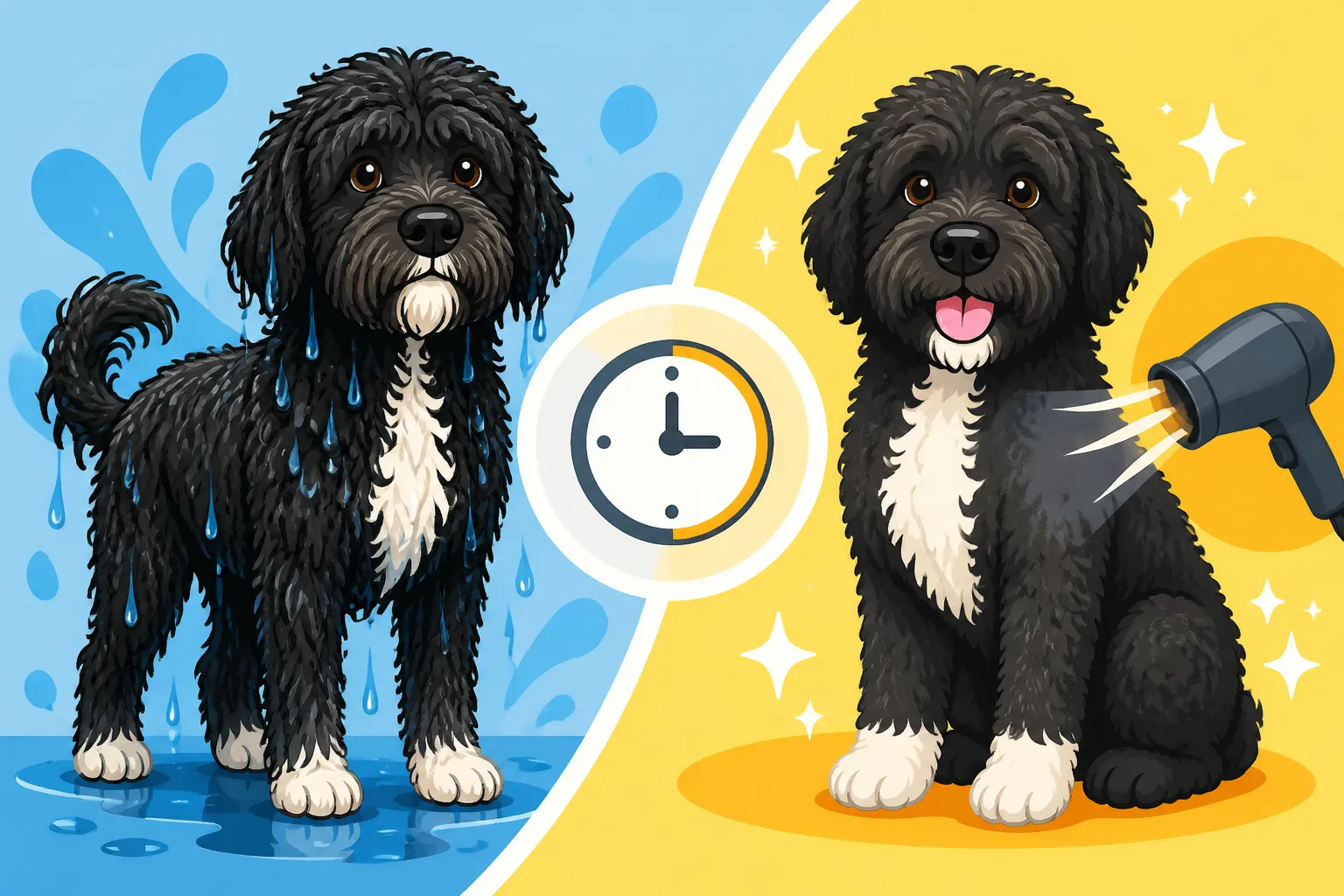
How Long a Portuguese Water Dog Takes to Dry
If you've ever found yourself watching your Portuguese Water Dog shake and drip, wondering if they'll ever truly be dry again after a good swim or even just a bath, you are absolutely not alone. Many of us PWD owners grapple with the seemingly endless drying process, and it can be a source of real frustration and even concern. Their incredible, water-loving coats, while fantastic for their original purpose, present a unique challenge when it comes to getting them thoroughly dry. This guide is here to shed some light on why your PWD seems to stay damp forever, what factors play into their drying time, and most importantly, how you can help speed up the process to keep your beloved companion comfortable and healthy.
Understanding the Portuguese Water Dog Coat
The Portuguese Water Dog's coat is a marvel of nature, perfectly designed for its historical role working on fishing boats along the coast of Portugal. It's built for functionality in and out of the water, but that unique design is also precisely why drying them can feel like an Olympic sport.
The Unique Structure of Their Single Coat
Unlike many breeds, Portuguese Water Dogs possess a single coat, meaning they lack the soft, dense undercoat found in double-coated breeds like Labradors or Golden Retrievers. This single coat is either curly or wavy, and both textures are incredibly dense and water-repellent. The hairs themselves are quite robust and have a somewhat oily texture, which contributes to their water resistance. When your PWD dives into the ocean or a lake, the outer layer of their coat creates a barrier that sheds water, helping them stay buoyant and warm.
However, once that barrier is breached, the dense, single coat acts almost like a sponge, designed to protect the dog's skin from the elements. This means that while water might initially bead off, it eventually saturates the coat, and because there's no soft undercoat to fluff up and allow air circulation, the water just sits there, trapped within the dense curls or waves. It's a fantastic design for a working dog in the water, but not so great for quick drying times in your living room. The difference between the curly and wavy coats can also play a role; a very tight, dense curly coat might feel like it holds water more intensely, while a wavy coat, if it's particularly thick, can be just as challenging.
Why Their Coat Holds Water Like a Sponge
It really boils down to the density and the individual hair structure. Imagine trying to dry a thick, tightly woven wool sweater versus a thin cotton t-shirt. The PWD's coat is like that sweater. The tightly packed curls or waves don't allow air to penetrate easily, which is crucial for evaporation. Water gets trapped between the individual hairs, and because the hairs themselves are designed to be somewhat water-absorbent (to provide insulation once fully wet), they cling to that moisture.
Furthermore, the natural oils in their coat, while beneficial for water repellency and skin health, can also contribute to the "stickiness" of the water to their fur. These oils create a protective layer, but once water penetrates, it doesn't easily run off or evaporate from the skin. This can lead to a dog that feels damp to the touch long after you've tried to towel them off. Many owners have experienced the frustration of thinking their PWD is dry, only to find a cold, damp spot when they cuddle up later. It's not just a surface issue; the dampness can permeate right down to the skin.
Factors Influencing Drying Time
The amount of time it takes for your Portuguese Water Dog to dry isn't a fixed number; it's a dynamic process influenced by several key elements. Understanding these factors can help you anticipate and manage the drying routine more effectively.
Coat Type and Length
This is probably the most obvious factor. A Portuguese Water Dog with a The Retriever Clip Is the Coat Most Portuguese Water Dogs Wear, which keeps the coat fairly short all over, is going to dry much faster than one sporting a long, flowing The Lion Clip Costs a Portuguese Water Dog Owner Daily Brushing. Shorter hair simply has less surface area to hold water and allows air to circulate closer to the skin. If your PWD has a dense, tightly curled coat that is kept long, you could be looking at several hours of drying time, even with intervention. The wavy coat, if it's voluminous, can also take an exceptionally long time to dry, often leading to hidden damp spots.
Beyond length, the actual texture plays a role. A very coarse, wiry coat might shed water more readily at first, but once saturated, it can trap moisture just as effectively as a softer coat. Conversely, a very soft, cottony coat, while less common for the breed standard, might absorb water even more aggressively. It's a balance of density, length, and texture that ultimately dictates how much moisture is retained and how quickly it can escape. Think of it as the ultimate test of your patience, especially after a particularly enthusiastic swim.
Environmental Conditions
Just like your laundry, your Portuguese Water Dog's coat will dry faster in certain environmental conditions. High humidity in the air significantly slows down evaporation. If you're trying to dry your PWD in a humid basement or on a rainy day, expect the process to take much, much longer. Conversely, a dry, warm day with good air circulation will naturally expedite drying.
Temperature also plays a role, though you must be careful not to use excessive heat on your dog. A warmer room helps water evaporate faster, but direct, high heat can damage their skin and coat. Airflow is perhaps the most critical environmental factor. A gentle breeze, a fan, or even an open window can make a world of difference by carrying away the moisture-laden air around your dog, allowing drier air to reach their coat and continue the evaporation process. This is why many owners find that a PWD can air-dry relatively quickly outdoors on a breezy, sunny day, but takes forever indoors, where air might be stagnant.
Activity Level and Subsequent Coat Condition
Not all "wets" are created equal for a Portuguese Water Dog. A quick splash in a puddle is a far cry from a full-body, energetic swimming session (e.g., How Long a Portuguese Water Dog Can Stay in Cold Water). If your dog has had a vigorous swim, their coat will be thoroughly saturated, often right down to the skin, and may even be matted in places from the movement in the water. This deep saturation naturally requires more time and effort to dry.
Furthermore, the type of water can affect how the coat behaves. Salt water, for instance, can leave a residue that makes the coat feel stickier or slightly coarser, potentially impacting drying speed. Chlorine from a pool can also affect the coat's natural oils. It's always a good idea to When a Portuguese Water Dog Should Be Rinsed After the Sea or after a pool session to remove these residues, as a clean coat is often easier to dry effectively. A coat that is matted or tangled will also take longer to dry because the mats prevent air from circulating and trap moisture. Regular brushing, even when dry, is key to preventing mats that compound drying problems.
Passive Drying Methods: The "Hands-Off" Approach
When you're dealing with a Portuguese Water Dog, a truly "hands-off" approach to drying after a substantial wetting is usually not recommended due to their dense coats. However, understanding the most common passive methods helps set realistic expectations and highlights why active methods are so vital.
Air Drying: Pros, Cons, and Risks
Air drying your Portuguese Water Dog essentially means letting nature take its course, without the aid of forced air or extensive toweling. The main "pro" here is the minimal effort required from you. You simply let your dog shake off as much water as possible, and then… you wait. On a warm, sunny, breezy day, especially if your PWD has a shorter clip, they might air dry reasonably well outdoors.
However, the "cons" and "risks" for PWDs are significant, particularly if you're air drying indoors or if the coat is long. For a fully saturated PWD, air drying can take many hours, easily half a day, or even overnight. This extended dampness poses several health risks. Foremost among these is the risk of skin irritations and infections, such as hot spots (e.g., Why a Damp Portuguese Water Dog Gets Skin Trouble). The warm, moist environment created by a damp coat clinging to the skin is a perfect breeding ground for bacteria and yeast. This can lead to itching, discomfort, and painful lesions that require veterinary attention. Beyond this, the prolonged dampness can also lead to significant matting. As the water evaporates, the hairs can tangle and felt together, especially in high-friction areas like behind the ears (e.g., Where a Portuguese Water Dog Mats Behind the Ears), under the harness, or in the armpits. These mats are not only uncomfortable but can pull on the skin and be very painful to remove.
Towel Drying: Basic Techniques and Limitations
Towel drying is usually the first line of defense against a wet Portuguese Water Dog, and it's certainly essential, but it has its limitations. The basic technique involves gently squeezing and blotting the coat with absorbent towels, rather than vigorous rubbing, which can actually encourage matting. Many PWD owners swear by specialized microfiber towels, which can absorb significantly more water than standard cotton towels. You can find excellent options on platforms like Amazon or Chewy that are designed for pet use and can really soak up the initial deluge.
The main limitation is that even the best towel can only remove so much surface moisture. For a PWD's dense coat, towels rarely get down to the skin, leaving a substantial amount of dampness trapped within the inner layers of the fur. You might go through several towels, wringing them out repeatedly, and still find your dog feels cold and damp underneath. While towel drying is crucial for removing the bulk of the water and preventing major drips, it's rarely sufficient on its own to thoroughly dry a PWD and prevent the risks associated with prolonged dampness. It's more of a preparatory step for more active drying methods rather than a complete solution in itself.
Active Drying Methods: Taking Control of Moisture
Given the Portuguese Water Dog's unique coat, active drying methods are often not just recommended, but essential for their health and comfort. These methods involve using tools to accelerate the removal of moisture, ensuring your PWD gets thoroughly dry.
The Power of a Force Dryer
If there's one piece of equipment almost all veteran Portuguese Water Dog owners consider indispensable, it's a force dryer. Also known as a high-velocity dryer, this device uses powerful, unheated or very low-heat air to literally blast water out of the coat. The force of the air separates the hair strands, allowing air to get right down to the skin, which is exactly what a PWD's dense coat needs.
The benefits of a force dryer are manifold:
- Speed: It drastically cuts down drying time, turning an hours-long process into minutes for a well-maintained coat.
- Reduces Matting: By separating the hair and blowing out loose undercoat (even a single-coated dog has some shedding), it helps prevent mats from forming as the coat dries. It also helps to fluff the coat, making it easier to brush.
- Gets to the Skin: Unlike towel drying, a force dryer ensures that the skin itself gets dry, which is critical for preventing skin infections and hot spots.
- Circulation: It stimulates blood flow to the skin, which is good for overall coat health.
When using a force dryer, always start with a low setting to acclimate your dog (e.g., Whether a Portuguese Water Dog Tolerates a Dryer). Use various nozzles to get into dense areas. Keep the nozzle moving constantly to avoid concentrating air on one spot, which can be uncomfortable. Many dogs learn to love the sensation, or at least tolerate it well, especially if introduced positively with treats and praise. It's an investment, but one that truly pays off in time saved and a healthier, happier dog.
Hair Dryers (with Caution) and Stand Dryers
While a force dryer is the gold standard, some owners might consider alternatives. Human hair dryers can be used, but they come with significant caveats. Never use a human hair dryer on a hot setting. These dryers are designed for human hair and can quickly overheat a dog's skin, leading to burns. If you must use one, ensure it's on a "cool" or "low-heat" setting and keep it moving constantly, holding it a safe distance from the coat. The airflow isn't as powerful as a force dryer, so it will take much longer and be less effective at getting to the skin. It's best reserved for quick touch-ups or small, less dense areas.
Stand dryers offer a more convenient alternative to holding a human hair dryer. These hands-free units allow you to brush your dog while drying, which can be a huge time-saver. They typically offer variable heat and speed settings, making them safer than a handheld human dryer. They work by directing a stream of air (which can be heated) over the dog, and while they might not have the sheer force of a dedicated force dryer, they are excellent for maintaining airflow around the dog, especially if paired with diligent brushing. Both types are generally less powerful than force dryers, meaning they will take longer to achieve full dryness, especially with a thick PWD coat.
Professional Grooming for Efficient Drying
Sometimes, the best solution is to let the professionals handle it! Professional groomers are equipped with high-powered force dryers, specialized tools, and the expertise to efficiently and safely dry even the most challenging Portuguese Water Dog coats. If you're not comfortable using a force dryer yourself, or if your dog gets particularly matted after swimming, scheduling regular professional grooming (e.g., How Often a Portuguese Water Dog Needs a Groomer) can be a lifesaver.
Many owners opt for a professional groom after a big swimming season or before an event, just to ensure their dog's coat is in tip-top condition and thoroughly dry. A groomer can not only dry your PWD but also de-shed, demat, and ensure their skin is healthy, catching any potential issues early. This can be especially valuable if your PWD's coat is particularly dense, or if you simply don't have the time or space for an extensive at-home drying routine.
Practical Tips for Speeding Up Drying Time
Getting a Portuguese Water Dog thoroughly dry can be a project, but with a few smart strategies, you can significantly cut down on the time and effort involved. It's all about proactive care and efficient techniques.
Pre-Swim and Post-Swim Routines
Establishing a solid routine around water activities can make a world of difference.
- Keep the Coat Shorter: If your PWD is a frequent swimmer, consider keeping their coat in a shorter, practical clip, like a sport or retriever clip. Less hair means less water to hold and faster drying.
- Brush Before Wetting: A well-brushed, mat-free coat will dry much faster than one with tangles. Mats hold water like nobody's business, so a quick brush before a swim can prevent a lot of post-swim headaches.
- Rinse Thoroughly After Swimming: Whether your PWD has been in salt water, lake water, or a chlorinated pool, a thorough rinse with clean fresh water is paramount. This removes any residues (e.g., When a Portuguese Water Dog Should Be Rinsed After a Pool) that can irritate the skin, dry out the coat, or make drying more difficult. Use a gentle shampoo and conditioner occasionally, especially after heavy swimming.
- Immediate Towel Drying: As soon as your PWD is out of the water and rinsed, start towel drying. Use multiple absorbent towels to squeeze and blot as much water as possible. Microfiber towels are particularly effective here. Don't rub vigorously, as this can cause tangles. Get them as damp-dry as possible before moving to forced air.
Creating an Optimal Drying Environment
Where you dry your Portuguese Water Dog can influence the speed and effectiveness of the process.
- Ventilation is Key: Ensure the drying area has good airflow. Open windows, turn on a fan, or use an exhaust fan in a bathroom to help move moist air out and bring drier air in.
- Dehumidifiers: If you live in a particularly humid climate or are drying indoors, a dehumidifier can be your best friend. It removes moisture from the air, allowing your PWD's coat to dry faster through evaporation.
- Designated "Drying Zones": Consider creating a specific spot in your home for drying. This might be a utility room, a large bathroom, or even a covered outdoor area. Having a dedicated space equipped with towels, a force dryer, and easy-to-clean surfaces can streamline the process (e.g., What a Wet Dog Crate Setup Costs a Portuguese Water Dog Owner). This way, you're not chasing a dripping dog through the house.
Tools and Products That Help
Beyond the force dryer, several tools and products can aid in a more efficient drying process.
- High-Absorbency Towels: Invest in several large, high-quality microfiber towels. Brands available on Chewy often have specific pet-drying towels that are thicker and more absorbent than standard bath towels.
- Coat Sprays: Some grooming product lines offer "drying sprays" or "speed dry" conditioners that can be applied after bathing. These products are formulated to help repel water or accelerate the evaporation process, often by reducing surface tension or aiding in detangling.
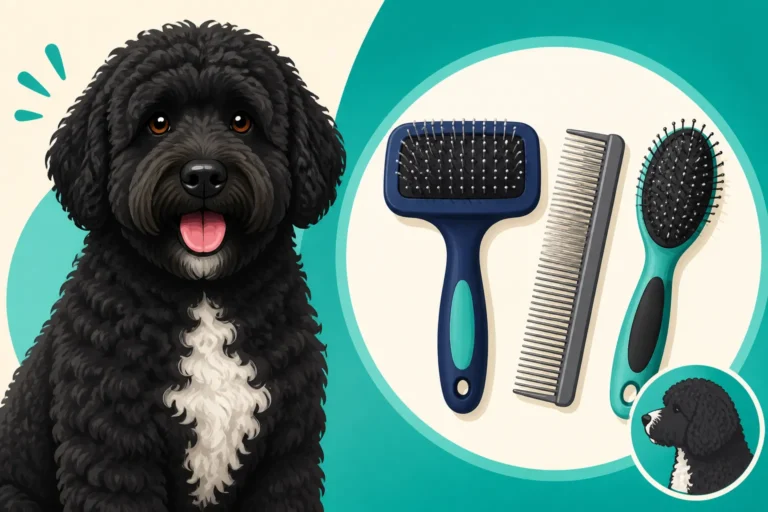
- Proper Brushes: While force drying, use a slicker brush and a metal comb. Brushing while drying helps separate the hair strands, allowing the air to reach the skin more effectively. It also helps to prevent mats from forming as the coat dries. Always brush in the direction of hair growth, working in sections. This ensures every part of the coat gets proper airflow.
| Drying Method | Typical Time for Saturated PWD (approx.) | Effort Level | Equipment Needed | Common Risks |
|---|---|---|---|---|
| Air Dry | 4-8+ hours (indoors), 2-4 hours (outdoors on sunny/breezy day) | Very Low | None | Matting, Hot Spots, Skin/Ear Infections |
| Towel Dry | 2-4 hours (to damp-dry) | Medium | Multiple absorbent towels (microfiber ideal) | Incomplete drying, Matting |
| Human Hair Dryer | 1-3 hours (with caution) | Medium-High | Human hair dryer (cool/low heat only) | Skin burns, Ineffective drying |
| Stand Dryer | 1-2 hours | Medium | Stand dryer | Can still be slow without force |
| Force Dryer | 30-90 minutes | High | High-velocity force dryer, slicker brush, comb | Overheating (if not controlled), Dog discomfort (if not acclimated) |
| Professional Groomer | N/A (they handle it for you) | Low (for owner) | Professional equipment, expertise | Cost, Scheduling |
The Risks of Incomplete Drying
Allowing your Portuguese Water Dog to remain damp for extended periods isn't just a matter of comfort or a slightly damp couch. It poses genuine health risks that every PWD owner should be aware of. Their dense, water-retaining coat, while a fantastic asset in their working role, becomes a liability if not properly managed after a swim or bath.
Skin Irritations and Infections
The most common and immediate risk of incomplete drying for a Portuguese Water Dog is the development of skin irritations and infections. When the coat remains damp and warm against the skin, it creates a perfect breeding ground for bacteria and yeast, which are naturally present on your dog's skin. This can lead to a condition commonly known as "hot spots," or acute moist dermatitis. These are red, inflamed, often oozing lesions that appear very suddenly, spread rapidly, and are incredibly itchy and painful for your dog. They often look far worse than they feel to the touch, and your dog will obsessively lick, chew, and scratch at them, making the problem worse.
Beyond hot spots, prolonged dampness can also contribute to more generalized bacterial or yeast skin infections. You might notice a persistent musty smell, excessive scratching, or a dull, greasy coat. These infections can be chronic and difficult to clear up, often requiring veterinary intervention with medicated shampoos, topical treatments, and sometimes oral antibiotics or antifungals. Preventing these issues starts with ensuring your PWD's skin is thoroughly dry after every wetting, especially in those dense, hard-to-reach areas.
Matting and Coat Damage
Incomplete drying is a primary culprit for severe matting in Portuguese Water Dogs. As wet hair dries, the individual strands tend to cling together and can quickly felt, forming tight, painful mats. This is especially true if the coat is not thoroughly brushed during the drying process. These mats aren't just cosmetic; they pull on the skin, causing discomfort and pain, and can even restrict movement. In severe cases, mats can create their own microclimate, leading to skin infections hidden beneath the matted fur.
You'll often find mats forming in areas where friction is high or where the coat is particularly dense, such as behind the ears (e.g., Where a Portuguese Water Dog Mats Behind the Ears), in the armpits, under the harness (e.g., Whether a Portuguese Water Dog Mats Under the Harness), and on the insides of the legs. If your PWD frequently swims (e.g., Whether a Portuguese Water Dog Mats After Swimming) or gets bathed, the risk of matting increases exponentially if they are not dried properly. Severe matting can become so bad that the only humane solution is to shave the dog completely, which can be traumatic and costly. Regular, thorough drying and brushing are non-negotiable for maintaining a healthy, mat-free coat.
Ear Infections: A Common PWD Concern
Portuguese Water Dogs are prone to ear infections, and incomplete drying is a major contributing factor. Their floppy, pendulous ears, combined with the dense hair that often grows inside the ear canal (e.g., Whether a Portuguese Water Dog's Ear Hair Should Be Removed), create a warm, dark, moist environment that is perfect for bacteria and yeast to flourish. When water gets trapped in the ear canal after a swim or bath and isn't allowed to dry out, the risk of infection skyrockets.
Signs of an ear infection include head shaking, scratching at the ears, a foul odor coming from the ears, redness, swelling, or discharge. These infections are uncomfortable for your dog and can be difficult and expensive to treat, sometimes requiring repeated vet visits and specialized medications. To prevent this, it is absolutely critical to dry your Portuguese Water Dog's ears thoroughly after any water exposure (e.g., Whether a Portuguese Water Dog's Ears Should Be Dried Inside). You can use cotton balls or a soft cloth to gently wipe the visible parts of the ear canal. Many owners also use a vet-approved ear drying solution, often available from pet retailers like Chewy or Ollie, which helps evaporate moisture and acidify the ear canal, making it less hospitable to infection. Regularly checking and cleaning your PWD's ears (e.g., How Often a Portuguese Water Dog's Ears Need Checking) is just as important as drying their coat.
Disclaimer
This article is for general informational purposes only and does not constitute professional advice. Laws, prices and regulations vary by location and change over time. Consult a qualified professional for guidance on your specific situation.