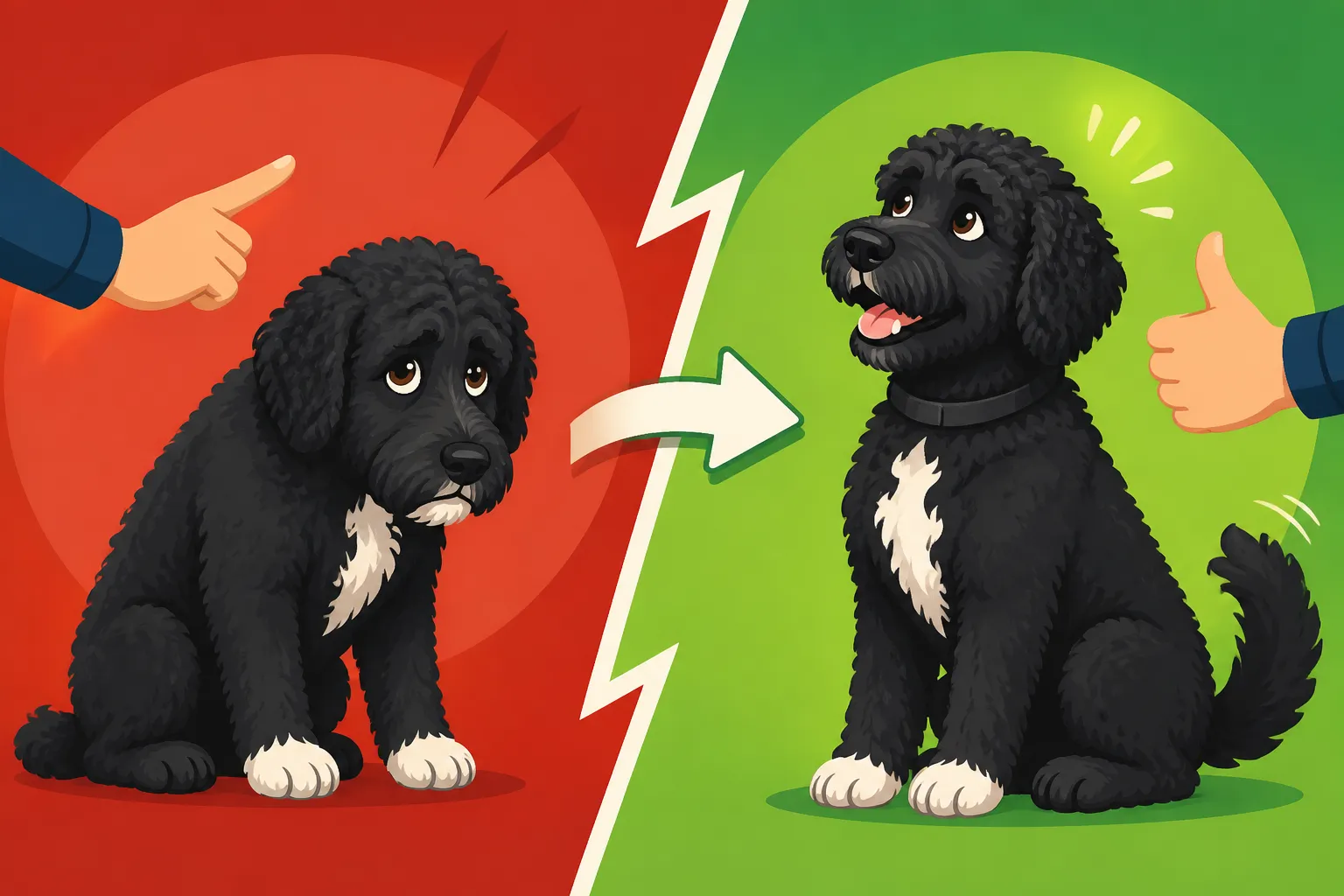
How a Portuguese Water Dog Responds to Correction
It’s a common scenario: you’re trying to teach your bright, energetic Portuguese Water Dog a new command, or perhaps curb an unwanted behavior like counter-surfing, and you find yourself wondering if they’re just exceptionally stubborn or if your methods are entirely off. Many PWD owners, myself included, have faced the unique challenge of a dog that is incredibly smart but also possesses an independent streak a mile wide. This guide is here to shed light on exactly how a Portuguese Water Dog responds to various forms of correction, exploring why traditional approaches often falter and offering more effective, bond-building strategies that truly resonate with this exceptional breed.
Understanding the Portuguese Water Dog's Temperament and Learning Style
Before we even talk about "correction," it’s vital to understand the magnificent creatures we're sharing our lives with. Portuguese Water Dogs aren't your average "yes sir, how high?" kind of dog. They bring centuries of working alongside humans in a partnership capacity, and that history deeply influences their learning style and how they perceive authority. If you’ve ever felt like your PWD is constantly analyzing the situation and deciding if your idea is better than theirs, you’re not alone – you’re simply experiencing a very core part of their breed identity.
The Independent Thinker: Why "Obey First" Isn't Always Their Motto
The Portuguese Water Dog was bred to be an active, intelligent partner on fishing boats along the coast of Portugal. Their job wasn't just to fetch; it was to herd fish, retrieve lost gear, and even carry messages between boats. This wasn't a job for a dog that simply waited for commands; it required independent thought, problem-solving skills, and the ability to adapt to dynamic, unpredictable situations at sea. They had to make decisions, often without direct instruction, for the benefit of their human companions. This historical role is crucial to understanding their modern behavior.
When you ask a PWD to do something, especially something they perceive as redundant or without clear purpose, they might hesitate, offer an alternative, or simply choose not to engage. It’s not necessarily defiance in a malicious sense, but rather their inherent nature as an independent thinker coming to the forefront. Owners often describe this as "stubbornness," but it's more accurately a dog assessing the situation and deciding if their solution is more efficient or rewarding. This can be incredibly frustrating when you're trying to establish basic manners or more complex tasks, as it feels like they’re intentionally ignoring you. However, recognizing this trait as part of their heritage, rather than a personal affront, is the first step toward effective training. Think about what a Portuguese Water Dog was bred to do on a boat – it required intelligence and autonomy. This foundational understanding will help you tailor your approach.
High Intelligence and Sensitivity: A Double-Edged Sword
Beyond their independent spirit, Portuguese Water Dogs are exceptionally intelligent and remarkably sensitive. This combination means they pick up on cues, both verbal and non-verbal, with incredible speed. They learn quickly, whether you’re intentionally teaching them something or not. This is fantastic when you're teaching tricks or complex behaviors, but it also means they can just as quickly learn to avoid situations or people if they associate them with unpleasant experiences. Their sensitivity means they are acutely aware of your tone of voice, your body language, and even subtle shifts in your mood.
Because of this sensitivity, harsh or inconsistent corrections can have a disproportionately negative impact. A loud voice, a sudden physical correction, or even just repeated frustration from an owner can cause a PWD to shut down emotionally, become withdrawn, or develop evasive behaviors. They might start to anticipate negative interactions and become hesitant to engage, or worse, they might become fearful. This isn't a dog that can just "shake off" a stern reprimand. Their deep bond with their people makes them highly attuned to disapproval, and they internalize it quickly. This dual nature of high intelligence and high sensitivity is why the way you deliver correction is far more important than with many other breeds. If you’re interested in understanding their innate capacity for learning, consider exploring How Trainable a Portuguese Water Dog Is.
The Pitfalls of Traditional or Aversive Corrections with a PWD
Many traditional dog training methods, particularly those that rely on force or intimidation, are simply not effective for a Portuguese Water Dog, and in fact, can be actively detrimental. These dogs thrive on partnership and trust, not on being compelled through fear or discomfort. Using aversive techniques might achieve a momentary suppression of behavior, but it often comes at a significant cost to the dog's emotional well-being and your relationship with them.
Why Force-Based Methods Backfire
Methods like leash jerks, physical punishments, or equipment designed to cause discomfort (such as choke chains or prong collars when used incorrectly) are counterproductive with a PWD. Instead of understanding what you want them to do, a sensitive Portuguese Water Dog will primarily learn to associate you, or the task itself, with pain or fear. Imagine trying to teach a child to read by yelling at them every time they make a mistake; they might eventually learn to avoid reading altogether, not to read better. The same principle applies here. A PWD forced to comply might momentarily perform the requested action, but they won't do it with enthusiasm or understanding.
More often than not, force-based methods lead to a breakdown of trust. A Portuguese Water Dog that doesn't trust its owner to be a fair and benevolent leader may become withdrawn, showing signs of anxiety or even aggression as a defensive mechanism. They might refuse to engage, offer appeasement behaviors, or simply shut down completely, making genuine learning impossible. For a breed that was bred for active collaboration, breaking that partnership model through force creates a dog that is less, not more, inclined to work with you. Their intelligence allows them to quickly process negative associations, and once those are formed, they are incredibly difficult to undo.
Creating Evasion and Aversion
When a Portuguese Water Dog is consistently corrected using harsh methods, they don't learn not to do the behavior; they learn how to avoid the correction. This can manifest in various ways, from subtle evasive maneuvers to outright disobedience when they perceive they can get away with it. They might learn to only perform a command when a specific piece of equipment is on, or when a certain person is giving the command, because they associate the correction with those specific triggers. For example, if you use a stern voice every time they jump on guests, they might learn not to jump when you're looking, but still do it with others or when your back is turned.
This leads to a dog that is not truly trained, but rather one that is constantly strategizing to avoid punishment. You might find your PWD becoming "deaf" to commands in certain environments, or suddenly developing "selective hearing" when a distraction arises. This isn't them being deliberately defiant; it’s a learned response to avoid discomfort. They may become wary of new situations, hesitant to explore, or unwilling to offer new behaviors for fear of making a mistake that leads to correction. This makes their natural problem-solving abilities turn inward, often leading to a dog that is anxious and less confident, rather than a joyful, eager participant in life.
Damaging the Bond: More Than Just a Training Issue
The relationship you have with your Portuguese Water Dog is unique and deeply rooted in mutual respect and understanding. These aren't dogs that are happy simply being told what to do; they want to be your companion, your confidante, and your active partner. When training becomes a battle of wills, or when corrections are delivered in a way that erodes trust, it doesn't just impact their obedience; it damages the very foundation of your bond. The PWD thrives on interaction and attention, and a relationship marred by fear or resentment will deprive both owner and dog of the rich, fulfilling companionship that is the hallmark of the breed.
A PWD that feels misunderstood or unfairly treated can become emotionally distant. They might stop seeking out your affection, avoid eye contact, or seem generally less engaged in family activities. This is particularly heartbreaking for owners who cherish the breed's affectionate and loyal nature. The goal of training should always be to enhance the relationship, not diminish it. For a Portuguese Water Dog, a positive, trusting bond is the ultimate motivator, and anything that compromises it will ultimately hinder all aspects of their behavior and happiness. Understanding How a Portuguese Water Dog Was Bred to Think for Itself highlights just how vital this bond is, as they need to trust your leadership, not fear it.
Positive Reinforcement: The Cornerstone of PWD Training
When it comes to training a Portuguese Water Dog, positive reinforcement isn't just a suggestion; it's practically a requirement for success. These intelligent, sensitive dogs respond magnificently to methods that encourage cooperation, reward good choices, and build confidence, rather than breaking their spirit with harshness. It’s about teaching them what to do, rather than constantly scolding them for what they shouldn’t do.
The Power of Motivation and Reward
Portuguese Water Dogs are incredibly food-motivated, toy-motivated, and attention-motivated. They are willing to work hard for something they truly value. This means that using high-value treats, their favorite squeaky toys, or even access to a beloved activity like a swim in the lake can be incredibly powerful motivators. The key is to find out what truly makes your PWD's tail wag and leverage that in your training. They want to please, yes, but they also want to be rewarded for their efforts, and rightfully so. When a PWD understands that a certain action leads to a positive outcome, they are much more likely to repeat it enthusiastically.
This isn't about bribing your dog; it's about making desired behaviors more appealing and rewarding than unwanted ones. If your PWD is mouthing your hands, for example, redirecting them to an appropriate chew toy and then praising them profusely when they chew the toy teaches them that chewing that item is what earns them your approval and good feelings. Over time, the behavior becomes ingrained because it’s inherently rewarding. This approach respects their intelligence by giving them a clear reason to make good choices. Many owners find that once they unlock what truly motivates their PWD, training becomes a joyful collaboration rather than a chore. If you're struggling to understand what drives your dog, consider exploring What Motivates a Portuguese Water Dog.
Shaping Behavior Through Encouragement
Shaping is a fantastic technique for PWDs, especially when teaching complex behaviors. It involves rewarding successive approximations of a desired action. Instead of waiting for your dog to perform the perfect "sit" before offering a treat, you might reward them for just looking at you, then for lowering their rear slightly, then for a full sit. This builds the behavior in small, manageable steps, reducing frustration for both you and your dog. Clicker training, in particular, is an excellent tool for PWDs. The click provides an instantaneous, clear marker for the exact moment they performed the correct action, followed immediately by a reward. This precision helps them understand exactly what earned the treat, making the learning process incredibly efficient.
For example, if you want your PWD to settle on their mat, you might click and treat for simply glancing at the mat, then for taking a step towards it, then for lying down on it. This positive reinforcement chain makes them eager to figure out what you want next. This approach not only teaches them the desired behavior but also encourages them to think and offer behaviors, which aligns perfectly with their natural intelligence and problem-solving abilities. Online training platforms, such as those offered by BAXTER & Bella, often champion these positive, shaping-based methods, providing structured guidance for owners to implement them effectively.
Building Confidence and Willingness
Beyond teaching specific commands, positive reinforcement builds a dog's overall confidence and willingness to engage. When a Portuguese Water Dog learns in an environment free from fear of punishment, they are more likely to explore, try new things, and offer behaviors without hesitation. They learn that making mistakes isn't punished, but rather an opportunity to learn and try again, usually with a little guidance from you. This fosters a resilient dog who isn't afraid to fail, which is incredibly important for such an active and intelligent breed.
A confident PWD is a joy to live with. They are more likely to be outgoing, adaptable to new situations, and less prone to anxiety or fear-based behaviors. They see you as a source of good things, guidance, and fun, strengthening your bond exponentially. This willingness to participate, born from confidence, translates into a dog that is eager to please and genuinely enjoys learning and working alongside you. This is especially important during crucial developmental stages, such as The First Year With a Portuguese Water Dog Puppy, where positive experiences lay the groundwork for a well-adjusted adult.
Effective "Correction" Strategies for a Portuguese Water Dog
With Portuguese Water Dogs, the word "correction" often needs to be reframed. Instead of thinking of it as punishment for wrongdoing, it’s more effective to think of it as guidance, redirection, or preventing unwanted behaviors from happening in the first place. These strategies allow you to manage your PWD’s natural drive and intelligence without resorting to tactics that damage their sensitive nature or your relationship.
Redirection and Management: Preventing the Problem
The best correction is often the one you never have to give. For a high-energy, intelligent breed like the Portuguese Water Dog, prevention and environmental management are incredibly powerful tools. This means proactively setting up your dog for success and removing opportunities for them to practice unwanted behaviors. For instance, if your PWD is a notorious counter-surfer, management might involve keeping counters clear of food or installing baby gates to restrict access to certain rooms when you can’t supervise. If they tend to mouth guests, providing an appropriate chew toy before guests arrive can redirect that natural instinct.
It's about understanding your dog's motivations and finding appropriate outlets. If your PWD is mouthing or chewing inappropriately, it’s not because they are "bad," but because they have a strong instinct to use their mouth, especially when they're puppies or feeling bored. Providing a variety of sturdy, engaging chew toys, perhaps from a selection found on Amazon, can satisfy this need in an acceptable way. This approach validates their natural instincts while channeling them appropriately. By consistently managing their environment and redirecting their energy, you teach them acceptable behaviors without the need for harsh intervention, making life much more harmonious for everyone. This is a critical aspect when considering Why a Portuguese Water Dog Puts Everything in Its Mouth.
Interrupting and Rewarding Alternatives
When an unwanted behavior does occur, the goal is to interrupt it gently and immediately redirect your PWD to a desired, alternative behavior, then reward that alternative. The interruption should be neutral, not scary or aversive. A simple, calm "uh-oh," a clap, or even a sudden noise can break their focus without causing fear. The moment they pause or look at you, that’s your window. Immediately ask for a different, incompatible behavior that you do want, and then reward it enthusiastically.
For example, if your PWD starts to jump on you, you might calmly turn your back or step away (the interruption). The moment their paws hit the floor, ask for a "sit" (the alternative behavior). When they sit, immediately reward them with praise and a treat. This teaches them that "four paws on the floor" is what earns them good things, not jumping. This method is incredibly effective because it clearly communicates what you do want, rather than just what you don’t. It leverages their intelligence to figure out the path to a reward, rather than leaving them guessing or feeling punished for natural, albeit inconvenient, behaviors. For instance, if they tend to pick up forbidden items, practicing Teaching a Portuguese Water Dog to Trade can be a valuable skill, turning a potential conflict into a positive interaction.
Time-Outs and Withholding Resources
Sometimes, an unwanted behavior is so self-reinforcing (like jumping for attention or nipping during excited play) that simply redirecting isn't enough. In these cases, a calm, brief time-out can be an effective "correction" for a Portuguese Water Dog, as it temporarily removes something they value: your attention or access to a stimulating environment. The key is that the time-out should be short, unemotional, and consistent.
For a PWD who is nipping or being overly boisterous, a time-out might involve you calmly standing up and turning your back, or even stepping into another room for 10-20 seconds. The moment they calm down, you return and re-engage. This teaches them that over-excitement or unwanted behavior makes the fun stop. Similarly, withholding a resource can be powerful. If they refuse to drop a stolen item, you might simply ignore them until they drop it (assuming it's not dangerous to them) and then immediately reward the drop. PWDs thrive on interaction, so losing access to it, even briefly, is often a strong motivator for them to modify their behavior. This approach provides clear boundaries without resorting to fear or pain, preserving the positive bond.
Consistency, Patience, and Understanding: The Long Game
Training a Portuguese Water Dog isn't a sprint; it's a marathon that requires unwavering commitment and a deep understanding of their unique personality. There will be days when you feel like you're making incredible progress, and others when it seems like your PWD has forgotten everything you've taught them. This is normal, especially with a breed that possesses such an independent mind. The true measure of success lies in your consistency, your patience, and your willingness to adapt your approach to meet your dog where they are.
The Importance of a United Front
One of the biggest challenges, and most critical components, of successful PWD training is ensuring that every member of the household is on the same page. Inconsistency is the enemy of clarity for a Portuguese Water Dog. If one person allows a behavior (like jumping up for greetings) while another corrects it, your dog will quickly become confused. They won't understand why the rules change, and they'll likely continue to try the behavior with the person who is most permissive. This often leads to frustration for everyone involved and can make it seem like your PWD is deliberately misbehaving.
Before bringing your PWD home, or even when introducing new family members or regular visitors, it’s essential to discuss and agree upon house rules, commands, and acceptable behaviors. Use the same verbal cues, the same hand signals, and the same methods of redirection and reward. This unified approach provides your Portuguese Water Dog with clear expectations, making it easier for them to learn and comply. When everyone in the household acts as a consistent team, your PWD feels more secure and understands their role within the family structure, ultimately strengthening their bond with each person.
Patience Pays Off with a Thinking Dog
As we've discussed, Portuguese Water Dogs are intelligent thinkers. They don't just react; they process, analyze, and sometimes, they improvise. This means that sometimes, when you give a command, there might be a pause. It's not always a sign of defiance; it might be them deliberating, weighing their options, or trying to figure out if your command truly makes sense in the current context. Rushing them, or becoming frustrated during these moments, can be counterproductive. They might interpret your impatience as a negative correction, leading them to shut down or become hesitant.
Patience allows your PWD the space to think and to offer the correct response. It means repeating commands calmly, waiting for their processing time, and celebrating every small victory, even if it took a moment longer than you expected. This breed thrives on positive interactions, and your patience communicates that you trust them to figure things out. When you combine this patience with consistent, positive reinforcement, you foster a dog that is eager to engage and willing to experiment, knowing that you're there to guide them, not scold them. Remember, they are partners, and sometimes partners need a moment to consider their moves.
Knowing Your Individual Dog
While general breed characteristics are helpful, every Portuguese Water Dog is an individual. Some might be more boisterous and require more rigorous redirection, while others might be incredibly sensitive and respond to the slightest change in your voice. Some may be incredibly food-motivated, while others live for a good game of fetch or a swim. Truly effective correction and training strategies involve deeply understanding your specific dog's personality, their unique quirks, and what truly motivates them. This means paying attention to their body language, their responses to different stimuli, and their preferences.
Spend time observing your PWD. What makes them happy? What makes them uncomfortable? How do they react when you're firm versus when you're playful? Tailor your approach based on these observations. A highly sensitive PWD might thrive on quiet praise and gentle guidance, whereas a more confident, boisterous dog might respond well to enthusiastic verbal cues and interactive play rewards. There's no one-size-fits-all training manual for a Portuguese Water Dog; it's a living, breathing relationship that evolves as you both learn more about each other. This deep understanding allows you to communicate more effectively and strengthen the incredible bond you share, ensuring that What a Portuguese Water Dog Needs Every Day includes tailored engagement and consistent, loving guidance.
Here's a quick comparison of traditional vs. positive correction approaches for your PWD:
| Feature | Traditional (Aversive/Force) Approach | Positive (Guidance/Reinforcement) Approach |
|---|---|---|
| Primary Tool | Physical correction, leash jerks, loud verbal reprimands | Rewards (treats, praise, toys), clear cues, environmental management |
| Dog's Learning | Avoidance of punishment, fear of consequences | Understanding what to do, eagerness to cooperate |
| Impact on Bond | Can erode trust, create fear, lead to resentment | Strengthens trust, builds confidence, fosters partnership |
| Effectiveness | May suppress behavior temporarily, but often leads to evasion | Teaches lasting behaviors, creates a willing participant |
| Dog's State | Anxious, withdrawn, strategic avoidance, reactive | Confident, eager to learn, joyful, engaged in interaction |
| Focus | What the dog did wrong | What the dog can do right |
This article is for general informational purposes only and does not constitute professional advice. Laws, prices and regulations vary by location and change over time. Consult a qualified professional for guidance on your specific situation.