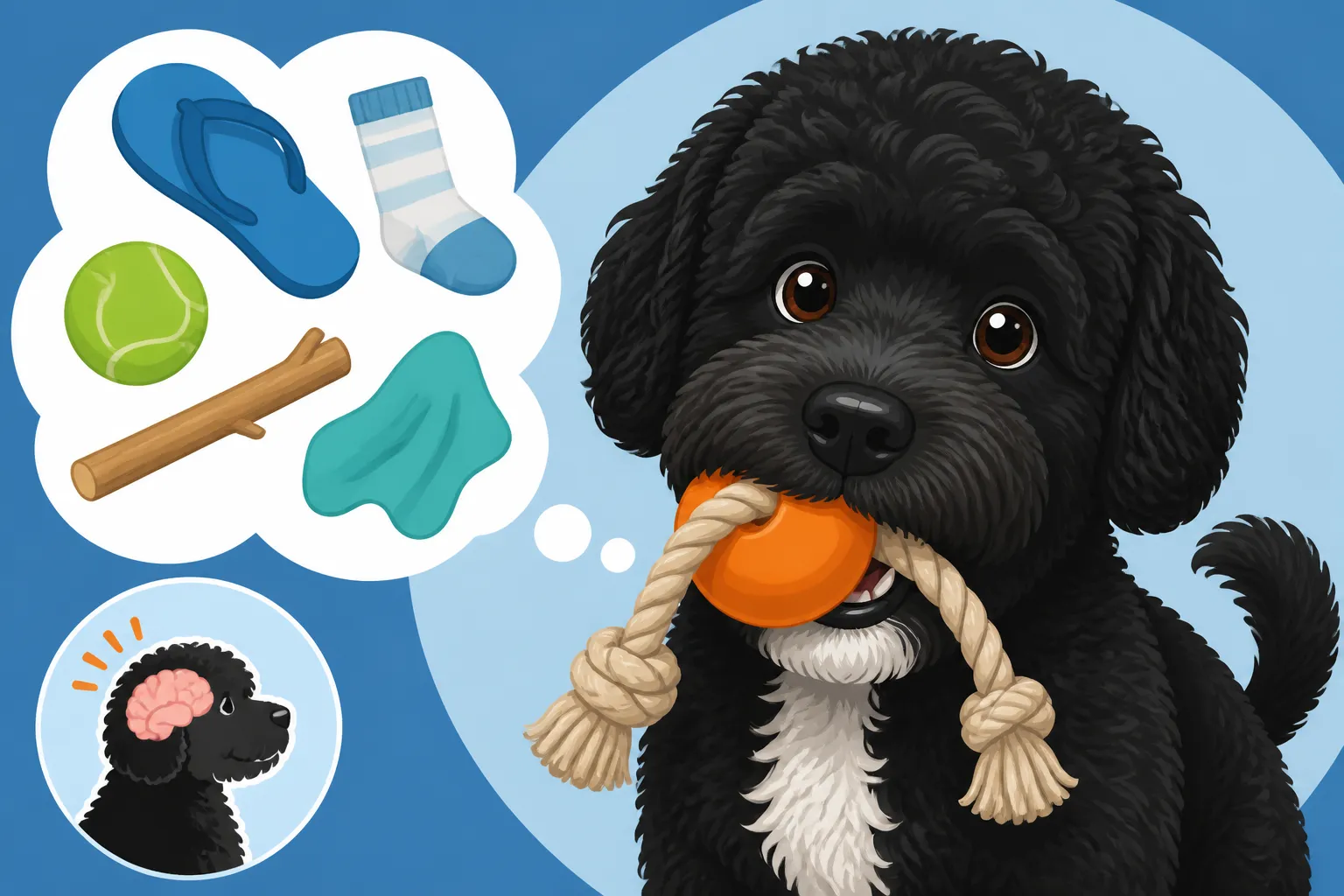
Why a Portuguese Water Dog Puts Everything in Its Mouth
If you've ever found your Portuguese Water Dog puppy happily "rearranging" your living room decor with their mouth, or an adult PWD carrying around your prized possessions, you know the unique frustration of a highly mouthy dog. It's not just about mischievousness; for Portuguese Water Dogs, putting things in their mouth is deeply rooted in their history and natural instincts. This guide will dive deep into why your PWD is so prone to mouthing everything, from puppyhood through adulthood, and provide practical, empathetic strategies to gently guide this instinct into appropriate, safe behaviors.
The Instinctive Roots of Mouthing in Portuguese Water Dogs
It's easy to get exasperated when your beloved Portuguese Water Dog treats your hand like a chew toy or disappears with your slipper. But understanding why they do this is the first step toward managing the behavior. This isn't just a quirky habit; it's a deeply ingrained trait that harks back to their working heritage. These dogs were bred for very specific tasks, and many of those tasks heavily involved their mouths.
Their Ancestral Job: Mouth as a Tool
Imagine a fisherman's life off the coast of Portugal centuries ago. Rough seas, unpredictable weather, and fishing nets that could break or drift away. This is the environment where the Portuguese Water Dog truly shined. They were integral members of the crew, not just companions. Their job often involved retrieving broken tackle, lost nets, or even stray fish that had escaped the lines. To do this, they needed a mouth that was both strong and incredibly gentle – capable of holding a heavy rope without damaging it, or carrying a fish without crushing it. Their jaws and mouths were their primary tools for these aquatic tasks. This historical role means they are predisposed to using their mouths to explore, interact, and manipulate objects in their environment. It’s their way of feeling, carrying, and understanding the world around them, much like we use our hands.
The Retriever Drive: Bringing Things Back
Beyond simply holding objects, the Portuguese Water Dog has a strong inherent retrieve drive. This isn't just about fetching a ball in the park; it's a fundamental part of their working past. They were often tasked with retrieving items from the water, bringing them back to the boat or the shore. This natural inclination to pick things up and carry them is a powerful force. When a PWD mouths your arm or takes your remote control, it's often an extension of this retrieve drive, seeking to engage with you or interact with their surroundings in a way that feels natural to them. They're not necessarily trying to destroy it, but rather to possess it, carry it, and sometimes, present it to you. This instinct is so strong that for many PWDs, a walk isn't complete without carrying something in their mouth, whether it's a stick, a toy, or a particularly interesting leaf. It fulfills a deep-seated need.
Genetic Predisposition: Why PWDs are Mouthy
When you combine their historical role as aquatic retrievers with the overall temperament of the breed, you find a genetic predisposition toward mouthing. Portuguese Water Dogs are intelligent, high-energy dogs that thrive on having a "job." If they don't have an appropriate outlet for their mental and physical energy, these natural instincts can manifest in ways that are less than ideal for a modern household. They are problem-solvers who enjoy figuring things out with their mouths. This is why you'll often hear PWD owners talk about their dogs "herding" household items or even family members with their noses and mouths. It's not aggression; it's simply how their breed's wiring expresses itself. Recognizing this genetic blueprint is key to patience and effective training. You're not fighting against a "bad" dog; you're working with a dog whose instincts are strong and need proper channeling.
Puppy Mouthing: A Natural (But Annoying!) Phase
Ah, the "puppy shark" phase! If you're currently navigating life with a Portuguese Water Dog puppy, you know exactly what I'm talking about. Those tiny, needle-sharp teeth seem to find their way onto every exposed piece of skin, every pant leg, and every piece of furniture. It's frustrating, sometimes painful, and can make you wonder if you've brought home a piranha instead of a puppy. Rest assured, this is a completely normal, albeit challenging, part of puppy development for almost all breeds, and especially for mouthy breeds like the PWD.
Teething and Exploration
Just like human babies, puppies go through a teething phase, which typically starts around 3-4 weeks and continues until all their adult teeth are in, usually by 6-7 months. During this time, their gums are sore, swollen, and itchy, and the urge to chew on everything is overwhelming. Your hands, ankles, furniture legs, and anything else within reach become prime targets for relief. For a Portuguese Water Dog puppy, this is amplified by their natural inclination to use their mouth for exploration. Their mouth is how they gather information about the world – the texture of a rug, the give of a shoe, the taste of a table leg. It's a sensory experience, and every item is a new discovery. Providing a variety of appropriate chew toys is crucial during this stage, offering different textures and hardnesses to satisfy this intense urge. Think rubber, rope, and softer puppy-specific chews.
Learning Bite Inhibition
Beyond teething, puppy mouthing is a critical part of learning bite inhibition. When puppies play with their littermates, they learn how much pressure is too much. A yelp from a sibling teaches them to moderate their bite. Since you, as a human, don't have a thick fur coat or the same pain tolerance, you need to teach your PWD puppy this lesson. When your puppy bites too hard, a sharp, immediate "ouch!" or "yelp!" can mimic a littermate's reaction. Then, immediately withdraw attention. Stand up, turn your back, or even leave the room for 10-20 seconds. This teaches them that hard bites make the fun stop. Consistency is absolutely key here. Every family member needs to react the same way every time. Over time, your puppy learns that gentle mouthing might be tolerated during play, but hard bites mean play stops entirely.
The "Sharky" Puppy Stage
The "sharky" puppy stage, often between 8 weeks and 5-6 months, can feel like a relentless assault of nips and chews. This isn't aggression; it's over-excitement, play, and a desperate need to chew. Your PWD puppy has boundless energy and a clever mind, and if that energy isn't directed, it will come out in ways you don't appreciate. This means plenty of structured playtime, short training sessions, and appropriate chew toys. Make sure your puppy always has something acceptable to chew on. When they grab something inappropriate, calmly redirect them to an approved toy. The goal isn't to punish the act of mouthing, but to teach them what is acceptable to mouth. Consider a training program like BAXTER & Bella, which often has modules dedicated to managing puppy nipping and chewing, providing step-by-step guidance on these common puppy challenges. Remember, the intensity of this phase will pass, but the habits you instill now will last a lifetime. The First Year With a Portuguese Water Dog Puppy is full of these sorts of developmental milestones and how to manage them.
Adolescent Mouthing: Testing Boundaries and Seeking Attention
Just when you think you've conquered the puppy shark phase, your Portuguese Water Dog enters adolescence, typically between 6 months and 1.5-2 years. This is a tricky time, as their physical size and strength are increasing, but their impulse control and decision-making skills are still developing. Mouthing during this period often takes on new nuances, shifting from pure instinct or teething to more deliberate behaviors like testing boundaries or seeking attention.
Energy Outlet and Frustration
Adolescent PWDs are bursting with energy. They're no longer small puppies that tire easily; they need significant physical and mental exercise every single day. If they're not getting enough appropriate outlets, that pent-up energy and frustration can easily manifest as mouthing. They might nip more often during play, grab your clothing, or mouth furniture with more intensity. This isn't necessarily malicious; it's a dog with a full tank of gas and nowhere to go, trying to find a way to release that pressure. Think of it as a teenager slamming a door – a sign of frustration rather than outright rebellion. Providing plenty of structured exercise, like long walks, runs, swimming, or engaging training sessions, is paramount. What a Portuguese Water Dog Needs Every Day delves into just how much activity these energetic dogs require.
Seeking Interaction and Play
Portuguese Water Dogs are highly social and intelligent. As adolescents, they're learning to interact with the world and their human family more deeply. Sometimes, mouthing becomes a way for them to initiate play or seek interaction. A nudge with their nose, a soft "hold" of your arm, or even a playful nip can be their attempt to say, "Hey, I'm bored! Play with me!" They've learned that certain behaviors get a reaction, even if it's a frustrated "No!" from you. While negative attention isn't ideal, it's still attention. This is why it's crucial to reward calm, appropriate interactions and redirect mouthing attempts. If they mouth you for attention, ignore it, and only engage when they offer a calm sit or a polite nudge. Learning How a Portuguese Water Dog Responds to Correction can help you refine your approach during this phase.
The Challenge of Consistency
One of the biggest hurdles during adolescence is maintaining consistency in your responses. An adolescent PWD is clever and will quickly learn if rules are negotiable. If mouthing is sometimes tolerated and sometimes met with a sharp correction, they won't understand what's expected. They'll try it in different situations, with different people, to see what sticks. This means everyone in the household needs to be on the same page regarding mouthing rules and consequences. Have a family meeting to discuss what is and isn't allowed, and how everyone will respond. This consistent approach, combined with plenty of appropriate outlets and positive reinforcement for desired behaviors, is the most effective way to navigate the adolescent mouthing phase. It reinforces to your PWD that while their natural instincts are valid, there are acceptable ways and times to express them.
Adult Mouthing: Boredom, Stress, and Seeking Engagement
Even after navigating the "sharky" puppy and rebellious adolescent phases, some Portuguese Water Dogs may continue to mouth as adults. While the intensity typically lessens, and it's less about teething or boundary testing, adult mouthing usually stems from deeper psychological or behavioral needs. Understanding these triggers is essential for managing the behavior effectively in a mature dog.
Under-Exercised and Under-Stimulated
A common culprit behind persistent adult mouthing is a lack of sufficient physical and mental exercise. Portuguese Water Dogs are highly intelligent working dogs. They need more than just a quick walk around the block; they need purposeful activity that challenges their minds and bodies. If an adult PWD is under-exercised, they will find their own "jobs," and those often involve their mouths. This could mean carrying household items, chewing on furniture, or even mouthing at your hands or clothing when seeking attention or feeling restless. An under-stimulated PWD is a bored PWD, and a bored PWD is a creative PWD, often in ways you don't appreciate. What an Under Exercised Portuguese Water Dog Does can give you a better idea of the range of undesirable behaviors that can stem from this, and mouthing is high on that list. Ensure your PWD gets daily vigorous exercise, brain games, and perhaps even formal training like obedience, agility, or water work to keep them engaged.
Anxiety and Comfort Seeking
Just like people might bite their nails or fidget when stressed, dogs can develop comfort-seeking behaviors when feeling anxious, and for a Portuguese Water Dog, this can often involve their mouth. If your PWD starts mouthing more frequently during times of stress (e.g., loud noises, new environments, changes in routine, separation anxiety), it might be their way of self-soothing. They might chew on their bed, carry a specific toy around obsessively, or even mouth at your hands more gently than usual, almost as if seeking reassurance. It's not about being naughty; it's a coping mechanism. Observing when the mouthing occurs can help you identify potential stressors in their environment. Addressing the root cause of the anxiety, perhaps with environmental changes, calming supplements, or professional guidance, will be more effective than simply punishing the mouthing behavior.
Attention-Seeking Behavior
While we touched on this in adolescence, attention-seeking can persist into adulthood, especially if it's been inadvertently reinforced. An intelligent Portuguese Water Dog quickly learns that if they pick up an item (your keys, your phone, the TV remote) or gently mouth your hand, they get an immediate reaction from you. Even if that reaction is a frustrated "Drop it!" or chasing them to get the item back, it's still a form of attention. And for a dog who loves to be engaged with their people, any attention can be better than none. To curb this, practice ignoring the undesirable behavior (as much as safely possible) and lavish praise and attention when they do something right – like lying calmly on their bed, playing with an approved toy, or offering a polite sit. Reinforce calm and desired behavior, and make sure they get plenty of positive engagement throughout the day so they don't feel the need to resort to less desirable tactics. This ties into the concept of Why a Portuguese Water Dog Needs a Job – an engaged dog is a happy dog, less likely to invent their own, less appropriate, jobs.
Redirecting Mouthing: Effective Training Strategies
Okay, so we understand why Portuguese Water Dogs put everything in their mouth. Now, let's talk about how to proactively manage this natural tendency and redirect it into acceptable channels. This isn't about crushing their spirit or denying their instincts; it's about channeling that energy in a way that works for both of you.
The "No Reward" Approach and Redirection
When your PWD puppy or adult dog mouths inappropriately, the first and most crucial step is to adopt a "no reward" approach. This means no yelling, no hitting, and no engaging in a game of chase if they have something they shouldn't. Any of these reactions, even negative ones, can inadvertently be seen as a reward by your dog because they got your attention. Instead, the moment they mouth something inappropriate – whether it's your hand or a forbidden object – stop all interaction immediately. If it's your hand, let out a sharp "ouch!" and withdraw your hand, turning your back or leaving the room for 10-20 seconds. This is the same principle as teaching bite inhibition in puppies. If they grab an object they shouldn't, don't chase them. Instead, immediately get an appropriate chew toy or high-value treat, get their attention, and trade for the forbidden item. This teaches them that letting go of the "wrong" thing leads to a better reward. Make the appropriate toy far more interesting than the object they currently have. Many PWDs will readily trade for a favorite KONG filled with peanut butter or a really exciting squeaky toy from Amazon.
Teaching an "Off" or "Drop It" Cue
Beyond redirection, teaching solid "Off" and "Drop It" cues is invaluable for any mouthy Portuguese Water Dog. "Off" typically means to remove their mouth from something they shouldn't be touching or mouthing (e.g., your arm, clothing, a table leg). "Drop It" means to release an item they are holding in their mouth.
- Teaching "Drop It": Start by holding a less-preferred toy in one hand. With your other hand, present a higher-value treat. As your dog opens their mouth to take the treat, they will naturally drop the toy. The moment the toy drops, say "Drop It!" and give them the treat. Repeat this many times. Gradually, start saying "Drop It!" before you present the treat, so they associate the verbal cue with releasing the item. Practice with various items, always making the "trade" rewarding. Teaching a Portuguese Water Dog to Trade goes into this in much more detail.
- Teaching "Off": This cue is often taught by pairing it with immediate redirection. If your dog is mouthing your hand, say "Off!" and immediately present an appropriate chew toy. When they switch to the toy, praise and reward. The goal is to teach them that "Off!" means to disengage from the current object and look for an acceptable alternative.
Consistency, short training sessions, and positive reinforcement are critical for these cues. Remember, these are intelligent dogs, and they can learn quickly if you're clear and consistent.
Appropriate Chew Toys and Outlets
The absolute bedrock of managing a Portuguese Water Dog's mouthing tendencies is providing a consistent supply of appropriate, engaging chew toys and outlets. These dogs need to chew and carry. Your job is to ensure they're chewing and carrying the right things.
- Variety is Key: Offer a range of textures, sizes, and hardness levels. Some PWDs love soft plush toys (though they might not last long!), while others prefer hard rubber chews, braided ropes, or even natural chews like bully sticks. Rotating toys keeps them interesting.
- Interactive Toys: Puzzle toys or food-dispensing toys are fantastic for mental stimulation. Fill a KONG with frozen wet food or peanut butter, or use a treat-dispensing ball. These provide a "job" for their mouth and brain, keeping them occupied for longer periods.
- Durability Matters: PWDs have strong jaws. Invest in durable, breed-appropriate chew toys. Look for brands known for their tough products, often found on platforms like Amazon. Always supervise new toys to ensure they don't break off pieces that could be swallowed.
- Water-Friendly Toys: Since PWDs love water, buoyant retrieve toys are excellent for channeling their mouthing instinct into healthy play, whether in a lake, pool, or even just the backyard kiddie pool.
By proactively providing these outlets, you're not just stopping bad behavior; you're fulfilling a fundamental need of your Portuguese Water Dog in a constructive way.
Creating a "No-Mouth" Environment: Management and Prevention
Beyond direct training, managing your environment is a huge part of successfully living with a mouthy Portuguese Water Dog. It's about setting them up for success by removing temptations and providing clear, appropriate alternatives. Think of it as creating a safe, stimulating space where they don't need to resort to mouthing your household items.
Puppy-Proofing Your Home
Just as you would child-proof a home for a curious toddler, you need to "puppy-proof" (or even "adolescent-proof") your living space for a PWD. These dogs are intelligent and resourceful, and if something is within reach, they will investigate it with their mouth.
- Remove Temptation: This is the golden rule. Put away anything valuable, fragile, or potentially dangerous that could be chewed. This includes shoes, books, remote controls, children's toys, blankets, towels, and electrical cords. Assume anything at floor level is fair game until your dog consistently understands what's off-limits.
- Secure Cabinets and Drawers: Many PWDs are smart enough to open low-lying cabinets or drawers. Use child-proof latches or locks to secure areas containing cleaning supplies, food, or other forbidden items.
- Gates and Crates: Utilize baby gates to restrict access to certain rooms when you can't supervise directly. A crate, when used properly as a safe den, can be an invaluable tool for preventing destructive chewing when you need to step away. Ensure it's large enough for them to stand, turn around, and lie down comfortably. This setup is crucial, especially during The First Year With a Portuguese Water Dog Puppy.
A proactive approach to puppy-proofing means fewer opportunities for your PWD to practice undesirable mouthing behaviors, making your life easier and your belongings safer.
Supervising Interactions
Even in a well-proofed home, direct supervision remains crucial, especially during the puppy and adolescent phases. This means actively watching your Portuguese Water Dog when they are out of their crate or confined area.
- Active Supervision: Don't just be in the same room; actively observe what your PWD is doing. Are they sniffing the edge of the rug? Lingering by the table leg? These are cues that they might be about to mouth something inappropriate.
- Intervene Early: The moment you see them approaching something they shouldn't mouth, or if they begin to mouth gently, intervene before the behavior escalates. A calm "Ah-ah!" or "Leave it!" followed by immediate redirection to an appropriate toy is far more effective than waiting until they've already started chewing your antique chair leg.
- Leash Indoors: For persistent offenders or during intense teething phases, keeping your PWD on a light leash tethered to you (or a piece of furniture you are near) can be incredibly helpful. This allows you to physically prevent them from getting to forbidden items and offers immediate opportunities for redirection and training. It's not about punishment, but about managing their access to things that could get them into trouble, giving you time to interrupt and teach.
Providing Engaging Alternatives
The core of preventing unwanted mouthing is ensuring your Portuguese Water Dog has plenty of acceptable things to mouth. This isn't just about having a few toys; it's about providing a stimulating "job" for their mouth throughout the day.
- Chew Toy Rotation: Don't leave all toys out all the time. Rotate them to keep things fresh and exciting. When a toy reappears after a few days, it feels new and interesting.
- Mealtime "Work": Instead of just putting food in a bowl, use puzzle feeders or stuffable toys (like a KONG) for meals. This extends mealtime, provides mental stimulation, and engages their mouth in a productive way.
- Structured Play: Engage in interactive play with appropriate toys like tug ropes or durable fetch toys. This allows them to use their mouths safely with you. Games like "find it" where they use their nose to locate hidden treats also provide excellent mental enrichment. Remember that How Many Hours a Week a Portuguese Water Dog Really Takes often surprises new owners, largely due to the need for these consistent engagement activities. A well-exercised and mentally stimulated PWD is far less likely to chew inappropriately out of boredom.
When to Seek Professional Help
While mouthing is a natural behavior for Portuguese Water Dogs, there's a spectrum, and sometimes it can cross into concerning territory. It's crucial to distinguish between normal puppy mouthing or playful adult nipping and more serious issues that warrant professional intervention. You're doing your best to apply all the techniques, but if you're feeling overwhelmed, frustrated, or notice specific escalating behaviors, it's absolutely okay – and often necessary – to seek help.
Persistent, Hard Biting
One of the most significant red flags is persistent, hard biting that goes beyond play or exploration, especially if it breaks the skin or leaves bruises. If your PWD is still biting with significant pressure despite consistent application of bite inhibition techniques, or if the biting seems to be escalating in intensity or frequency, it's time to call in a professional. This could indicate a deficit in their bite inhibition learning, a deep-seated frustration, or even an underlying anxiety issue. A certified professional dog trainer or a veterinary behaviorist can assess the situation, identify triggers, and develop a tailored training plan to address the root cause and teach appropriate bite control. They might observe interactions you're not seeing or interpret body language that you've missed.
Resource Guarding and Aggression
Mouthing becomes a much more serious concern when it's accompanied by signs of resource guarding or outright aggression. Resource guarding is when a dog growls, snaps, or bites to protect an item (e.g., a toy, food, a bed, or even a person) from being taken away or approached. If your Portuguese Water Dog mouths you, and then shows aggressive displays when you try to retrieve an object they shouldn't have, this is a dangerous situation that requires immediate professional help. Similarly, if the mouthing is paired with stiff body language, growling, snarling, or actual bites intended to cause harm, it moves beyond natural mouthing into aggressive behavior. These behaviors can be complex and are often driven by fear or insecurity. Attempting to manage them without professional guidance can inadvertently make them worse and potentially dangerous for everyone in the household.
Lack of Progress with Training
You've read all the articles, watched the videos, and diligently applied the training techniques – redirection, "drop it," "off," providing appropriate chews. But despite your best efforts, you're just not seeing progress. Your PWD continues to mouth inappropriately, and you feel like you're constantly fighting an uphill battle. This lack of progress, even with consistent effort, is a clear signal that it's time for outside help. A professional trainer can offer a fresh perspective, identify subtle nuances in your dog's behavior or your training approach, and introduce new strategies or tools that you might not be aware of. Sometimes, a professional eye can spot an underlying issue – perhaps a medical condition causing discomfort that manifests as chewing, or an environmental factor contributing to stress – that you might overlook. Don't view seeking professional help as a failure on your part, but rather as an act of responsible pet ownership, ensuring your Portuguese Water Dog gets the specialized guidance they need to be a well-adjusted and safe member of your family. Organizations like the Certification Council for Professional Dog Trainers (CCPDT) or the Karen Pryor Academy can help you find qualified individuals in your area.
| Mouthing Behavior Type | Common Age Range | Primary Motivation | Management/Training Focus | When to Seek Help |
|---|---|---|---|---|
| Puppy Nipping | 8 weeks – 6 months | Teething, Exploration, Play, Bite Inhibition Learning | Redirection to appropriate chews, "yelp" and disengage, crate training | Persistent hard bites (skin broken repeatedly), uncontrolled escalation |
| Adolescent Mouthing | 6 months – 2 years | High energy, Attention-seeking, Boundary testing, Frustration | Increased exercise/mental stimulation, consistent rules, "Off"/"Drop It" cues | Significant aggression during play, unmanageable frustration-based biting |
| Adult Mouthing | 2+ years | Boredom, Stress, Attention-seeking, Deep-seated instinct | Structured "jobs," anxiety management, ignoring attention-seeking mouthing | Resource guarding, actual aggression, hard bites causing injury, no progress after consistent training efforts |
Disclaimer
This article is for general informational purposes only and does not constitute professional advice. Laws, prices and regulations vary by location and change over time. Consult a qualified professional for guidance on your specific situation.