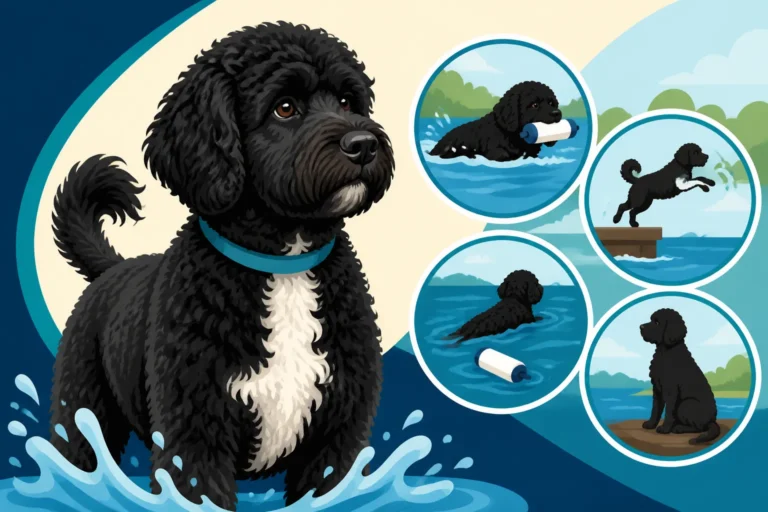
How Long a Portuguese Water Dog Will Work in a Session
Bringing a Portuguese Water Dog into your life is an absolute joy, but many new owners quickly discover that their intelligent, high-energy companion isn't always keen on long, repetitive training drills. It's a common frustration to feel like you're talking to a wall when your PWD decides they've had enough, or worse, they start finding their own "entertainment." This guide is here to help you understand the unique training mindset of your Portuguese Water Dog, and how to structure sessions that keep them engaged, eager to learn, and ensure you both get the most out of your time together.
Understanding the Portuguese Water Dog's Work Ethic
Before we dive into the nitty-gritty of session lengths, it's crucial to understand the fundamental nature of the Portuguese Water Dog. These aren't your typical 'always eager to please' retrievers who will endlessly fetch for hours. They come from a lineage of independent, thinking dogs who were partners, not just tools, to their human companions. This deep-seated history profoundly impacts their approach to work and training.
Historical Context of Their Drive
Imagine the rough seas off the coast of Portugal, a small fishing vessel, and a dog who was an integral part of the crew. The Portuguese Water Dog wasn't just there for companionship; they had vital jobs. They retrieved lost fishing gear, acted as couriers between boats, and even herded fish into nets. This wasn't a job where they waited for a specific command for every single action. Instead, they were expected to observe, anticipate, and often make their own decisions to complete tasks. They needed initiative and problem-solving skills, not just rote obedience. This historical role has instilled in them a strong work ethic, but it's one that thrives on purpose, variety, and partnership, not endless, monotonous drills.
This historical drive means your PWD wants to work and to have a "job," but that job needs to be engaging and mentally stimulating. If the task feels pointless or too repetitive, their independent mind will quickly tune out. It's not defiance, but rather their inherent intelligence telling them, "I've got this, or this isn't worth my time." Their eagerness to please is often tied to the perceived value and fun of the activity. Understanding this background is key to appreciating why they might check out of a long, boring "sit-stay" session much faster than they would a dynamic game of hide-and-seek. A Portuguese Water Dog Was Bred to Work a Boat, Not a Yard is a great resource if you want to delve deeper into their origins.
Innate Intelligence and Independent Thinking
Portuguese Water Dogs are incredibly intelligent. They're quick learners, often picking up new commands and concepts with remarkable speed. However, this intelligence comes with a caveat: they are also independent thinkers. They were bred to improvise and adapt to changing conditions at sea. This means they often process commands not just as "do this," but as "why should I do this?" or "is there a more efficient way to achieve the goal?" This isn't stubbornness in the negative sense, though it can certainly feel that way when you're trying to get them to focus. It's simply a manifestation of their problem-solving nature.
This independent streak means that while they learn quickly, they can also become bored quickly if the training isn't challenging or varied enough. If they perceive a task as redundant or without a clear purpose, they're likely to disengage or even offer an alternative behavior they think is more appropriate. You might find them trying to "trick" you into giving them a reward for something they thought up, rather than the command you issued. This is why many PWD owners find that shorter, more dynamic sessions are far more productive than trying to force a long, drawn-out training period. They need to feel like they're collaborating, not just obeying orders. Training a Portuguese Water Dog That Was Bred to Think for Itself explores this fascinating aspect of their temperament in more detail.
Why a Portuguese Water Dog Needs a Job
Without a clear purpose or "job," a Portuguese Water Dog can become bored, and a bored PWD is often a destructive PWD. Their historical role provided immense mental and physical stimulation, and while most modern PWDs aren't working on fishing boats, their intrinsic need for purpose remains. If you don't provide them with outlets for their intelligence and energy, they will absolutely find their own "jobs"—which might include redecorating your couch, counter-surfing for snacks, or creating elaborate digging projects in your backyard.
Training isn't just about teaching commands; it's about channeling their innate drive and providing that crucial mental engagement. Short, focused training sessions, even just for 5-10 minutes several times a day, can fulfill a significant portion of this need. It gives them a chance to use their brains, earn rewards, and strengthen their bond with you. Think of these sessions as their daily dose of cognitive enrichment. Whether it's learning complex tricks, practicing advanced obedience, or engaging in canine sports, ensuring your PWD has a job will lead to a happier, better-behaved companion. Why a Portuguese Water Dog Needs a Job is a must-read for anyone looking to truly understand this crucial aspect of their breed.
Factors Influencing Session Length and Effectiveness
The ideal length of a training session for your Portuguese Water Dog isn't a one-size-fits-all answer. It depends on several critical factors, from their age to the environment you're training in. Being mindful of these influences will help you tailor your sessions for maximum success and enjoyment.
The Role of Age and Maturity
Just like human children, Portuguese Water Dog puppies have incredibly short attention spans. Trying to force a 30-minute training session on a 10-week-old puppy is a recipe for frustration for both of you. Their little brains are still developing, and they can only absorb so much information before they're completely overwhelmed or simply lose interest.
For young puppies (8-16 weeks), very short, frequent sessions are best. Think 2-5 minutes, 3-5 times a day. These mini-sessions should be fun, positive, and end on a high note, leaving the puppy wanting more. As they grow into adolescence (typically around 6 months to 2 years), their attention span will lengthen, but they'll also hit a phase where they're testing boundaries and can be easily distracted. During this period, 5-10 minute sessions are often more appropriate, gradually increasing as they mature. Adult PWDs, generally after two years of age, can handle longer sessions, perhaps 10-20 minutes, especially if the training is varied and challenging. However, even an adult PWD will benefit from breaks and a mix of activities to keep their sharp minds engaged. Never push them past the point of enjoyment, as this can create negative associations with training. When a Portuguese Water Dog Hits Adolescence provides excellent insights into this challenging, yet rewarding, developmental stage.
The Impact of Distractions and Environment
The environment in which you choose to train your Portuguese Water Dog has a monumental impact on their ability to focus. A PWD, with their keen senses and intelligent minds, is easily distracted by novel sights, sounds, and smells. Trying to teach a new, complex command at a bustling dog park is setting your dog up for failure, and you up for disappointment.
When introducing new concepts, start in a quiet, low-distraction environment, like your living room or a calm backyard. As your PWD masters the command, you can gradually introduce more distractions, slowly increasing the difficulty. This concept is called "proofing," and it's essential for a dog to reliably perform commands in various real-world situations. For example, once they've mastered "sit" indoors, practice it in your backyard, then on a quiet street, then a slightly busier park. Always keep initial sessions in new, distracting environments shorter than usual, as the mental effort required to filter out distractions is significant. If you find your PWD constantly scanning their surroundings or ignoring your cues, it's a clear sign that the environment is too stimulating, and it's time to either move to a quieter spot or shorten the session significantly.
Motivation and Reinforcement Techniques
A Portuguese Water Dog's motivation is directly linked to the perceived value of the reward and the fun factor of the training. These dogs aren't typically driven solely by praise; they need tangible motivators. High-value treats (think small pieces of cheese, cooked chicken, or special training treats) are often incredibly effective, especially for new behaviors. Toys, especially those they love to retrieve or tug with, can also be powerful motivators, particularly for a breed that thrives on play.
Varying your rewards is also key to keeping them interested. Don't always use the same treat or toy. Keep them guessing! For PWDs, the activity itself can also be a reward. For example, if they love to swim, making a successful retrieve a precursor to a supervised dip in the lake can be a fantastic motivator. Conversely, if your PWD is losing interest, it's a sign that your current reinforcement isn't high-value enough, or the session has gone on too long. Ending a session before they're bored, and always on a positive note, will ensure they remain enthusiastic about future training. Platforms like BAXTER & Bella often emphasize positive reinforcement techniques that work wonderfully with intelligent, sensitive breeds like the Portuguese Water Dog, focusing on building a strong, trust-based relationship. What Motivates a Portuguese Water Dog offers more in-depth advice on tailoring your rewards.
Structuring Your Portuguese Water Dog's Training Sessions
Now that we've covered the underlying temperament and influencing factors, let's talk about the practicalities of setting up effective training sessions. It's all about quality over quantity, and keeping things fresh and exciting.
Optimal Session Durations for Different Stages
As discussed, a PWD's attention span varies dramatically with age and individual personality. Here's a general guideline for optimal session durations, but always remember to observe your dog's cues and adjust accordingly. If they're still eager, you can always extend a little; if they're flagging early, shorten it up!
| Age Stage | Recommended Session Length | Frequency per Day | Focus | Key Takeaway |
|---|---|---|---|---|
| Puppy (8-16 weeks) | 2-5 minutes | 3-5 times | Basic commands, socialization, positive associations | Keep it fun, short, and positive. End wanting more. |
| Adolescent (4-24 months) | 5-10 minutes | 2-3 times | Proofing commands, impulse control, problem-solving | Tackle distractions gradually. Be patient. |
| Adult (2+ years) | 10-20 minutes | 1-2 times | Advanced commands, complex tasks, maintenance | Incorporate variety and mental challenges. |
These are merely starting points. A PWD who has just had a vigorous swim might be more mentally tired and prefer a shorter session, while one who is bursting with energy might concentrate longer if the session is stimulating enough. The key is flexibility and observation. Don't set a timer and rigidly stick to it; watch your dog's body language. Are their ears perked? Are they making eye contact? Or are they sniffing the ground, looking away, or even yawning? These are all signals it's time for a break or to end the session.
Incorporating Variety and Fun
Monotony is the enemy of a Portuguese Water Dog's attention. If every training session involves the same five commands, in the same spot, with the same treats, you can bet your PWD will quickly decide there are more interesting things to do. To keep them engaged and prevent boredom, variety is absolutely essential.
Think about changing up:
- Location: One day, train in the living room; the next, in the backyard; another day, on a short walk in a quiet park. New environments offer new mental challenges and keep things interesting.
- Commands: Don't just drill "sit" and "stay." Mix in new tricks, advanced obedience cues, or even fun games that incorporate commands. Teach them to "find it," "touch," or weave through your legs.
- Rewards: Alternate between high-value treats, favorite toys, or even access to a desired activity (like a quick game of fetch or a short swim).
- Trainers: If other family members are involved, have them participate in training sessions too. This helps your PWD generalize commands to different people.
- Type of Training: Beyond formal obedience, consider incorporating puzzle toys, scent work, or even short agility exercises. The goal is to make learning an exciting, unpredictable adventure. Many owners find that online programs, like those offered by BAXTER & Bella, provide a structured way to introduce variety and keep training fresh with new ideas. What a Portuguese Water Dog Does All Day could inspire new activities to integrate into your routine.
Recognizing Signs of Fatigue or Frustration
Your Portuguese Water Dog will tell you when they've had enough, if you know how to read their signals. Ignoring these cues can lead to frustration for both of you, damaging your training relationship and making future sessions harder.
Common signs of mental fatigue, boredom, or frustration include:
- Yawning: Not just sleepy yawns, but often quick, repetitive yawns that indicate stress or disengagement.
- Licking lips/nose: Another common calming signal that can indicate stress.
- Averting gaze: Refusing to make eye contact or constantly looking away from you.
- Sniffing the ground: Disengaging from the task at hand to investigate irrelevant smells.
- "Zoomies": A sudden burst of frantic energy, often a release of pent-up frustration or overstimulation.
- Ignoring commands: Pretending they didn't hear you, or looking at you and then doing something else entirely.
- Chewing/Mouthiness: Redirecting their energy into mouthing your hand, the leash, or nearby objects. Why a Portuguese Water Dog Puts Everything in Its Mouth discusses this common PWD trait.
- Excessive scratching/shaking off: Another way dogs try to relieve stress.
When you see these signs, it's time to either take a short break (5-10 minutes) and then try again with a much simpler, high-reward task to end on a positive note, or simply end the session for the day. Always aim to finish before your PWD is completely checked out. This leaves them feeling successful and eager for the next session.
Maximizing Engagement Beyond Formal Sessions
While structured training sessions are vital, a Portuguese Water Dog's learning and engagement don't have to be confined to specific "training times." Many opportunities exist throughout the day to reinforce behaviors, provide mental stimulation, and deepen your bond.
Integrating Training into Daily Life
The most effective way to train a Portuguese Water Dog is to weave learning seamlessly into their everyday routine. Every interaction can be a micro-training moment, reinforcing commands and good habits without making it feel like a chore. This "passive training" approach is incredibly powerful for a dog that thrives on purpose.
Think about these opportunities:
- Mealtime: Make them "sit" or "down" before putting down their food bowl. Practice "stay" for a few seconds before releasing them to eat.
- Walks: Use walks to practice "heel," "leave it" (for interesting smells or distractions), and recalls in varied environments. Make them sit politely before crossing a street.
- Doorway manners: Ask for a "sit" and "wait" before opening the door to go outside or welcoming a guest.
- Playtime: Incorporate commands like "bring it," "drop it," and "wait" into games of fetch or tug.
- Getting attention: Only reward them for calm, polite attention, never for barking or jumping. Ask for a "sit" before you pet them.
By making training a natural part of daily life, you're constantly reinforcing behaviors and ensuring your PWD understands that commands apply everywhere, not just in a specific training spot. This builds reliability and consistency, which is crucial for such an intelligent and independent breed.
Utilizing Interactive Toys and Puzzles
For a dog as intelligent as a Portuguese Water Dog, interactive toys and puzzle feeders are a godsend. These tools provide mental stimulation, combat boredom, and can even slow down fast eaters, all while encouraging problem-solving skills. They can be a fantastic way to extend mental engagement when you can't be actively training.
There's a vast array of options available:
- Kibble dispensers: Toys that require your dog to manipulate them to release treats or kibble. This makes mealtime a mental exercise instead of a quick gulp. You can find many options on platforms like Amazon.
- Snuffle mats: Mats with fabric strips where you can hide treats, encouraging natural foraging behavior.
- Lick mats: Mats covered with suction cups that you can spread with wet food, peanut butter, or yogurt. Licking is a self-soothing behavior and can keep your PWD calm and occupied.
- Advanced puzzle toys: Some puzzles have multiple steps, requiring your dog to slide, lift, and push components to get to rewards. Start with simpler ones and gradually introduce more complex challenges.
- Chew toys: Durable chew toys, especially those that can be stuffed with treats, provide long-lasting engagement and help satisfy their natural urge to chew.
Always supervise your PWD with new puzzle toys to ensure they use them safely and don't ingest small parts. Introducing a new puzzle toy can be a mini-training session in itself, teaching them how to interact with it. Whether a Portuguese Water Dog Solves a Puzzle Toy Too Fast provides great advice on choosing appropriate puzzles.
The Importance of Physical and Mental Exercise
No matter how brilliant your training sessions are, they won't be truly effective if your Portuguese Water Dog's fundamental needs for exercise aren't met. These are high-energy dogs, bred for strenuous work. An under-exercised PWD will struggle to focus, will be easily distracted, and will often display unwanted behaviors out of sheer boredom and pent-up energy.
Physical exercise should always precede mental work. A good, vigorous walk, a solid game of fetch, or, ideally, a swim, can help burn off excess energy and put your PWD in a more relaxed, receptive state for training. After a good workout, their minds are often clearer and more ready to engage in cognitive tasks. Aim for at least 60-90 minutes of vigorous exercise daily, ideally broken into multiple sessions, and much of that should be off-leash or swimming.
Beyond physical exertion, mental exercise is equally important. This isn't just about learning commands but about engaging their problem-solving abilities. Scent work, agility, water work trials, or even just exploring a new hiking trail provides immense mental stimulation. A well-exercised and mentally stimulated Portuguese Water Dog is a happier, more attentive, and ultimately, more trainable companion. How Much Exercise a Portuguese Water Dog Needs and The Portuguese Water Dog That Has Not Had Enough Exercise offer comprehensive advice on meeting these crucial requirements.
Common Training Challenges and How to Overcome Them
Training a Portuguese Water Dog, while incredibly rewarding, isn't always smooth sailing. Their intelligence and independent nature can present unique challenges, but with the right approach and a good dose of patience, these can be successfully navigated.
Dealing with Stubbornness and Boredom
The "stubborn" label often gets unfairly attached to intelligent, independent breeds like the Portuguese Water Dog. More often than not, what appears as stubbornness is actually boredom, a lack of clear motivation, or simply your PWD offering their own, superior solution to the problem at hand. They aren't trying to be difficult; they're just thinking for themselves.
To combat this:
- Boost the Value: If your PWD isn't performing, ask yourself if the reward is truly motivating enough. Upgrade to something irresistible.
- Shorten Sessions: If boredom sets in, immediately shorten the session. It's better to do five perfect minutes than twenty minutes of frustration.
- Increase Variety: Are your sessions too predictable? Mix up commands, locations, and activities.
- Make it a Game: Frame training as a fun puzzle or a game you play together, rather than a strict drill. Use an upbeat tone and lots of enthusiastic praise.
- Give Them a Choice (within limits): Sometimes, giving a PWD a choice between two acceptable behaviors can increase their buy-in. "Do you want to fetch this toy or that one?"
- Break Down Tasks: If a command is too complex, break it into smaller, easier steps. Celebrate each tiny success.
Remember, a PWD doesn't respond well to harsh corrections or force. This can shut them down and make them truly stubborn or fearful. Patience, creativity, and positive reinforcement are your best tools.
Managing High Energy During Sessions
It's tough to get a PWD to focus if they're buzzing with untapped energy. Imagine trying to concentrate on a complicated task when you've just chugged three espresso shots – that's often how an under-exercised PWD feels! Their high drive, especially in younger dogs, can manifest as jumping, nipping, or constantly trying to initiate play when you're trying to train.
Strategies for managing high energy during training:
- Pre-Session Exercise: As mentioned, a good dose of physical exercise before training can make a world of difference. A brisk walk, a hearty game of fetch, or a swim can help them settle. Whether Swimming Tires a Portuguese Water Dog Enough is a relevant read here.
- Short, Frequent Sessions: If your PWD is still too amped up for a long session, break it down. Five minutes of focused work, a 10-minute play break, then another five minutes of training.
- Calming Protocols: Teach a "settle" or "mat" command in a low-distraction environment. Practice having them lie calmly on a designated mat or bed for increasing durations. Reward heavily for calm behavior.
- Use Energy in Training: Incorporate activities that naturally burn energy within the training. For example, use a retrieve as a reward for a perfect "stay," or integrate movement into obedience like heeling.
- Impulse Control Games: Play games like "leave it" with tempting items, or "stay" with distractions, which teach them to control their impulses even when excited. These are crucial for a high-energy breed.
Consistency is key. If you consistently ensure their energy needs are met and gently guide them to calm behavior during training, they will learn to manage their excitement more effectively.
Building a Stronger Bond Through Positive Reinforcement
At the heart of all successful Portuguese Water Dog training is a strong, trusting bond between you and your dog. These dogs thrive on partnership and connection. Negative reinforcement, punishment, or harsh corrections can severely damage this bond, leading to a PWD who is fearful, disengaged, or unwilling to offer behaviors.
Positive reinforcement, which means rewarding desired behaviors, is not just a training method; it's a way of life with a Portuguese Water Dog. It teaches them what you want them to do, rather than punishing them for what you don't want. It makes learning a joyous experience, which is paramount for a sensitive, intelligent breed.
Here's how to foster that bond:
- Keep it Fun: Always aim to make training engaging and enjoyable. End on a high note, even if it means doing one super-easy command and giving a huge reward.
- Be Patient: Understand that learning takes time, and there will be setbacks. Frustration on your part will only confuse and demotivate your dog.
- Be Fair and Consistent: Dogs thrive on predictability. Ensure your rules and expectations are clear and consistently applied by everyone in the household.
- Celebrate Successes: Don't just reward; truly celebrate when your PWD does something right. Enthusiastic praise, a little happy dance, or an extra special treat can go a long way.
- Spend Quality Time: Beyond training, simply spend time together. Go for adventurous walks, cuddle on the couch, or play their favorite games. This strengthens the emotional connection.
Many online resources and trainers, like those found through BAXTER & Bella, are dedicated to positive reinforcement methods that resonate particularly well with the Portuguese Water Dog's intelligent and sensitive nature. By making training a positive, collaborative experience, you're not just teaching commands; you're building a lifelong partnership based on mutual trust and respect.
Disclaimer
This article is for general informational purposes only and does not constitute professional advice. Laws, prices and regulations vary by location and change over time. Consult a qualified professional for guidance on your specific situation.