How Long a Portuguese Water Dog Copes Alone
One of the biggest anxieties for Portuguese Water Dog owners, especially new ones, is the question of how long these incredibly intelligent and people-oriented dogs can truly be left by themselves. It's a common struggle, this feeling of guilt or worry when you have to leave for work or run errands, wondering if your beloved PWD is pacing, barking, or worse, tearing up your couch. This guide is here to provide realistic expectations, practical strategies, and comforting insights into helping your Portuguese Water Dog cope happily and safely when you're not around.
Understanding Your Portuguese Water Dog's Need for Company
Let's face it, Portuguese Water Dogs aren't really built for solitude. Their entire history and genetic makeup point to a dog that thrives on companionship and a job to do. Understanding this fundamental aspect of their breed can help you manage your expectations and create a home environment that suits their needs, even when you can't be there every single second.
Their Working Dog Heritage Dictates Their Disposition
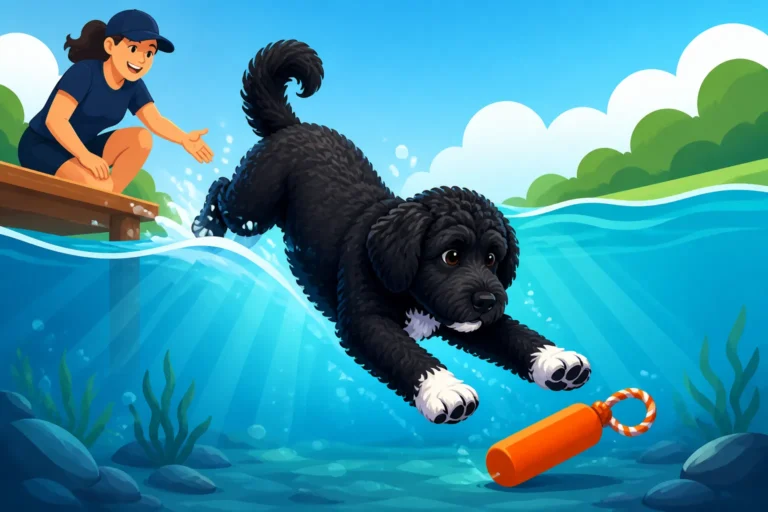
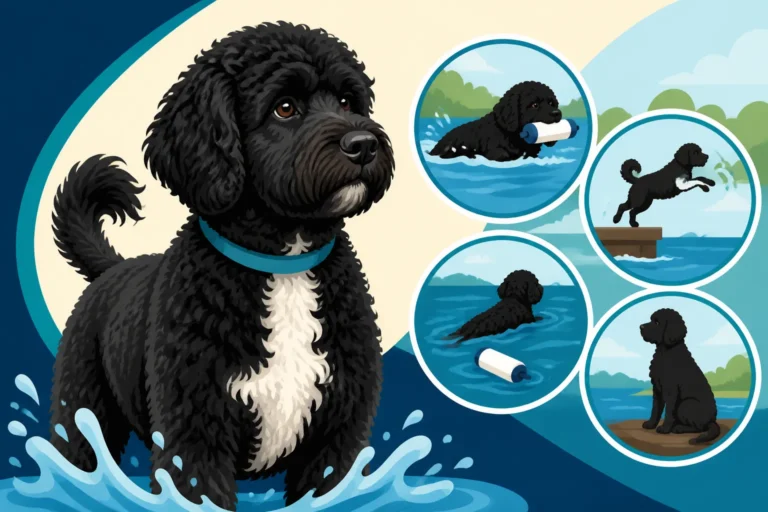
Imagine a Portuguese Water Dog in its ancestral role, working alongside fishermen on the boats off the coast of Portugal. These dogs weren't just passengers; they were active crew members, retrieving lost tackle, driving fish into nets, and even carrying messages between boats. Their days were filled with purpose, physical activity, and constant interaction with their human companions. They were bred to be attentive, to problem-solve, and to work in close collaboration with people. This isn't a dog that was historically left alone in a backyard all day. Their innate drive is to be involved, to be part of the family "pack," and to have a job to do. When they don't have that interaction or engagement, they can become bored, frustrated, and sometimes even destructive.
The Need for Companionship and Engagement
Because of this deep-seated working heritage, Portuguese Water Dogs have an incredibly strong need for companionship. They bond intensely with their families and thrive on being included in daily activities. They are not content to be isolated; they want to be where the action is, observing, participating, and often 'helping' in their own unique ways. This isn't just about being physically present; it's about mental and emotional engagement. A PWD who feels ignored or under-stimulated for extended periods will often seek out ways to entertain themselves, which can often manifest in behaviors we owners find less than desirable. They are constantly looking for input and interaction, and when that's missing, their intelligent minds will quickly come up with their own, often creative, solutions.
High Intelligence and Boredom Potential
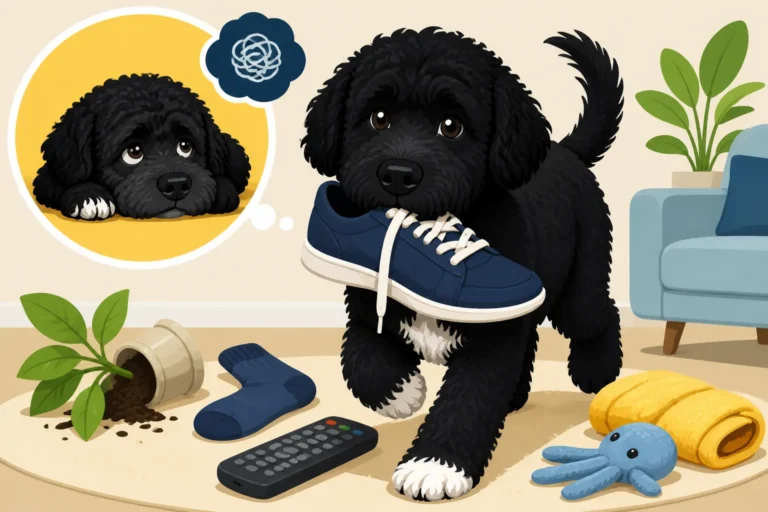
Portuguese Water Dogs are notoriously intelligent, and while this makes them incredibly fun to train and live with, it also means they get bored easily. A bored PWD is a recipe for trouble. They have problem-solving minds, and if you don't give them appropriate puzzles to solve or activities to engage with, they'll find their own. This might mean investigating the kitchen counter for forgotten snacks, redecorating your sofa, or engaging in persistent barking at anything that moves outside the window. Their intelligence means they need consistent mental stimulation throughout the day, not just a quick walk. Leaving them alone with nothing to do for hours on end is like leaving a toddler in a room full of breakable objects – they're smart enough to figure out how to get into mischief. Training a Portuguese Water Dog That Was Bred to Think for Itself is a truly vital aspect of successful PWD ownership, and it applies even when you're not physically present.
Realistic Timeframes for Alone Time
Setting realistic expectations for how long your Portuguese Water Dog can comfortably cope alone is crucial for their well-being and your peace of mind. There's a big difference between a young puppy and a well-adjusted adult, and even then, every dog is an individual with their own needs and thresholds.
Puppy Limitations: Building Tolerance Gradually
A young Portuguese Water Dog puppy, especially those under six months, should really not be left alone for very long at all. Think of them like human toddlers – they need frequent potty breaks, constant supervision to prevent mischief, and lots of social interaction to develop into well-adjusted adults. As a general rule of thumb, a puppy can hold their bladder for about one hour per month of age. So, a three-month-old puppy might only be able to last three hours, max. Pushing this limit can lead to accidents in the crate or house, which sets back potty training and can cause stress for your puppy.
Beyond bathroom needs, puppies are in a critical socialization period. Every minute spent alone is a minute they're not learning about the world, bonding with you, or receiving comfort and stimulation. For very young puppies, leaving them for more than an hour or two is pushing it. You need to gradually build up their tolerance, starting with just a few minutes in their crate while you're still home, then extending to short trips out. Consider getting help from a trusted neighbor, dog walker, or family member if you have long days away from home with a young pup. The First Year With a Portuguese Water Dog Puppy is a demanding but rewarding time that sets the stage for their future.
Adult Dogs: What's Truly Sustainable
Once your Portuguese Water Dog is a mature adult, generally around 1.5 to 2 years old, they can handle being alone for longer periods, but there are still limits. A well-adjusted adult PWD who has been properly trained and exercised can typically cope with 4-6 hours alone. Some exceptional individuals might stretch this to 7-8 hours on occasion, but this should be the absolute maximum, and certainly not an everyday occurrence.
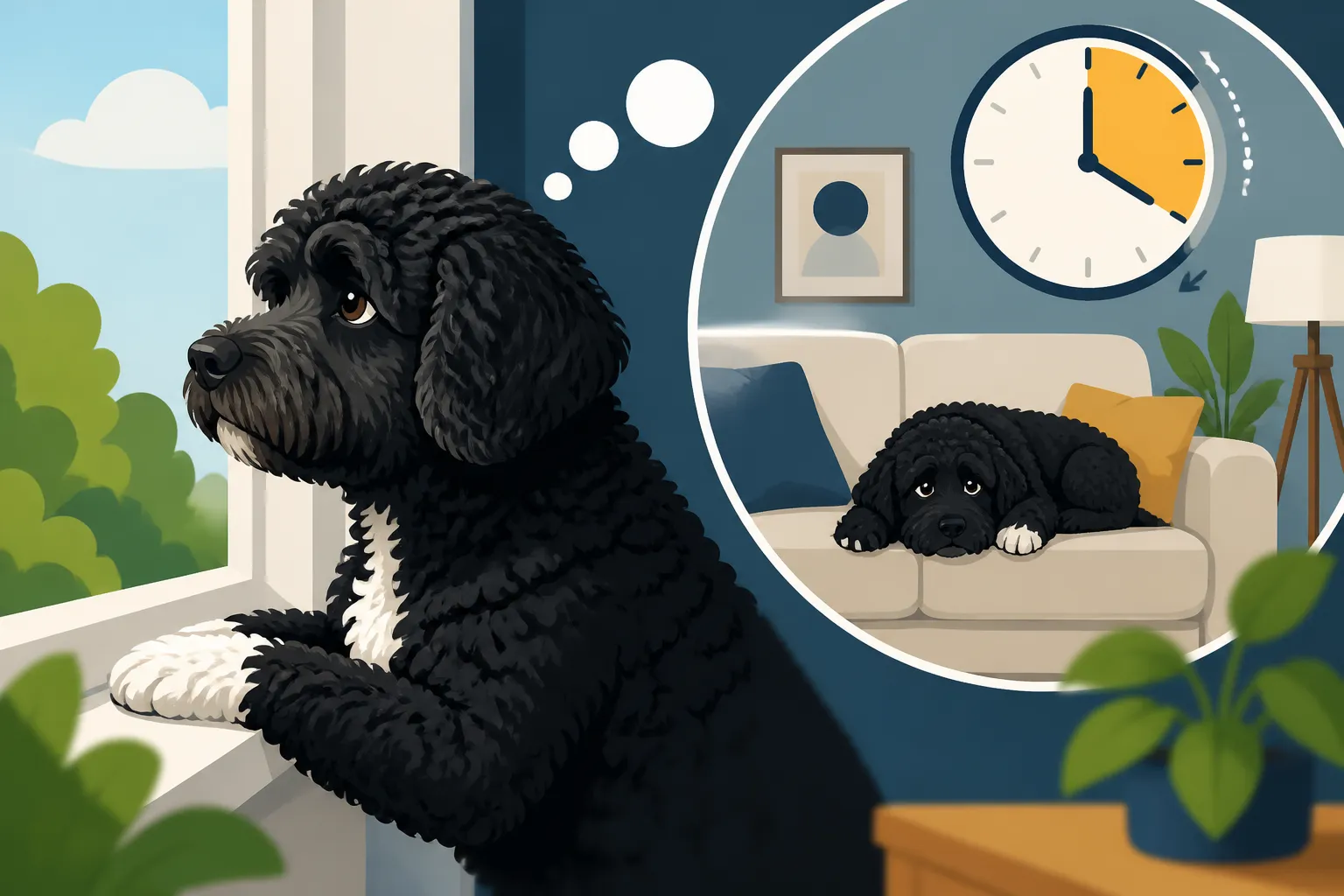
It’s important to remember that 'coping' doesn't always mean 'thriving.' While they might not be destructive, prolonged solitude can still lead to boredom, anxiety, or a general feeling of neglect for such a social breed. If your typical workday is 8-9 hours plus commute time, that means your PWD could be alone for 10+ hours a day. This is simply too long for most Portuguese Water Dogs. It's at this point that you need to implement strategies like dog walkers, doggy daycare, or even a trusted friend or family member who can break up the day. Failing to do so often leads to problems like excessive barking, chewing, or even Signs a Portuguese Water Dog Has Separation Anxiety.
| PWD Age/Training Level | Recommended Max Alone Time | Notes |
|---|---|---|
| 2-4 Months Puppy | 1-2 Hours | Needs frequent potty breaks, short periods to build tolerance. |
| 4-6 Months Puppy | 2-4 Hours | Still learning bladder control, needs mental stimulation. |
| 6-12 Months Adolescent | 4-5 Hours | Can hold longer, but still needs exercise and engagement to avoid mischief. |
| Adult (Well-adjusted) | 4-6 Hours | Maximum for regular daily occurrences; 7-8 hours only occasionally with proper preparation. |
| Adult (Anxious/Untrained) | Varies, 0-2 Hours | Requires dedicated training and possibly professional help to extend. |
The Impact of Individual Temperament and Training
Just like people, every Portuguese Water Dog has a unique personality. Some are naturally more independent and may tolerate alone time better, while others are "velcro dogs" who thrive on constant human contact. The key is to know your dog. Observe their behavior when you return home: are they frantic, showing signs of relief? Or are they calm and happy?
Training plays an enormous role. A dog that has been systematically crate-trained and taught to be calm and self-reliant will do much better than one that hasn't. Early and consistent training, especially around self-settling and appropriate independent play, can make a huge difference. If your dog struggles, remember that it's not their fault; it's a reflection of their breed's needs and possibly a gap in their training or routine. Seeking guidance from an online program like BAXTER & Bella, which emphasizes positive reinforcement and building a strong foundation, can be incredibly beneficial for teaching your PWD to be comfortable alone.
Strategies for Preparing Your PWD for Alone Time
Leaving your Portuguese Water Dog alone isn't just about walking out the door. It requires preparation, consistent routines, and creating an environment where they feel safe and stimulated. This proactive approach can significantly improve their ability to cope.
Crate Training as a Foundation
Crate training is one of the most effective tools for managing alone time, especially for puppies and young Portuguese Water Dogs. A crate, when introduced correctly, becomes a safe, den-like space where your dog can feel secure. It's not a punishment; it's their personal bedroom. The key is to make it a positive place, filled with comfortable bedding, safe chew toys, and never used for anything negative.
Start by introducing your PWD to the crate for short periods, feeding meals inside, and giving high-value treats. Gradually extend the time they spend in the crate while you're in the house, eventually moving to short absences. This teaches them that being in the crate, and being alone, is a normal and often relaxing part of their day. A well-crate-trained Portuguese Water Dog is far less likely to be destructive or have accidents when left alone, simply because they have a designated safe space where they feel secure. Many owners find that once their PWD understands and accepts the crate, it becomes their preferred spot for naps and quiet time, even when the door is open.
Establishing a Departure Routine
Dogs thrive on routine and predictability. A consistent departure routine helps your Portuguese Water Dog understand what's happening and that your leaving is temporary. This routine should start well before you actually walk out the door. Avoid making a big fuss right before you leave, as this can heighten their anxiety. Instead, make your departure calm and uneventful.
Your routine might include a substantial walk or play session to burn off energy, a potty break, followed by settling them in their designated space with an engaging chew or puzzle toy. Then, calmly grab your keys, say a quiet goodbye, and leave. When you return, initially keep the greeting calm until your dog has settled, then you can lavish them with attention. This teaches them that your leaving isn't a big deal, and your return is just as calm and predictable. The predictability helps reduce anxiety and builds trust. What a Portuguese Water Dog Needs Every Day includes consistent routine, which extends to alone time.
Enrichment Activities for Mental Stimulation
Physical exercise is vital for a Portuguese Water Dog, but mental exercise is just as important, especially when they're alone. Providing appropriate enrichment activities can keep their intelligent minds engaged and prevent boredom-induced mischief. Think puzzle toys that dispense treats, long-lasting chews, or even snuffle mats where they have to 'hunt' for their food.
Before you leave, ensure your PWD has had ample physical exercise – a vigorous walk, a swimming session, or a good game of fetch can tire them out both physically and mentally. Then, give them a mentally stimulating toy as you depart. This turns your leaving into a positive association, as it means they get their special 'alone time' treat. Products found on Amazon like Kongs filled with frozen peanut butter or interactive treat dispensers can be lifesavers, keeping your PWD occupied for a good chunk of time. Remember, a tired dog is a good dog, and a mentally satisfied dog is often a calm one.
Addressing Separation Anxiety in Portuguese Water Dogs
While many Portuguese Water Dogs can learn to cope with alone time, some may develop separation anxiety, a more serious condition that goes beyond simple boredom. Recognizing the signs and understanding why this breed might be prone to it is the first step toward effective management.
Recognizing the Signs
Separation anxiety manifests in various ways, and it's important to distinguish it from a dog who is simply bored or needs more training. Common signs include:
- Destructive Chewing: This isn't just chewing a slipper; it's often destructive chewing around exits (doors, windows) or items that smell like you (your clothes, the couch you sit on).
- Excessive Barking or Howling: Neighbors often complain about continuous vocalization that starts shortly after you leave and persists for long periods.
- Inappropriate Urination or Defecation: Even a perfectly house-trained PWD might have accidents when left alone, especially if they are left in an un-crated area and it's not a bladder control issue.
- Pacing or Panting: Obsessive pacing, panting, or drooling, even when the temperature is normal, can indicate high anxiety.
- Escaping: Attempts to escape from crates, rooms, or yards, often resulting in injury.
- Hyper-greeting: An overly enthusiastic, almost frantic greeting when you return, far beyond normal happy greetings.
If you suspect separation anxiety, consider setting up a camera to observe your dog's behavior when you're gone. This objective evidence can be invaluable for diagnosis and creating a treatment plan.
Why PWDs are Prone to It
Portuguese Water Dogs, with their deep historical bond to humans and their intelligent, sensitive nature, can be particularly susceptible to separation anxiety. They were bred to be constant companions, working in close proximity to their people. This innate desire for connection, combined with their high intelligence, means they often struggle when that connection is abruptly severed for extended periods.
Furthermore, a PWD who hasn't received adequate physical and mental exercise, consistent training, or proper socialization can be more prone to anxiety. An under-stimulated PWD has a lot of pent-up energy and an active mind, which, when coupled with being alone, can easily spiral into anxious behaviors. It's not a fault in their character, but rather a manifestation of their unmet breed-specific needs. What a Portuguese Water Dog Was Bred to Work a Boat, Not a Yard underscores their inherent disposition for activity and companionship, making them less suited for solitary confinement.
Professional Help and Training Adjustments
If you've identified true separation anxiety, it's crucial to seek professional help. This isn't a problem that will simply resolve itself, and often, traditional obedience training alone isn't enough. A certified professional dog trainer or a veterinary behaviorist can help you develop a tailored desensitization and counter-conditioning program. This often involves very gradual increases in alone time, paired with positive associations, and sometimes, in severe cases, medication to help reduce anxiety during the retraining process.
The approach needs to be slow and patient, never pushing your dog beyond their comfort zone. It also requires consistency from everyone in the household. Online resources, like those provided by BAXTER & Bella, can offer foundational training that builds confidence and helps your dog learn to be comfortable in various situations, which can be a valuable supplement to in-person behavioral therapy. They provide structured lessons that empower owners to understand and address underlying issues, fostering a more secure bond that can mitigate anxiety triggers.
Tools and Resources to Help Your PWD Cope
Even with the best training and routines, sometimes your Portuguese Water Dog needs a little extra help to make their alone time more comfortable and less stressful. Thankfully, there are many tools and resources available today that can be incredibly beneficial.
Interactive Toys and Puzzles
Interactive toys and food puzzles are game-changers for PWDs left alone. These aren't just toys; they're mental challenges that keep your dog's brain engaged, making the time pass more quickly and enjoyably. A classic example is a Kong toy stuffed with a mix of kibble, peanut butter, yogurt, or even wet dog food, then frozen. This can keep a PWD busy for a surprisingly long time as they work to lick out every last morsel. You can find a wide variety of these on Amazon, from simple puzzle feeders to more complex seek-and-find toys that dispense treats when manipulated correctly.
Rotating these toys helps keep things fresh and prevents your dog from becoming bored with the same old thing. Introduce a new puzzle toy only when you're about to leave, making it a special 'alone time' treat. This positive association helps them view your departure less negatively. Why a Portuguese Water Dog Puts Everything in Its Mouth is a natural PWD trait, and these toys redirect that mouthing instinct productively.
Monitoring and Communication Devices
Modern technology offers some fantastic solutions for worried pet parents. Pet cameras with two-way audio allow you to check in on your Portuguese Water Dog, speak to them, and even dispense treats remotely. Seeing that your PWD is calmly napping or engaging with a toy can provide immense reassurance, and hearing your voice might offer comfort if they seem a little restless.
Some advanced systems even track your dog's activity levels, barking episodes, and can alert you to potential issues. While these devices shouldn't replace proper training or adequate care, they can be invaluable tools for monitoring behavior, especially when you're trying to gauge how long your PWD truly copes alone, or if you suspect separation anxiety. They allow you to be "present" in a small way, even when you're physically absent.
Dog Walkers and Daycare Options
For those unavoidable long days away from home, a dog walker or doggy daycare can be an absolute lifesaver for a Portuguese Water Dog. A mid-day dog walker can break up your PWD's solitude, give them a much-needed potty break, provide some physical exercise, and offer valuable human interaction. Even a 30-minute visit can make a huge difference in their overall well-being.
Doggy daycare is another excellent option, especially for PWDs who thrive on social interaction with other dogs and people. Look for a facility that emphasizes supervised play, mental stimulation, and a safe environment. Many daycares even offer swimming opportunities, which is perfect for a water-loving PWD. While it can be an added expense, the benefits of a happy, well-socialized, and tired Portuguese Water Dog who hasn't spent countless hours alone are truly priceless. This is especially true given How Many Hours a Week a Portuguese Water Dog Really Takes to keep happy and healthy.
Long-Term Solutions and Lifestyle Adjustments
Ultimately, ensuring your Portuguese Water Dog copes well alone often requires more than just quick fixes; it involves a holistic approach and, sometimes, significant lifestyle adjustments. This breed thrives when their core needs for companionship, activity, and purpose are met.
Rethinking Your Schedule
For a Portuguese Water Dog, simply fitting them into a demanding, 9-to-5-plus-commute schedule without adjustment is often a recipe for stress and behavioral issues. If you find your PWD consistently struggling with alone time, it might be time to seriously rethink your schedule. Can you adjust your work hours to come home mid-day? Can you work from home more frequently? Are there options for job-sharing or hybrid work models that give you more flexibility?
If these aren't possibilities, then investing in consistent external help, like a daily dog walker or regular daycare attendance, becomes a non-negotiable part of PWD ownership. This breed needs more than just weekend attention; they need daily engagement. A few hours of quality time in the evening, after a long day of solitude, might not be enough to satisfy their deep need for connection and activity. It's about ensuring their total daily needs are met.
The Benefit of a Second Dog (Sometimes!)
Some owners consider getting a second dog to keep their Portuguese Water Dog company. In certain situations, this can indeed be a wonderful solution. A well-matched canine companion can provide social interaction, play, and comfort, making alone time much less isolating. They can tire each other out and offer mutual support.
However, a second dog is not a guaranteed fix for separation anxiety, and it's certainly not a decision to be taken lightly. If your first PWD has severe separation anxiety, a second dog might just learn the anxious behaviors or might not be able to calm the original dog. You'll also have twice the responsibility, twice the exercise needs, and twice the potential for mischief! If considering this, ensure your first PWD is already well-trained and adjusted, and choose a second dog with a compatible temperament. It's about enhancing their lives, not just adding another problem to the mix.
Considering Professional Pet Care
Beyond daily dog walkers or daycare, some owners might benefit from other forms of professional pet care. For instance, if you travel frequently, finding a trusted pet sitter who can stay at your home (or bring your PWD to theirs) is often preferable to boarding kennels for this breed, as it minimizes disruption to their routine and keeps them in a familiar environment. A professional pet sitter understands canine behavior and can provide the specific exercise and mental stimulation that a Portuguese Water Dog needs.
For puppies or dogs with specific behavioral challenges, professional trainers offering day training or board-and-train programs can be helpful, though always research and choose reputable, positive-reinforcement-based trainers. The goal is always to create a situation where your Portuguese Water Dog isn't just surviving their alone time, but genuinely thriving and enjoying their life with you, even when you're not right by their side. Their happiness is, after all, why we bring them into our lives.
Disclaimer
This article is for general informational purposes only and does not constitute professional advice. Laws, prices and regulations vary by location and change over time. Consult a qualified professional for guidance on your specific situation.