Whether a Portuguese Water Dog Watches a Child in a Pool
It’s a natural and lovely image many Portuguese Water Dog owners, or those hoping to become one, have in their minds: a faithful, observant dog standing watch by the pool as children splash and play, a silent guardian overseeing the fun. While our amazing PWDs are incredibly devoted family members with an undeniable affinity for water, relying on them as a form of "lifeguard" for children in a pool is a dangerous misconception. This guide will explore the true nature of your Portuguese Water Dog's instincts around water and children, help you set realistic expectations for their behavior, and underscore why human vigilance remains the only true safeguard for pool safety.
The Portuguese Water Dog's Instincts Around Water and People
Our beloved Portuguese Water Dogs are truly remarkable creatures, bred for generations to be invaluable companions and workers on the open seas. Their deep connection to water is etched into their very DNA, but it's crucial to understand what those instincts truly compel them to do.
Their Deep-Rooted History as a Working Water Dog
Imagine the rough waters off the coast of Portugal, the chill wind blowing, and fishermen wrestling with their nets. This is where the Portuguese Water Dog earned their keep. Their ancestors weren't bred to guard children, or even people on land, in the way a traditional livestock guardian dog might watch over a flock. Instead, they were integral parts of the fishing crew. They retrieved lost tackle from the water, carried messages between boats, and even drove fish into nets with their enthusiastic splashing and herding instincts. Their job was active participation, problem-solving, and collaboration with their human partners in a dynamic, aquatic environment.
This history explains their boundless energy, their drive to retrieve, and their sheer joy in water activities. When a Portuguese Water Dog sees water, their first thought isn't "I must protect," it's often "I must get in!" or "What can I do to help?" – even if their "help" might look different from what a human would consider helpful in a given situation. Understanding A Portuguese Water Dog Was Bred to Work a Boat, Not a Yard helps clarify that their instincts are geared towards a very specific kind of water work, not passive guardianship.
Affectionate and Attentive, But Not a Lifeguard
Portuguese Water Dogs are renowned for their loyalty, intelligence, and their deep desire to be an integral part of their human families. They thrive on interaction and often form strong bonds with children. They are typically very attentive to what their humans are doing, particularly if it involves an activity they love, like swimming. So, yes, your PWD will likely "watch" your children in the pool in the sense that they will observe them with great interest and a keen desire to participate. They might sit by the edge, nose nudging the water, perhaps whimpering with excitement, or even pacing. They want to be where the action is, especially if that action involves splashing and retrieving.
However, this attentive observation stems from their social nature and their love of activity, not from an understanding of potential dangers or a protective instinct in the way a human lifeguard operates. They perceive splashing as fun, as an invitation to play, or as a sign that their human needs "help" retrieving something. Their desire to be involved is huge, and they might even see themselves as part of the fun rather than a separate observer. It's a wonderful trait that makes them fantastic family dogs, but it’s vital not to confuse their affectionate engagement with true protective supervision.
What "Watching" Really Means for a Portuguese Water Dog
The difference between a dog observing activity and a human actively supervising for safety is vast. It's easy to project human reasoning onto our canine companions, especially when they appear so intelligent and engaged. But for a Portuguese Water Dog, "watching" around a pool is interpreted through their unique doggy lens.
Observing vs. Actively Guarding
When your Portuguese Water Dog "watches" a child in the pool, they are primarily observing. They are taking in the sights, sounds, and movements, and processing them through their instincts. For a PWD, splashing often means "playtime!" or "something needs to be retrieved!" If a child is flailing or struggling in the water, a PWD might interpret this not as a sign of distress, but as an exciting game of chase or a call for them to "help" by pulling on clothing or even by trying to mouth the child. This is where their natural retrieving and mouthing behaviors can become problematic. You see, these dogs are prone to putting things in their mouths, and that includes arms, legs, or even swimsuits if they think it's part of a game or they're trying to "save" someone. Understanding Why a Portuguese Water Dog Puts Everything in Its Mouth can shed light on this common behavior.
Their "watchfulness" is driven by a desire to be involved, a longing to join the aquatic fun, or even a sense that something needs herding, not by a cognitive understanding of drowning hazards or distress signals. A dog might also get distracted by a bird, a squirrel, or a person walking by, instantly shifting their focus away from the pool, something a human supervisor would never do. It's a beautiful expression of their breed traits, but it's not a safety net.
The Limitations of Canine Supervision
Let's be unequivocally clear: a dog cannot, and should not, be considered a form of supervision for children around water. Their limitations are profound and critical:
- No Understanding of Danger: Dogs do not comprehend the concept of drowning, exhaustion, or hypothermia. They don't know the difference between playful splashing and a genuine cry for help.
- Instinct Over Judgment: While intelligent, a PWD's response to a child in distress would be instinctual. They might jump in, try to "herd" or "retrieve" the child, or bark excessively, but these actions could inadvertently put the child at greater risk or even panic them further.
- Inability to Call for Help or Administer Aid: A dog cannot dial 911, perform CPR, or explain what happened to emergency responders. They cannot gauge the depth of the water or the child's swimming ability.
- False Sense of Security: Perhaps the most dangerous limitation is the false sense of security a dog's presence might provide. If parents believe their dog is "watching," even subconsciously, it could lead to a momentary lapse in their own vigilance, and those moments are all it takes for tragedy to strike.
Ultimately, while a Portuguese Water Dog might be a loving, attentive presence by the pool, their role is that of a cherished family member and playmate, never a substitute for human adult supervision. Their actions are based on their amazing breed traits, which, in the context of human safety, require careful management rather than reliance.
Training and Safety: Setting Realistic Expectations
Since we've established that a Portuguese Water Dog isn't a human lifeguard, the next logical step is to understand how we can safely integrate them into our poolside routines and what training is genuinely beneficial. It's about empowering ourselves as owners to manage the environment and our dogs responsibly.
Can You Train a PWD to Be "Water Aware"?
While you can't train a dog to be a human-level lifeguard, you can absolutely train your Portuguese Water Dog to have "water awareness" in a way that promotes safety for both the dog and the children. This means teaching specific, clear commands and boundaries around the pool. For instance, you can teach a solid "stay" or "wait" command that applies when you are near the water's edge. This allows you to control when and how your dog enters the water, preventing impulsive jumps or unexpected interactions with children. Teaching your PWD to Teaching a Portuguese Water Dog to Wait on the Bank is an excellent example of a practical and valuable safety skill.
Positive reinforcement training is key here. Reward your PWD generously for calm behavior around the pool, for waiting patiently, and for entering the water only when given a specific cue. Consider an online training program like BAXTER & Bella, which offers comprehensive guidance on basic obedience and advanced commands using positive methods. Their approach focuses on building a strong bond and clear communication, which is exactly what you need when managing an enthusiastic water dog around children and a pool. This structured training ensures that your dog understands their role and boundaries, rather than relying on ambiguous instincts.
Non-Negotiable Human Supervision and Pool Safety
This point cannot be stressed enough: human adult supervision is the only acceptable form of child protection around a pool. No dog, no matter how well-trained or instinctively attuned to water, can replace a vigilant adult. Think of your PWD as a wonderful, water-loving family member who needs to be managed around the pool, not as an extra layer of security.
Here’s what constitutes genuine pool safety:
- Constant, Undivided Attention: An adult should always be actively watching children in and around the water, without distractions like phones, books, or chores.
- Physical Barriers: Secure, self-latching fences around the pool are paramount. Check out resources on Pool Fencing Costs a Portuguese Water Dog Owner to understand the investment and necessity. Pool alarms can also add an extra layer of notification.
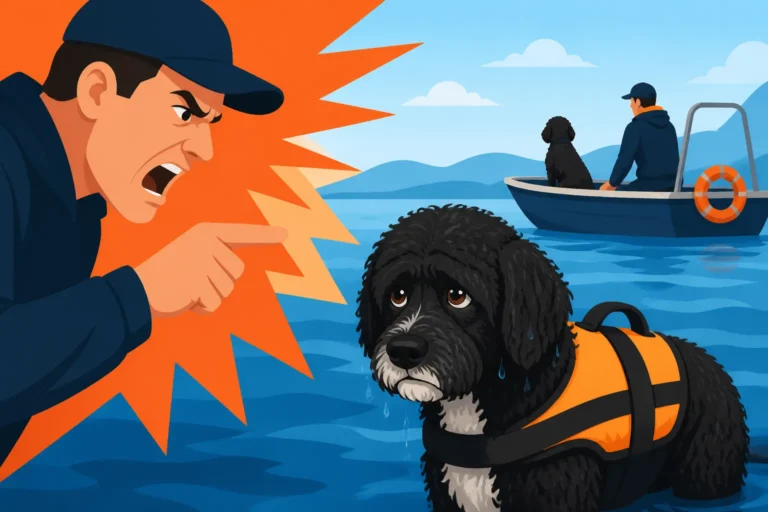
- Life Jackets for Non-Swimmers: Any child who is not a strong swimmer should wear a properly fitted life jacket. Similarly, if your PWD is joining in the fun, especially in open or rough water, a dog-specific life jacket (easily found on Amazon) can be a great safety measure. This is also important if you're taking them out on a boat, as discussed in When a Portuguese Water Dog Needs a Life Jacket.
- Establishing Rules: Clear rules for children and dogs around the pool should be established and consistently enforced. For example, no running near the edge, no jumping in without permission, and the dog waits until invited.
Your Portuguese Water Dog can certainly enrich the family's pool experience, but their presence should never dilute the absolute necessity of human vigilance and robust safety measures. They are a joyful addition, not a safety device.
Managing Your Portuguese Water Dog Around the Pool
Integrating your water-loving Portuguese Water Dog safely into your family's poolside activities is entirely possible with thoughtful planning and consistent boundaries. It's about creating an environment where everyone, including your furry friend, can enjoy the water responsibly.
Establishing Clear Boundaries and Rules
The key to a harmonious and safe poolside experience with your Portuguese Water Dog is to establish clear, non-negotiable boundaries from day one. Your dog needs to understand when they are allowed in the pool area and under what circumstances. This might mean having a designated "pool time" for the dog, or specific rules about when children are present. For example, perhaps the dog is only allowed in the pool with an adult actively supervising both the dog and the children, or only when children are out of the water. Using a sturdy leash can be incredibly helpful when teaching these boundaries, especially with an excitable puppy who might be tempted to bolt towards the splashing fun.
Consider your dog's energy levels too. An under-exercised Portuguese Water Dog is more likely to create their own fun, which might mean pushing boundaries or being overly exuberant around children in the water. Ensuring your PWD gets plenty of exercise throughout the day, whether through walks, retrieving games, or other activities, as detailed in How Much Exercise a Portuguese Water Dog Needs, can help them be calmer and more compliant when it comes to pool rules. Consistency from every family member is crucial; if one person allows the dog to jump in whenever they want, it will undermine the training efforts of others.
Enriching Their Poolside Experience Safely
Once boundaries are understood, you can enrich your Portuguese Water Dog's experience around the pool in safe, controlled ways. Remember, these dogs live for water! Engage them in supervised retrieving games with toys specifically designed for water play. These could be floating bumpers or soft, durable balls that they can fetch on command. This gives them an outlet for their natural instincts while keeping the play structured and safe. Teach them how to safely enter and exit the pool, using steps or a ramp, so they don't have to scramble or injure themselves. This is an important part of their water education, starting from puppyhood, as highlighted in Teaching a Portuguese Water Dog Puppy to Enter Water.
Always ensure your PWD has access to fresh drinking water by the pool to prevent them from drinking pool water, which can upset their stomach due to chlorine or other chemicals. This is a common concern for PWD owners, and you can find more information in Whether a Portuguese Water Dog Drinks Pool Water. Provide ample shade and breaks, especially on hot days, to prevent overheating. And remember, their webbed feet and rudder-like tail make them incredible swimmers; enjoying activities like How a Portuguese Water Dog Can Swim Beside a Kayak can be a fantastic way to spend time with your PWD in the water, ensuring they get to use their natural talents in a controlled environment.
By combining clear rules, consistent training, and thoughtful engagement, you can create a safe and enjoyable poolside environment where your Portuguese Water Dog can be a cherished, active member of your family without ever being burdened with the critical role of a lifeguard.
Human vs. Canine "Supervision" at the Pool
It's tempting to think of our intelligent and water-loving Portuguese Water Dogs as extra eyes or even a safety net around the pool. However, when it comes to children's safety, the capabilities of a human adult and even the most well-intentioned dog are vastly different. This table illustrates why active human supervision is irreplaceable.
| Feature | Human Adult Supervision | Portuguese Water Dog "Supervision" |
|---|---|---|
| Risk Assessment | Understands drowning risk, fatigue, water depth, non-swimmers, medical emergencies | Reacts to splashing, movement, perceived play; no concept of danger or distress |
| Intervention | Can physically rescue, perform CPR, administer first aid, call for emergency services | May jump in, retrieve, herd; actions can accidentally cause panic or further risk |
| Cognitive Awareness | Recognizes subtle signs of distress, understands consequences, makes informed decisions | Operates primarily on instinct, seeking involvement or responding to perceived activity |
| Consistent Vigilance | Trained to maintain active, undivided attention; focused on safety | Easily distracted by external stimuli (sounds, smells, other people, toys); focus shifts based on excitement |
| Responsibility & Accountability | Solely responsible for child's safety; legally and morally accountable | No understanding of responsibility; acts as a companion, not a caregiver |
Disclaimer
This article is for general informational purposes only and does not constitute professional advice. Laws, prices and regulations vary by location and change over time. Consult a qualified professional for guidance on your specific situation.