How Far a Portuguese Water Dog Jumps Off a Dock
It's completely natural to watch those incredible videos of dogs launching themselves off docks, soaring through the air, and wonder, "Could my Portuguese Water Dog do that?" Many PWD owners see their dogs' boundless energy and inherent love for water and dream of achieving those impressive, splashy jumps. This guide is here to demystify what it takes for a Portuguese Water Dog to excel in dock diving, exploring the realistic distances they can achieve and how you can help them become a dock-jumping star.
Understanding the Portuguese Water Dog's Natural Aptitude for Dock Diving
When you look at a Portuguese Water Dog, you're not just seeing a curly or wavy-coated companion; you're looking at centuries of selective breeding for a specific, demanding job. These dogs weren't bred to sit on a couch all day, though they're certainly adept at it if they've had enough activity! They were bred to be active, intelligent, and incredibly skilled in and around water, and this heritage gives them a significant head start in sports like dock diving.
The Instinctive Drive for Water and Retrieval
Imagine a time when fishermen along the coast of Portugal relied on these dogs for their livelihood. They were the original "deckhands," herding fish into nets, retrieving lost tackle, and even carrying messages between boats. This history isn't just a fun anecdote; it's etched into their DNA. Modern Portuguese Water Dogs still possess an almost irresistible urge to be in the water, a deep-seated enjoyment that makes dock diving a natural fit. They love to retrieve, especially from the water, and this strong prey drive, combined with their water affinity, is the perfect combination for the sport.
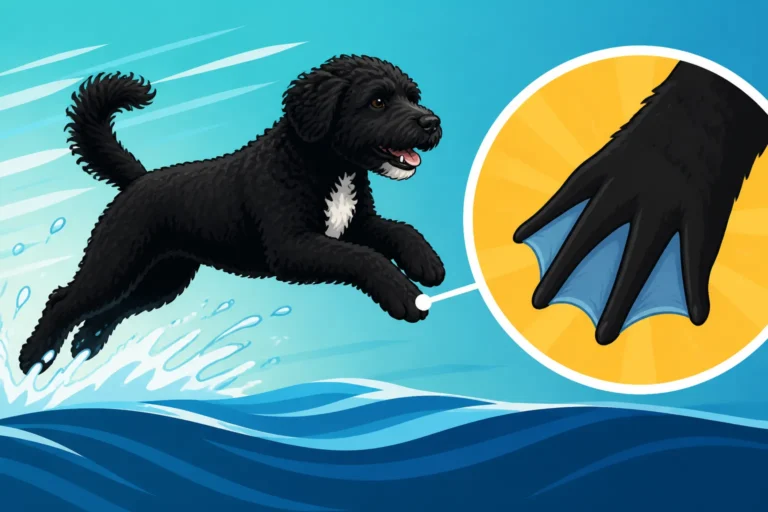
That webbed foot isn't just for show; it's a powerful paddle, and their strong, thick tail acts as a rudder, giving them incredible agility in the water. This combination of physical traits and an unshakeable love for the aquatic environment means that for many Portuguese Water Dogs, learning to launch off a dock isn't a chore, it's a joy. Their enthusiasm is often infectious, turning a training session into an exhilarating game of fetch. This inherent drive simplifies the initial steps of dock diving, as you're not trying to convince a water-averse dog to get wet; you're simply channeling an existing passion. You can read more about how their unique anatomy aids their swimming prowess in How Much a Portuguese Water Dog's Webbing Adds to Its Speed.
Physical Attributes That Aid in Jumping
Beyond their love for water, Portuguese Water Dogs boast a physical conformation that makes them surprisingly capable jumpers. They have a compact, muscular build, particularly strong hindquarters that provide the explosive power needed for a solid launch. Their agility, balance, and coordination allow them to execute powerful take-offs and controlled entries into the water. They're not fragile dogs; they're athletic, robust, and built for stamina.
Consider their overall structure: a deep chest for lung capacity, powerful legs for propulsion, and a keen, intelligent mind to process the handler's cues. These traits contribute to their ability to not only jump, but to do so repeatedly with enthusiasm. While they might not be the absolute fastest sprinters or highest jumpers on dry land compared to some other breeds, their ability to combine speed, power, and coordination specifically into water makes them formidable dock diving contenders. It’s a testament to how well their bodies are designed for the very thing they love to do.
Factors Influencing a Portuguese Water Dog's Jump Distance
While their natural abilities are a fantastic starting point, a Portuguese Water Dog's dock diving performance isn't solely about instinct. A multitude of factors, from rigorous training to their overall health, play a critical role in how far they can truly launch themselves into the air. Understanding these elements is key to unlocking your PWD's full potential and ensuring a safe, enjoyable experience.
Training, Motivation, and Handler Techniques
No dog, no matter how talented, just spontaneously becomes a champion dock diver without some serious effort on both ends of the leash. The biggest variable in how far your Portuguese Water Dog jumps often comes down to the quality of their training, the consistency of your motivation, and your own technique as a handler. It's not just about throwing a toy; it's about building a sequence, fostering drive, and making it an incredibly rewarding experience every single time. A PWD is smart and can offer its own solutions, so clear communication is essential.
Effective training relies heavily on positive reinforcement and building a strong "toy drive." This means finding that one special toy your dog absolutely adores and will do anything to get. Often, a "chase toy" – something you move enticingly down the dock – works better than a "throw toy" initially, as it encourages a full-speed run and a dynamic launch. Your throwing technique is equally vital; a well-aimed throw that leads your dog out and up will naturally extend their jump distance. Consistency in these techniques, combined with an understanding of what truly motivates your particular PWD, will make a monumental difference. Whether it's a specific brand of squeaky toy from Amazon or a sturdy bumper, knowing Which Toy a Portuguese Water Dog Will Work Hardest For is half the battle. Regular practice, even just on flat ground, to reinforce retrieve and retrieve speed is invaluable.
Age, Fitness, and Health Considerations
Just like human athletes, a dog needs to be in peak physical condition to perform demanding sports safely. For dock diving, this means your Portuguese Water Dog should be fully mature before engaging in high-impact jumping. Typically, this means waiting until their growth plates have closed, usually around 12-18 months of age, to protect their developing joints. Starting too young can put undue stress on their body and lead to injuries down the line. It's important to remember that The Age a Portuguese Water Dog Can Start Swimming can be quite young for general water fun, but competitive jumping needs more maturity.
Beyond age, overall fitness is paramount. A Portuguese Water Dog needs consistent, varied exercise to build muscle, stamina, and agility. Dock diving itself is excellent exercise, but it shouldn't be their only form of activity. Regular walks, runs, hikes, and other water sports like retrieving in a lake or river contribute to a well-conditioned body ready for the demands of jumping. Health checks are also crucial. Before starting any intense sport, a veterinary check-up to assess their general health, joint soundness, and cardiovascular function is highly recommended. Conditions like hip and elbow dysplasia, which can affect the breed, need to be ruled out or managed carefully. Understanding Hips and Joints in a Portuguese Water Dog is vital for their long-term well-being. Keeping them at a healthy weight also significantly reduces stress on their joints, allowing for more powerful and safer jumps.
Environmental and Equipment Variables
The environment where your Portuguese Water Dog learns and practices dock diving, along with the equipment you use, can also subtly influence their jump distance and confidence. Not all docks are created equal, and understanding these nuances can help you optimize conditions for your dog.
First, consider the dock itself. A dock with good traction is essential to prevent slips and allow for a powerful push-off. The height of the dock above the water can also play a role; some dogs prefer a slightly lower dock to start, while others, once confident, don't mind a higher launch pad. The water entry is also a factor. Clear, clean water where your dog can see their toy is often preferred, as it boosts their confidence and commitment to the jump. If the water is murky or has a strong current, a dog might hesitate, affecting their speed and therefore their distance.
As for equipment, a high-value, highly visible, and floatable toy is non-negotiable. It needs to be something your dog is truly excited about, and it must float easily so they can retrieve it without struggle. While a life jacket isn't usually worn for competitive dock diving as it can hinder movement, it's a great safety tool for initial training or for dogs who are still building confidence in the water. Post-swim, especially if your PWD is frequently in the water, a good quality force dryer is invaluable to ensure their coat dries quickly and prevents skin issues. You can find excellent options for toys and force dryers on platforms like Amazon, making it easy to equip your PWD for their aquatic adventures. If you're serious about keeping their coat healthy, knowing What a Force Dryer Costs a Portuguese Water Dog Owner will help you budget.
Realistic Expectations and the Range of Jumps
It's easy to get caught up in the highlight reels of dock diving champions, where dogs seem to defy gravity with their incredible leaps. While Portuguese Water Dogs certainly have the potential to impress, it's important to set realistic expectations for your own dog. Dock diving is a journey, and every jump, big or small, represents a success for both you and your PWD.
Average Versus Elite Portuguese Water Dog Distances
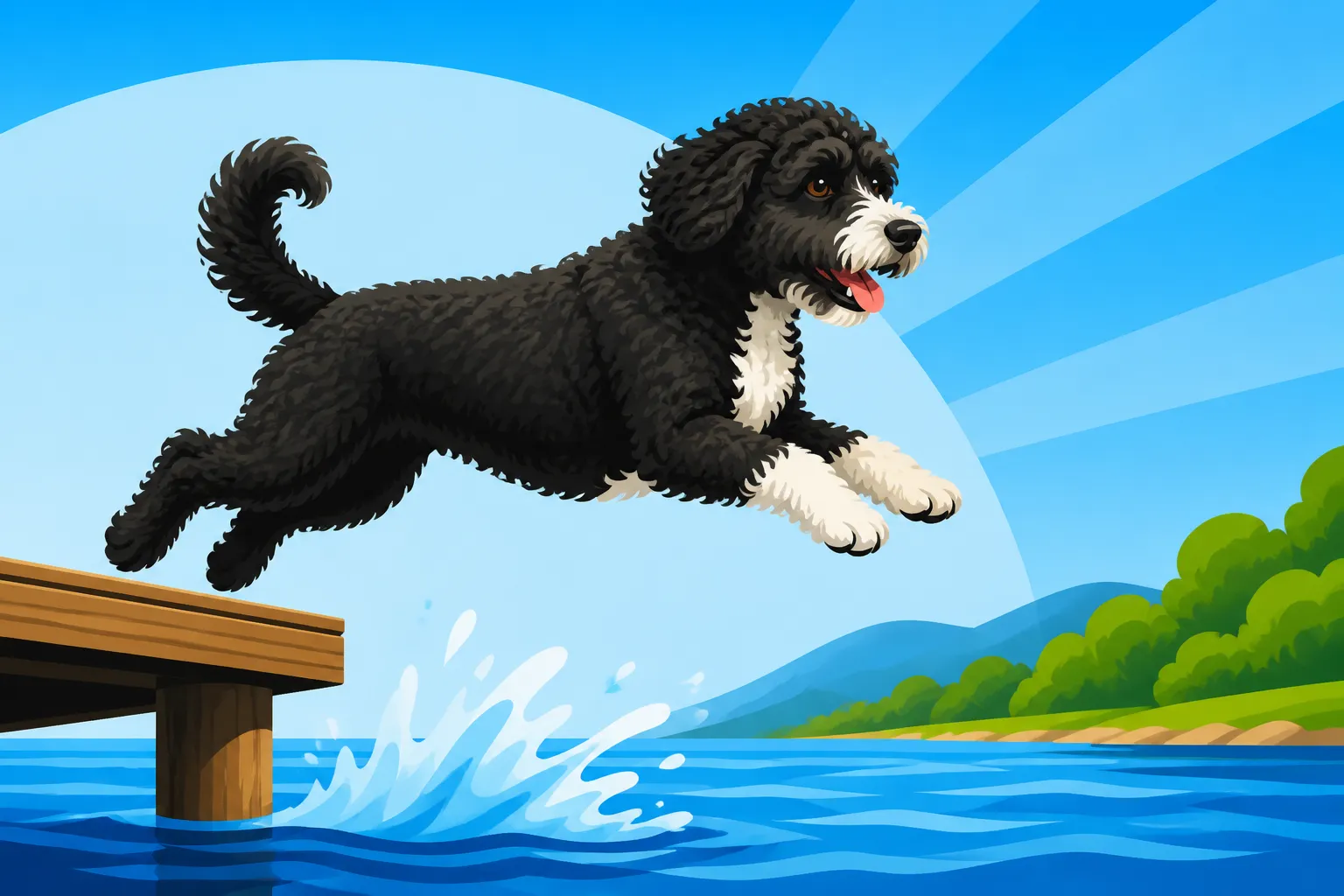
When we talk about how far a Portuguese Water Dog jumps off a dock, we're really looking at a spectrum. For a well-trained pet PWD who loves the water and has some consistent practice, a jump distance of 5 to 10 feet is a fantastic achievement. This is often where many casual dock diving enthusiasts and their dogs comfortably operate. These jumps are fun, physically stimulating, and strengthen the bond between dog and owner. They are celebrating the joy of the splash, not necessarily chasing records.
Then you have the more dedicated, often competition-focused Portuguese Water Dogs. With consistent, expert training, a high level of motivation, and a well-conditioned body, these dogs can regularly achieve jumps in the 15 to 20-foot range, which is incredibly respectable in the sport. The truly elite, top-tier Portuguese Water Dogs, those that are highly driven, exquisitely conditioned, and expertly handled, can sometimes push beyond 20 feet. These are the dogs that truly fly, demonstrating the pinnacle of the breed's athletic capability. It's less about their absolute maximum single jump, and more about consistently strong performances. Always remember, the goal should first and foremost be about your dog's enjoyment and welfare.
Progression and Setting Goals
Dock diving is a sport of progression, not instant mastery. Very few dogs, even naturally talented ones, start by launching themselves 20 feet on their first try. The key is to celebrate every small improvement and gradually build confidence and distance over time. Think of it as a ladder: each rung represents a new personal best, and you ascend it together.
Start with simply getting your Portuguese Water Dog comfortable with the dock and entering the water from it. Then focus on building speed and drive down the dock, even if the initial jumps are very short. Gradually, as their confidence grows and their technique refines, you'll see the distances increase. Setting realistic, achievable goals along the way keeps both you and your dog motivated. Maybe your first goal is simply a consistent, confident run-and-jump, regardless of distance. Then, you might aim to hit a certain marker on the measuring tape. Consistency is far more important than one-off heroics. Dogs thrive on routine and clear expectations, and regular, positive practice sessions will yield much better results than sporadic, high-pressure attempts. This kind of consistent engagement is also vital to keep their minds and bodies active, as discussed in How Much Exercise a Portuguese Water Dog Needs.
Getting Started with Dock Diving for Your Portuguese Water Dog
Ready to introduce your water-loving Portuguese Water Dog to the exhilarating world of dock diving? It’s an incredibly rewarding sport that taps into their natural instincts and provides an amazing outlet for their energy. But like any new endeavor, a solid foundation and the right resources make all the difference.
Building Foundational Skills
Before your Portuguese Water Dog ever sets paw on a dock, there are a few foundational skills that will make the entire process smoother and more enjoyable. These aren't just about jumping; they're about overall control, confidence, and a strong working relationship with you. First and foremost, a strong recall is absolutely essential. You need to be able to call your dog back reliably, especially when they're in the water or excited. Basic obedience commands like "stay" or "wait" will also be invaluable for keeping them on the dock until you give the cue to jump.
Developing a high-value toy drive is another critical step. Find a toy that your PWD absolutely goes wild for – something they’ll chase with unbridled enthusiasm. This toy will be their primary motivator for jumping. Practice retrieving it on land, building up their speed and eagerness to bring it back. Additionally, ensure your dog is comfortable swimming and retrieving in various water environments. While PWDs are natural swimmers, reinforcing positive experiences in the water builds confidence. For general obedience and building that strong bond, resources like BAXTER & Bella offer comprehensive online training programs that can establish these vital foundational skills, making it easier to transition to specialized activities like dock diving. You can also work on specific water commands, such as those covered in Teaching a Portuguese Water Dog to Swim on Cue, to ensure they understand your expectations around water.
Finding a Training Facility and Gear
Once your Portuguese Water Dog has a solid foundation of obedience and a burning desire for their favorite retrieve toy, it's time to find a place to learn and practice. Look for dedicated dock diving facilities or clubs in your area. Many offer introductory classes, open practice sessions, or even private lessons with experienced instructors. These professionals can guide you through the nuances of handling on the dock, proper throwing techniques, and how to build your dog's confidence and distance safely. They'll also be able to tell you What Dock Diving Asks of a Portuguese Water Dog in terms of specific tasks and rules.
As for gear, you'll need a few essentials. A high-contrast, durable, and floatable retrieve toy is paramount. Something your dog can easily see in the water and enthusiastically carry back. Many owners use specific dock diving bumpers or soft toys. A long leash is useful for managing your dog on the dock during early training, keeping them safe and focused. And, as we've discussed, if your PWD will be a frequent flyer, investing in a good force dryer will help keep their coat healthy and prevent skin issues that can arise from prolonged dampness. Don't forget ear cleaner to keep those ears healthy after many swims, as Why a Swimming Dog Gets Ear Infections is a common concern. You can easily find a wide range of suitable toys and drying equipment on Amazon, ensuring you're well-prepared for every splashy adventure.
Here's a quick overview of typical dock diving levels and the kind of distances you might encounter:
| Level | Typical Jump Distance Range (Feet) | Primary Focus | Training Goals |
|---|---|---|---|
| Novice | 5 – 10 | Building water confidence and toy drive from the dock | Consistent, confident entry; enthusiastic retrieve |
| Intermediate | 10 – 20 | Refining technique, increasing speed and accuracy | Smooth run and jump; targeting specific distances |
| Advanced | 20+ | Maximizing distance and maintaining consistency | Explosive launches; perfecting aerial form and entry |
Remember, the true measure of success isn't just the tape measure; it's the joy your Portuguese Water Dog finds in the sport and the incredible bond you build together through shared experiences.
Disclaimer
This article is for general informational purposes only and does not constitute professional advice. Laws, prices and regulations vary by location and change over time. Consult a qualified professional for guidance on your specific situation.