Whether a Portuguese Water Dog Makes a Therapy Dog
It’s a truly heartwarming thought, isn't it? Imagining your beloved Portuguese Water Dog bringing smiles and comfort to those who need it most. Many of us see the gentle, loving nature of our PWDs at home and immediately wonder if they have what it takes to be a therapy dog. This guide will walk you through what it really means for a Portuguese Water Dog to be a therapy dog, examining their natural aptitudes and the commitment required to achieve this incredibly rewarding goal.
Understanding What Makes a Therapy Dog
Before we even dive into the specific traits of our wonderful PWDs, it’s crucial to understand what the term "therapy dog" actually entails. It's more than just having a friendly pup; it's about a specific set of skills, temperament, and training that allows them to provide comfort and affection in various environments. Many people confuse therapy dogs with other types of working canines, and getting this distinction clear is the first step.
Beyond Just Being Friendly: Key Temperament Traits
While a friendly disposition is certainly a prerequisite, a true therapy dog needs a robust and unflappable temperament. Think about it: they might encounter loud noises, unfamiliar smells, strange equipment like wheelchairs or IV poles, and people who behave unconventionally due to illness or age. A therapy dog must be calm, patient, and tolerant of unexpected movements and sometimes clumsy interactions. They shouldn't be easily startled or prone to jumping, even when excited. They need to genuinely enjoy being handled by strangers, including those with limited mobility or unusual touch. A therapy dog also needs to be incredibly resilient, able to bounce back quickly from any minor stressor. This isn't just about a wagging tail; it's about a deep-seated confidence and an innate desire to connect with people, even in challenging circumstances.
The Difference Between Therapy, Service, and Emotional Support Dogs
This is where a lot of confusion lies, and it's vital to understand the distinctions. A service dog is an animal specifically trained to perform tasks for an individual with a disability. These tasks are directly related to the person's disability, like guiding a blind person or alerting to medical emergencies. Service dogs have public access rights under the Americans with Disabilities Act (ADA) and are considered medical equipment. An emotional support dog (ESD) provides comfort simply through its presence, without any specialized task training. While they can be very beneficial to their owners, they do not have the same public access rights as service dogs and are generally only allowed in housing and on flights, depending on regulations. A therapy dog, on the other hand, works with its owner to provide comfort and affection to many different people in settings like hospitals, nursing homes, schools, or disaster areas. They are usually owned by volunteers and work in conjunction with a facility's staff. Therapy dogs do not have automatic public access rights, and permission must be granted by each facility they visit. Understanding these roles helps clarify the specific training and behavioral expectations for a therapy dog.
Portuguese Water Dog Traits and Therapy Work
Now that we know what therapy work demands, let's look at how our marvelous Portuguese Water Dogs measure up. They certainly have many qualities that can make them excellent candidates, but also some characteristics that need careful management.
The PWD's Intelligence and Trainability
Portuguese Water Dogs are incredibly intelligent. They were bred to be working dogs, thinking partners with their human fishermen, rather than just followers of commands. This means they are often quick to learn and eager to please, especially when there's a reward involved. This high intelligence is a huge advantage in therapy work, as it means they can grasp complex commands and adapt to new situations quickly. However, this intelligence also comes with a caveat: a bored PWD is often a mischievous PWD. They need mental stimulation, and if not given a job to do, they might invent their own, which may not always be helpful in a therapy setting. Training them for therapy work often involves channeling this cleverness into positive, focused tasks. Their ability to problem-solve can be fantastic, but it means you, as their handler, need to be equally smart and consistent in your training methods. Training a Portuguese Water Dog That Was Bred to Think for Itself really highlights this unique aspect of their intelligence.
Their Affectionate and Engaging Nature
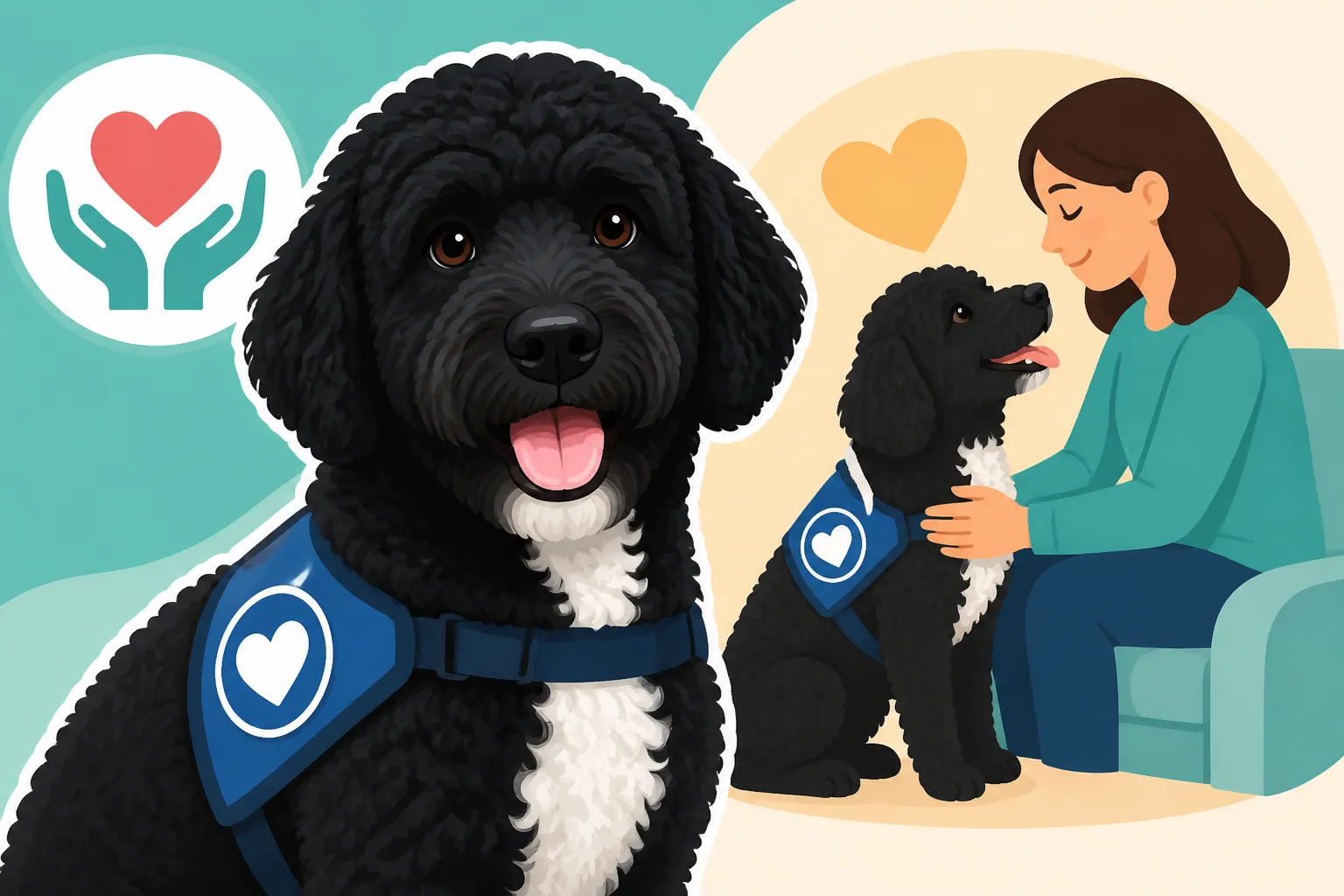
One of the most appealing traits of a Portuguese Water Dog is their loving and engaging personality. They adore their families and are generally quite social. This innate desire to connect with people is a cornerstone of a good therapy dog. PWDs are often described as "velcro dogs" because they love to be close to their humans. This natural inclination to offer comfort and seek interaction is a huge plus. They're typically not shy or aloof; instead, they often approach strangers with a confident curiosity and a wagging tail. Their expressive faces and eager-to-please attitudes can be incredibly uplifting for someone feeling down. It's this genuine warmth that makes people feel seen and loved, a crucial part of what a therapy dog provides. A Portuguese Water Dog with Children and Other Dogs also touches on their generally good nature with people.
Energy Levels and Adaptability in Different Environments
Here's where the PWD's natural heritage requires some careful consideration. Portuguese Water Dogs are highly energetic working dogs. They thrive on activity, both physical and mental. A PWD that isn't sufficiently exercised can become restless, anxious, or destructive – not ideal traits for a calm therapy visit. Before any therapy work can begin, your PWD needs How Much Exercise a Portuguese Water Dog Needs on a daily basis. This is not a breed that's content to be a couch potato all day, even on a therapy visit day.
For therapy work, they need to be able to settle calmly in unfamiliar places for extended periods. This means training them extensively to lie down and relax, even amidst distractions. While their intelligence helps them learn to "turn it off" when needed, it's a skill that requires consistent practice and patience. They need to be adaptable to various environments, from quiet hospital rooms to bustling school hallways. Owners often use enrichment tools from places like Amazon to keep their PWDs mentally engaged even when resting, such as puzzle feeders or chew toys, helping them learn to relax on command. A well-exercised and mentally stimulated PWD is far more likely to be a calm, focused, and effective therapy dog.
Training and Socialization for Therapy Work
Even with the best natural temperament, no dog is born a therapy dog. It's a journey that begins in puppyhood and continues throughout their lives, demanding consistent effort and dedicated training.
Early Foundations: Puppy Socialization is Crucial
The importance of early, positive socialization for any dog, especially one destined for therapy work, cannot be overstated. From the moment you bring your Portuguese Water Dog puppy home, expose them to a wide variety of sights, sounds, smells, people, and gentle experiences. This isn't just about meeting other dogs; it's about taking them to different environments like hardware stores (where permitted, carried when young), parks (before they are fully vaccinated, observe from a distance), and even just sitting outside a busy cafe to watch the world go by. Enroll in a well-structured puppy class that focuses on positive reinforcement and safe interactions. The First Year With a Portuguese Water Dog Puppy is a critical time for building this foundation. The goal is to create a confident, resilient dog who sees new experiences as interesting rather than frightening. A puppy training program like BAXTER & Bella can provide excellent guidance and structure for new owners looking to lay these vital groundwork skills right from the start.
Advanced Obedience and Public Access Skills
Beyond basic obedience (sit, stay, come, down), a therapy dog needs impeccable advanced obedience. This includes a rock-solid "leave it" command (essential for ignoring dropped medications or food on the floor), a reliable "stay" for extended periods, and the ability to walk politely on a loose leash even with distractions. They need to be comfortable with strangers petting them in unusual ways, and not be startled by sudden movements or loud noises. They should be able to ignore other animals, even if those animals are being disruptive. This level of control and focus is developed through consistent, positive reinforcement training. Practice these skills in increasingly challenging environments, gradually introducing new distractions. Think about the types of scenarios they might encounter – a child running past, a dropped tray, a sudden alarm – and train for calm responses. How Trainable a Portuguese Water Dog Is makes them excellent candidates for this rigorous training.
Specific Therapy Dog Training Programs
While you can do a lot of initial training yourself, enrolling in a dedicated therapy dog preparation course is highly recommended. These courses are designed to fine-tune the specific skills and behaviors required for successful therapy work. They often include:
- Simulated environments: Practicing in mock hospital rooms, wheelchair zones, or busy waiting areas.
- Exposure to medical equipment: Getting dogs comfortable with wheelchairs, walkers, crutches, oxygen tanks, and other common items.
- Handling exercises: Practicing being petted by multiple people, including those with limited motor skills, and being comfortable with having paws and ears examined.
- "Leave it" and "stay" in high-distraction settings: Ensuring the dog can maintain focus no matter what is happening around them.
- Handler skills: Training you to be an effective and responsible therapy dog handler, understanding dog body language, and advocating for your dog's needs.
These specialized programs help bridge the gap between a well-behaved pet and a confident therapy animal.
The Path to Becoming a Certified Therapy Dog
Once your Portuguese Water Dog has the right temperament and training, the next step is formal certification. This isn't a single event but a process that ensures both dog and handler are ready for the responsibilities of therapy work.
Selecting a Reputable Therapy Dog Organization
There are several national and local organizations that certify therapy dogs. It's important to choose one that is well-respected, provides thorough evaluations, and offers insurance coverage for therapy teams. Some popular organizations include Pet Partners, Therapy Dogs International (TDI), and Alliance of Therapy Dogs (ATD). Each organization has its own specific requirements, but they all share the goal of ensuring dogs are safe, reliable, and effective in their roles. Research their websites, read reviews, and consider attending an orientation session if available to find the best fit for you and your PWD. These organizations often provide valuable resources and continuing education for their certified teams.
The Evaluation Process: What to Expect
The certification evaluation is a comprehensive test of your dog's temperament, obedience, and your handling skills. It's designed to simulate real-world therapy situations and identify any potential issues. Common elements of the evaluation include:
| Test Component | What It Assesses | PWD Considerations |
|---|---|---|
| Accepting a Friendly Stranger | Dog's comfort with approaching strangers. | PWDs are often social; ensure they don't jump excitedly. |
| Sitting Politely for Petting | Dog's patience and comfort during handling by strangers. | PWDs love attention; train for gentle, four-on-the-floor greetings. |
| Appearance and Grooming | Dog's general health, cleanliness, and acceptance of examination. | PWDs require regular grooming; ensure they're accustomed to being handled. |
| Walk on Loose Leash | Dog's ability to walk calmly on a leash amidst distractions. | PWDs can be strong pullers; perfect this skill. |
| Walk Through a Crowd | Dog's composure and handler's control in busy areas. | PWD's natural curiosity needs to be managed to prevent sniffing everything. |
| Reaction to Distraction | Dog's response to sudden noises, dropped objects, or unusual sights. | PWDs are intelligent and can be sensitive; desensitize to various sounds. |
| Supervised Separation | Dog's ability to remain calm when the handler briefly leaves their side. | Some PWDs can be prone to separation anxiety if not trained; build confidence. |
| Leave It | Dog's ability to ignore tempting items on the ground. | Essential for safety in environments with dropped food or medication. |
| Stay | Dog's ability to hold a position for an extended period. | Important for allowing interactions with patients without the dog moving too much. |
| Passing Other Dogs | Dog's ability to remain focused on the handler when passing other canines. | PWDs are generally good with other dogs, but focus is key in a therapy setting. |
The evaluators are looking for a dog who is not only well-behaved but genuinely enjoys the interaction and can handle stress with grace. It's important to be realistic about your dog's capabilities. If they show signs of stress or discomfort during practice sessions, it's better to address those issues before attempting the evaluation.
Ongoing Requirements and Maintaining Certification
Becoming certified is not a one-time achievement; it's an ongoing commitment. Therapy dog organizations often require periodic re-evaluations to ensure the dog still meets the required standards. This might be every one or two years. Additionally, handlers are usually required to log their therapy visits and adhere to the organization's rules and ethical guidelines. Continuous training and socialization are also crucial. Your PWD will benefit from regular refreshers of their obedience skills and continued exposure to different environments. This helps maintain their confidence and ensures they remain a happy and effective therapy dog for many years. It's a fantastic way to honor their working heritage by giving them a job (Why a Portuguese Water Dog Needs a Job).
In conclusion, yes, a Portuguese Water Dog absolutely can make a fantastic therapy dog. Their intelligence, affectionate nature, and strong bond with their handlers are huge assets. However, it requires a significant investment in early socialization, consistent, advanced obedience training, and a deep understanding of their energetic needs. If you're willing to put in the work, your PWD has the potential to bring immense comfort and joy to countless lives, making it a truly enriching experience for both of you.
Disclaimer
This article is for general informational purposes only and does not constitute professional advice. Laws, prices and regulations vary by location and change over time. Consult a qualified professional for guidance on your specific situation.