Whether a Portuguese Water Dog Still Retrieves
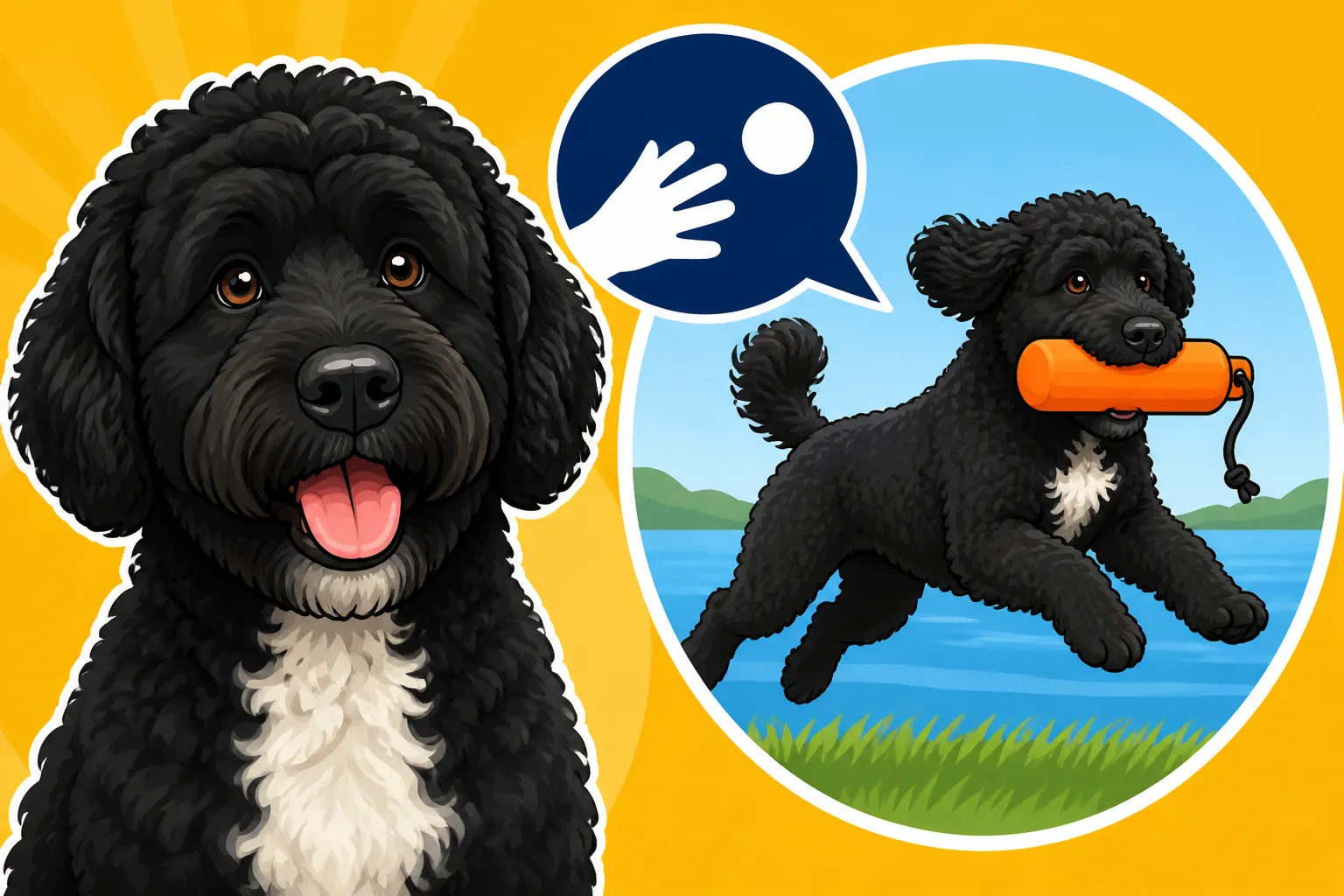
One of the most common questions I hear from prospective Portuguese Water Dog owners, or even those who just welcomed a fluffy puppy into their home, is whether this breed, famous for its historical work on fishing boats, still possesses that strong retrieving instinct. It’s a completely valid question, especially if you’re hoping for a companion who will joyfully bring back a ball from the lake or help you gather scattered items around the house. This guide will dive deep into the Portuguese Water Dog's natural inclination for retrieving, how it manifests, and how you can nurture and harness this incredible drive.
A Legacy of Aquatic Retrieval: The PWD's Working Past
It’s easy to look at a fluffy Portuguese Water Dog today and imagine them primarily as a family pet, perhaps occasionally splashing in a kiddie pool. But these dogs have a rich history rooted in hard, practical work alongside fishermen on the coasts of Portugal. Their retrieving abilities weren't just for fun; they were a vital part of their job, and understanding this history helps us appreciate the strong instincts they still carry.
Retrieving From the Water: Nets, Tackle, and Lost Items
Imagine the bustling scene on an old Portuguese fishing boat. Nets might snag, ropes could break, or valuable tackle could fall overboard. In those challenging conditions, a human diving in might not have been safe or efficient. This is where the Portuguese Water Dog truly shone. They were specifically bred and trained to plunge into the cold Atlantic waters, often repeatedly, to retrieve these essential items. Their powerful, rudder-like tail, webbed feet, and water-resistant coat made them perfectly suited for the task. They weren’t just fetching a stick; they were retrieving the livelihood of their human companions. This wasn't a game; it was a job. You can learn more about their specific duties in What a Portuguese Water Dog Was Bred to Do on a Boat and How a Portuguese Water Dog Worked a Net. This deep-seated drive to bring things from the water, often under duress, is a powerful genetic blueprint that still influences the breed today.
Instinct Versus Training in the Past
While the Portuguese Water Dog possessed a natural aptitude for water work and a strong desire to retrieve, it wasn't purely instinctual that they knew exactly what to do. Their fishermen companions certainly shaped and directed these instincts through rigorous training. Puppies likely started young, perhaps fetching small items from shallow water, gradually building up to more complex tasks in open water. The drive was inherent, but the precise execution – discriminating between items, navigating currents, and returning to the correct boat – would have been honed through patient, consistent guidance. It was a partnership of natural talent and skilled mentorship. This balance of innate ability and learned behavior is crucial to remember when approaching retrieval training with your own PWD. They have the drive, but they still need your help to channel it effectively.
The Modern Retrieval Instinct: Alive and Well
So, does that historical drive still exist in the Portuguese Water Dog curled up on your sofa? Absolutely! While they may not be dodging fishing trawlers, the core instincts that made them such invaluable partners to fishermen are very much present. These instincts are what make them so eager and capable in various modern dog sports and everyday life.
Natural Drives: Prey Drive and Desire to Please
At its heart, retrieval is often linked to a dog's prey drive – the instinct to chase, catch, and "kill" (or, in the case of a pet, return) an object. PWDs, with their intelligent and active minds, have a healthy dose of this drive. They love the thrill of the chase, whether it’s a tennis ball soaring through the air or a toy bouncing across the living room floor. Coupled with this is their strong desire to please their human companions. PWDs are very connected to their people and thrive on interaction and positive reinforcement. When you combine their inherent prey drive with their eager-to-please nature, you get a dog that is often highly motivated to engage in retrieval games. They learn quickly that bringing the item back often results in praise, a treat, or another toss, which is the ultimate reward for them.
Individual Differences: Not All PWDs Are Identical
It’s important to remember that while retrieval is a breed hallmark, not every Portuguese Water Dog will display the exact same level of enthusiasm or natural talent for it. Just like people, dogs have individual personalities. Some PWDs will be born "retrieving machines," grabbing anything that moves and bringing it straight back to you with boundless joy. Others might need a bit more encouragement, or they might prefer to run with the item and initiate a game of "keep away" rather than immediately returning it. These variations are perfectly normal. It doesn't mean your PWD lacks the breed's natural instincts entirely; it simply means you might need to tailor your approach to training and play to suit their specific temperament. Some might prefer water retrieval over land, for example, or vice-versa. Understanding What Motivates a Portuguese Water Dog can help you adapt your training.
Manifestations in Play: Toys, Sticks, and Even Laundry
You'll quickly see the retrieval instinct manifest in various ways with your Portuguese Water Dog, often in charming and sometimes mischievous ways. Beyond typical fetch with a ball or a frisbee, you might notice your PWD naturally bringing you:
- Sticks and pinecones from the yard, presenting them proudly at your feet.
- Their favorite toys, dropping them in your lap as an invitation to play.
- Items you didn't even realize were "lost," like a sock from under the bed or a remote control from behind the couch, often retrieved with a happy wag.
- Household items they've "borrowed" (sometimes without permission!), like a slipper, a dish towel, or even a piece of mail. This is where their habit of Why a Portuguese Water Dog Puts Everything in Its Mouth comes into play.
These everyday behaviors are direct descendants of their ancestral job. They see something out of place or something they desire, pick it up, and often have an innate desire to bring it to their "pack leader"—you! It's their way of interacting, playing, and sometimes, helping.
Training for the Perfect Retrieve
Even with a strong natural instinct, a "perfect" retrieve – where your dog eagerly goes, picks up the item, and brings it straight back to your hand – usually requires some guidance. Think of it as refining their inherent talents. The good news is that PWDs are intelligent and eager to learn, making them wonderful students for retrieval training.
Starting Young: The Puppy Stages
The best time to start cultivating a strong retrieve is when your Portuguese Water Dog is a puppy. Their natural curiosity and playfulness are at their peak.
- Keep it fun and low-pressure: Begin with soft, easily graspable toys in a quiet, enclosed space. Roll the toy a short distance and encourage your puppy to chase it.
- Celebrate every return: Even if they just pick it up and look at you, or bring it halfway, lavish them with praise and a small, high-value treat. Make it the most exciting thing in the world that they brought you the toy.
- Short sessions: Puppy attention spans are short. A few minutes of enthusiastic play multiple times a day is far more effective than one long, boring session.
- Tug-of-war as a bridge: Many PWDs love a good game of tug. This can be a great way to build interest in toys. After a short tug, disengage and entice them to "take it" again, then praise any movement back towards you.
Consider enrolling in a puppy class or an online program like those offered by BAXTER & Bella. They provide structured lessons that can guide you through these foundational stages, ensuring you’re building good habits from the start.
Building the Foundation: "Take It," "Bring It," "Drop It"
Once your puppy is happily chasing and picking up items, you can start adding verbal cues to formalize the retrieve.
- "Take It" (or "Fetch"): As your dog engages with the toy, say "Take it!" in an excited voice. Over time, they'll associate the word with picking up the item.
- "Bring It" (or "Come"): When your dog has the item in their mouth, back away a few steps, squat down, and enthusiastically call "Bring it!" or "Come!" Pat your leg to encourage them to approach. The goal is to make coming to you the most rewarding part.
- "Drop It" (or "Give"): This is often the trickiest part for many dogs, especially those who love to hold onto their treasures.
- The "trade" method: When your dog brings the item, show them an even more exciting toy or a high-value treat. As they open their mouth to investigate the new item, say "Drop it!" and take the retrieved toy. Immediately reward them with the new toy or treat. This teaches them that dropping the item leads to something even better, rather than losing their treasure.
- Avoid chasing: Never chase your dog to get the item back. This turns it into a fun game of "keep away" for them, which is exactly what you don't want. If they run off with the item, turn your back, walk away, and make yourself uninteresting. When they come to investigate, re-engage with the "trade" method.
Consistency is key here. Practice these steps in short, frequent sessions every day.
Proofing and Consistency: Different Environments and Distractions
Once your PWD reliably retrieves in a quiet environment, it's time to "proof" the behavior, meaning practicing it in increasingly challenging situations.
- Vary the location: Move from your living room to the backyard, then to a park, and eventually to places with more distractions. Start in low-distraction areas and gradually increase the challenge.
- Introduce distractions: Practice with other people present, or with mild background noises. Slowly build up to busier environments.
- Vary the objects: Don't just use one type of toy. Practice retrieving different textures, weights, and shapes. This helps your dog generalize the command.
- Increase distance and duration: Gradually throw the item further away and ask your dog to hold it for a few seconds before dropping.
- Water retrieval: For a Portuguese Water Dog, water is their natural element. Introduce retrieval in water gradually. Start with shallow water and floating toys, always ensuring safety. Teaching a Portuguese Water Dog Puppy to Enter Water is a great resource. You might find your PWD's retrieving drive intensifies in the water, as it taps into their deepest historical instincts.
Remember to always set your dog up for success. If a location is too distracting, go back to an easier one. End every session on a positive note.
Beyond Basic Fetch: Specialized Retrieval Work
The Portuguese Water Dog's retrieval drive and intelligence make them excellent candidates for a variety of advanced activities that go far beyond a simple game of fetch in the park. These specialized forms of retrieval tap into their working heritage and provide incredible mental and physical stimulation.
Dock Diving and Water Trials
This is where the Portuguese Water Dog truly shines, embracing their aquatic heritage in a competitive setting.
- Dock Diving: In this sport, dogs run down a dock and jump as far as they can into a pool of water, often after a thrown toy. It's a fantastic outlet for their powerful swimming abilities and their retrieving instincts. PWDs often excel at this, combining their love of water, high energy, and eagerness to chase. It's exhilarating to watch a PWD launch itself off a dock with pure joy, knowing it's fulfilling a deep-seated part of its nature. The Age a Portuguese Water Dog Can Start Dock Diving and What Dock Diving Asks of a Portuguese Water Dog are excellent reads for those interested.
- Water Trials: These trials simulate the historical work of the breed, requiring dogs to retrieve specific items from the water, often navigating around obstacles or performing tasks on command. They might need to retrieve a "fishing net" (a rope with a buoy), or carry a "message" (a stick) between two points. These tasks require not just physical prowess but also incredible focus and problem-solving skills, making it a wonderful challenge for a bright PWD. What a Water Trial Asks of a Portuguese Water Dog delves into the details. Engaging in these sports provides not only an incredible bonding experience but also a profound sense of purpose for your water dog.
Scent Work and Object Identification
The Portuguese Water Dog's keen sense of smell, combined with their retrieve drive, makes them surprisingly capable at scent work, even if it's not their primary historical role.
- Finding Hidden Objects: You can teach your PWD to find specific scented items and then retrieve them. This could be a "lost" set of keys or a particular toy. Start by hiding the item in plain sight, then gradually increase the difficulty by hiding it under blankets, behind furniture, or in other rooms. When they find it, encourage them to bring it to you. This uses their nose and their brain, making it a very engaging activity. How a Portuguese Water Dog Can Do Scent Work is a fantastic resource if you're looking to explore this further.
- Targeted Retrieval: In more advanced scenarios, some PWDs are trained to identify and retrieve specific objects from a group based on verbal cues. For instance, if you have a "toy basket" with multiple items, you could ask your dog to "get the rope" and have them bring only that specific item to you. This builds on their object recognition and strengthens their focus and obedience. It's not just about fetching; it's about fetching the right thing.
Therapy and Service Work: Practical Retrieval Tasks
Beyond sports, the PWD's intelligence, retrieving skills, and strong bond with humans make them excellent candidates for therapy and service work.
- Therapy Dogs: A calm, well-trained PWD can visit hospitals, nursing homes, or schools, bringing comfort and joy. Their retrieving skills can be used in interactive games, such as rolling a soft ball to a patient and encouraging them to throw it back, or retrieving a dropped item for someone with limited mobility. The act of retrieving can be therapeutic in itself, encouraging movement and interaction.
- Service Dogs: For individuals with physical disabilities, a Portuguese Water Dog trained for service work can perform a variety of crucial retrieval tasks. This might include picking up dropped keys, retrieving a leash from a hook, opening and closing cabinet doors by pulling on a rope, or even fetching specific medications. Their compact but sturdy build and natural aptitude for carrying objects make them well-suited for these roles. The consistent, reliable retrieve is a cornerstone of effective service dog work. How a Portuguese Water Dog Can Be a Service Dog offers more insight into this demanding but rewarding path.
These advanced forms of retrieval demonstrate the incredible versatility and intelligence of the Portuguese Water Dog, showcasing how their historical instincts can be adapted to serve modern purposes, both practical and recreational.
Common Challenges and Solutions in Retrieval Training
While the Portuguese Water Dog typically has a strong retrieval drive, you might still encounter some common hurdles. Don't get discouraged! These are often easily overcome with patience, understanding, and the right approach.
The "Keep Away" Game: Strategies for Getting Items Back
Ah, the infamous "keep away" game. Your PWD races after the toy, picks it up, but then rather than returning it, prances around just out of reach, tail wagging, inviting you to chase them. It's a fun game for them, but frustrating for you.
- Avoid the Chase: This is the most crucial rule. Chasing your dog reinforces the "keep away" behavior. Instead, if they run off, immediately turn your back, walk a few steps away, or even sit down. Make yourself uninteresting. When they eventually come closer out of curiosity, be ready with a high-value treat or a second, equally exciting toy.
- The Second Toy Method: This is incredibly effective. Have two identical (or equally appealing) toys. Throw one. When your dog picks it up, enthusiastically show them the second toy. Most PWDs can't resist a new, exciting toy. As they drop the first one to grab the second, praise them and then throw the first one again. This teaches them that dropping the toy leads to more fun, not the end of the game.
- Reinforce the "Drop It" command: As discussed earlier, use the "trade" method consistently. Always make dropping the retrieved item a positive experience that leads to something better (a treat, another toy, or even just enthusiastic praise).
- Practice on a Long Line: In open spaces, if your PWD struggles with recall and "drop it," use a long training line (available on Amazon or at most pet stores). This allows you to gently guide them back to you if they try to run off with the item, without having to chase them.
Lack of Interest: What If They're Not Keen?
What if your PWD just isn't that into retrieving? It happens! Some dogs, despite their breed, just don't have a high drive for it.
- Find Their Motivator: Not all PWDs are food motivated, and not all are toy motivated. Experiment to find what truly excites your dog. Is it a squeaky ball, a soft plush toy, a specific type of treat, or even just your excited praise? Some dogs prefer specific textures or sizes.
- Make It Easy and Fun: Start with very short distances, and use the most exciting toy they have. Roll the toy instead of throwing it to prevent it from going too far.
- High-Value Rewards: When they do show interest, reward them with something truly special. This could be a small piece of cooked chicken, cheese, or their favorite chew.
- Engage in Other Activities: If retrieval just isn't their thing, don't force it. PWDs are incredibly versatile and enjoy many activities. Perhaps they'd prefer How a Portuguese Water Dog Can Do Agility, How a Portuguese Water Dog Can Do Rally, or How a Portuguese Water Dog Can Do Obedience Trials. The goal is to provide them with mental and physical stimulation that they enjoy. Your bond is more important than a perfect retrieve.
- Consult a Trainer: If you're truly struggling, a professional dog trainer or behaviorist can offer personalized advice and techniques tailored to your dog's specific personality and challenges. Programs like BAXTER & Bella often have trainers available for one-on-one consultations.
Over-Arousal: Managing Intense Retrieval Drives
On the flip side, some PWDs can get too excited about retrieval. They might become obsessive, unwilling to stop, or even develop resource guarding tendencies around their retrieved items.
- Teach an "Off Switch": It’s important to teach your dog when playtime begins and ends. Use a clear cue like "all done" and then put the toys away. Reward them for settling down after play.
- Controlled Play Sessions: Don't let retrieval games go on indefinitely. Keep sessions short and sweet, ending before your dog becomes over-aroused or exhausted.
- Vary Play: Don't only play fetch. Mix in other activities like walks, puzzle toys, sniff games, or training sessions to provide variety and prevent obsession with one type of play.
- Practice Impulse Control: Incorporate exercises like "wait" or "stay" before throwing the toy. This teaches them patience and self-control, even when they're excited.
- Address Resource Guarding: If your PWD shows any signs of guarding retrieved items (growling, snapping, freezing when you approach), seek professional help immediately. This is a serious issue that needs expert guidance to resolve safely.
By understanding these common challenges and implementing these solutions, you can foster a healthy, enjoyable retrieval relationship with your Portuguese Water Dog, ensuring it's a fun and enriching experience for both of you.
The Joy of Retrieval: Building a Deeper Bond
Ultimately, whether your Portuguese Water Dog is a natural-born retriever or needs a bit of encouragement, the act of engaging in retrieval games is about far more than just a dog bringing back a toy. It's about interaction, communication, and deepening the incredible bond you share.
Strengthening the Bond: A Shared Activity
Few activities foster the human-canine bond quite like a good game of fetch. It's an active, collaborative effort where you are both engaged in a common goal. When your PWD races off, catches the toy, and brings it joyfully back to you, there's an undeniable connection in that shared moment. Your dog is looking to you for direction and reward, and you are providing both. This creates a positive feedback loop that strengthens trust and understanding. It’s not just a physical workout; it’s an emotional one, reinforcing that you are a team. This mutual enjoyment is a huge part of How Many Hours a Week a Portuguese Water Dog Really Takes – it's quality time.
Mental and Physical Exercise
A well-exercised Portuguese Water Dog is a happy Portuguese Water Dog. And retrieval games offer a fantastic combination of both mental and physical stimulation.
- Physical: Running, jumping, swimming, and carrying objects are all excellent forms of exercise that help keep your PWD fit and healthy. It taps into their natural athleticism. This is particularly important for an active breed like the PWD, who needs considerable exercise to prevent boredom and destructive behaviors. How Much Exercise a Portuguese Water Dog Needs is a great resource.
- Mental: Retrieval isn't just mindless running. It involves focus, listening to commands, problem-solving (like finding a hidden toy or navigating obstacles), and impulse control (waiting for the "go" command). These mental gymnastics are just as important as physical exercise for a smart breed like the PWD. An under-exercised or under-stimulated PWD can become a handful, leading to behaviors described in What an Under Exercised Portuguese Water Dog Does. Retrieval gives them a constructive outlet for their intelligence and energy.
Real-World Applications: A Helpful Companion
While most modern PWDs aren't retrieving nets from fishing boats, their natural retrieving instincts can still translate into surprisingly helpful real-world applications around the home.
- The "Clean Up" Game: You can teach your PWD to pick up their toys and put them in a basket, turning a chore into a fun game.
- Retrieving Dropped Items: If you drop your keys, remote, or even a pen, a well-trained PWD can be a lifesaver, happily bringing the item back to you. This is especially valuable for individuals with mobility challenges.
- Assisting with Errands: Imagine needing an item from another room. A PWD could be taught to retrieve a specific object on command, bringing it to you. This kind of interaction fosters a sense of purpose for your dog and makes them an even more integrated and valuable member of the family.
The Portuguese Water Dog's retrieval drive is a testament to their incredible working heritage and their innate intelligence. By understanding and nurturing this instinct, you’re not just training a dog; you’re unlocking a rich part of their history and building an even stronger, more rewarding relationship with your loyal, water-loving companion.
Retrieval Activities Comparison Table
To give you a clearer picture of the different ways your Portuguese Water Dog can engage in retrieval, here's a comparison of common activities:
| Activity | Description | Primary Skills Involved | Benefits for PWD | Level of Difficulty (Training) | Cost (Typical) |
|---|---|---|---|---|---|
| Basic Fetch | Throwing a ball or toy on land, dog retrieves and returns. | Chase, retrieve, "drop it" | Physical exercise, reinforces basic commands, strengthens bond. | Easy | Low (toys) |
| Water Fetch | Throwing floating toys into water, dog swims to retrieve and returns. | Swimming, water comfort, retrieve, "drop it" | Excellent physical exercise, fulfills water instinct, coat care needed. | Moderate | Low (toys, life jacket) |
| Dock Diving | Dog runs down a dock and jumps into a pool to retrieve a toy for distance. | Explosive power, swimming, high drive, confidence | Intense physical and mental workout, competitive outlet, builds confidence. | Moderate to Advanced | Medium (lessons, entry fees) |
| Water Trials | Simulates historical work, retrieving specific items (nets, ropes) from water. | Problem-solving, focus, obedience, water endurance | Deeply fulfilling, taps into breed history, high mental stimulation. | Advanced | Medium (lessons, entry fees) |
| Scent Retrieval | Dog uses nose to find hidden scented items and retrieves them. | Olfactory skills, focus, object recognition, retrieve | Mental workout, builds problem-solving skills, reduces boredom. | Moderate | Low (scent kits, treats) |
| Assisted Retrieval | Dog retrieves specific household items on command (e.g., keys, leash). | Object recognition, precision, obedience, retrieve | Practical help for owner, strong mental stimulation, builds bond. | Moderate to Advanced | Low (household items, treats) |
This table should help you identify which retrieval activities might best suit your Portuguese Water Dog's personality and your lifestyle, ensuring a fulfilling and active life for your beloved companion.
Disclaimer
This article is for general informational purposes only and does not constitute professional advice. Laws, prices and regulations vary by location and change over time. Consult a qualified professional for guidance on your specific situation.