Why a Portuguese Water Dog Steals Objects
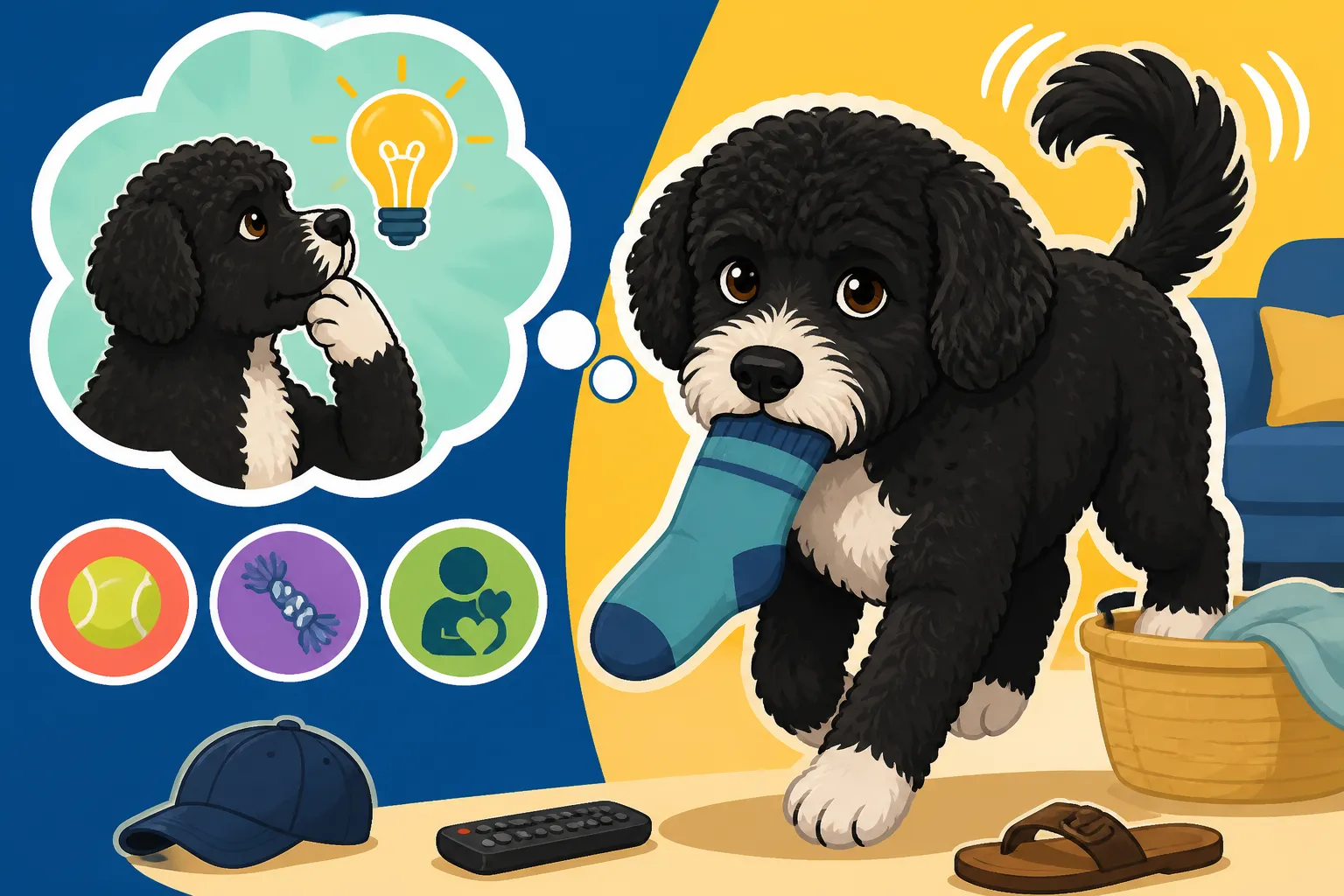
It's incredibly frustrating, isn't it? You walk into a room, looking for your glasses, your phone, or that brand-new sock you just pulled out of the laundry basket, only to find it's vanished. Then, you spot a familiar curly-coated snout poking out from under the couch, a guilty glint in those dark eyes, and your prized possession firmly clamped in their jaws. This guide is here to shed some light on why your beloved Portuguese Water Dog has such a penchant for "borrowing" your belongings and, more importantly, what you can do about it.
The Instinctive Drive Behind Object "Theft" in Portuguese Water Dogs
Let's be clear upfront: your Portuguese Water Dog isn't plotting against you or trying to be naughty. Their behavior, as perplexing as it might seem when you're missing a shoe, is often deeply rooted in their history and natural instincts. These dogs were bred for a very specific job, and that job heavily involved using their mouths and their intelligence.
A History of Retrieval and Purpose
The Portuguese Water Dog, or Cão de Água Português, was historically an essential crew member on fishing boats along the coast of Portugal. Their role was diverse and demanding, requiring them to be highly intelligent, agile, and, crucially, excellent retrievers. Imagine a rough sea, and a fisherman drops a net, a piece of equipment, or even a fish overboard. Who do you think was diving in to fetch it back? That's right, your PWD's ancestors. They were literally bred to retrieve lost tackle. This wasn't just about bringing things back; it was about problem-solving, identifying valuable items, and delivering them reliably to their human companions.
This ingrained drive to carry and retrieve means that their mouths are not just for eating; they are tools for interaction, exploration, and fulfilling a deep-seated purpose. When your Portuguese Water Dog picks up your TV remote, they might not understand its electronic function, but they certainly understand that it's an object, often one that holds your attention, and it's perfectly sized for their mouth. It's their way of interacting with their environment, much like their ancestors interacted with the fishing gear. They’re not just taking it; they’re engaging with it on a fundamental, instinctual level.
The Strong Mouth and Play Drive
Beyond retrieval, Portuguese Water Dogs are known for their robust play drive. They love to engage, to chase, to tug, and to carry. For many PWDs, finding an object that smells like you, or that is interesting in its texture or shape, is simply an invitation to play. It's like finding a treasure. Your forgotten glove or a paperback book left on the coffee table suddenly becomes the most exciting toy in the house. This isn't necessarily destructive behavior (though it can quickly become that if the item isn't suitable for chewing), but rather a manifestation of their playful and exploratory nature.
Think about it from their perspective: they see you interact with these objects daily. You touch them, hold them, and sometimes even talk to them (like your phone!). To a Portuguese Water Dog, these are clearly items of importance. By picking them up, they are joining in on that importance, or perhaps even trying to initiate a game. It's a testament to their intelligence and their desire for connection, even if it means you're frantically searching for your car keys.
What Motivates the "Borrowing" Behavior?
While instinct plays a huge role, the act of a Portuguese Water Dog stealing objects is often layered with other motivations. Understanding these can help you address the behavior more effectively. It's rarely a single, simple reason.
Seeking Attention and Engagement
Let's be honest, few things get your attention faster than your dog running off with something they shouldn't have. For a Portuguese Water Dog, who thrives on interaction and being part of the family "pack," this can be a powerful motivator. If they feel under-stimulated, or if you've been busy and haven't engaged with them much, grabbing a sock and parading it around might be their foolproof way to get you to drop everything and chase them. It works, doesn't it? You might groan, but you're now focused solely on them.
This isn't manipulative in a human sense; it's simply a learned behavior based on cause and effect. If "stealing the remote" consistently leads to you interacting with them – even if it's just to say "drop it!" or playfully chase them – then they've achieved their goal. They've gotten your attention. It's a clear signal that they want to engage, and sometimes, any attention is better than no attention at all. This is especially true for puppies and young adults who are still learning the ropes of family life and figuring out how to communicate their needs. The First Year With a Portuguese Water Dog Puppy is often a masterclass in learning about their communication style, including these cheeky attention-seeking maneuvers.
Boredom and Lack of Mental Stimulation
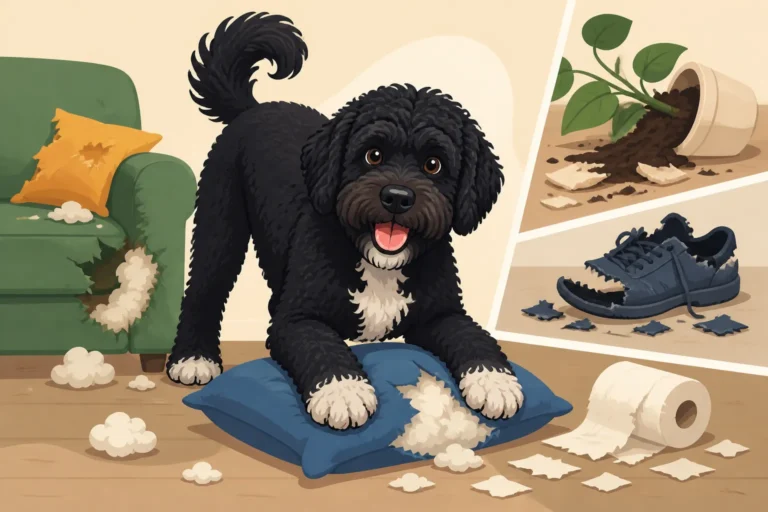
Portuguese Water Dogs are incredibly smart. Seriously, they're like canine Einsteins with webbed feet. This high intelligence means they need a lot of mental stimulation to stay happy and out of trouble. A bored PWD is a creative PWD, and that creativity often manifests in ways we don't appreciate. If they don't have enough appropriate outlets for their minds and bodies, they will invent their own entertainment. Your shoe collection, the papers on your desk, or even the kitchen towels become fair game. They're exploring textures, scents, and the joy of carrying something new.
Imagine being stuck at home with nothing to do. You'd probably find something to fiddle with, wouldn't you? For a Portuguese Water Dog, that "fiddling" often involves their mouth. This is where those puzzle toys and enrichment activities come into their own. If they've already "solved" all their approved toys, or if their daily routine is lacking in variety and challenge, they're going to look for new puzzles to solve. Your house offers an endless supply of interesting items to investigate. What a Portuguese Water Dog Needs Every Day includes a hefty dose of mental work, not just physical exercise.
Oral Fixation and Chewing Needs
Portuguese Water Dogs are often quite mouthy, particularly as puppies and adolescents. They explore the world with their mouths, and this tendency can extend well into adulthood. They might not always be chewing the objects they steal, but the act of carrying them, feeling them in their mouth, and perhaps gently mouthing them, is satisfying. It's a tactile experience. If they don't have enough appropriate chew toys – and by "enough," I mean a variety of textures, hardnesses, and sizes – they will find alternatives.
This mouthiness can be particularly prevalent when they are teething as puppies, but it continues as a comfort mechanism or a way to burn off excess energy. The satisfying "grab" and "carry" fulfills a primal urge. It's important to provide them with robust, appealing chew toys that are safe and long-lasting. Brands like KONG or Nylabone, widely available on Amazon, offer excellent options that can stand up to a PWD's strong jaws. Without these outlets, your phone charger might start looking mighty appealing for a good chew session.
Managing and Preventing Object Pilfering
So, how do we curb this endearing, yet often infuriating, habit? It’s a multi-pronged approach that combines environmental management, consistent training, and ensuring your PWD's needs are met.
Environmental Management: "Puppy Proofing" for Life
The easiest way to stop your Portuguese Water Dog from stealing something is to make sure they can't get it in the first place. This sounds simple, but it requires a constant awareness of what's within their reach. For PWDs, "within reach" means anywhere they can jump, stretch, or potentially climb onto. If you have a counter surfer on your hands, this can be especially challenging.
Start by thinking like your dog. What's interesting? What's at nose level? What smells like you?
- Designated "Dog Zones": Create areas where it's okay for your dog to be, and ensure these areas are free of tempting "off-limits" items. This might mean having a specific toy basket, or a special bed where they can chew their own things peacefully.
- Secure Storage: Important documents, wallets, keys, phones, and anything valuable or dangerous should be kept behind closed doors, in drawers, or on shelves well out of reach. Don't leave things on coffee tables or low shelves if your PWD is known for their "collecting" habits.
- Crate Training: A crate can be an invaluable tool for managing a Portuguese Water Dog, especially when you can't actively supervise them. It gives them a safe, secure space where they can't get into mischief. Just be sure to always provide appropriate toys inside the crate! For tips on making the crate a positive place, BAXTER & Bella's training resources often emphasize positive reinforcement for crate training.
- Cleanup Crew: Make it a habit to do a quick sweep of living areas before you leave the house or go to bed. Are there socks on the floor? Is the remote on the couch cushion? Training yourself to be tidy will save you a lot of headaches (and potentially ruined items).
Training Essential Commands: Drop It and Leave It
While prevention is key, accidents happen. And more importantly, you want your dog to learn self-control. This is where solid "Drop It" and "Leave It" commands become lifesavers. These commands are not about punishment; they're about teaching your dog to disengage from an object willingly and safely.
- "Drop It": Start with a toy your dog likes but isn't overly obsessed with. When they have it in their mouth, offer them a higher-value treat right next to their nose. The moment they open their mouth to take the treat, say "Drop It!" and reward them. Repeat this many, many times, gradually increasing the value of the item they are dropping. The goal is for them to associate "Drop It" with releasing an object to get something even better.
- "Leave It": This teaches your dog not to touch an object in the first place. Place a low-value treat on the floor and cover it with your hand. When your dog tries to get it, keep your hand covered. The moment they look away from the treat (even for a split second), mark the behavior with a verbal "Yes!" or a clicker, and reward them with a different, higher-value treat from your other hand. Slowly progress to uncovered treats, then to tempting items (like your socks!), always rewarding for ignoring the item. Training a Portuguese Water Dog That Was Bred to Think for Itself often benefits from these positive reinforcement techniques.
These commands should be practiced regularly, even when your dog isn't actively stealing anything, to build a strong foundation. The more positive experiences they have with these commands, the more likely they are to respond when it really counts.
Meeting Physical and Mental Needs
A well-exercised and mentally stimulated Portuguese Water Dog is a less mischievous Portuguese Water Dog. Seriously, it's that simple sometimes. These are working dogs with boundless energy and sharp minds.
- Plenty of Exercise: Portuguese Water Dogs need significant daily physical activity. This isn't just a quick walk around the block. They need vigorous play, running, and swimming. Swimming is particularly excellent for them, as it’s low impact and engages their entire body. Why Swimming Protects a Portuguese Water Dog's Joints while providing an excellent workout.
- Mental Challenges: Incorporate puzzle toys, scent work, obedience training, or even dog sports like agility or Dock Diving and Water Trials With a Portuguese Water Dog. These activities tire their minds as much as their bodies, fulfilling their need to problem-solve and work. Rotate toys frequently to keep things interesting. A new puzzle feeder from Amazon might keep them occupied for hours.
- Consistent Training Sessions: Even short, fun training sessions throughout the day can make a big difference. Five to ten minutes of practicing tricks, basic obedience, or new commands can be incredibly enriching for their minds.
Here’s a quick overview of common "stolen" items and what might be behind the behavior:
| Stolen Item Category | Common Motivations | Recommended Action |
|---|---|---|
| Socks/Underwear | Attention-seeking, scent-seeking, oral fixation | Put laundry away immediately, provide engaging chew toys. |
| Remotes/Phones | Attention-seeking, curious exploration, "game" | Keep out of reach, teach "Leave It," redirect to appropriate toys. |
| Shoes/Slippers | Scent-seeking, chewing, comfort, attention | Secure shoes, offer designated comfort chews, ensure ample exercise. |
| Paper/Magazines | Shredding instinct, boredom, texture exploration | Keep paper off low surfaces, provide shreddable dog-safe toys. |
| Food (from counters) | Hunger, opportunistic, learned behavior | Never leave food unattended, train "Off" for counters, manage diet. |
By addressing the underlying reasons for your Portuguese Water Dog's object pilfering, you can redirect their natural instincts and intelligence towards more appropriate and less destructive outlets. It takes patience and consistency, but a well-understood and well-cared-for PWD is a joy, even if they occasionally eye your wallet with a mischievous twinkle.
Disclaimer
This article is for general informational purposes only and does not constitute professional advice. Laws, prices and regulations vary by location and change over time. Consult a qualified professional for guidance on your specific situation.