Whether a Portuguese Water Dog Confuses Wet Feet With Outdoors
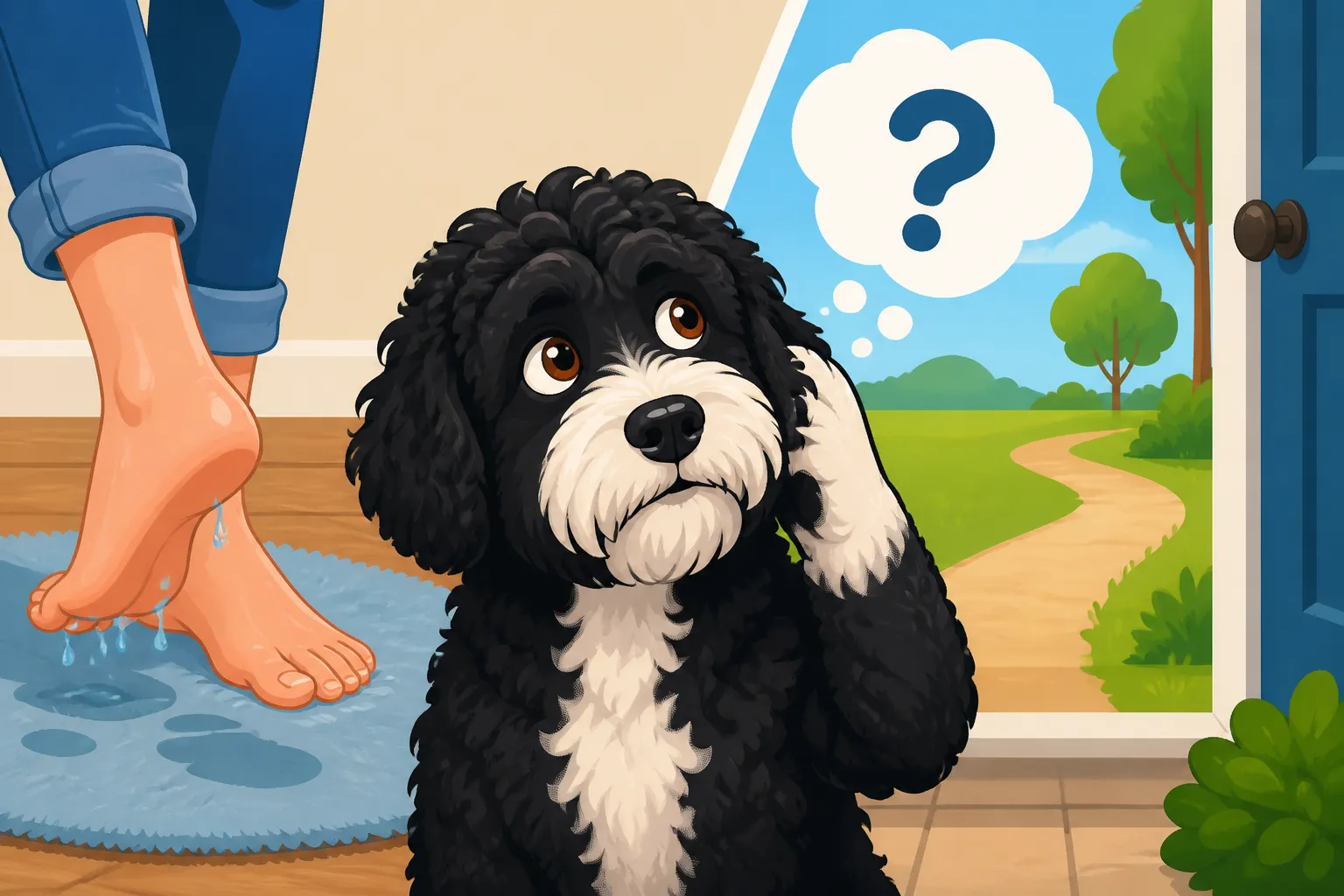
It's a scenario many Portuguese Water Dog owners know all too well: your furry companion just romped in the sprinklers, took a dip in the lake, or simply walked across a dew-kissed lawn, and now they're standing by the door, looking at you with that expectant gaze, as if their wet feet automatically mean it's time for a potty break. This frustrating cycle of perceived outdoor needs, triggered by nothing more than damp paws, can make you wonder if your clever PWD genuinely confuses wetness with the need to relieve themselves. This guide will dive deep into why this might happen and, more importantly, how you can help your water dog differentiate between "wet" and "potty time."
The Curious Case of the Wet-Foot Potty Request
You adore your Portuguese Water Dog's love for water and the outdoors, it's a huge part of their heritage and charm. But let's be honest, the constant "I'm wet, therefore I must pee" signal can drive you absolutely bonkers, especially when you know they just went out a short while ago. This isn't just a quirky habit; it's a learned association that can stem from various factors in your dog's environment and training history.
Why Your PWD Might "Confuse" Wetness with Outdoor Needs
Portuguese Water Dogs are incredibly intelligent and observant creatures. They make connections based on patterns, and if a consistent pattern has emerged where getting wet always precedes a trip outside, it's natural for them to form that association. Think about it from their perspective: they splash around, their feet get soaked, you then immediately open the door and escort them to their potty spot. Over time, that sequence becomes ingrained. It's not necessarily a confusion of concepts, but rather a strong conditioned response. They're not saying "my feet are wet, so I must pee now," they're saying "my feet are wet, and that means we go outside." The outdoor access becomes the reward for the wet feet, regardless of their actual bladder status.
Another factor could be an instinctive behavior. These dogs were bred to work in and around water, and part of their work might have involved being in or out of boats, or on shorelines. They are acutely aware of their physical state and environment. For some PWDs, the sensation of wet paws, especially cold ones, might simply feel "wrong" or uncomfortable indoors, leading them to seek relief in their designated outdoor space. It's a bit like us wanting to kick off wet shoes – but for them, the "shoes" are their own paws, and the "relief" is the outdoors. Sometimes, it’s also a way to gain your attention and solicit an outing, because they know it usually works.
The Frustration of Constant "False Alarms"
Let’s be real, the novelty of a wet-nosed request wears off pretty quickly when it happens five times an hour. You've got things to do, and constantly opening the door, leashing up, and standing outside in various weather conditions, only for your PWD to sniff around and decide they don't actually need to go, can be incredibly tiresome. It can lead to moments of exasperation where you question if you're misunderstanding them, or if they're just being manipulative. The concern isn't just about wasted time; it's also about potential house-training regression. If every wet-footed signal results in outdoor access, your PWD might start to think that any puddle, whether indoors or out, means "go time," blurring the lines of what's acceptable. This can be particularly frustrating during the puppy stages, where The First Year With a Portuguese Water Dog Puppy is already a whirlwind of training and learning. You want to reinforce proper potty habits, not accidental ones.
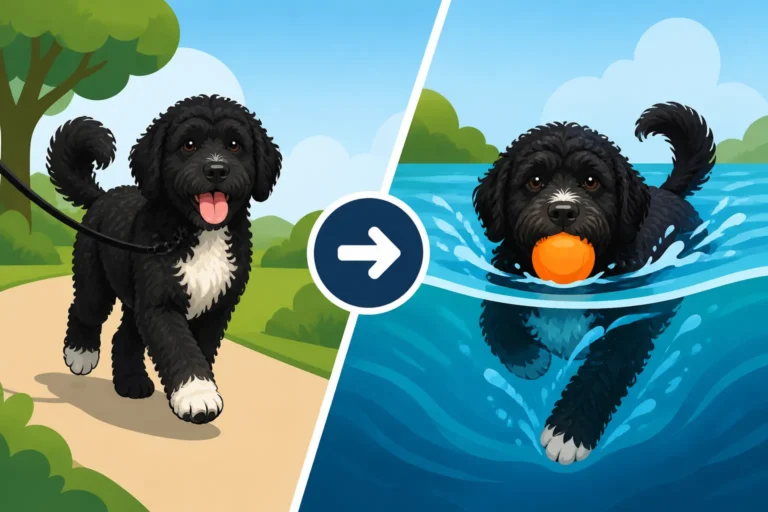
Moreover, if you have a dog that loves to swim, like most PWDs do, this problem can escalate. After a good swim in the lake or a dip in the pool, they'll be drenched. Imagine having to stand outside for ages while they maybe go potty, and then repeat the process moments later because their feet are still damp. It can feel like a never-ending cycle, and it definitely chips away at the enjoyment of their water activities.
Distinguishing Real Needs from Wet-Foot Whines
It's crucial to differentiate between genuine potty signals and the "wet feet = outdoors" association. Your PWD has real needs, and you never want to ignore them. However, you also don't want to reinforce a learned habit that isn't serving either of you well. Learning to read your dog's cues is key.
How to Read Your PWD's Genuine Potty Signals
True potty signals are often more urgent and specific than a casual lean against the door. A PWD who genuinely needs to relieve themselves might:
- Pace or circle: They might walk in tight circles, especially near the door or their usual potty spot.
- Sniff intently: They'll put their nose to the ground and sniff around, actively searching for a place to go.
- Whine or vocalize differently: While a "wet foot whine" might be a soft plea for attention, a true potty whine often sounds more insistent or distressed.
- Stare intently: Their gaze will be fixed on you or the door, often accompanied by a more rigid body posture.
- Go to the door unprompted: They won't just stand there; they'll actively move to the door and might even paw at it.
- Exhibits increasing urgency: The signals will get stronger and more frequent the longer they wait.
Compare this to the "wet foot" signal: they might just stand by the door after getting wet, perhaps give a soft whine, but without the intense sniffing or pacing. It’s more of a general request for outdoor access than a specific need to eliminate. Observing their previous potty schedule can also help. If they just went out 20 minutes ago and had a good, long pee, chances are the current request is habit, not bladder pressure.
The Role of Routine and Observation
Establishing a consistent routine is paramount for any dog, but especially for intelligent breeds like the Portuguese Water Dog who thrive on predictability. Your PWD should have set times for potty breaks: first thing in the morning, after meals, after waking from naps, and before bedtime. If a "wet foot" signal falls outside these established times and doesn't match the genuine potty cues, you have a better basis for addressing it as an association rather than an urgent need. For example, if your PWD gets their morning swim, and you know they've already had their significant morning potty break, then the post-swim door-sitting is likely the learned habit.
Keep a mental log, or even a literal one if you're struggling, of when your dog genuinely eliminates. This will give you confidence in knowing whether their current request is valid. This kind of diligent observation is critical during The First Year With a Portuguese Water Dog Puppy to build a strong foundation, but it's equally important to revisit if new habits emerge in adulthood. Sometimes, simply paying closer attention to their schedule helps you anticipate their actual needs and preempt the "false alarm" requests.
Practical Solutions for Managing Wet Paws and Potty Breaks
Now, let's talk about what you can actually do when your PWD's wet feet trigger that outdoor request. It's about breaking the association and establishing a new, clearer one.
Immediate Post-Wetness Protocols
The key here is to disrupt the "wet feet -> go outside" sequence. Instead, create a "wet feet -> get dried -> then assess" sequence.
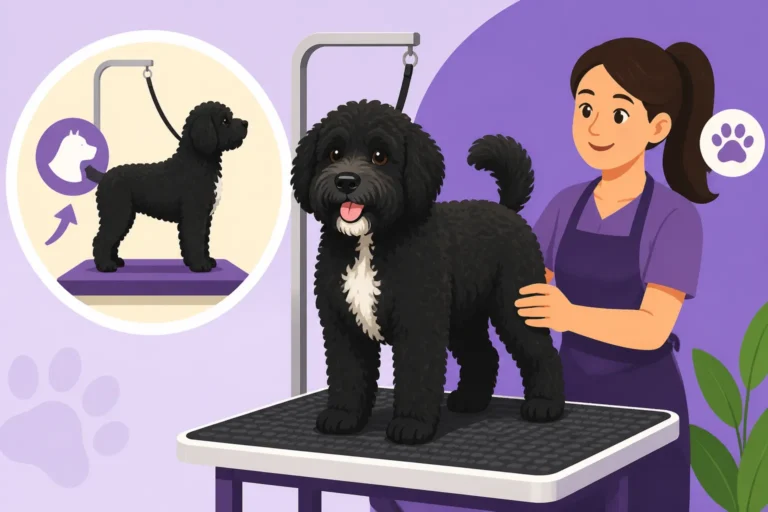
- Immediate Drying: As soon as your PWD comes in from a wet adventure, intercept them. Don't let them wander to the door. Instead, direct them to a designated drying area. This could be by the back door, in a mudroom, or even just a specific mat. Use absorbent towels to thoroughly dry their paws and as much of their coat as possible. Drying a Portuguese Water Dog After Every Swim is a whole art form, and the more diligent you are, the less residual wetness there will be to trigger the "outdoors" signal. You might find a high-quality force dryer incredibly useful here, not just for their full coat but specifically for getting those paw pads truly dry. Many owners swear by microfibre "noodle" towels, available on Amazon, which can wick away a surprising amount of moisture quickly.
- No Immediate Outdoor Access: Once they are dried, if they still go to the door, you do not immediately take them out. This is the crucial step in breaking the old pattern. If they've just been out, and you know their bladder is empty, offer a different activity. Engage them with a puzzle toy, a short training session, or some indoor play.
- Use a Specific Potty Cue: When it IS genuinely time for them to go out, use a specific verbal cue like "Go potty!" or "Outside to pee!" This helps them connect the phrase with the action of eliminating, rather than just the state of being outdoors.
Reinforcing Clear Potty Cues
Beyond the immediate drying, you need to actively teach your PWD the difference between simply going outside and going outside to relieve themselves.
- "Potty First" Principle: Whenever your dog goes out for a potty break, make sure they do something before you engage in play or walks. Go straight to their potty spot, stand still, and give your cue ("Go potty!"). As soon as they eliminate, offer enthusiastic praise and a small, high-value treat. This makes eliminating outside a highly rewarding act in itself, separate from simply being outdoors. If they don't go within a reasonable time (say, 5-10 minutes), bring them back inside. Keep them on a leash or closely supervised for a few minutes, then try again. This teaches them that "outside" isn't always play time; sometimes it's business first.
- Separate Outdoor Activities: Try to distinguish between potty breaks and exercise/fun outings. For potty breaks, it's quick, to the spot, do their business, then back inside or transition to a different activity. For exercise or play, you can still go to the same general area, but the initial focus is not on elimination. This might mean having a designated "potty zone" that's different from their play area in the yard, if space allows. A Portuguese Water Dog Was Bred to Work a Boat, Not a Yard, so a simple yard visit might not fulfill their enrichment needs anyway.
Tools and Techniques for a Drier Home (and Clearer Communication)
Having the right tools can make managing wet paws much easier and less messy for you.
- Super Absorbent Towels: Invest in several good quality, highly absorbent towels. There are specific dog-drying towels made of chenille or microfibre that work wonders. Having them readily available at every entry point can significantly reduce the amount of wetness tracked inside and thus, fewer "wet foot" triggers.
- Paw Cleaners/Wipers: Devices like paw plungers or silicone paw wipes can be fantastic for quickly cleaning and drying paws before your PWD steps inside. These are often readily available on Amazon. They get into the crevices of those webbed feet (part of what makes a PWD so great in the water!), removing moisture and dirt effectively.
- Doormats and Runners: Strategically placed absorbent doormats and runners, especially those designed for muddy paws, can capture a lot of moisture before it spreads. This helps keep your floors cleaner and reduces the "wetness everywhere" sensation for your dog.
- Designated Drying Area: Create a clear drying station. This could be a small crate with an absorbent pad, a utility sink for quick rinses (if they're really muddy after a swim in a murky lake), or a specific mat where they know they need to wait to be dried. Consistency here helps them learn the routine.
- Crate Training: If your PWD is crate trained, the crate can be a useful tool. After coming in wet and getting partially dried, they can be crated for a short period with a dry towel. This prevents them from wandering and making an immediate dash for the door, and allows their paws to air dry a bit more without triggering the old association. Whether a Wet Portuguese Water Dog Should Be Crated is a good question – as long as it's for a short, comfortable period with good ventilation and a dry bed, it can be part of the drying process.
Long-Term Training for a Smarter Potty Partnership
Addressing this "wet feet" confusion is not a quick fix; it requires consistent, long-term effort and patience. Remember, your Portuguese Water Dog is smart and capable of learning complex associations, which means they can also unlearn them and form new, better ones.
Consistency is Your Best Friend
This really can't be overstated. Every single time your PWD comes in wet, you need to follow your new protocol. If you sometimes let them go to the door immediately and sometimes redirect, you're sending mixed signals. Every member of the household needs to be on the same page. Children, partners, and even guests need to understand the new routine.
Think about how a dog learns. They look for patterns. If 90% of the time wet feet leads to drying and then redirection, but 10% of the time it leads to immediate outdoor access because you're in a hurry, that 10% can be enough to maintain the confusion. Be diligent. It might feel like a lot of work initially, but it will pay off in clearer communication and fewer frustrating moments in the long run.
Addressing Underlying Training Gaps
Sometimes, this "wet feet" phenomenon points to a broader need for clearer communication around potty training or even general impulse control.
- Review Potty Training Fundamentals: If your PWD is generally good about house training but develops this specific wet-foot issue, revisit the basics. Are your potty cues clear? Are you rewarding enthusiastically every single time they go outside? Are you giving them enough opportunities to go? Sometimes we get complacent after the puppy stage, and a refresher helps.
- Impulse Control Exercises: Training "wait" or "stay" at the door, even when dry, can translate to better impulse control when they're wet. If they can wait patiently for you to open the door when you're going for a walk, they can learn to wait while you dry their paws when they've just been swimming. Tools and advice from reputable training programs, like those offered by BAXTER & Bella, often emphasize these foundational skills that benefit many aspects of a dog's life, including proper door manners.
- Enrichment and Exercise: An under-exercised or under-stimulated Portuguese Water Dog might use any excuse to go outside, including wet feet. Ensure your PWD is getting adequate physical exercise and mental stimulation daily. These are active, working dogs. What a Portuguese Water Dog Needs Every Day is more than just a walk around the block. They need a "job" and an outlet for their energy, whether it's retrieving, swimming, or engaging in scent work. A tired, mentally satisfied dog is less likely to invent reasons to go out.
By being consistent, clear with your signals, and providing the necessary tools and training, you can help your brilliant Portuguese Water Dog understand that while wet feet are part of their wonderful, water-loving nature, they don't automatically mean "potty break!" It's all about teaching them a new, more accurate association that benefits both of you.
Disclaimer
This article is for general informational purposes only and does not constitute professional advice. Laws, prices and regulations vary by location and change over time. Consult a qualified professional for guidance on your specific situation.