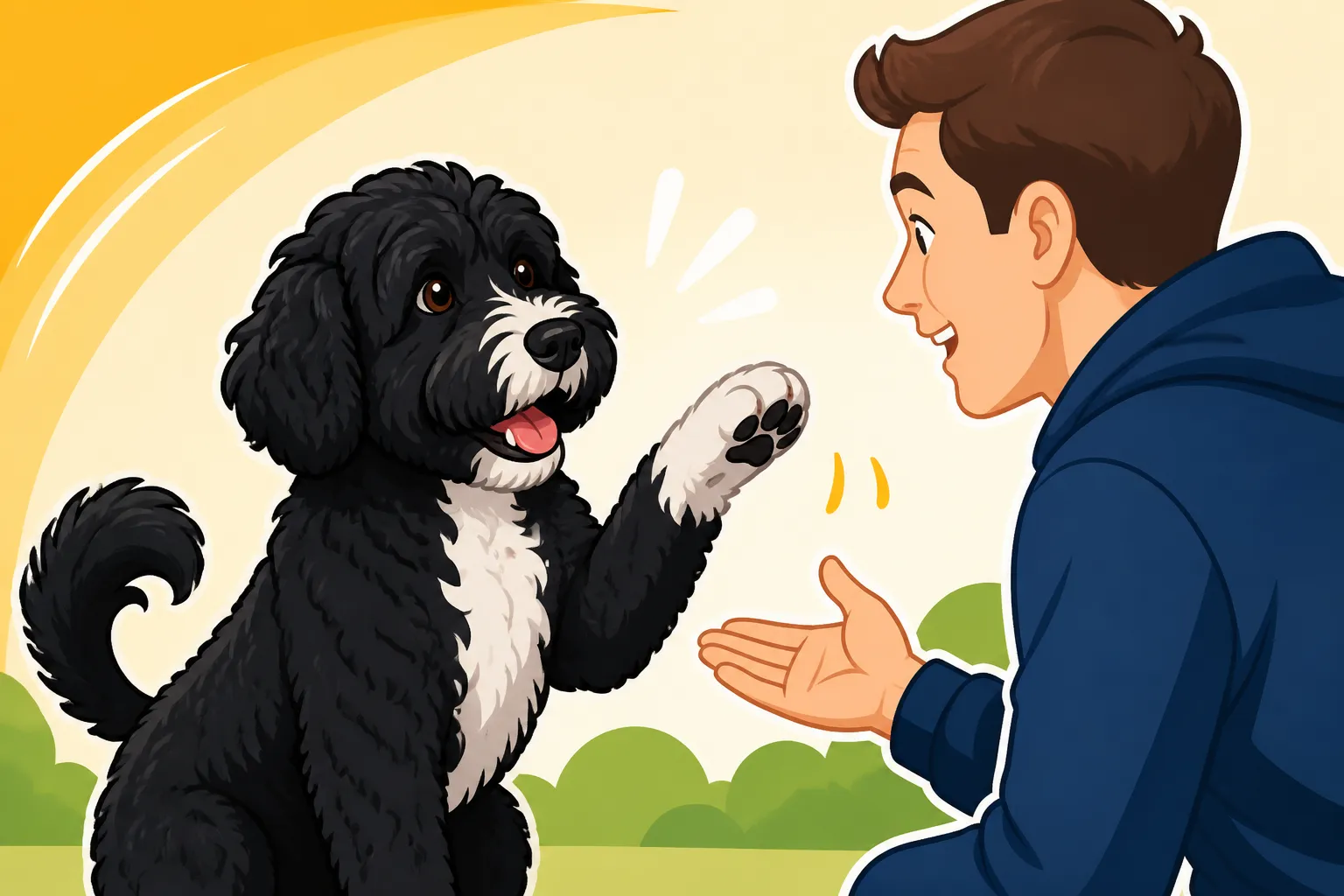
How a Portuguese Water Dog Greets a Stranger
It can be incredibly nerve-wracking when you have guests coming over, or you're out and about with your Portuguese Water Dog, and you're not quite sure how they're going to react to a stranger. Will they be exuberant and jumpy, reserved and watchful, or something else entirely? Navigating these social situations is a common challenge for many PWD owners, and this comprehensive guide will help you understand the nuances of their greeting behaviors and how to foster polite, calm interactions.
Understanding the Portuguese Water Dog's Instincts
When we talk about how a Portuguese Water Dog greets a stranger, it's crucial to first understand the bedrock of their instincts. These dogs weren't just bred for their charming curls; they were hardy, intelligent working animals, partners to fishermen on the high seas. This history deeply influences their personality and how they interact with the world around them, including new people.
Their Working Dog Heritage
Imagine a world where your dog wasn't just a pet, but an indispensable crew member, responsible for retrieving tackle, herding fish into nets, and even carrying messages between boats. That's the legacy of the Portuguese Water Dog. They needed to be vigilant, strong, and capable of making decisions independently, often far from their human companions. This independence and alertness are still very much part of their genetic makeup. They weren't bred to be passive background observers; they were active participants, keenly aware of their surroundings. This means a new person entering their space isn't just a casual encounter; it's something their innate working drive might prompt them to assess, announce, or even attempt to "manage."
For many owners, this historical context can be a lightbulb moment. It explains why your PWD might be so keenly observant, why they might have an opinion on every new person, and why simply ignoring a stranger might feel unnatural to them. They're wired to engage with their environment and the people in it. Understanding What a Portuguese Water Dog Was Bred to Do on a Boat helps explain so much of their modern-day behavior.
High Intelligence and Sensitivity
Portuguese Water Dogs are incredibly smart. They pick up on cues quickly, both from their environment and from their human companions. This intelligence, while a huge asset in training, also means they can be very sensitive to new situations and people. They aren't always 'go with the flow' dogs; they often process new information, size up situations, and then react. A new person isn't just a face; it's a new scent, a new energy, a new set of body language signals to decipher.
Their sensitivity also means they can be easily impacted by past experiences. A negative encounter, even a subtle one, can linger and shape future reactions. Conversely, a positive interaction can build a foundation of confidence. It’s this combination of intelligence and sensitivity that makes their greeting behavior so variable and, at times, perplexing for owners. It means a cookie-cutter approach to introductions often won't work; you need to be observant and responsive to your dog's individual processing style.
Common Ways a PWD Reacts to Strangers
When a Portuguese Water Dog encounters a stranger, their reaction can range widely. It's rarely a 'one size fits all' scenario. You might have a PWD who acts like everyone is their long-lost best friend, or one who views new people with cautious skepticism.
The Enthusiastic Leaper and Licker
Ah, the "velcro dog" turned "pogo stick"! Many PWDs greet new people with an explosion of joy and physical contact. This often manifests as jumping up, sometimes quite high, and an intense desire to shower the person with licks. For those who love dogs, this might be endearing, if a bit much. For others, particularly children or elderly guests, it can be overwhelming or even a little frightening. This behavior stems from their natural exuberance, combined with a strong desire for attention and connection. They're telling you, "You're here! You're new! Let's be friends right now!"
The challenge here isn't a lack of friendliness, but an abundance of it, expressed in an unrefined manner. It's a common complaint among owners, who desperately want their beloved PWD to be well-mannered. They might just want to reach your face for a quick kiss, or perhaps demand a full-body scratch. This intensity can often escalate if the person inadvertently reinforces the jumping by petting the dog while it's up, even if it's just to push them down. Breaking this habit takes consistency and teaching an alternative, polite greeting.
The Reserved Observer and Barker
On the flip side, some Portuguese Water Dogs approach strangers with a much more reserved demeanor. They might hang back, observing from a distance, or even retreat behind their owner. This isn't shyness in the fearful sense, but often a cautious assessment. They're taking their time, evaluating the newcomer, and deciding if they're worthy of a closer inspection. This can be frustrating for owners who want their dog to be friendly, but it's often a sign of their intelligence and discernment, rather than true aggression.
This reserved nature can sometimes escalate into barking. A PWD might bark to announce the stranger, to create distance, or to simply express their unease. The barks might be deep and resonant, acting as an alert, or sharper and more insistent. It's their way of communicating, "I see you. What are you doing here?" This can be particularly true if the stranger makes direct eye contact or approaches too quickly. Owners often feel embarrassed by this barking, especially when trying to assure guests, "Oh, he's friendly, he just barks!" But it's important to differentiate between alert barking and aggressive barking, and to give your PWD the space and time they need to process the situation. You might find that over time, with repeated positive exposure, they warm up considerably, or they might always remain a dog who prefers to observe from a slight distance.
Factors Influencing a PWD's Greeting Behavior
Understanding why your Portuguese Water Dog acts the way they do around strangers is key to managing and modifying their behavior. It's a complex interplay of genetics, early life experiences, and ongoing training.
Early Socialization Experiences
The single biggest influence on how a Portuguese Water Dog greets strangers is their early socialization. Puppies are like sponges, soaking up every experience. A well-socialized PWD puppy will have been exposed to a wide variety of people—different ages, genders, sizes, and even those wearing hats, carrying umbrellas, or using mobility aids—in positive, controlled ways. This builds a foundation of confidence and teaches them that new people are generally not a threat, but rather a source of potential fun or benign neutrality.
Conversely, a puppy with limited or negative early exposure might develop apprehension or over-excitement when encountering new people. If their only experiences with strangers involved being rushed by well-meaning but over-the-top admirers, they might learn to jump as a preemptive greeting. If they were never exposed to people outside their immediate family, they might view every new person with suspicion. Puppy classes are fantastic for this, and many online programs like those offered by BAXTER & Bella can guide you through structured socialization in your own home and community. It’s not just about meeting people; it’s about positive experiences that teach them how to cope calmly and politely.
Genetics and Temperament
While socialization is paramount, we also can't ignore the role of genetics and individual temperament. Just like humans, dogs have inherent personality traits. Some PWDs are born with a naturally more outgoing, boisterous disposition, while others are more sensitive and reserved. A reputable breeder will screen for temperament, aiming to produce confident, stable puppies, but variations will always exist within a litter and within the breed.
Some lines might naturally produce more "alert" barkers, while others are known for their easygoing nature. While you can certainly influence and shape behavior through training, you're also working with the dog you have. Understanding this can help you set realistic expectations. You might have to work harder on polite greetings with a naturally more exuberant PWD than with one who is naturally more reserved, but the underlying temperament will always be a factor. This is why Finding a Portuguese Water Dog Breeder Who Runs the Full Panel and observing the temperament of the parents is so important, as it gives you a glimpse into potential inherited traits.
Owner's Behavior and Reinforcement
Dogs are masters at reading their owners. Your reactions, conscious or unconscious, heavily influence how your PWD behaves around strangers. If you get tense or anxious every time a new person approaches, your dog will pick up on that energy and might become more alert or stressed themselves. If you inadvertently reinforce undesirable behaviors, they will continue. For example, if your PWD jumps on a guest and you respond by petting them to calm them down, you're actually rewarding the jumping behavior, however well-intentioned you might be.
Consistency is key. If some family members allow jumping while others try to discourage it, your PWD will be confused and the behavior will be harder to extinguish. Owners need to be mindful of what they're communicating to their dog, both verbally and through body language. Your calm, confident demeanor can go a long way in helping your PWD feel secure and behave appropriately. This also extends to how you introduce them to new people; a calm, managed introduction from you will set the tone for your dog.
Managing and Training for Positive Interactions
Training a Portuguese Water Dog to greet strangers politely requires patience, consistency, and a clear understanding of what you want them to do instead of what they're currently doing. Remember, they are intelligent dogs, and they can learn!
Teaching Alternative Behaviors
The core of training polite greetings is teaching your PWD an alternative behavior that is incompatible with jumping or excessive barking. The "four on the floor" rule is a classic: all four paws must be on the ground for them to receive attention. You can teach them to sit when someone approaches, or even to go to a designated "place" like their mat or bed until they are calm. Start this training in a low-distraction environment with people they know, then gradually introduce new people.
When a stranger approaches, instruct your PWD to sit. If they remain sitting, even for a second, praise them calmly and offer a high-value treat. If they jump, immediately turn your back, ignore them, and remove all attention. Only re-engage when their paws are on the floor. It takes relentless consistency, and you'll need to educate your guests to help you by ignoring undesirable behavior and only rewarding the good. A clicker can be an excellent tool here, marking the exact moment their paws are on the ground before the treat is given. For dogs that mouth or nip, teaching them How to Stop a Portuguese Water Dog Chewing will also be vital during greetings.
Controlled Introductions and Exposure
Setting your Portuguese Water Dog up for success means controlling introductions initially. Don't throw them into situations where they're likely to fail. Instead, arrange for planned, calm introductions. Have friends or family members come over who are willing to participate in training sessions. Start with your PWD on a leash, in a calm, neutral state. As the person approaches, reward your dog for calm behavior (looking at you, sitting, not reacting). If your PWD is prone to barking, start at a distance where they acknowledge the person but don't react, then slowly decrease the distance.
Utilize treats as a positive association. Every time a stranger appears, it means good things happen. You can even have the stranger gently toss treats on the ground near your dog, without direct eye contact or petting initially. This helps create a positive emotional response to new people. For dogs who are prone to fear-based reactions, having a trusted trainer involved can be invaluable. This structured exposure helps them build confidence without being overwhelmed, fostering a positive association rather than fear or over-excitement.
Using Training Aids Effectively
There are several tools that can assist you in training polite greetings. A sturdy front-clip harness can help manage jumping and pulling, giving you more control without causing discomfort. A long line can be useful for practicing greetings at a distance in an open space, allowing your PWD some freedom while still keeping them safe and within your control. For training at home, especially during initial introductions, a baby gate can provide a barrier that allows your PWD to see and smell guests without being able to jump on them, giving them time to settle.
Treat pouches, easily found on Amazon, are essential for quick and timely rewards. You can also look into online training resources, such as those provided by BAXTER & Bella, which offer structured programs for teaching polite manners and dealing with common behavioral challenges. Remember, tools are just that—tools. They enhance training, but they don't replace consistent effort and positive reinforcement on your part. Think of them as helping you communicate more clearly and manage situations while your dog learns.
Recognizing and Addressing Problematic Greetings
While an enthusiastic greeting can be managed with training, some behaviors can cross the line from exuberant to genuinely problematic, requiring a more focused approach. It’s important to recognize the signs and understand when to seek professional help.
Differentiating Excitement from Anxiety or Aggression
Sometimes, what looks like over-excitement can actually be underlying anxiety. A dog that is excessively jumping, mouthing, or even nipping at strangers might be expressing an inability to cope with the situation, rather than pure joy. Look for other signs of stress: lip licking, yawning (when not tired), averted gaze, tucked tail, panting heavily, or stiffness in their body. These can indicate that your PWD is feeling overwhelmed or anxious.
True aggression, on the other hand, is characterized by growling, snarling, snapping, or lunging with intent to harm. If your PWD displays any of these behaviors towards strangers, it's a serious matter and not something to be managed with basic obedience. This requires immediate intervention from a certified professional dog trainer or veterinary behaviorist. Never ignore or punish aggressive displays, as this can suppress the warning signs and lead to more dangerous unprovoked bites. Understanding the difference is critical, as the training approach for anxiety or aggression is very different from managing over-excitement.
When to Seek Professional Guidance
If you find yourself consistently struggling with your PWD's greeting behaviors, or if you're seeing signs of anxiety or aggression, it's time to call in the cavalry. A professional dog trainer or a veterinary behaviorist can assess your specific situation, help you identify the root cause of the behavior, and develop a tailored training plan. They can also teach you advanced techniques, like desensitization and counter-conditioning, which are particularly effective for addressing fear-based reactions.
Don't wait until the problem becomes severe. Early intervention is always better. Professionals can observe nuances in your dog's body language and your interactions that you might miss, providing invaluable insights. They can also help rule out any underlying medical conditions that might be contributing to behavioral issues, such as pain or discomfort, making sure you consider the full picture of What a Portuguese Water Dog's Yearly Bloodwork Should Cover. Investing in professional guidance is investing in a safer, happier relationship with your Portuguese Water Dog and ensuring they can comfortably navigate the world.
Living with a PWD and Frequent Visitors
Many Portuguese Water Dog owners love to entertain, but managing a high-energy, people-oriented dog with frequent visitors requires a proactive approach. It's about setting boundaries, providing structure, and ensuring your dog feels secure and understands their role.
Establishing House Rules for Guests
Before your guests even arrive, establish clear house rules for how they should interact with your PWD. Communicate these expectations politely but firmly. For instance, ask guests to ignore your dog for the first few minutes, especially if your PWD is prone to jumping or excessive excitement. Explain that all four paws must be on the floor before they can offer any attention. If your dog is a barker, ask them not to make direct eye contact or approach until your dog is calm.
You can even provide guests with treats (if appropriate for your dog's diet and any allergies) and instruct them on how to reward polite behavior, such as tossing a treat on the ground when your dog is sitting calmly. This not only reinforces good manners but also enlists your guests as part of your training team. A simple written note or a quick verbal briefing before they enter can make a world of difference. Consistency from everyone involved, even temporary visitors, is crucial for your PWD to understand what's expected.
Creating a Calm Space for Your PWD
Even the most social PWD can benefit from having a designated calm space to retreat to when guests are over, especially during longer visits or if things get too noisy or overwhelming. This could be their crate, a cozy bed in a quiet room, or a section of the house blocked off by a baby gate. Teach your dog that this is their safe haven, a place where they can go to relax without being disturbed.
Encourage them to use this space by periodically sending them there with a high-value chew toy or a stuffed Kong. This isn't a punishment; it's a reward and an opportunity for them to decompress. When guests arrive, you can initially place your PWD in their calm space with a special treat, allowing them to observe the activity from a distance until they are settled. This not only gives your dog a much-needed break but also helps manage their energy levels and prevents them from getting overstimulated, making greetings easier when they do occur.
| Greeting Behavior | Potential Cause | Owner Response Strategy | When to Seek Help |
|---|---|---|---|
| Excited Jumping/Licking | Over-excitement, seeking attention, lack of boundaries | "Four on the floor" rule, turn away, reward calm sit. | If consistent, impacts safety, or doesn't improve. |
| Reserved/Watchful | Caution, assessment, lack of exposure, sensitivity | Allow space, no forced interaction, gentle praise for calm. | If escalates to fear, aggression, or excessive hiding. |
| Alert/Excessive Barking | Announcing, territoriality, anxiety, overstimulation | Manage distance, positive association (treats), "quiet" command. | If constant, aggressive, or causes distress to dog. |
| Nipping/Mouthiness | Puppy behavior, over-arousal, anxiety, poor bite inhibition | Redirect to appropriate chew toy, disengage, teach "off." | If sustained, breaks skin, or shows aggression. |
| Cowering/Hiding | Fear, past negative experience, under-socialization | Create safe space, positive reinforcement from distance, no force. | Immediately, if fear is severe or impacting daily life. |
Continued Training and Exercise
Remember that a well-exercised Portuguese Water Dog is generally a calmer, more manageable dog. Their heritage dictates a need for physical activity and mental stimulation. If your PWD hasn't had enough exercise, they'll have pent-up energy that can easily manifest as over-the-top greetings. Make sure they get their daily dose of activity, whether it's a long swim, a brisk walk, or engaging playtime. How Much Exercise a Portuguese Water Dog Needs is often more than new owners anticipate.
Beyond physical exercise, consistent mental training is vital. Continue to practice basic obedience commands daily, reinforcing good manners in all situations, not just when strangers are present. Use puzzle toys, scent work, or short training sessions to keep their intelligent minds engaged. A dog that is physically and mentally satisfied is far less likely to resort to undesirable behaviors out of boredom or frustration. This ongoing commitment to their well-being is the foundation for a well-behaved companion who can greet any stranger with grace.
Disclaimer
This article is for general informational purposes only and does not constitute professional advice. Laws, prices and regulations vary by location and change over time. Consult a qualified professional for guidance on your specific situation.