Whether a Portuguese Water Dog Carried Messages Between Boats
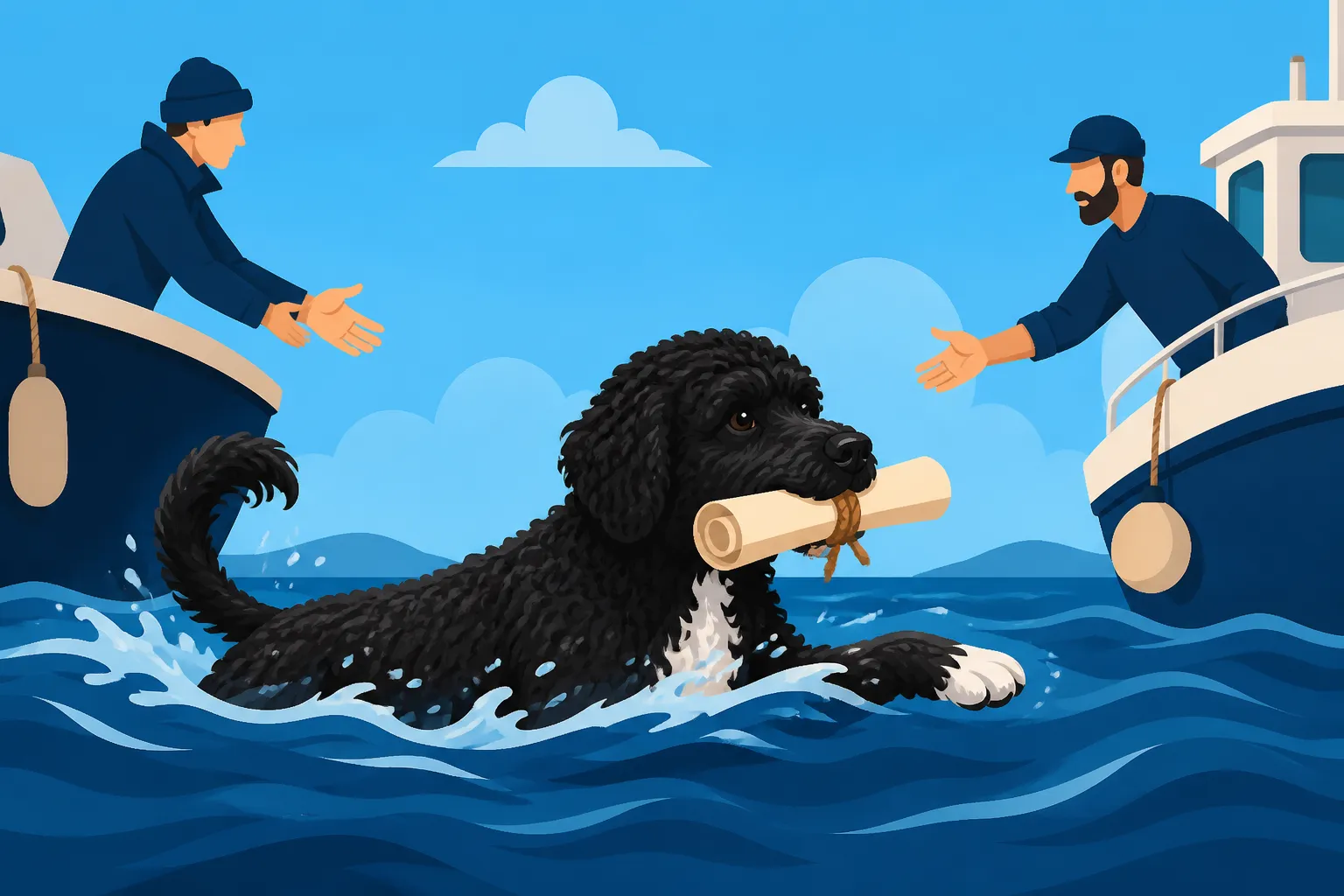
It’s a romantic image, isn't it? A sturdy, intelligent Portuguese Water Dog, leaping from one fishing vessel to another, a vital message tucked securely in its collar or a specialized pouch, bridging the gap between sailors at sea. Many of us, myself included, have wondered about the full scope of their historical duties. While these incredible dogs certainly played an indispensable role in the Portuguese fishing fleet, the idea of them acting as canine postal workers between boats is a fascinating detail that deserves a closer look. This guide will delve into what these remarkable working dogs truly did, why the message-carrying scenario is more myth than reality, and how their actual capabilities were arguably even more impressive.
The Real Work of the Portuguese Water Dog on Fishing Boats
For centuries, the Portuguese Water Dog was an invaluable crew member on the fishing boats along the coast of Portugal, particularly in the Algarve region. Their job wasn't just a leisure activity; it was crucial for the livelihood and safety of the fishermen. These dogs were bred for their robust swimming ability, keen intelligence, and unwavering loyalty, making them perfect partners for a life at sea.
Herding Fish and Retrieving Gear
Their primary and most famous role involved working with nets. Imagine a bustling fishing scene: boats out on the water, nets cast wide. The Portuguese Water Dog would plunge into the cold Atlantic, often on command, and expertly herd fish into the nets, essentially acting as a living fence. Their powerful swimming, rudder-like tail, and incredible agility in the water were perfectly suited for this demanding task. This wasn't a gentle nudge; they were actively driving fish, a testament to their strength and coordination.
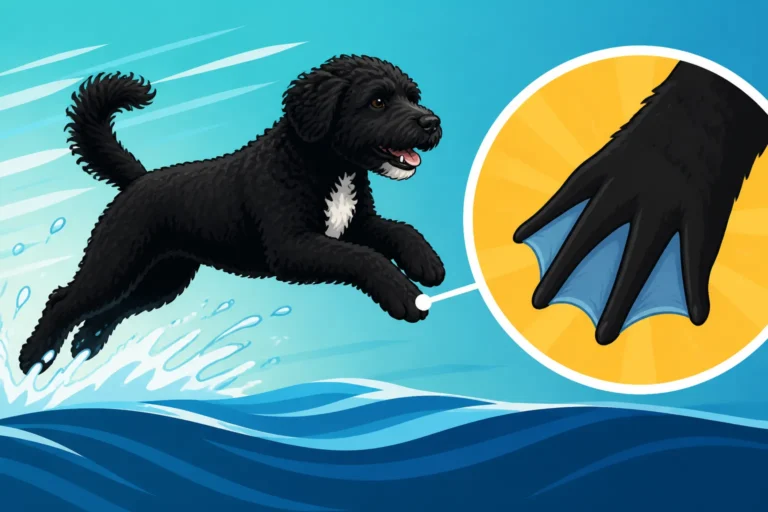
Beyond herding, they were masters of retrieval. Lost tackle, broken lines, or escaped fish were not just annoyances; they represented lost time and income. A Portuguese Water Dog could dive into the water, locate these items, and bring them back to the boat. This wasn't about fetching a stick; it was about retrieving valuable equipment from often turbulent waters. Their dense, waterproof coats protected them from the elements, allowing them to remain in the water for extended periods. This ability to fetch and retrieve was fundamental to their utility and why fishermen held them in such high regard. Their webbed feet were a huge asset, giving them incredible propulsion in the water. You can learn more about how they performed these tasks in How a Portuguese Water Dog Worked a Net.
Guarding the Catch and the Boat
While out at sea, or when docked in port, the fishing boat and its precious cargo were vulnerable. Portuguese Water Dogs also served as vigilant guardians. Their protective instincts were well-honed, and they would alert the crew to any approaching strangers or potential threats. This dual role of active worker and watchful protector meant that a fisherman truly had a partner in every sense of the word. They weren't just pets; they were integral members of the team whose presence contributed to the overall security of the operation. Whether it was warding off opportunistic thieves in harbor or alerting to unexpected shifts in weather while anchored, their awareness was a valuable asset.
The Logistical Challenges of Canine Message Delivery Between Boats
When we think about dogs carrying messages, we often picture a land-based scenario, like a messenger dog in wartime or delivering notes between houses. The open sea, however, presents a unique set of challenges that make the idea of a Portuguese Water Dog regularly carrying messages between boats highly impractical, if not outright dangerous for the dog.
Distance, Visibility, and Weather Conditions
Consider the distances involved. Fishing boats often spread out, sometimes quite far from one another, to maximize their catch. Expecting a dog to navigate these distances, often without a direct line of sight between the vessels, is unrealistic. The dog would need to be perfectly directed, which is challenging on land, let alone on moving water. Visibility could be poor due to fog, rain, or the simple vastness of the ocean.
Then there's the weather. The Atlantic is notoriously unpredictable. Calm waters can turn into rough seas in a matter of minutes. A dog swimming between boats in choppy conditions would be at serious risk of being swept away, injured, or simply losing its way. The safety of the dog would always be paramount for these fishermen, as a healthy dog was an active, valuable worker. You can imagine the heartbreak and practical loss of a dog lost at sea.
The Message Itself: Security and Reliability
What kind of message would warrant such a perilous delivery method? Most critical communications between boats would have been shouted, signaled, or, in later times, transmitted by rudimentary radio or flag signals. A written message, especially in an era before waterproof containers were commonplace, would be easily damaged by water. Even if it could be waterproofed, the act of attaching it securely to a dog that's about to embark on a potentially long and strenuous swim adds another layer of complexity. The reliability factor just isn't there compared to other methods available at the time.
Consider, too, the possibility of the dog getting distracted or simply deciding to return to its original boat. While incredibly intelligent, dogs are still animals. Their focus, especially over long distances in a stimulating environment like the open sea, cannot be guaranteed for such a critical task.
Why Their Actual Roles Were More Important Than You Might Think
The true historical duties of the Portuguese Water Dog, while perhaps less dramatic than tales of message-carrying, were far more essential to the daily operations and survival of the fishing community. Their abilities directly contributed to the economic viability and safety of the fishermen.
Essential for Livelihoods
Without these dogs, fishermen would have struggled significantly. Imagine trying to herd thousands of fish into a net using only human power, or diving repeatedly into cold water to retrieve lost gear. The dogs saved time, labor, and ultimately, money. They were an investment that paid off daily. Their contribution meant more fish caught, less gear lost, and a more efficient operation overall. This was particularly true in an era before advanced technology, where every pair of hands—or paws—mattered. They were truly partners in their human companions' endeavors. To understand more about their historical context, read The Portuguese Water Dog Worked the Algarve Fishing Fleet.
Adaptability and Unique Skills
Their skill set was perfectly tailored to their environment. Their dense, non-shedding, waterproof coat was ideal for cold water. Their webbed feet gave them an unparalleled advantage in swimming. Their intelligence and eagerness to please made them highly trainable for complex tasks like net-herding. These weren't just general-purpose dogs; they were specialists, uniquely adapted for their aquatic profession. Even today, these traits make them superb companions for those who enjoy water sports. Teaching a Portuguese Water Dog to Swim on Cue highlights how their natural inclination is still valued.
A Legacy of Partnership, Not Postal Service
Ultimately, the legacy of the Portuguese Water Dog is one of partnership, resilience, and unique working ability. They were integral members of the fishing community, deeply valued for their practical contributions. While the image of them carrying messages is charming, it’s far more compelling to appreciate the actual, rigorous, and often dangerous work they performed that truly saved lives and sustained families. They were the original "water dogs" for a reason, their history forged in the waves and hard work of the sea.
Modern Interpretations: How PWDs "Carry Messages" Today
While the historical message-carrying role is largely apocryphal, modern Portuguese Water Dogs still demonstrate incredible intelligence, trainability, and a desire to communicate and work with their humans. In a sense, they "carry messages" in new, enriching ways through various activities.
Communication and Training in Modern Life
Today's PWDs are often involved in complex training, where understanding and responding to cues is a form of message exchange. Whether it's learning intricate agility courses, performing tasks as service dogs, or simply navigating the nuances of family life, these dogs are constantly interpreting and responding to "messages" from their human companions. Resources like those offered by BAXTER & Bella can help new owners establish clear communication channels and training protocols, ensuring their PWD understands what's being "communicated." This builds a strong bond and allows the dog to excel in various roles.
For example, teaching a Portuguese Water Dog to retrieve specific items on command – like their leash for a walk, or a particular toy – is a form of object-based message carrying. They are "told" what to get and "deliver" it. This builds on their natural retrieving instincts that were so crucial in their fishing days.
Participating in Canine Sports and Activities
Modern Portuguese Water Dogs still thrive in water sports like dock diving and water trials. In these events, they are responding to cues and commands, effectively "carrying out instructions" from their handlers. This requires intense focus, understanding, and a strong bond. When a dog successfully performs a complex retrieve in a water trial, they are demonstrating their ability to process information and act upon it, a sophisticated form of "message" reception and execution.
Many PWD owners find invaluable training materials and equipment, from specialized retrieving dummies to waterproof leashes, on platforms like Amazon, making it easier to engage their dogs in these enriching activities. Their historical drive to work and interact with humans is still very much alive, just channeled into different, often competitive, pursuits. You can learn about their capabilities in What a Portuguese Water Dog Was Bred to Do on a Boat and Teaching a Portuguese Water Dog to Wait on the Bank.
Here's a comparison of the perceived vs. actual historical roles of Portuguese Water Dogs:
| Perceived Role (Often Romanticized) | Actual Historical Role (Essential for Livelihoods) | Skills Required |
|---|---|---|
| Carrying messages between boats | Herding fish into nets | Swimming, agility, intelligence, focus |
| Casual companionship | Retrieving lost tackle and gear | Diving, scenting, strong retrieval drive |
| Ornament on the boat | Guarding the boat and catch | Alertness, protective instincts |
| Simple water play | Swimming in cold, rough seas for extended periods | Stamina, waterproof coat, webbed feet |
Emotional Support and Sensing Cues
Perhaps the most profound way Portuguese Water Dogs "carry messages" today is through their emotional intelligence. They are often incredibly attuned to their human's moods and needs, offering comfort or initiating play at just the right moment. This unspoken communication, sensing subtle cues and responding empathetically, is a form of message exchange far deeper than any written note. Their intuition and connection to their families are powerful aspects of their character that continue to endear them to owners worldwide. It's a testament to their breed's intelligence and desire for close partnership, a quality that dates back to their working days when they had to understand a fisherman's subtle commands amidst the noise of the sea.
Disclaimer
This article is for general informational purposes only and does not constitute professional advice. Laws, prices and regulations vary by location and change over time. Consult a qualified professional for guidance on your specific situation.