How to Stop a Portuguese Water Dog Chewing
Oh, the joys and frustrations of a Portuguese Water Dog puppy or even an adolescent! If you're reading this, chances are you've recently discovered that beloved, web-footed companion of yours has a penchant for chewing things that absolutely should not be chewed – whether it's the leg of your antique coffee table, your favorite pair of shoes, or even the corner of your drywall. It’s not just annoying; it can be downright destructive and even dangerous. This guide is here to help you understand why your PWD chews and, more importantly, equip you with practical strategies to redirect that chewing instinct toward appropriate outlets, saving your sanity and your belongings.
Understanding the "Why" Behind Your PWD's Chewing
Before we can effectively address the chewing, we really need to get into our PWD's mind and figure out why they're doing it. It’s rarely out of spite or malice, though it certainly feels that way when you come home to a shredded cushion. Chewing is a deeply ingrained, natural canine behavior, and for Portuguese Water Dogs, who are intelligent and often quite oral, it’s even more pronounced.
Puppy Teething: The Inevitable Phase
Let's face it, puppyhood is adorable, but it also comes with a sharp, pointy phase: teething. Just like human babies, Portuguese Water Dog puppies go through a period where their baby teeth fall out and their adult teeth emerge. This process can be incredibly uncomfortable, causing their gums to be sore, itchy, and sometimes inflamed.
During this time, chewing provides immense relief. The pressure on their gums helps to alleviate the discomfort and loosen those stubborn baby teeth. If you've ever had a toothache, you can empathize with the intense urge to chew on something to numb the pain. For a PWD puppy, everything becomes a potential gum massager – from your fingers to the chair leg. This phase typically starts around 3-4 months and can last until they're 6-7 months old, sometimes even a bit longer for the back molars. It's a critical period where you need to be extra vigilant and provide an abundance of appropriate, safe chew items to help them through it.
Boredom and Lack of Mental Stimulation
Portuguese Water Dogs are not just pretty faces; they are highly intelligent, active working dogs. Bred to be partners with fishermen, they thrive on having a "job" and a purpose. This means they need both physical and mental stimulation, and if they don't get enough of it, they'll find their own entertainment – often by chewing.
Think about it: an idle mind is the devil's playground, right? For a PWD, a day spent without engaging activities can lead to immense frustration. They might chew out of sheer boredom, simply because it's something to do. This isn't just about physical exercise, though that's a huge component. It's also about challenging their clever brains. A PWD left alone with nothing but four walls and no interactive toys will inevitably turn to exploring their environment with their mouth. They’ll chew on furniture, baseboards, or anything else that offers texture and novelty. Providing puzzle toys, short training sessions throughout the day, or even just rotating their chew toys can make a significant difference. Why a Portuguese Water Dog Needs a Job speaks volumes about their inherent drive.
Anxiety and Stress-Related Chewing
Chewing can also be a coping mechanism for stress and anxiety in Portuguese Water Dogs. It’s a self-soothing behavior, much like how some people bite their nails or fidget when nervous. If your PWD is chewing excessively, especially when you're away or during times of change, it might be a sign they're feeling anxious.
Common triggers for anxiety chewing include separation anxiety, changes in routine, new environments, loud noises (like thunderstorms or fireworks), or even the introduction of a new pet or family member. When a PWD feels overwhelmed or insecure, chewing releases endorphins, which can help them feel calmer. It's important to look at the context of the chewing. Is it always when you leave the house? Are they also pacing, vocalizing, or having accidents? These could be clues pointing to anxiety. Signs a Portuguese Water Dog Has Separation Anxiety can offer more insights into recognizing and addressing these behaviors.
Setting Up for Success: Environment and Management
Managing your environment is just as important as training your Portuguese Water Dog when it comes to curbing inappropriate chewing. You can't expect your dog to ignore tempting items if they're readily available and no alternative is offered. It's about setting them up to win, not to fail.
Puppy-Proofing Your Home
Before your Portuguese Water Dog puppy even sets a paw in your home, or certainly as soon as you realize chewing is becoming an issue, you need to go on a "puppy-proofing" mission. This means getting down on their level and looking at your home from their perspective.
Remove anything valuable, fragile, or dangerous that's within their reach. This includes electrical cords, shoes, remote controls, houseplants (many are toxic!), small rugs, decorative items, and anything else you wouldn't want them to chew. Use baby gates to restrict access to certain rooms when you can't supervise directly. For items that can't be moved, like furniture legs, you might consider using bitter-tasting sprays (more on those later) as a deterrent, or even physical barriers. The goal here isn't just to save your stuff; it's to prevent your PWD from developing a habit of chewing on forbidden objects. Every time they successfully chew something inappropriate, that behavior is reinforced.
Providing Appropriate Chewing Outlets
This is where you want your Portuguese Water Dog to chew! The key is to offer a variety of appealing, safe, and appropriate chew toys that can satisfy their instinct. Not all chew toys are created equal, and what one PWD loves, another might ignore.
Consider different textures, shapes, and durability levels. For a strong chewer like a PWD, you’ll need robust options. Think hard rubber toys, nylon bones, or interactive puzzle toys that dispense treats. Brands like Kong and Nylabone offer many durable options. Rotate their chew toys regularly to keep things interesting. If they see the same three toys every single day, they'll quickly lose interest. Keep a stash of 6-8 toys and rotate 2-3 new ones into their access every few days. This makes them feel "new" and exciting again. Always supervise new chew toys to ensure they are safe and don't pose a choking hazard if pieces break off. You can find a fantastic selection of durable and stimulating chew toys on Amazon that cater to even the most enthusiastic chewers.
Here's a quick comparison of common chew toy types:
| Chew Toy Type | Material | Durability | Best Use | Notes |
|---|---|---|---|---|
| Hard Rubber Toys | Rubber | High | Stuffing with treats, fetch | Excellent for power chewers, interactive |
| Nylon Chew Bones | Nylon | Very High | Sustained chewing | Long-lasting, can help clean teeth |
| Interactive Puzzle Toys | Plastic, rubber | Medium to High | Mental stimulation, slow feeding | Great for boredom, problem-solving, can be filled with kibble |
| Rope Toys | Cotton, synthetic | Medium | Tug-of-war, light chewing | Monitor for fraying and ingestion of strings |
| Dental Chews | Edible | Low to Medium | Teeth cleaning, short-term satisfaction | Supervise to prevent choking, check ingredients |
Supervised vs. Unsupervised Chewing
One of the biggest mistakes owners make is assuming their Portuguese Water Dog can distinguish between "good" and "bad" chew items without supervision. During the initial training phase, especially with a puppy or a newly adopted adult, all chewing should ideally be supervised.
When you are actively present, you can intervene immediately if your PWD starts to chew on something inappropriate. A quick, firm "No!" followed by redirecting them to an appropriate chew toy and then praising them for using it correctly is key. If you can't actively supervise – perhaps you're cooking dinner, on a work call, or just need a moment – your PWD should be in a safe, puppy-proofed area. This might be a crate, an exercise pen, or a designated "safe room" that has absolutely nothing they shouldn't chew. This management technique prevents them from practicing bad habits when you're not there to guide them. It’s all about teaching them what’s fair game and what’s off-limits, which takes consistency and vigilance.
Training Strategies for Discouraging Inappropriate Chewing
Beyond managing the environment, direct training plays a pivotal role in teaching your Portuguese Water Dog appropriate chewing behaviors. This involves clear communication, positive reinforcement, and sometimes, safe deterrents.
Redirection and Positive Reinforcement
The most effective way to stop inappropriate chewing is through redirection and positive reinforcement. This means catching your PWD in the act of chewing something they shouldn't, gently interrupting the behavior, and then immediately offering them an appropriate chew toy.
Here's how it works: If you see your PWD eyeing or mouthing the table leg, calmly say "Ah-ah!" or "No chew!" (using a consistent phrase). As soon as they pause, even for a second, immediately present their favorite chew toy. The moment their mouth touches the toy, give enthusiastic praise ("Good chew!") and maybe even a small, high-value treat. This teaches them that letting go of the forbidden item and choosing the designated toy earns them rewards. It’s crucial to be consistent and to praise the correct behavior. Over time, your PWD will learn to make the right choice on their own. This approach fosters a positive relationship and encourages desired behaviors, unlike punishment, which can create fear and confusion.
Teaching "Leave It" and "Drop It"
These two commands are invaluable for any dog owner, but especially for those with a mouthy Portuguese Water Dog. "Leave It" teaches your dog to ignore an object, while "Drop It" teaches them to release something they already have in their mouth.
Start teaching "Leave It" in a low-distraction environment. Hold a treat in your closed fist. When your PWD tries to get it, say "Leave It." The moment they look away from your hand, even for a split second, open your hand and reward them with a different, higher-value treat from your other hand. Repeat this many times, gradually increasing the difficulty by placing the treat on the floor, then further away. For "Drop It," start with a low-value toy your PWD has in their mouth. Offer a high-value treat right to their nose. As they drop the toy to take the treat, say "Drop It" and then immediately give the treat. Once they eat the treat, you can pick up the original toy. Repeat until they drop the toy on cue. Consistent practice with these commands, perhaps with guidance from a program like BAXTER & Bella, can make a huge difference in managing your PWD’s oral fixations and help reinforce good habits around objects.
Using Deterrents Safely and Effectively
Sometimes, redirection and training aren't quite enough, and a safe deterrent can give you an extra layer of protection for those irresistible items. Bitter sprays are the most common type of deterrent. These sprays contain a safe, non-toxic ingredient that tastes extremely unpleasant to dogs, making them less likely to chew on anything treated with it.
You can spray these on furniture legs, electrical cords, baseboards, or anything else your Portuguese Water Dog seems determined to chew. However, a word of caution: not all dogs are equally deterred by bitter sprays. Some might find the taste only mildly off-putting, or even ignore it completely. Always test the spray on an inconspicuous area first to ensure it doesn't stain or damage the material. And remember, deterrents are a management tool, not a substitute for training and providing appropriate chew outlets. They buy you time and reduce opportunities for bad habits, but the ultimate goal is for your PWD to choose the right things to chew because they’ve been taught to.
Exercise and Mental Engagement to Combat Chewing
For a Portuguese Water Dog, a tired dog is a good dog. But it's not just about physical exhaustion; it's also about mental fatigue. Without adequate outlets for their natural energy and intelligence, chewing can become an unwelcome byproduct.
The Importance of Physical Exercise
Portuguese Water Dogs are an active, energetic breed. They were bred to work long hours with fishermen, herding fish, retrieving nets, and carrying messages. This means they have stamina and need a significant amount of physical exercise every single day.
A quick walk around the block isn't going to cut it for most PWDs. They need vigorous activity that truly tires them out, both physically and mentally. This could mean long walks, intense games of fetch, running alongside a bike, or, ideally, swimming. A PWD that is under-exercised will have pent-up energy, and that energy often manifests in destructive behaviors, including excessive chewing. Aim for at least 60-90 minutes of dedicated exercise daily, broken into multiple sessions, and ideally including some off-leash running in a safe area. An active Portuguese Water Dog is far less likely to resort to chewing out of boredom or excess energy. How Much Exercise a Portuguese Water Dog Needs is a great resource for understanding their requirements.
Engaging Their Minds with Training and Puzzles
Physical exercise is crucial, but for a highly intelligent breed like the Portuguese Water Dog, mental stimulation is equally vital. Their brains need to be worked just as much as their bodies. If they're not challenged mentally, they'll find their own "puzzles" to solve, which often involves dismantling your home.
Incorporate short, fun training sessions throughout the day. Teach them new tricks, practice obedience commands in different environments, or enroll in a dog sport like agility or rally. Puzzle toys are also fantastic for mental enrichment. These toys require your PWD to figure out how to get treats, engaging their problem-solving skills. Snuffle mats, treat-dispensing balls, or even just hiding their kibble around the house for them to sniff out can provide valuable mental exercise. Even ten or fifteen minutes of focused mental work can be as tiring as a much longer physical activity and can significantly reduce the urge to chew inappropriately. Which Retrieving Games Tire a Portuguese Water Dog details some excellent options for engaging their minds and bodies.
Incorporating Water Work and Breed-Specific Activities
Let's not forget the "Water Dog" part of their name! These dogs were literally bred for the water, and engaging in water activities is often the ultimate way to satisfy their natural instincts and expend energy. If you have access to safe swimming areas, this can be a game-changer for a chewing PWD.
Whether it's swimming in a lake, a dog-friendly pool, or participating in organized water sports like dock diving or water trials, these activities tap into their genetic predisposition and provide immense satisfaction. Dock Diving and Water Trials With a Portuguese Water Dog explains how these activities can channel their energy. Water work is incredibly tiring, both physically and mentally, as it requires focus, endurance, and problem-solving. A PWD that has had a good swim and worked its natural retrieving instincts is much less likely to come home and chew on your furniture. If water access isn't feasible, consider other active dog sports like agility, flyball, or scent work, which also provide excellent outlets for their energy and intelligence.
What NOT to Do: Common Mistakes to Avoid
While we've covered what to do, it's just as important to understand what not to do when trying to stop your Portuguese Water Dog from chewing. Some common approaches can actually make the problem worse or damage your relationship with your dog.
Punishment After the Fact
This is a big one. Discovering a chewed-up item hours after the fact and then punishing your Portuguese Water Dog will be ineffective and potentially harmful. Dogs live in the moment. When you come home and scold them for something they did hours ago, they don't connect your anger to the chewed item; they connect it to your arrival.
All they learn is that your return means something scary or unpleasant is about to happen, which can damage their trust in you and potentially exacerbate anxiety or lead to secretive chewing. If you didn't catch them in the act, clean up the mess calmly and resolve to be more vigilant in the future. The time for correction is only when you catch them in the act, so you can immediately redirect to an appropriate chew item. Consistency and immediate intervention are key, not retroactive punishment.
Giving Old Clothes or Shoes as Chew Toys
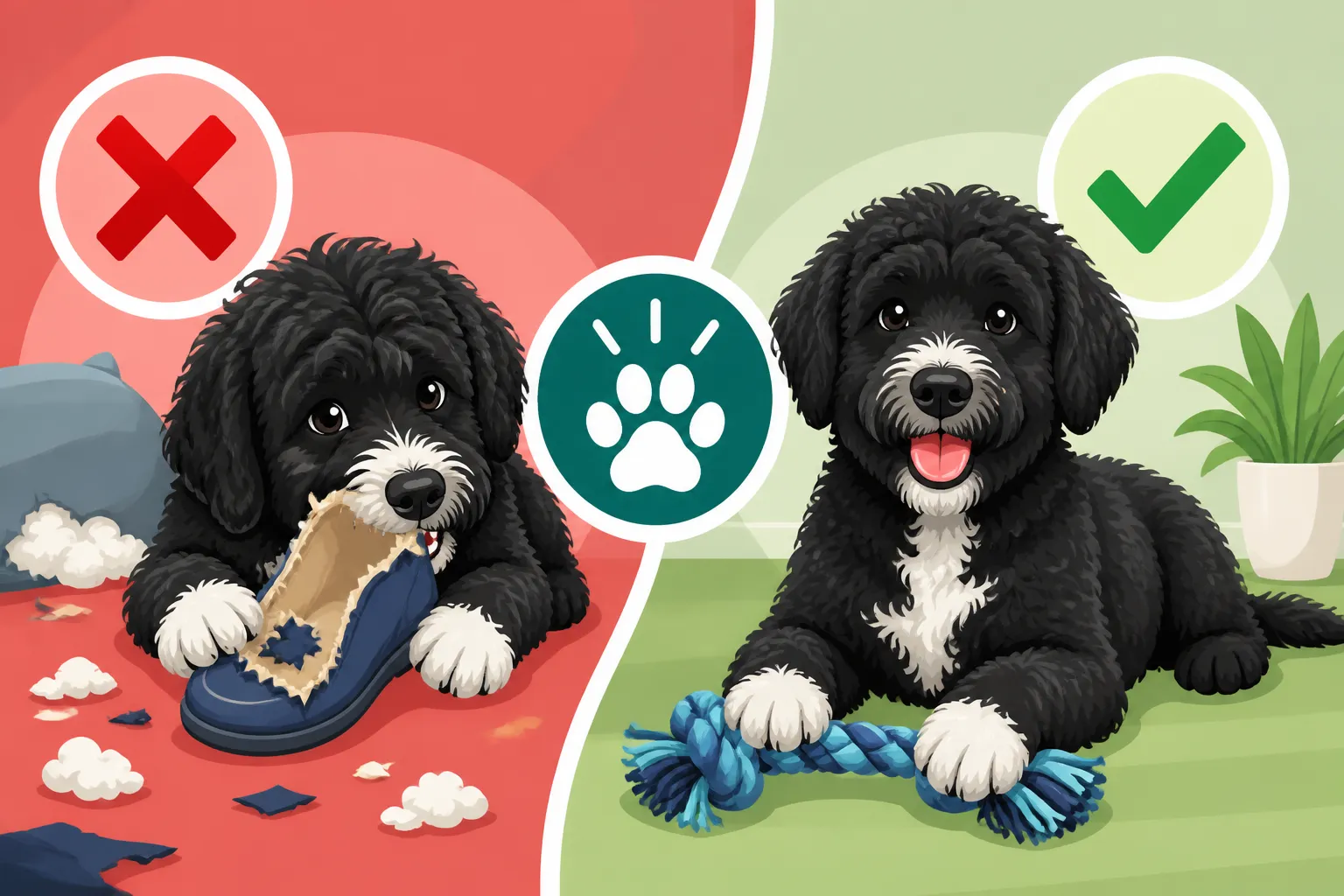
It might seem logical to give your Portuguese Water Dog an old sock or a worn-out shoe as a chew toy – after all, they love to chew fabric and leather, right? Wrong! This is a recipe for disaster and creates immense confusion for your dog.
By giving them your old clothes or shoes, you're essentially telling them that these types of items are acceptable to chew. They can't distinguish between your old, tattered sneaker and your brand-new, expensive leather loafers. To them, a shoe is a shoe. This blurs the lines and makes it nearly impossible for them to learn what's appropriate and what's not. Stick to designated dog chew toys that are distinctly different from household items. Save your old clothing for donation, not for your PWD's chew time.
Not Providing Enough Variety or Durability in Toys
As mentioned earlier, Portuguese Water Dogs are intelligent and can be powerful chewers. If you provide them with only one type of toy, or toys that are too flimsy, you're setting yourself up for failure. Dogs, like people, get bored with the same old thing, and a PWD will quickly destroy a low-quality toy, which can lead to them looking for other, less appropriate items to chew.
Invest in a variety of durable chew toys. Look for different textures and shapes, and rotate them regularly. If your PWD is a super chewer, focus on toys designed for aggressive chewers. Check reviews online, perhaps on Amazon, to see what other power-chewer owners recommend. A lack of variety can lead to boredom, and a lack of durability means they'll tear through their "allowed" toys too quickly and then move on to your furniture. Remember, the goal is to satisfy their chewing instinct appropriately, not just to momentarily distract them.
Disclaimer
This article is for general informational purposes only and does not constitute professional advice. Laws, prices and regulations vary by location and change over time. Consult a qualified professional for guidance on your specific situation.