What a Portuguese Water Dog Puppy Should Weigh by Month
Bringing a Portuguese Water Dog puppy home is such an exciting time, but it’s also natural to worry about whether they're growing just right. Many new owners find themselves constantly wondering if their little water dog is hitting all the right milestones, especially when it comes to their weight. This guide is here to walk you through what to expect with your Portuguese Water Dog puppy's growth, offering a month-by-month look at typical weights and how to ensure your furry friend is thriving.
Understanding Portuguese Water Dog Growth Patterns
Watching a tiny Portuguese Water Dog puppy transform into a robust, energetic companion is a true marvel. But it's not a perfectly linear journey, and understanding the general patterns of their growth can help ease some of those new-puppy anxieties. They don't just add a fixed amount of weight every week; it's a dynamic process with distinct phases.
The Rapids of Puppyhood: Rapid Initial Growth
From the moment they're born, Portuguese Water Dog puppies are on a fast track. For the first few weeks and even months, their growth seems incredibly rapid. Think about it: they go from a tiny, helpless creature to a wobbly, then bounding, little dog in what feels like the blink of an eye! This initial burst of growth is crucial for developing strong bones, muscles, and organs. During this time, you'll notice significant changes week by week, sometimes even day by day. Their bodies are soaking up nutrients and converting them into size and strength at an astonishing rate. This phase demands high-quality nutrition to fuel such intense development, and any hiccups in diet or health can show up quickly on the scale. Good breeders monitor their puppies closely during this period, ensuring each one gets a fair share and is gaining appropriately.
The Slowing Tide: Gradual Maturation
Just as quickly as they seem to burst onto the scene, the rapid growth phase eventually starts to slow down. Around six to eight months, while they might still be gaining height and some muscle mass, the dramatic weekly changes become less pronounced. This "slowing tide" doesn't mean they've stopped growing entirely, but rather that their body is now focusing more on consolidation and filling out, rather than just getting taller or longer. Most Portuguese Water Dogs will reach their full height somewhere between 10 to 14 months, though they might continue to add muscle and breadth until they are two years old. It’s during this period that their playful, awkward puppy bodies start to morph into the powerful, agile physique of an adult Portuguese Water Dog. It’s interesting to note that even after reaching their full stature, some individuals, particularly males, can continue to mature and fill out for another year or so. If you're wondering The Age a Portuguese Water Dog Reaches Full Weight, remember it's a process that spans months, not just weeks, and can vary between individuals.
Puppy Weight by Month: A General Guide
It's natural to want a clear roadmap for your Portuguese Water Dog puppy's growth, especially when you're diligently tracking their progress. While every puppy is unique, having a general idea of typical weight ranges can be incredibly reassuring and help you spot any significant deviations. Remember, these are averages, and your puppy might be a little above or below without cause for concern, as long as they are otherwise healthy and energetic.
Charting the Course: Average Weight Ranges
Below is a general guideline for what you might expect your Portuguese Water Dog puppy to weigh as they grow. This table gives you a snapshot of typical ranges for both males and females, keeping in mind that males generally mature into larger adults than females.
| Age (Months) | Male Weight Range (lbs) | Female Weight Range (lbs) |
|---|---|---|
| 1 | 8-12 | 6-10 |
| 2 | 15-20 | 12-17 |
| 3 | 25-35 | 20-30 |
| 4 | 35-45 | 28-38 |
| 5 | 40-50 | 32-42 |
| 6 | 45-55 | 35-45 |
| 7 | 50-60 | 38-48 |
| 8 | 55-65 | 40-50 |
| 9 | 58-68 | 42-52 |
| 10 | 60-70 | 43-53 |
| 11 | 60-70+ | 44-54+ |
| 12 | 60-70+ | 45-55+ |
Please use this table as a rough guide, not a rigid rulebook. Just like human children, puppies have growth spurts and plateaus. What’s most important is a consistent, healthy upward trend. Don't panic if your puppy isn't exactly in the middle of these ranges every single month. Your veterinarian will be able to tell you if your puppy's individual growth curve is healthy. Eventually, your PWD will settle into What an Adult Portuguese Water Dog Should Weigh, but getting there is a gradual journey.
Factors Influencing a Puppy's Weight
A puppy's weight isn't just about their age; it's a complex interplay of several factors. Understanding these can help you manage your puppy's growth and overall health effectively.
First and foremost, genetics play a huge role. Just like in people, some lines of Portuguese Water Dogs are naturally bigger or smaller than others. If your puppy comes from parents who are on the smaller side of the breed standard, it's very likely your puppy will follow suit, even if they eat the same amount as a puppy from larger parents. A good breeder can usually give you an idea of the typical size and weight range of their adult dogs, offering clues about your puppy's likely mature size.
Next, nutrition is absolutely paramount. A puppy needs a diet specifically formulated for growth, rich in appropriate levels of protein, fats, vitamins, and minerals. Feeding an adult dog food to a puppy can lead to deficiencies, while feeding too much or too little of even the right puppy food can impact their growth. It's crucial to choose a high-quality puppy food and follow the feeding guidelines, adjusting as needed based on your individual puppy's activity level and metabolism. Brands like Chewy offer a wide variety of reputable puppy food brands, making it easy to find something that suits your PWD. Be mindful of not overfeeding, as rapid growth, especially in larger breeds, can sometimes contribute to developmental orthopedic issues. This is why many vets will tell you Why a Portuguese Water Dog Puppy Should Grow Slowly.
Exercise levels also factor in. A highly active Portuguese Water Dog puppy, always on the go, will burn more calories than a more sedate one, even if they are from the same litter. While PWDs are active, appropriate exercise is key for bone and muscle development without overstressing developing joints. Too much strenuous, high-impact exercise at a very young age can be detrimental.
Finally, general health and environment are crucial. A puppy battling parasites, infections, or other health issues might not gain weight as expected. Stressful environments can also impact their appetite and overall well-being, indirectly affecting growth. Regular vet check-ups are vital to catch and address any underlying health problems promptly. It's also worth considering When a Portuguese Water Dog Needs Large Breed Puppy Food as they approach their adolescent stage, to ensure they're getting the right balance for their maturing body.
Why Monitoring Weight Is More Than Just Numbers
Keeping an eye on your Portuguese Water Dog puppy's weight isn't about hitting an arbitrary target; it's a powerful tool for understanding their overall health and well-being. The numbers on the scale, when viewed consistently over time, can tell a silent story about what's happening inside their growing bodies. It's an active way to participate in their preventative care.
Early Detection of Health Concerns
One of the most critical reasons to monitor your puppy's weight is its role in the early detection of potential health concerns. A sudden drop in weight, a noticeable plateau in growth where there should be steady gain, or even an unexpectedly rapid increase can be warning signs. For instance, if your active, hungry PWD puppy suddenly starts losing weight or simply stops gaining for more than a week, it could indicate anything from intestinal parasites to a less obvious underlying illness that needs veterinary attention. Portuguese Water Dogs, like all breeds, can be prone to certain conditions, and changes in weight can be one of the first visible clues. Keeping track, perhaps even Weighing a Portuguese Water Dog Puppy Every Week for the first few months, allows you to notice subtle shifts that might otherwise be missed. This consistent data can give your veterinarian valuable information, helping them to diagnose problems sooner rather than later. Pay close attention to Signs a Portuguese Water Dog Puppy Is Not Thriving, and remember that weight changes are often at the top of that list.
Preventing Over or Underfeeding
Another significant benefit of regular weight monitoring is to help you fine-tune your puppy's diet and prevent the pitfalls of either overfeeding or underfeeding. It's a delicate balance; you want your puppy to grow robustly, but not too quickly or too heavily.
Underfeeding can lead to stunted growth, nutrient deficiencies, and a lack of energy. A constantly hungry or lethargic puppy, even if eating, might not be getting enough, or the food isn't nutrient-dense enough for their active lifestyle. On the other hand, overfeeding can be equally detrimental, especially for a developing Portuguese Water Dog. Excessive weight gain puts undue stress on their growing joints, potentially exacerbating issues like hip or elbow dysplasia later in life. It can also lead to a host of other health problems, including diabetes and heart issues, down the line.
By regularly weighing your puppy and comparing it to the general growth chart (and, more importantly, to your vet's assessment of their ideal body condition), you can adjust their food portions accordingly. If they're gaining too quickly, you might need to slightly reduce their intake. If they're lagging, you might need to increase it or consider a more calorie-dense food. Sometimes, simply changing the brand or type of food can make a big difference. Services like Ollie can provide portion-controlled, fresh food that can be tailored to your puppy's specific caloric needs as they grow, taking some of the guesswork out of feeding. Don't just blindly follow the bag's recommendations; always observe your individual puppy and adjust. This careful management during puppyhood sets the foundation for a healthy adult weight, impacting everything from their energy levels to How Many Cups a Day an Adult Portuguese Water Dog Eats when they're fully grown. It also directly influences What a Portuguese Water Dog Puppy Eats at Four Months and beyond.
Beyond the Scale: Assessing Overall Puppy Health
While the numbers on the scale provide valuable data points, a healthy Portuguese Water Dog puppy is much more than just a weight figure. It’s crucial to step back and look at the whole picture, using your eyes and hands to assess their overall well-being. This holistic approach ensures you’re not just chasing numbers but truly nurturing a thriving companion.
The Eye Test: What to Look For Visually
When you glance at your Portuguese Water Dog puppy, what do you see? This "eye test" is about more than just their size; it's about their body condition, energy, and zest for life. A healthy PWD puppy should have a playful sparkle in their eyes and an eager bounce in their step.
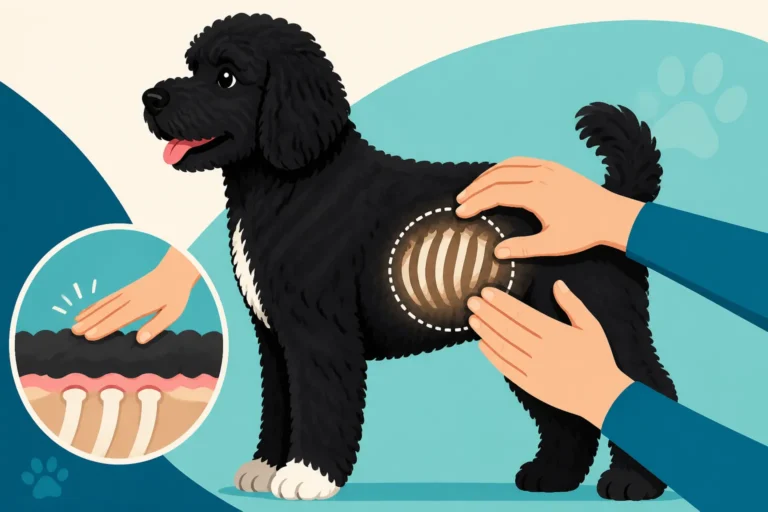
Body Condition Scoring is a visual and tactile assessment that helps you determine if your puppy is at an ideal weight, regardless of what the scale says. You should be able to easily see a distinct waist when looking down at your puppy from above – it shouldn't be a straight line from ribs to hips. When looking from the side, their abdomen should tuck up slightly behind the rib cage. Their coat should be shiny and thick, characteristic of the breed, without any dry patches or excessive shedding (beyond normal puppy coat changes). Their energy levels should be appropriate for their age – playful and energetic, but also capable of settling down for naps. A puppy that's constantly lethargic or hyperactive could be signaling an imbalance.
One common pitfall with Portuguese Water Dogs is their thick, dense coat, which can sometimes obscure their true body condition. How a Portuguese Water Dog's Coat Hides Weight Loss (or gain!) is a real concern. You might think they look robust, but underneath all that fluff, they could be underweight or overweight. This is why the hands-on check is so vital. If your puppy seems consistently low on energy, despite good food and rest, or if their coat seems dull, these are visual cues that something might be off, even if their weight seems to be in the "normal" range.
The Hands-On Check: Feeling for Healthy Growth
To truly assess your Portuguese Water Dog puppy's condition, you need to get your hands on them. This tactile examination complements the visual cues and the scale, giving you a complete picture of their growth and health.
Start by gently running your hands along their sides. You should be able to feel their ribs easily, almost like the knuckles on your hand, without them being sharply protruding like the back of your hand. If you have to press firmly to feel them, your puppy might be carrying too much weight. Conversely, if the ribs feel very prominent with little to no padding over them, your puppy might be underweight. This gentle touch allows you to feel what their dense coat might be hiding. Learning How to Feel a Portuguese Water Dog's Ribs Under the Coat is an invaluable skill for any PWD owner.
Next, feel along their spine. The vertebrae should be discernible but not sharply protruding. A prominent, bony spine is often a sign of being too thin. You should also feel for good muscle development over their shoulders, hips, and thighs. A healthy, active puppy will have firm, well-developed muscles. If the muscles feel soft or wasted, it could indicate undernourishment or a lack of appropriate exercise. Pay attention to any lumps, bumps, or tender spots during this check – these are things you should always mention to your vet. Regular hands-on checks not only help you monitor health but also get your puppy comfortable with being handled, which is great for vet visits and grooming sessions.
When to Consult Your Vet About Puppy Weight
While you're doing your best to monitor your Portuguese Water Dog puppy's growth, it’s absolutely vital to remember that your veterinarian is your primary partner in their health journey. Knowing when to simply observe and when to pick up the phone can make all the difference. Don't hesitate to reach out if you have concerns; that's what they're there for!
Red Flags: Signs of Worry
There are certain scenarios regarding your puppy's weight that should always prompt a call or visit to your veterinarian. These are the "red flags" that indicate something might be genuinely amiss and requires professional assessment:
- Significant or Sudden Weight Loss: If your puppy, who was previously gaining steadily, suddenly starts losing weight or shows no gain for an extended period (more than a week or two), it's a cause for concern. This could be indicative of parasites, an infection, gastrointestinal issues, or other underlying illnesses.
- Failure to Gain Weight: Even if they aren't losing weight, a puppy that consistently falls far below the expected weight range for their age and shows no consistent upward trend on the growth chart should be evaluated. This can signal nutritional deficiencies or metabolic problems.
- Excessive Weight Gain: While less commonly seen as an immediate crisis, a puppy gaining weight too rapidly or becoming visibly overweight at a young age needs attention. As discussed earlier, rapid growth and excess weight put enormous strain on developing bones and joints, which can have long-term orthopedic consequences for a breed like the Portuguese Water Dog.
- Accompanying Symptoms: If weight issues are combined with other symptoms like lethargy, persistent vomiting or diarrhea, a dull coat, poor appetite, difficulty breathing, or changes in behavior, seek immediate veterinary advice. These combined signs are often a stronger indicator of a problem than weight alone.
Remember, you know your puppy best. If something just feels "off" to you, even if you can't pinpoint why, trust your instincts and reach out to your vet. It's always better to be safe than sorry.
Regular Check-ups and Growth Discussions
Beyond addressing specific concerns, routine veterinary check-ups are fundamental to ensuring your Portuguese Water Dog puppy is growing healthily. These scheduled visits are not just for vaccinations; they are critical opportunities to discuss your puppy's growth, diet, and overall development with a professional.
During these visits, your vet will perform a thorough physical examination, palpating your puppy's ribs and spine, checking their joints, and assessing their overall body condition. They will also weigh your puppy on a reliable scale and record it, allowing them to track your puppy's individual growth curve against healthy parameters. This is far more accurate than trying to make sense of generic charts at home. Your vet can provide tailored advice on feeding, exercise, and any preventative care needed, ensuring your PWD gets the best start in life. They can confirm if your puppy is indeed tracking well on their growth curve or if adjustments are needed. For instance, part of their early life care includes The Vaccination Schedule a Portuguese Water Dog Puppy Needs, and these visits are perfect for discussing everything from diet to training. Don't hesitate to bring your weight logs and any questions you have to these appointments; your vet is your best resource for navigating the exciting, sometimes challenging, journey of raising a healthy Portuguese Water Dog puppy.
Disclaimer
This article is for general informational purposes only and does not constitute professional advice. Laws, prices and regulations vary by location and change over time. Consult a qualified professional for guidance on your specific situation.