Which Stretch of Coast the Portuguese Water Dog Worked
Many Portuguese Water Dog owners know their beloved companions hail from Portugal, but the specifics of which particular stretch of coast shaped their ancestors, and the gritty details of the work they did there, often remain a mystery. It's difficult to truly appreciate the depth of your dog's heritage without understanding the very coastline that forged their intelligence, athleticism, and unyielding bond with humans. This guide will take you on a journey back in time, revealing the historic coastal region in Portugal where these incredible dogs honed their skills, and exploring the geographical and cultural tapestry that defined their original, indispensable purpose.
The Algarve Coast: Cradle of the Cão de Água
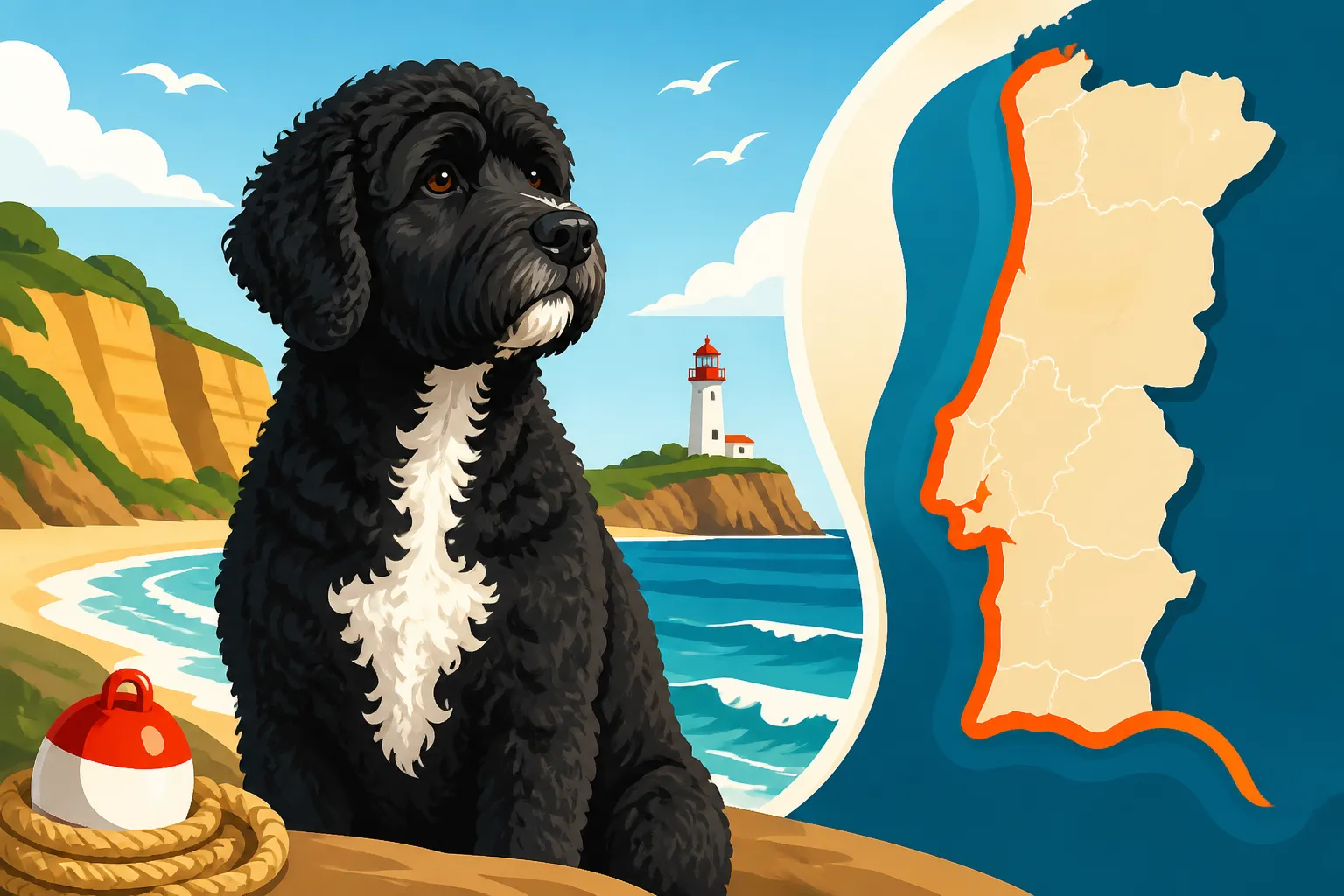
When we talk about the historical home of the Portuguese Water Dog, we're not just talking about Portugal in general; we're focusing our lens primarily on the stunning, often rugged, and always vibrant Algarve coast. This southernmost region of Portugal, with its unique blend of geography and maritime culture, was the crucible in which the breed's distinctive traits were forged. It's a place where the land meets the Atlantic with dramatic flair, and where fishing traditions run as deep as the ocean itself.
A Landscape of Fishing Villages and Rough Seas
Imagine a coastline defined by towering ochre cliffs, interspersed with hidden sandy coves and small, bustling fishing villages like Olhão, Faro, and Portimão. The waters here, while beautiful, could also be treacherous. The Atlantic isn't always a gentle giant; it can whip up quickly, creating challenging conditions for small fishing boats and the men who depended on them. This was the natural stage for the Portuguese Water Dog. Their work wasn't confined to placid harbors; it extended into the open, often rough, sea, where a steady paw, an keen eye, and an unshakeable spirit were absolute necessities. The very structure of the coastline, with its countless inlets and rocky outcrops, meant that fishing methods were often small-scale, involving nets, lines, and traps set close to shore or from small boats. These were not industrial trawlers; they were vessels that required hands-on, often improvisational, assistance—exactly what a clever, agile dog could provide. This constant interaction with a dynamic environment demanded a dog that was physically robust and mentally sharp, capable of navigating varied terrain both on land and in the water.
The Historic Fishing Fleet of Portugal
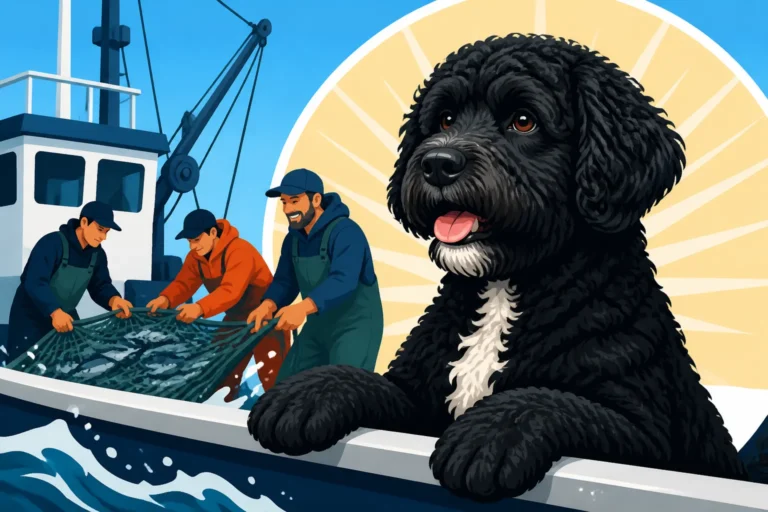
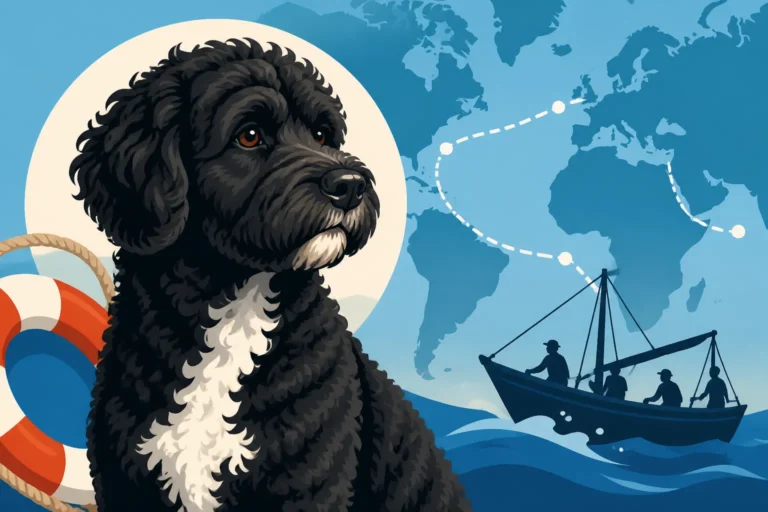
The Portuguese fishing fleet of old was a sight to behold, a collection of traditional wooden boats, each with its own character, heading out daily into the vast Atlantic. These weren't just vessels; they were extensions of the fishermen's lives, and their dogs were an undeniable part of the crew. The relationship between the cão de água – "dog of water" – and the fisherman was one of deep mutual reliance. The dogs weren't pets in the modern sense; they were working partners, their skills directly contributing to the day's catch and the crew's safety. They lived and breathed the rhythm of the sea alongside their human companions. While we often think of "fishing" as a solitary pursuit for dogs today (like retrieving a thrown bumper), for the Portuguese Water Dog, it was a complex, collaborative effort. They were involved in everything from guiding fish into nets to retrieving lost equipment. Unfortunately, as technology advanced and engines replaced sails, the need for these canine deckhands diminished significantly. It's a poignant chapter in their history, reminding us How Engines Ended the Portuguese Water Dog's Job. The traditional methods faded, and with them, the working roles that had defined the breed for centuries.
The Dog's Role in Algarve Fishing Operations
It's easy to romanticize the idea of a dog working on a fishing boat, but the reality was a physically demanding, often dangerous, and critically important set of tasks. The Portuguese Water Dog wasn't just there for companionship; they performed specific, vital functions that directly impacted the livelihood and safety of the fishermen. Their intelligence and agility were paramount, distinguishing them from other breeds.
Retrieving Lost Gear and Herding Fish
Imagine a busy day at sea: nets are being hauled, lines are being cast, and suddenly, a crucial piece of equipment—a gaff, a loose net float, or even a fish that has slipped the hook—goes overboard. In the choppy waters of the Atlantic, retrieving such items from a small boat could be challenging, if not impossible, for a human. This is where the Portuguese Water Dog truly shined. With their incredible swimming ability and keen eyesight, they would dive in, locate the lost item, and bring it back to the boat. This wasn't just a game of fetch; it was critical recovery work. Their webbed feet, strong rudder-like tail, and dense, water-repellent coat made them perfectly suited for these aquatic missions. They could swim for hours without succumbing to the cold or fatigue. It wasn't just about retrieving, either. One of the most fascinating aspects of their historical role was "herding fish." This meant that when nets were being drawn in, the dogs would often dive into the water, sometimes even under the boat, creating disturbances and splashes that would drive escaping fish back into the nets. This required an almost intuitive understanding of fish behavior and a willingness to work collaboratively with their human partners. It was a testament to their innate intelligence and their deep connection to the fishermen's efforts. The dog became an extension of the crew, a vital, four-legged member who contributed directly to the success of the catch. They would even swim out to retrieve specific fish that had managed to escape the net but were still within reach, ensuring minimal loss for the crew. For more on this, you can explore Whether a Portuguese Water Dog Dived for Lost Gear.
Communication Between Boats and Shore
In an era before reliable radio communication, or even when conditions made it impractical to shout across distances, the Portuguese Water Dog served as a living messenger service. This wasn't just a cute trick; it was a practical necessity that underscored the deep trust and communication between dog and fisherman. Imagine a scenario where a small fishing boat needed to relay information to another boat further out, or perhaps send a message to the shore about a successful catch, changing weather, or even an urgent need for supplies. A small note, a pouch of money, or even just a signal could be attached to the dog's collar, and with a command, the dog would swim the distance, deliver the message, and often return to its original boat. This required immense intelligence, focus, and an incredible memory for locations and commands. The dogs had to be trustworthy, not just to complete the journey but also to ensure the message or item wasn't lost or damaged. This task speaks volumes about the breed's cognitive abilities and their eagerness to please their handlers, even when working independently. They were the original maritime postal service, connecting isolated vessels and ensuring vital information flowed freely. It’s hard to imagine the sheer dependence these fishermen had on their canine partners for such critical tasks, a reliance that truly built an unbreakable bond. To dive deeper into this specific role, check out Whether a Portuguese Water Dog Carried Messages Between Boats.
Why the Algarve's Conditions Shaped the Breed
The unique environment of the Algarve, both geographical and cultural, didn't just provide a stage for the Portuguese Water Dog's work; it actively shaped their physical and temperamental characteristics. These weren't random traits; they were direct evolutionary adaptations to the challenges and demands of their maritime life.
Adaptations for Cold and Warm Waters
While the Algarve is known for its sunny climate, the Atlantic Ocean can be surprisingly cold, especially during the winter months or far from shore. The Portuguese Water Dog's unique single coat, which can be either curly or wavy, is a marvel of natural engineering, perfectly designed for these fluctuating conditions. This dense, non-shedding coat acts like a wetsuit, providing excellent insulation in cold water while still allowing for efficient drying on land. It protects them from the elements, whether it's the chill of the deep sea or the harsh sun reflecting off the water. Beyond their coat, their physical build is a testament to their aquatic heritage. Their strong, muscular bodies are built for endurance swimming, and their powerful, rudder-like tail is crucial for steering and propulsion in strong currents. The extraordinary webbing between their toes, which extends almost to the tip of each digit, significantly increases their paddle power, making them incredibly efficient swimmers. This webbing is a characteristic that truly sets them apart and is a clear indicator of their profound connection to water. It's no wonder that even today, modern PWDs have an insatiable desire for water and can swim for extended periods without tiring. Understanding this history helps us appreciate why a robust, water-repellent coat and webbed feet are not just breed quirks, but vital adaptations. You can learn more about their unique physical attributes in Why a Portuguese Water Dog's Tail Works as a Rudder and How Much a Portuguese Water Dog's Webbing Adds to Its Speed.
Intelligence and Independence: A Necessity
Working alongside fishermen on small boats meant the Portuguese Water Dog often had to perform tasks at a distance from their human handler, sometimes out of sight or earshot. This demanded a high level of independent thought and problem-solving. They couldn't wait for a direct command for every single action; they had to anticipate needs, react to dynamic situations, and make intelligent decisions on their own. This critical need for self-reliance in their work environment fostered the incredible intelligence and, yes, sometimes stubborn independence that modern PWD owners know and love (or are occasionally frustrated by!). The dogs were expected to retrieve a dropped item, herd a school of fish, or deliver a message with minimal instruction, relying on their keen observation and understanding of the task at hand. This wasn't a breed bred for rote obedience in a controlled environment; it was a breed developed for smart, proactive collaboration in a chaotic, unpredictable setting. This historical context provides invaluable insight into why positive reinforcement training works best with these dogs, and why they thrive when given "jobs" or activities that engage their minds, not just their bodies. They are thinkers, not just doers, a trait directly inherited from their working ancestors. It also means that training a Portuguese Water Dog can be a unique experience; they were Training a Portuguese Water Dog That Was Bred to Think for Itself. Their eagerness to learn is matched only by their cleverness in finding their own solutions if they deem them better!
The Legacy of the Algarve on Today's PWD
The echoes of the Algarve coast and its fishing traditions are not just historical footnotes; they are vibrantly alive in every Portuguese Water Dog today. Understanding this heritage is key to providing a fulfilling life for these intelligent and active companions.
Enduring Traits in Our Modern Companions
Look at your Portuguese Water Dog today, and you're seeing a direct descendant of those intrepid canine deckhands from the Algarve. Their boundless energy, their intense intelligence, their deep connection to their human family, and, of course, their inherent love for all things water are not accidental. They are the enduring traits refined over centuries of demanding work on the open sea. When your PWD excitedly plunges into a lake, or meticulously retrieves a toy from the deepest end of the pool, they're not just playing; they're fulfilling an ancient, ingrained instinct. Their desire to be constantly by your side, to participate in every family activity, and to be engaged mentally and physically, is a direct reflection of their need to be part of the "crew." Providing outlets for these natural behaviors—whether it's through water sports, obedience training, or simply long, engaging walks—is crucial for their well-being. A PWD that isn't given a "job" or sufficient mental and physical exercise can easily become bored or destructive, a clear sign that their ancient working instincts are crying out for an outlet. Many owners find immense joy in activities like Dock Diving and Water Trials With a Portuguese Water Dog, which are modern-day reflections of their ancestral work. Even simple games of fetch in a park, especially if it involves a splash pad or a creek, connect them to their roots. This innate drive is what makes them such a captivating breed, and understanding it helps us to be better guardians for these remarkable dogs.
Preserving the Heritage
While the traditional fishing boats of the Algarve may largely be a thing of the past, the spirit of the Portuguese Water Dog lives on, thanks to dedicated breeders and enthusiasts who have worked tirelessly to preserve the breed. They faced significant challenges, as the breed came perilously close to extinction at one point, a stark reminder found in The Portuguese Water Dog Was Almost Gone by the 1930s. Today, responsible breeders focus not only on health and temperament but also on maintaining the physical and mental attributes that defined the original working dogs. For us, as modern owners, honoring this heritage means more than just appreciating their history; it means actively providing opportunities for our PWDs to engage their innate abilities. This could be anything from formal water training to informal swimming sessions, from competitive dog sports to daily puzzle toys and rigorous walks. It's about recognizing that beneath the curly or wavy coat lies a sharp mind and an athletic body designed for work. Finding the right tools and supplies to support an active PWD is also part of the modern commitment. Online retailers like Chewy offer a wide range of specialized gear, from durable retrieving toys that float to high-energy dog food formulas, all designed to meet the demands of this active breed. Whether you're looking for a new waterproof leash or a grooming tool designed for their unique coat, resources like Chewy can help you equip yourself to care for a true working dog at heart. Remembering their origins helps us ensure that the Portuguese Water Dog remains a vibrant, healthy, and engaged companion for generations to come, embodying all the qualities that made them indispensable on the historic Algarve coast.
Here's a quick look at how the Algarve shaped the PWD:
| Aspect of Algarve | Impact on Portuguese Water Dog |
|---|---|
| Rugged Coastline | Fostered agility, sure-footedness on various terrains. |
| Choppy Seas | Developed powerful swimming, endurance, and robust constitution. |
| Fishing Fleet | Cultivated strong retrieve drive, intelligence, human-dog bond. |
| Communication Needs | Enhanced problem-solving, independence, and responsiveness from a distance. |
| Variable Water Temps | Shaped unique, insulating, and fast-drying coat. |
| Decline of Traditional Fishing | Led to near extinction, highlighting the importance of preservation efforts. |
These dogs were bred for an extraordinary life at sea, and their modern-day descendants still carry that incredible legacy. It's truly amazing to see What a Portuguese Water Dog Was Bred to Do on a Boat come alive in our homes today, even if their "boat" is now our living room floor and their "fish" is a favorite toy from Chewy. Understanding the historical context of What a Portuguese Water Dog Needs Every Day and How Naturally a Portuguese Water Dog Swims deepens the bond we share with these magnificent animals.
Disclaimer
This article is for general informational purposes only and does not constitute professional advice. Laws, prices and regulations vary by location and change over time. Consult a qualified professional for guidance on your specific situation.