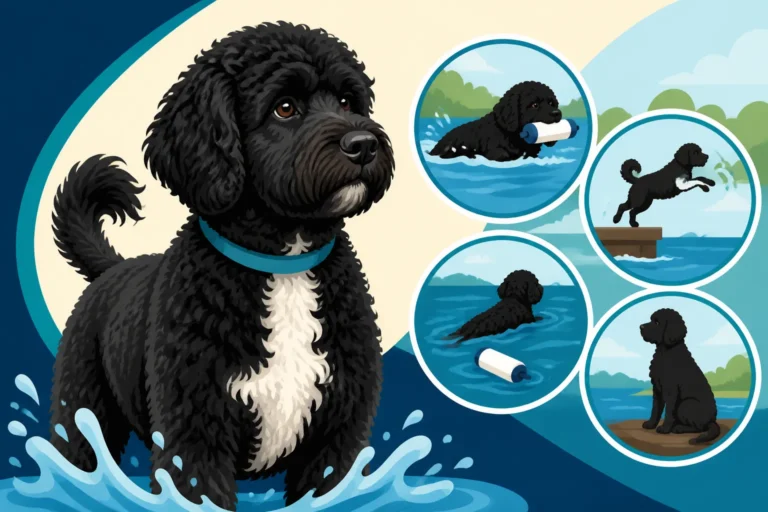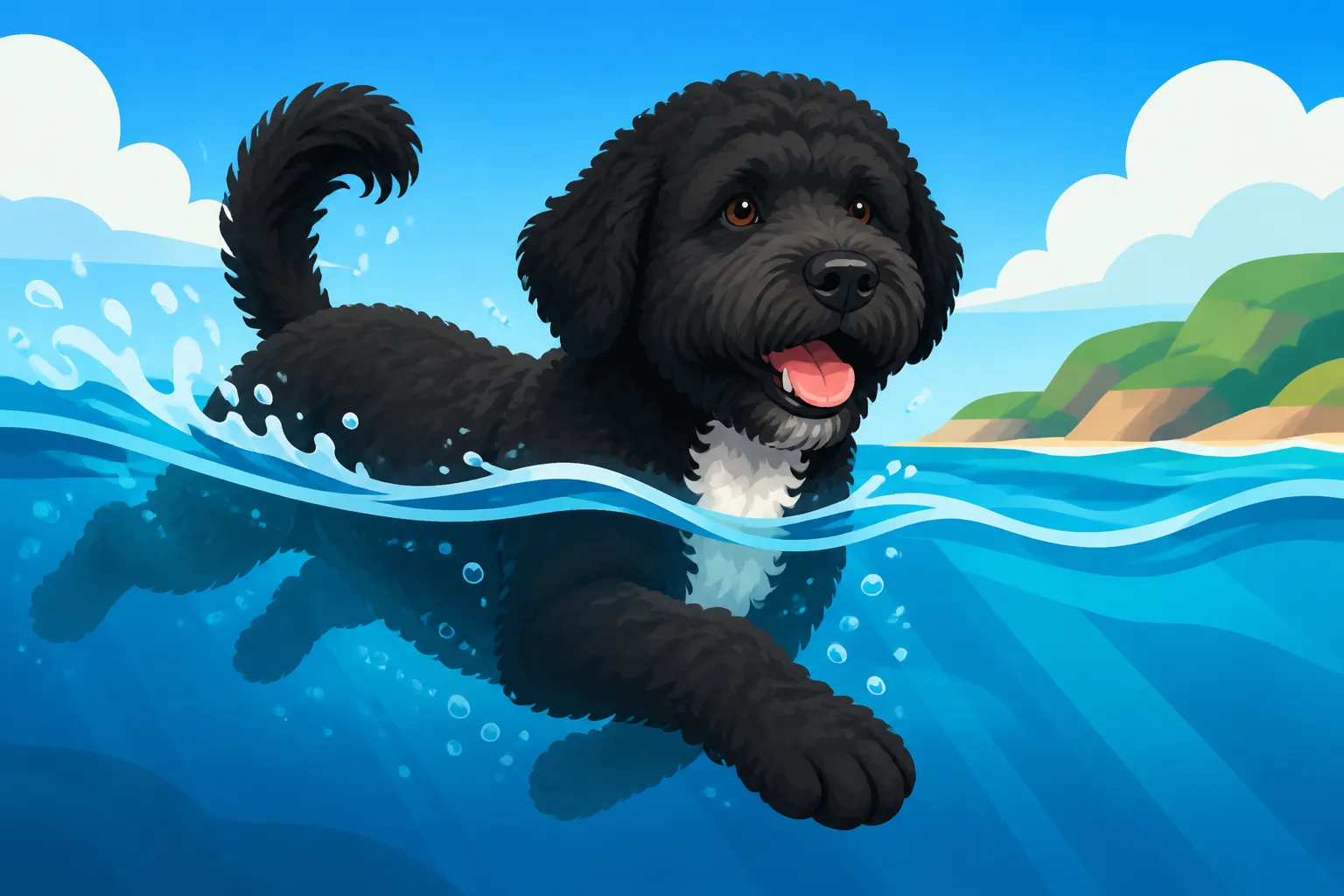
How Naturally a Portuguese Water Dog Swims
It's a common question among prospective Portuguese Water Dog owners, and frankly, it's one of the breed's most defining characteristics: just how naturally does a Portuguese Water Dog take to the water? If you've ever seen a PWD in action, you'll know they have an undeniable affinity for anything wet. This guide will dive deep into the genetic predispositions, historical context, and practical considerations that explain why these incredible dogs are so at home in the water, and what that means for you as an owner.
The Historical Roots of a Water Dog
To truly understand why Portuguese Water Dogs are such phenomenal swimmers, we have to look back at their origins. These aren't just dogs that like water; they were literally bred for centuries to work in it. Their very existence is tied to the fishing villages along the coast of Portugal.
Centuries on the Fishing Boats
Imagine the rugged, windswept coastlines of Portugal, where fishing was not just a livelihood but a way of life. For generations, fishermen relied on their intelligent, strong, and highly agile dogs to assist them. These dogs weren't simply companions; they were vital crew members. They would retrieve lost tackle or broken nets, carry messages between boats, and even herd fish into nets. This was a demanding job, requiring stamina, courage, and an absolute mastery of the aquatic environment. A dog that shied away from the waves, even in the coldest weather, wouldn't have lasted long in that profession. The breed's entire development was shaped by this need, creating a dog whose body and mind are perfectly attuned to water work. It's truly fascinating to learn about What a Portuguese Water Dog Was Bred to Do on a Boat and How a Portuguese Water Dog Drove Fish Into a Net.
Physical Adaptations for Aquatic Life
Evolution, or in this case, selective breeding, has a remarkable way of shaping creatures to their environment. The Portuguese Water Dog is a prime example of this. Their bodies are masterpieces of aquatic engineering. From their strong, muscular build that allows for powerful propulsion, to their unique coat designed for insulation, every feature serves a purpose in the water. They possess a robust skeletal structure and deep chest, which is crucial for lung capacity, enabling them to stay submerged for short periods and maintain endurance during long swims. Their powerful hindquarters are like natural propellers, pushing them through the water with impressive speed and grace.
Instinct vs. Learning: The PWD's Relationship with Water
It's one thing to have the physical tools, but another to possess the intrinsic desire. With Portuguese Water Dogs, both are profoundly present, creating a creature that truly lives up to its name.
The Innate Drive to Enter Water
Most Portuguese Water Dogs exhibit an almost magnetic pull towards water from a very young age. It’s more than just enjoying a splash; it's a deep-seated instinct. You might notice your puppy, barely old enough to walk steadily, trying to dunk its head in its water bowl or excitedly pouncing on puddles. This isn't something you typically have to teach them; it's practically hardwired into their DNA. Of course, every individual dog is different, but the general predisposition is remarkably strong. Many owners report that their PWDs will actively seek out water – whether it's a lake, a pool, a sprinkler, or even a mud puddle after a rain shower. It's a joy to witness this natural enthusiasm, and it’s a big part of the breed’s charm.
Early Exposure and Positive Reinforcement
While the drive is often innate, positive early exposure can solidify a Portuguese Water Dog’s love for water and build confidence. You don't want to just toss a puppy into the deep end! Gentle introductions in shallow, calm water, accompanied by lots of praise and treats, are key. Start in a kiddie pool, or at the very edge of a calm lake or ocean, letting them explore at their own pace. Make it a fun, rewarding experience. If you’re working with a young puppy, consider an online training program like those offered by BAXTER & Bella, which emphasize positive reinforcement and foundational skills. These programs can help you build trust and confidence with your pup, making introductions to new experiences, like water, much smoother and more enjoyable for both of you. Remember, the goal is to make water a source of joy, not fear.
The Mechanics of a Portuguese Water Dog's Swim
What exactly makes a Portuguese Water Dog such a superior swimmer? It’s a combination of several unique physical characteristics working in harmony, honed over centuries of purposeful breeding.
Webbed Feet: More Than Just a Cute Detail
Perhaps the most iconic physical trait that aids their swimming prowess is their fully webbed feet. These aren't just partially webbed like some other breeds; a PWD's webbing extends almost to the end of their toes. Think of them as natural paddles. When they push through the water, these webbed feet create a larger surface area, allowing for much more efficient propulsion. This means they can move through water with less effort and greater speed than dogs without such extensive webbing. It's a truly remarkable adaptation, and it’s a key factor in How Much a Portuguese Water Dog's Webbing Adds to Its Speed. These feet are also tough, designed to withstand varied underwater terrain, from sandy bottoms to rocky seabeds.
The "Rudder" Tail and Powerful Body
Beyond their feet, the entire physique of a Portuguese Water Dog is designed for aquatic maneuverability. Their powerful, muscular bodies, particularly the strong hindquarters, provide incredible thrust. But the tail? That's their secret weapon for steering. Often described as a "rudder," the thick, strong tail is typically carried high and curls over their back when they're excited or actively swimming. This high-set, undocked tail acts like a fin, allowing them to make quick turns and maintain balance, even in choppy waters. It's fascinating how their tail aids in navigation, especially when you consider Why a Portuguese Water Dog's Tail Works as a Rudder during complex retrievals or when working alongside fishing nets.
The Water-Resistant Coat
The Portuguese Water Dog's coat is another unsung hero in its swimming ability. Unlike many breeds that have a double coat with a soft underlayer, PWDs have a single coat that comes in two distinct types: curly or wavy. This coat is dense and resilient, providing excellent insulation in cold water without becoming waterlogged and heavy. It's often described as "hypoallergenic" because it sheds minimally, but its primary function for the working dog was practical: to protect them from the elements and cold ocean temperatures. The texture of the coat, whether curly or wavy, is designed to repel water, allowing them to emerge from a swim relatively dry underneath and preventing their body temperature from dropping too quickly. This trait made them invaluable to fishermen who needed their dogs to work for extended periods in harsh conditions.
Common Misconceptions and Variances in Water Enthusiasm
While the breed is famous for its love of water, it's important to set realistic expectations. Not every single Portuguese Water Dog will instantly plunge into the ocean like a seasoned sailor.
Not Every PWD Is a Water-Obsessed Machine
It's true that the vast majority of Portuguese Water Dogs are naturally drawn to water, but it's not a universal guarantee. Just like people, individual dogs have unique personalities and preferences. Some may be instant water fanatics, while others might be more hesitant, especially if they haven't had positive early experiences. A puppy that was never properly introduced to water, or perhaps had a negative experience, might need a bit more coaxing and patience. It's important not to force a dog into water if they show genuine fear, as this can create a lasting aversion. Instead, focus on making it a positive, gentle introduction. You might also want to understand How Often a Portuguese Water Dog Should Swim to help manage their exposure appropriately without overdoing it.
Overcoming Initial Hesitancy
If your Portuguese Water Dog shows some initial reluctance, don't despair! Patience and positive reinforcement are your best friends. Start with very shallow water, perhaps a kiddie pool in your yard, or a calm, shallow edge of a lake. Toss in some highly prized, buoyant toys, or even just walk into the water yourself and encourage them to follow. Praise them lavishly for every step they take towards or into the water. Never push them in or drag them; this can be traumatizing. You could also try associating water with a favorite activity, like fetching. For puppies, understanding Teaching a Portuguese Water Dog Puppy to Enter Water is crucial, focusing on making it a fun and low-pressure experience. Investing in fun water toys that float well and are visible on the water can also help pique their interest. Look for durable, brightly colored options on Amazon that can withstand enthusiastic chewing and repeated exposure to water.
Safe Swimming Practices for Your Portuguese Water Dog
Even with a dog as naturally adept in water as a PWD, safety should always be your top priority. Accidents can happen, and proper precautions can prevent unfortunate incidents.
Essential Safety Gear
While Portuguese Water Dogs are strong swimmers, certain situations warrant a life jacket. If you're out on a boat, swimming in strong currents, or introducing a puppy to deeper water, a well-fitting dog life jacket is a non-negotiable piece of equipment. It provides extra buoyancy and often has a handle on the back, which is incredibly useful for lifting your dog back into a boat or guiding them in the water. Always ensure the life jacket fits snugly without impeding movement, and that the buckles and straps are secure. You can find a wide range of high-quality dog life jackets, with features like reflective strips and adjustable straps, on platforms like Amazon. It's good to know When a Portuguese Water Dog Needs a Life Jacket so you can be prepared for any aquatic adventure. Additionally, always check the water quality before letting your dog swim. Blue-green algae, strong currents, or sharp objects beneath the surface can pose serious risks.
Supervising Water Play
Just because they're natural swimmers doesn't mean you can leave your Portuguese Water Dog unsupervised around water. They can still get into trouble, just like any dog. They might become fatigued, get tangled in something underwater, or ingest too much water, especially in open bodies of water like lakes or oceans. Always keep a close eye on them, especially if they are swimming for extended periods or in unfamiliar environments. If you’re introducing them to a new swimming spot, assess the entry and exit points, and be aware of any potential hazards. Ensure they have access to fresh drinking water to prevent them from drinking too much lake or ocean water, which can lead to upset stomachs or more serious issues. The more you know about How Much Exercise a Portuguese Water Dog Needs, the better you can balance their physical activity with safe water play.
Beyond Casual Swims: Water Sports and the PWD
The natural swimming ability and strong drive of the Portuguese Water Dog make them excellent candidates for a variety of water sports, allowing them to truly shine and fulfill their working instincts.
Dock Diving and Water Trials
If your Portuguese Water Dog absolutely adores the water, you might consider engaging them in competitive water sports. Dock diving is a thrilling activity where dogs run off a dock and leap into a pool, competing for distance or height. PWDs, with their powerful jumps and love for retrieving, often excel at this. Water trials, on the other hand, are designed to test the breed's historical working abilities. These trials simulate tasks like retrieving articles from the water, swimming long distances, or even acting as "lifeguards" by pulling a dummy or a person to shore. These events provide an incredible outlet for their intelligence, athleticism, and innate water drive. Participating in such sports can deepen your bond with your dog and give them a profound sense of purpose. Delve into What Dock Diving Asks of a Portuguese Water Dog to see if it’s a good fit for your furry friend.
Building Confidence and Skill
Even if you don't plan on competing, structured water activities can be hugely beneficial for your Portuguese Water Dog. They provide immense physical and mental stimulation, burning off energy in a way that regular walks simply can't. Training for specific water skills, like retrieving an object from the middle of a pond or swimming alongside a paddleboard, can build their confidence and reinforce their natural talents. Use positive, reward-based methods, perhaps drawing on the principles you might learn from a positive reinforcement-focused training program like BAXTER & Bella, to keep these experiences enjoyable and engaging. Remember that consistent, positive training not only enhances their skills but also strengthens their confidence in all aspects of life. It’s also worth exploring Whether a Portuguese Water Dog Still Retrieves to understand their strong drive for fetch, which translates perfectly to water retrieval games.
| Trait | Description | Impact on Swimming |
|---|---|---|
| Webbed Feet | Toes connected by strong membranes. | Creates a larger surface area for powerful propulsion, increases speed and efficiency. |
| Powerful Tail | Thick, strong tail carried high, acts as a rudder. | Excellent for steering, balancing, and making quick turns in water. |
| Muscular Body | Strong hindquarters and deep chest. | Provides incredible thrust and endurance, good lung capacity. |
| Single Coat | Dense, curly or wavy, water-repellent, minimal shedding. | Offers insulation in cold water, prevents waterlogging, protects skin. |
| Innate Drive | Genetic predisposition and strong desire to enter and work in water. | Encourages eagerness for water activities, often self-initiating. |
Disclaimer
This article is for general informational purposes only and does not constitute professional advice. Laws, prices and regulations vary by location and change over time. Consult a qualified professional for guidance on your specific situation.