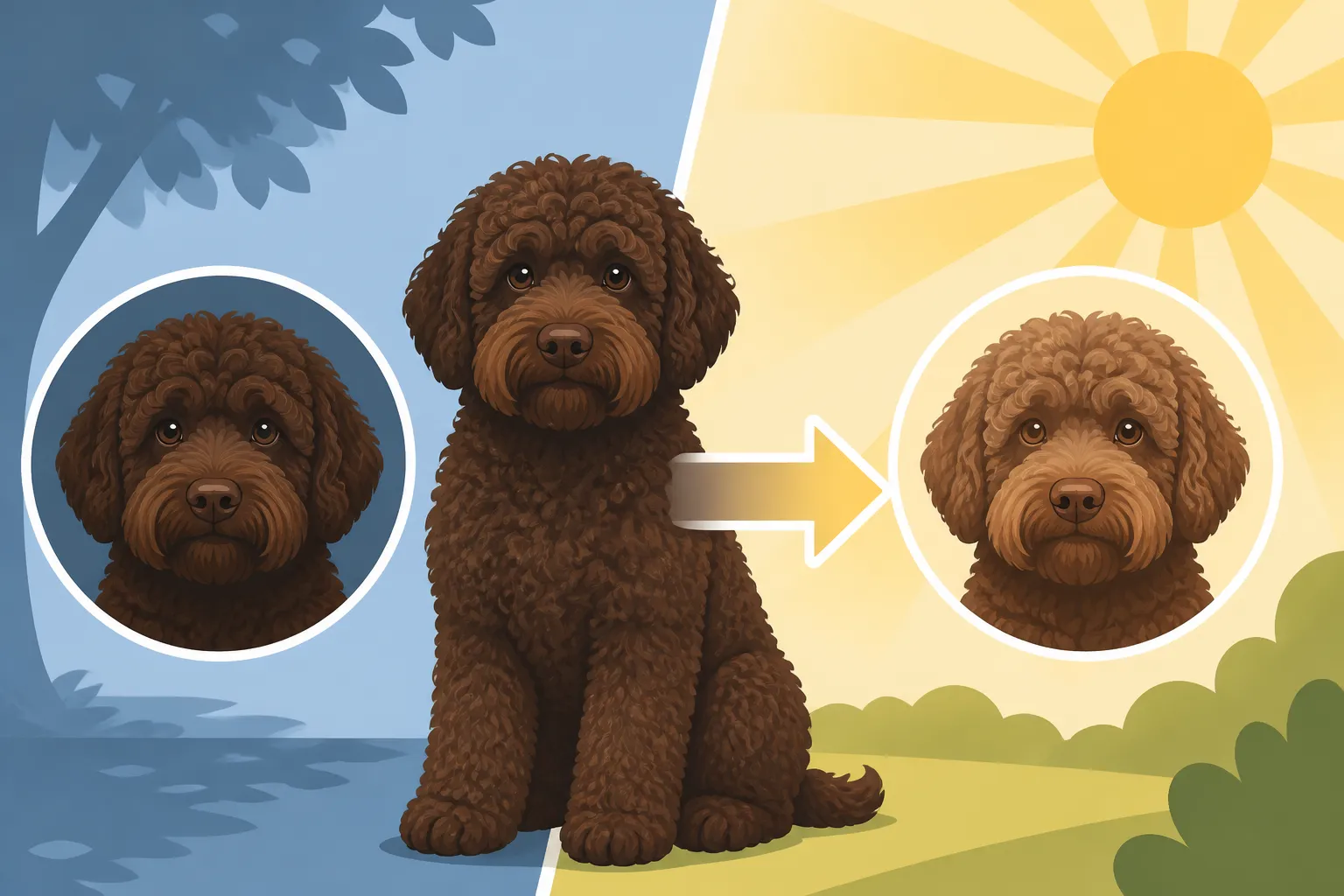
Whether a Brown Portuguese Water Dog Fades in Sun
A brown Portuguese Water Dog’s coat can look lighter, copperier, or reddish after sunny days, especially on areas that catch the most light. That change is often ordinary sun bleaching of the hair, but it can be hard to tell apart from puppy-coat changes, clipping, or a health issue. Here’s what fading can look like, how to protect the coat and skin, and when to ask your vet.
Can a brown Portuguese Water Dog’s coat fade in the sun
Why sunlight can lighten brown hair
Sunlight can gradually alter pigment in the hair shaft, making exposed brown coat look lighter or warmer in tone. The change may be easiest to notice on the back, top of the head, ears, or tail—areas that receive more direct light. A dog who spends long afternoons outdoors may show a more noticeable contrast than one who is usually in the shade.
It doesn’t happen at the same rate to every dog. Coat shade, time outdoors, season, grooming habits, and individual genetics all affect how visible the change is. One brown Portuguese Water Dog may develop a subtle sun-kissed look, while another appears much the same throughout the summer. A lighter-looking coat does not, by itself, mean the dog is unhealthy.
The change is in the colored hair, not necessarily the skin underneath. If your dog’s coat looks warmer in summer but the skin looks comfortable and there is no itching, redness, or unusual hair loss, sunlight may be a reasonable explanation. For more on the colors found in the breed, see Which Colors a Portuguese Water Dog Comes In.
What fading may look like
Sun-related lightening tends to show most on exposed parts of the coat. You might notice a brown back that looks reddish at the tips, or a tail that seems a shade lighter than the hair closer to the body. The effect can be gradual, so comparing the coat with older photos taken in similar lighting can help you judge whether it has truly changed.
It can also be misleading to compare wet and dry hair. A wet coat often looks darker, and differences in lighting, camera settings, or the dog’s haircut can make brown appear more or less intense. If the coat seems different after swimming, rinse it as appropriate and let it dry before deciding that the color has changed.
Brown is an accepted Portuguese Water Dog color, and variation in shade is normal. A lighter summer coat does not automatically mean the dog’s color is abnormal or that anything needs to be corrected. If you’re wondering whether brown is recognized in the breed, Whether a Brown Portuguese Water Dog Is Standard explains the distinction between a natural shade and a coat-color concern.
Other reasons a brown coat can look lighter
Puppy coat and age-related changes
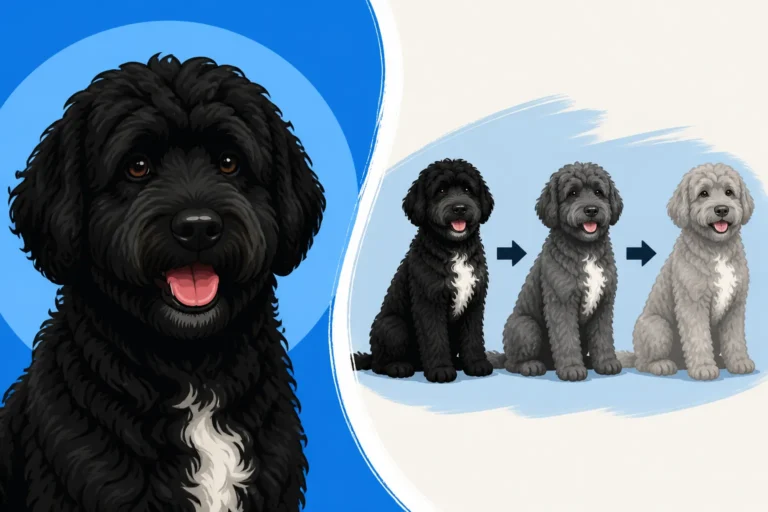
A puppy’s coat can change as it matures. The adult coat may differ in shade, texture, or appearance from the soft coat the puppy had early on. That change can overlap with the first sunny season, making it easy to credit sunlight for a color shift that is partly or mostly due to normal coat development. Whether a Portuguese Water Dog Puppy's Color Changes covers this transition in more detail.
Adult coats can also change gradually with age. Some dogs develop a lighter, grayer, or less uniform appearance over time, while others keep a fairly consistent shade. A Portuguese Water Dog’s coat texture can change too, which affects how light reflects from it. A curlier or wavier finish may make color look different even when the underlying pigment has not changed much. For background, see Whether a Portuguese Water Dog's Coat Changes Texture With Age and How a Curly Coat Differs From a Wavy Coat.
Clipping, bathing, and coat condition
A haircut can make the coat appear to have changed color. Clipping removes the older, more exposed lengths and reveals shorter hair underneath, which may look darker, lighter, or simply more even. Once that hair grows out, it gets more exposure to daylight and may gradually look different again. This is one reason a dog’s color can seem to shift between grooming appointments.
Bathing and drying can affect appearance as well. Product residue, dirt, and a coat that has not been fully rinsed may dull the hair, while clean, dry hair often looks brighter. Avoid trying to “restore” a brown shade with human hair dye or color-enhancing products; they are not a safe fix for sun bleaching. Use grooming products made for dogs and follow veterinary guidance if the coat or skin seems irritated.
Regular brushing helps you inspect the coat and notice changes early, but it does not prevent sunlight from altering exposed hair. If you’re looking for a comb or gentle dog grooming supplies, Chewy is one place to compare options; choose tools suited to your dog’s coat and use them without scraping or pulling at the skin.
When color change deserves a closer look
Color change is more concerning when it comes with other signs, such as thinning hair, persistent scratching, sores, redness, scabs, or a sudden change in coat texture. A patch that is bare or visibly irritated is different from a gradual change in the shade of otherwise healthy hair. Changes in appetite, energy, or weight are also worth mentioning to your veterinarian if they occur alongside coat changes.
A coat can hide the skin, so part the hair gently in a few places and look for irritation, unusual flakes, or areas where the hair is breaking or missing. Do not assume that every light patch is a sun effect. If the coat is thinning or the skin looks abnormal, Whether a Portuguese Water Dog's Coat Thins With Illness may help you understand why it is sensible to get veterinary advice rather than simply changing shampoo or grooming frequency.
| What you notice | Possible explanation | Helpful next step |
|---|---|---|
| Gradual lightening on the back or top of the head | Sun exposure or natural coat variation | Take photos in consistent lighting and monitor |
| A different shade after clipping | Newly exposed shorter hair or a change in how light reflects | Compare again as the coat grows |
| A puppy’s shade shifts as the coat matures | Normal coat development may be involved | Track the change and ask your breeder or vet if concerned |
| Light patches with itching, redness, or hair loss | Skin or coat problem may be present | Arrange a veterinary check |
| Red or sore skin beneath a short coat | Sun exposure or another irritation may be affecting the skin | Move the dog out of direct sun and contact your vet |
Protecting a brown Portuguese Water Dog’s coat and skin
Make shade and timing part of the routine
You do not need to keep a Portuguese Water Dog indoors all summer to protect its coat. Practical habits make a difference: provide shade outdoors, offer fresh water, and plan walks or play for cooler parts of the day when the sun is strong. If your dog settles in one sunny spot for hours, move the bed or provide a shaded alternative.
After swimming or outdoor play, check the coat and skin rather than assuming that the hair alone tells the whole story. A wet coat can hide redness, and a clipped dog may have less hair between the skin and direct sunlight. Be especially thoughtful about sun exposure after a close haircut. If you are unsure whether a particular area needs extra protection, ask your veterinarian.
Use sunscreen and clothing carefully
Some dogs may benefit from sun-protective clothing or a sunscreen specifically approved for dogs, especially if they have a very short clip or areas of exposed skin. Ask your veterinarian which option is appropriate before applying a product. Human sunscreen is not automatically safe for dogs, and dogs may lick anything put on their coat or skin.
If shopping for a dog-specific sun-protection product, you can look at retailers such as Chewy, but check the label carefully and confirm the product is suitable for your dog’s needs. Clothing should fit comfortably, allow normal movement, and not trap heat. A lightweight protective shirt may help in some situations, but it is not a substitute for shade, water, and breaks from the sun.
Keep coat care gentle and consistent
A healthy grooming routine makes it easier to notice changes, though it cannot guarantee that brown hair will not lighten. Brush gently and regularly, paying attention to areas where the coat tangles or mats. Avoid aggressive scrubbing, frequent unnecessary bathing, and harsh products that can dry or irritate the skin. If you are considering a new shampoo or conditioner, choose dog-formulated products and ask your veterinarian if your dog has a skin condition.
After a swim, rinse off salt, pool residue, or debris when needed, then dry the coat thoroughly. A comfortable, dry coat is easier to inspect than one that stays damp and tangled. If you need to replace basic grooming supplies, Chewy is one shopping option, but the right brush and product depend on your dog’s coat and what your groomer or veterinarian recommends.
How to tell whether the change is likely harmless
Look at the pattern, not just the color
A gradual, fairly even lightening on the most exposed parts of the coat—with normal skin and no discomfort—is more consistent with ordinary cosmetic change than a sudden patchy loss of color. Keep a simple record: note when you first noticed the change, where it appears, and whether it follows a summer outdoors, a haircut, or a coat transition. Photos taken in similar light are often more useful than memory.
Watch for changes in the hair itself. Is it still growing normally? Does the skin look comfortable? Is your dog scratching, licking, or avoiding touch? These details help you describe the problem clearly if you call your vet. You can also ask your groomer whether the haircut or coat length could be affecting the appearance, while remembering that a groomer cannot diagnose skin disease.
Ask your veterinarian when symptoms appear
Contact your veterinarian if the change is sudden, patchy, spreading, or paired with hair loss, persistent itching, odor, sores, or visible skin irritation. Seek advice sooner if your dog seems unwell or the skin is painful. Your vet can examine the skin and coat, ask about grooming and outdoor exposure, and decide whether any further assessment is needed.
Most importantly, don’t treat a color shift as a medical problem solely because the brown looks less rich than it did in winter. At the same time, don’t dismiss a sore or thinning area as “just sun fading.” A Portuguese Water Dog’s brown coat may lighten with exposure, age, or grooming, but the dog’s comfort and skin condition are the better guide to whether something needs attention.
Disclaimer
This article is for general informational purposes only and does not constitute professional advice. Laws, prices and regulations vary by location and change over time. Consult a qualified professional for guidance on your specific situation.