Whether a Portuguese Water Dog Smells When Wet
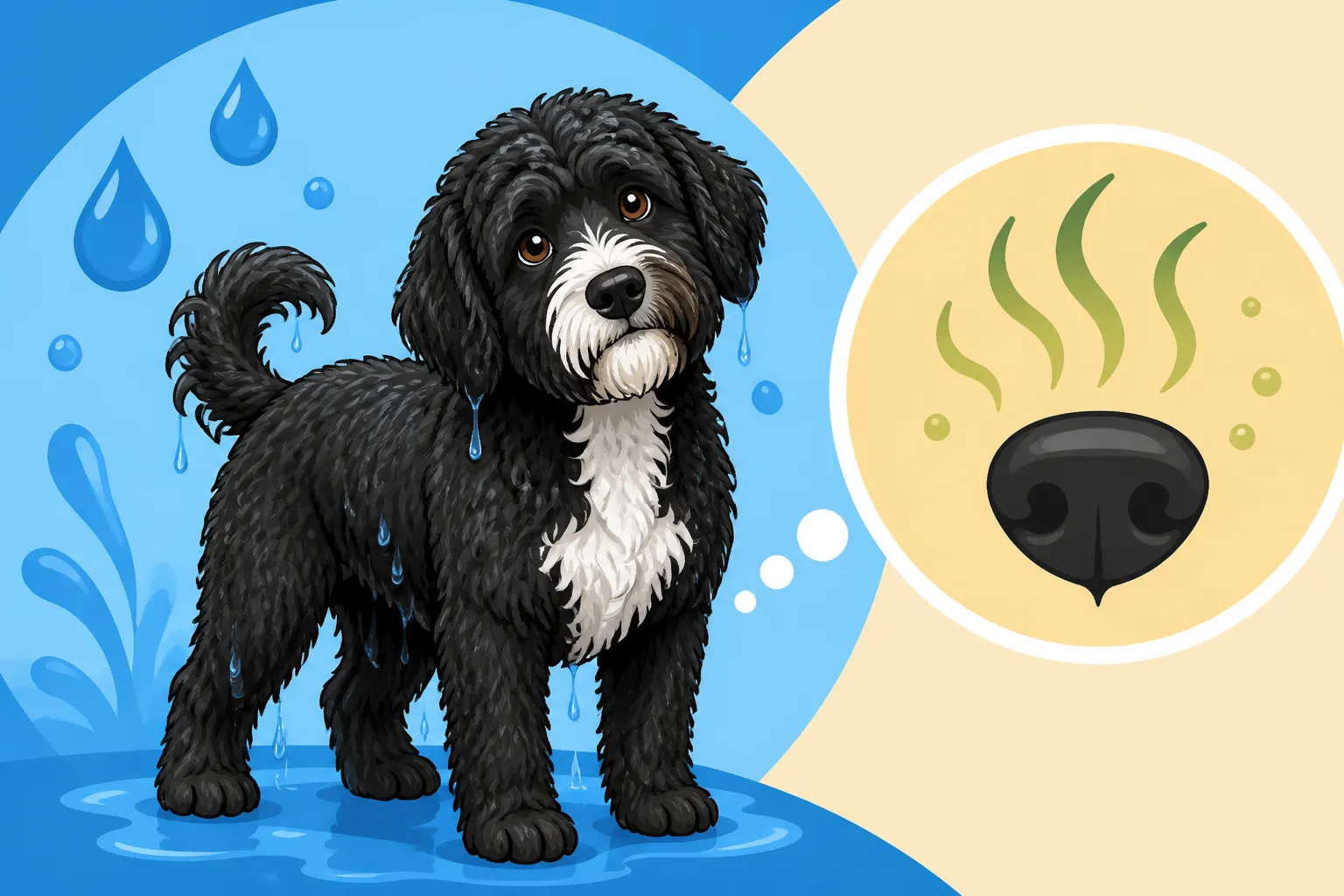
Ah, the distinct aroma of a wet dog! It’s a familiar experience for many dog owners, and if you’re wondering if your beloved Portuguese Water Dog will bring that particular scent into your home after a dip, you’re not alone. Many potential and current PWD owners worry about "wet dog smell," especially with a breed so inherently drawn to water. This guide will delve into why dogs, including our PWDs, develop that unique wet odor, and more importantly, what you can do to manage it so your home stays smelling fresh.
The Science Behind the "Wet Dog Smell" Phenomenon
Let's get one thing straight: all dogs, regardless of breed, have the potential to smell like a "wet dog" when they get wet. It's not a flaw in your particular furry friend, nor is it exclusive to water-loving breeds like the Portuguese Water Dog. It's simply a natural byproduct of canine biology and the way water interacts with their skin and fur.
The Role of Microorganisms and Oils
The primary culprits behind that unmistakable wet dog scent are microscopic. Your dog's skin and coat are home to a thriving ecosystem of bacteria and yeast. These microorganisms are completely normal and part of a healthy skin flora. They feed on the natural oils (sebum) that dogs produce, as well as dead skin cells. When your dog is dry, these microscopic residents and their metabolic byproducts are largely undetectable to our noses. However, when water saturates your dog's coat, it acts as a solvent. This process releases the volatile organic compounds produced by the bacteria and yeast, essentially activating and magnifying their scent. The water helps these compounds become airborne, making the smell much more noticeable to us. Think of it like a perfume being activated by heat – the water provides the medium for these scents to become potent.
Trapping Moisture and Evaporation
Another factor is the dense nature of a dog's coat. A Portuguese Water Dog, with its dense, single coat of curly or wavy hair, is particularly adept at trapping moisture close to the skin. This isn't a bad thing; it was bred that way to protect them in cold water. But it does mean that water doesn't evaporate instantly. The longer your dog stays damp, the more time those microorganisms have to continue their work and the more pronounced the smell can become. This is why a quick towel-dry might not be enough to fully prevent the smell from emerging. The smell can intensify as the water slowly evaporates from the inner layers of the coat, releasing those compounds into the air around your dog.
The Portuguese Water Dog's Coat and Its Impact on Smell
The Portuguese Water Dog's coat is a marvel of nature, designed for life in and around the water. It's a single coat, meaning no undercoat, which contributes to its low-shedding nature. However, it's this very structure that plays a significant role in how much your PWD might smell when wet.
Understanding the PWD Coat Type
Portuguese Water Dogs come in two primary coat types: curly and wavy. Both are dense and have a naturally water-resistant quality, not in the sense of repelling water completely, but in how they protect the dog's skin even when submerged. This density and texture, while fantastic for keeping them warm and buoyant in the ocean, also means they absorb and hold onto a considerable amount of water. Unlike some double-coated breeds where the undercoat sheds and can develop a musty smell if not dried properly, the PWD's single coat is more about density. You can learn more about these fascinating coat types in Curly or Wavy: the Two Portuguese Water Dog Coats. This density means that water can get trapped deep within the curls or waves, taking longer to dry completely than a shorter, thinner coat. The longer the coat, the more surface area there is for water to cling to and for those odor-producing microorganisms to thrive.
How the Coat Traps Moisture and Odor
Imagine a sponge: it's designed to absorb and hold water. While a PWD's coat isn't quite a sponge, its structure does allow it to retain a lot of moisture. When your PWD takes a swim, that water permeates deep into the coat, right down to the skin. If not thoroughly dried, this dampness creates a warm, humid environment – a perfect breeding ground for the bacteria and yeast we talked about earlier.
The oils in their coat, while essential for its health and water resistance, also contribute. These natural oils, combined with the dampness and microbial activity, create that distinctive wet dog smell. It's particularly noticeable if your PWD spends a lot of time in natural bodies of water like lakes or oceans, as these environments can introduce additional external bacteria and organic matter into their coats, intensifying the odor.
Factors That Exacerbate Wet Dog Smell in PWDs
While some degree of wet dog smell is normal, several factors can make it significantly worse for your Portuguese Water Dog. Being aware of these can help you proactively manage the scent.
Poor Grooming and Hygiene Habits
This is perhaps the biggest contributor to a strong wet dog smell. If your PWD isn't regularly brushed, bathed, and dried, the natural oils, dead skin cells, and trapped debris in their dense coat build up. When this already compromised coat gets wet, the resulting smell can be overpowering. Think about it: a dirty, matted coat provides more "food" for bacteria and yeast, leading to a much more potent odor when water is introduced.
Regular bathing with a good quality shampoo, specifically formulated for dogs, is crucial. But even more critical for a PWD is thorough drying. Skipping out on a proper drying routine after a swim or bath means leaving a damp, warm environment ripe for bacterial overgrowth. This is especially true for the PWD, whose coat can take a surprisingly long time to air dry, as detailed in How Long a Portuguese Water Dog Takes to Air Dry.
Ear Infections and Skin Issues
Sometimes, a persistent or particularly unpleasant wet dog smell isn't just about general dampness; it could be a sign of an underlying health issue. Portuguese Water Dogs, being water dogs, are prone to ear infections. Their floppy ears can trap moisture, creating a perfect breeding ground for yeast and bacteria deep within the ear canal. An infected ear can produce a very distinct, often sweet-and-sour or musty odor that becomes even more pronounced when wet. It's why Why a Portuguese Water Dog's Ears Need Checking Every Week is such vital reading.
Similarly, skin conditions like allergies, hot spots, or yeast infections on the skin itself can cause a foul odor. If your PWD has inflamed, itchy, or greasy patches of skin, these areas will likely smell worse when wet, as the skin's natural barrier is compromised and microbial activity increases. Regularly checking their skin and being vigilant for any changes can help catch these issues early.
Environmental Factors and Water Quality
The type of water your PWD swims in can also influence the smell. Swimming in stagnant ponds, muddy lakes, or ocean water laden with algae can introduce additional organic matter and microbes into their coat. This organic debris can then contribute to a stronger, more unpleasant odor when the coat gets wet and those compounds become airborne. Even chlorinated pool water, if not rinsed off thoroughly, can interact with their natural oils and skin flora, potentially leading to a funky smell or even skin irritation that exacerbates odor.
Practical Strategies to Minimize Wet Portuguese Water Dog Odor
The good news is that while you can't eliminate the natural process that causes wet dog smell entirely, you can significantly reduce its intensity and frequency with consistent care. It's all about proactive management.
Consistent Grooming Routine
A cornerstone of managing wet dog smell is a diligent grooming schedule. This isn't just about aesthetics; it's about hygiene.
Regular Brushing
Brushing your PWD several times a week, and especially before and after swims, helps to remove loose hair, dead skin cells, and any debris trapped in their dense coat. This reduces the organic matter that bacteria and yeast feed on. Regular brushing also helps distribute natural oils, keeping the coat healthy and preventing mats, which can trap moisture and perpetuate odors. If you let mats build up, they become miniature ecosystems for bacteria.
Bathing with the Right Products
Frequency of bathing will depend on how often your PWD gets truly dirty or swims. For a PWD that's in the water frequently, rinsing after each swim and bathing with shampoo every 2-4 weeks might be appropriate. For those less amphibious, monthly might suffice. Choose a high-quality dog shampoo that is gentle and helps clean the coat without stripping essential oils. Brands like Chewy often carry a wide selection of shampoos specifically formulated for dogs with sensitive skin or those needing a deep clean. Some owners find that a clarifying shampoo followed by a moisturizing one works best. Always make sure to rinse thoroughly to remove all shampoo residue, as leftover product can irritate skin and attract more dirt. You can find helpful tips on Which Shampoo Suits a Portuguese Water Dog's Coat.
Effective Drying Techniques
This is arguably the most critical step for a Portuguese Water Dog. A damp coat is an odorous coat.
Towel Drying and Force Drying
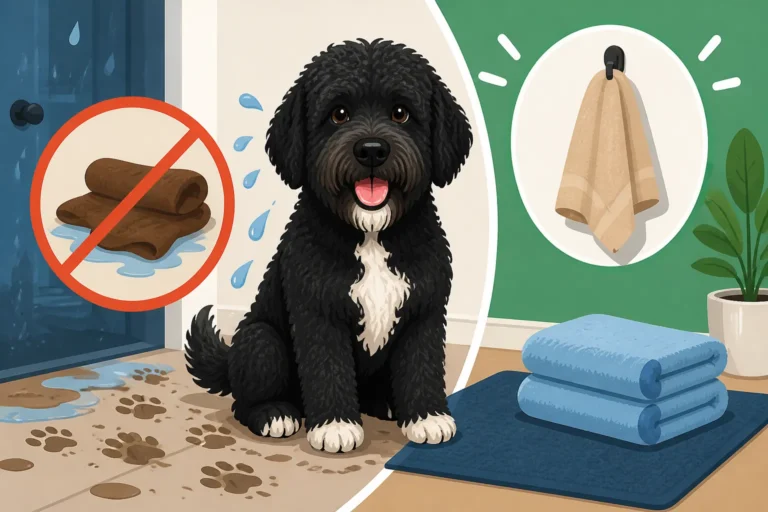
After any swim or bath, start with a thorough towel dry. Use absorbent towels to get as much surface water off as possible. But for a PWD, towel drying alone isn't enough. You absolutely need to invest in a good quality force dryer (also known as a high-velocity dryer) designed for dogs. These powerful dryers blow water out of the coat rather than just heating it, significantly reducing drying time and getting the coat dry right down to the skin. This prevents that warm, moist environment where odor-causing bacteria thrive. Using a force dryer effectively after every major wetting, even just a good rinse after a dip in the lake, is paramount. Learn more about its benefits in What a Force Dryer Does for a Portuguese Water Dog.
Air Circulation
Even after force drying, ensure your PWD has good air circulation around them until they are completely, bone-dry. Avoid crating a damp dog, as this creates a humid, enclosed space that encourages microbial growth and a stronger smell. Letting them relax in a well-ventilated area can help dissipate any lingering moisture.
Attention to Ears and Paws
Given their love for water, PWDs are prone to ear issues.
Weekly Ear Cleaning
Make it a habit to check and clean your PWD's ears weekly, and especially after every swim. Use a veterinarian-approved ear cleaner. Their floppy ears and dense ear hair can trap moisture, leading to yeast or bacterial infections that produce a strong, unpleasant odor. Gently wipe the visible parts of the ear canal and use the cleaner as directed. If you notice any redness, discharge, excessive scratching, or a particularly foul smell coming from the ears, it's time for a vet visit.
Paw and Pad Care
Excess hair between the paw pads can also trap moisture. Keep this hair trimmed short to allow for better air circulation and faster drying. After a swim, make sure to dry their paws thoroughly, including between the toes.
Dietary Considerations and Supplements
A healthy dog from the inside out often smells better.
Quality Diet
Feeding a high-quality, balanced diet can contribute to overall skin and coat health. A diet rich in essential fatty acids can support a healthy skin barrier, which might indirectly help reduce excessive oil production or skin issues that contribute to odor. Some owners opt for fresh dog food delivery services like Ollie, which can offer highly digestible, nutrient-dense meals tailored to your dog's needs.
Fish Oil Supplements
Omega-3 fatty acid supplements, like fish oil, can promote a healthier coat and skin, potentially reducing dry skin or excessive oiliness, both of which can contribute to odor. Always consult your vet before adding any supplements to your dog's diet.
Regular Vet Check-ups
If despite all your efforts, your PWD still has a persistent or unusually strong smell when wet, it’s worth a trip to the vet. As mentioned, underlying skin allergies, yeast infections, or chronic ear infections can be the root cause. Your vet can diagnose these issues and prescribe appropriate treatments, such as medicated shampoos, oral medications, or specific ear treatments. Early detection and treatment of these conditions can make a huge difference not only to the smell but also to your dog's comfort and health. For ongoing supplies, Amazon is a convenient place to stock up on vet-recommended shampoos or ear cleaners once you have a diagnosis and prescription.
Conclusion
The reality is that a Portuguese Water Dog, with its magnificent, water-loving coat, will indeed have a characteristic "wet dog smell" after a swim, just like any other dog. It's a natural phenomenon driven by microorganisms and moisture. However, the good news is that with a proactive and consistent approach to grooming, particularly focusing on thorough drying, proper hygiene, and addressing any underlying health issues, you can keep that odor to a minimum. So, embrace their love for water, equip yourself with the right tools and routines, and enjoy your PWD's aquatic adventures without letting the temporary smell dampen your spirits or your home!
Disclaimer
This article is for general informational purposes only and does not constitute professional advice. Laws, prices and regulations vary by location and change over time. Consult a qualified professional for guidance on your specific situation.