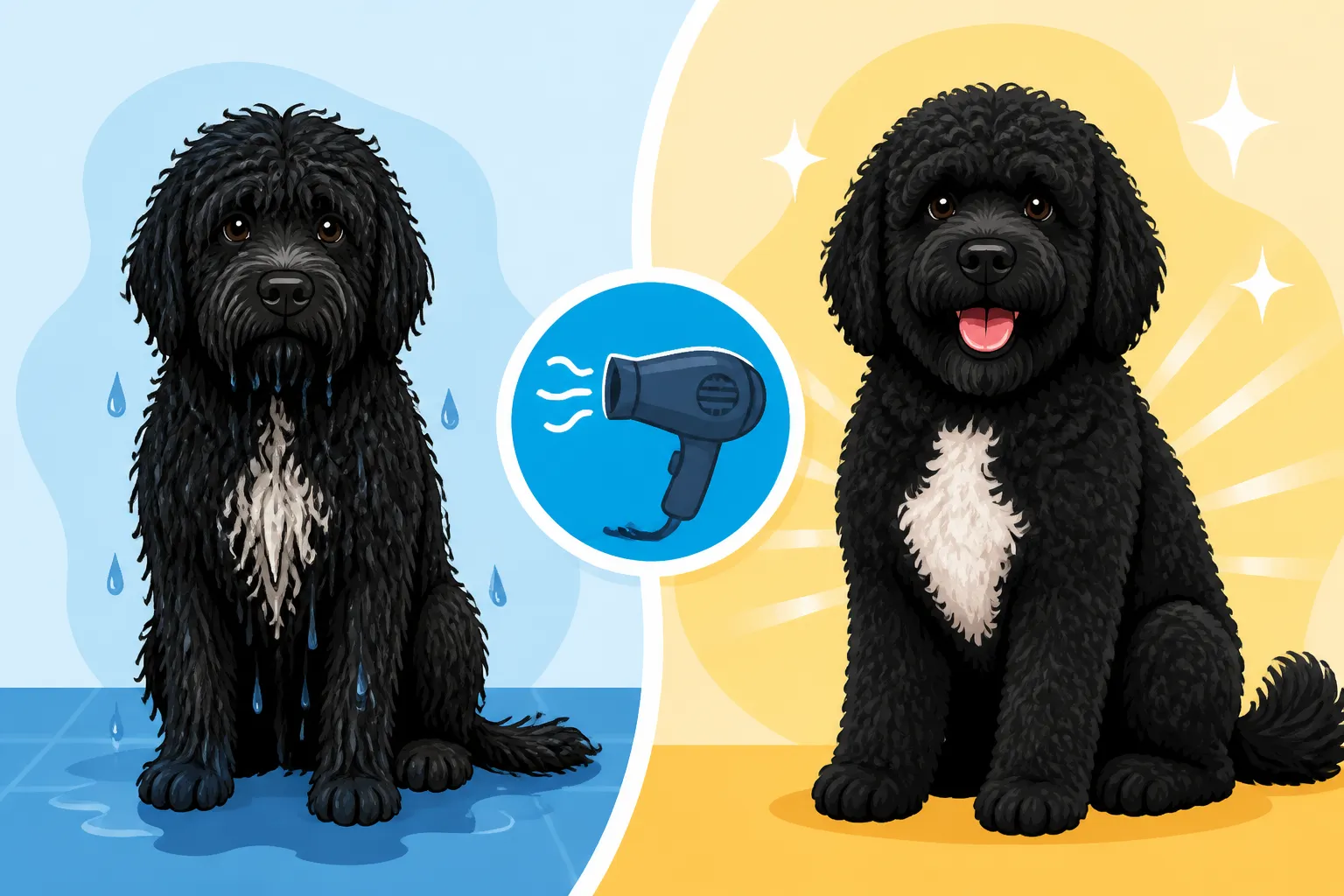
What a Force Dryer Does for a Portuguese Water Dog
If you've ever wrestled a sopping wet Portuguese Water Dog out of the bath or the lake, you know the Herculean task of getting them truly dry. Their dense, water-loving coat is fantastic for swimming, but a real challenge when it comes to drying, often leading to stubborn mats, unpleasant odors, and even skin issues if not properly managed. This guide is all about one of the most game-changing tools for PWD owners: the force dryer, and exactly what it does to make your life, and your dog's magnificent coat, so much better.
The Unique Drying Challenges of the Portuguese Water Dog Coat
Let's be honest, the Portuguese Water Dog's coat is one of its most defining features – a dense, single layer of either curly or wavy hair that sheds minimally. This makes them often touted as a "hypoallergenic" breed, which is fantastic for allergy sufferers. However, this very characteristic is also what makes drying them such an involved process, far different from towel-drying a Labrador or letting a short-haired dog air dry.
Why a PWD's Coat Holds Onto Water Like No Other
Unlike many breeds with a double coat that has a fluffy underlayer, the Portuguese Water Dog possesses a single coat that is designed to repel and shed water, but also to provide insulation and buoyancy. The hair itself, whether curly and tight or wavy and loose, is incredibly absorbent and dense. Imagine a thick wool sweater; it might shed water initially, but once soaked, it holds onto moisture with remarkable tenacity. This is precisely Why a Portuguese Water Dog's Coat Holds Water. When your PWD takes a dip, whether it's in the ocean, a lake, or their backyard pool, that water doesn't just run off; it gets trapped deep within the coat's structure, clinging to every strand.
This dense, water-retaining quality is fantastic for a dog bred to work in the water, providing warmth in cold oceans and making them incredibly efficient swimmers. They don't get waterlogged in the same way some other breeds might. But on the flip side, once the swim is over, getting that stored water out requires more than just a quick rub with a towel. The coat acts like a sponge, and a regular towel simply can't wick away all the moisture from the deeply set hair shafts.
The Hidden Dangers of Air Drying for Their Skin and Fur
Leaving a Portuguese Water Dog to air dry, especially after a thorough bath or a long swim, might seem like a natural, hands-off approach. However, for a breed with such a dense coat, it's actually one of the riskiest practices, often leading to a cascade of problems. The primary concern is the ideal environment that damp, warm fur creates for bacteria and fungi. Just like a damp towel left in a humid bathroom, a wet dog coat becomes a breeding ground for these microorganisms, leading to unpleasant odors and various skin issues.
One of the most common problems is the development of "hot spots" – acute moist dermatitis. These are painful, red, oozing skin lesions that can appear seemingly overnight, often because moisture has been trapped against the skin for too long. Beyond hot spots, persistent dampness can also exacerbate existing skin allergies or lead to new ones, causing intense itching and discomfort for your dog. Furthermore, a perpetually damp coat is a magnet for matting. As the hair dries slowly and naturally, especially if your dog rolls or rubs, the wet strands tangle and knot into tight, painful clumps that are incredibly difficult to remove and pull on the skin. Why a Damp Portuguese Water Dog Gets Skin Trouble really highlights how critical thorough drying is for their overall well-being.
The Time-Sink of Traditional Drying Methods
Let's not forget the sheer amount of time involved in drying a Portuguese Water Dog through conventional means. If you've ever tried to air dry your PWD, you know it's not a quick process. Depending on the density and length of their coat, ambient humidity, and how thoroughly they got wet, a PWD can take many hours, sometimes even a full day, to completely air dry. During this time, your dog might be uncomfortable, prone to developing those dreaded mats, and potentially tracking dampness and that "wet dog smell" throughout your home.
Even with diligent towel drying, you're only removing superficial moisture. Getting to the roots of that thick coat with just towels is a monumental effort. You might go through several towels, and your dog will still feel considerably damp. This extended drying time isn't just an inconvenience; it restricts their activity, keeps them from being fully comfortable, and puts them at risk for those skin and coat issues we just discussed. It can feel like a never-ending cycle, especially if your PWD is a frequent swimmer, which, let's face it, most of them are! Imagine getting them ready for bed, thinking they're dry, only to find damp spots hours later. This is where the force dryer truly steps in as a game-changer. You might be interested to read How Many Hours a Portuguese Water Dog Takes to Air Dry for a deeper dive into this specific challenge.
Unveiling the Power of the Force Dryer
A force dryer, also known as a high-velocity dryer, isn't just a fancy hairdryer; it's a piece of grooming equipment specifically designed to make drying a dense-coated dog efficient, safe, and incredibly effective. If you’ve ever seen a professional groomer at work, you’ve almost certainly seen them wield one of these powerful tools. It completely changes the game for PWD owners, transforming a grueling, hours-long task into a manageable part of your grooming routine.
How High-Velocity Air Revolutionizes Drying
The magic of a force dryer lies in its name: it uses a powerful, concentrated stream of forceful air to literally blast water off the dog's coat, rather than relying solely on heat to evaporate it. Think of it like a powerful leaf blower for your dog's fur, but much more refined and controllable. This high-velocity air physically separates the water from the hair shafts, pushing it away in tiny droplets. This method is vastly superior to a human hairdryer, which uses high heat to evaporate water, risking skin burns and dehydration of the coat. A good quality force dryer typically operates with little to no heat, using ambient air that warms slightly from the motor, making it much safer for your dog's skin.
The sheer volume and speed of the air generated by a force dryer penetrate deep into the dense undercoat of a Portuguese Water Dog, reaching areas that towels and traditional dryers simply can't. This not only removes the surface moisture but also gets to the water trapped closer to the skin, which is crucial for preventing matting and skin issues. It's truly a marvel to watch the water literally fly off the coat, especially on a very wet dog.
Beyond Just Drying: The Grooming Benefits for Your PWD
While fast drying is the primary benefit, a force dryer offers a wealth of other advantages that significantly improve your Portuguese Water Dog's overall coat health and manageability. For starters, it's an incredible tool for preventing mats. As the high-velocity air blasts through the coat, it helps to straighten and separate individual hair strands. This process can detangle minor knots and prevent them from forming into major mats, especially crucial during the notorious "coat change" phase as puppies mature, or for dogs with particularly dense or wavy coats. Regular force drying, coupled with brushing, reduces the need for extensive de-matting sessions, which can be painful and stressful for your dog.
Furthermore, force drying can help to remove loose hair and dander, contributing to a healthier coat and reducing allergens in your home, even though PWDs are minimal-shedders. It also allows you to thoroughly check your dog's skin for any abnormalities, bumps, or parasites as the coat is opened up and laid flat by the airflow. From a practical standpoint, it drastically cuts down on the time you spend on grooming. Instead of agonizing over a damp dog for hours, you can have your PWD fully dry and fluffed in a fraction of the time. This means more time for play, training, or just snuggling, and less time wrestling with wet fur. You'll be amazed at How Long a Portuguese Water Dog Takes to Dry when you use one of these.
Essential Safety Considerations When Using a Force Dryer
While a force dryer is a powerful and invaluable tool, it's crucial to use it safely and correctly to ensure a positive experience for your Portuguese Water Dog. The primary safety concerns revolve around temperature, noise, and proper handling. First, always ensure your force dryer is designed for pets and preferably has a cool or minimal heat setting. As mentioned, the drying power comes from air volume, not heat. Excessive heat can burn your dog's skin, especially in sensitive areas, and can dehydrate their coat, making it brittle. Always test the air on your own skin first to ensure it's comfortable.
Secondly, the noise level can be quite intense, especially for a dog new to the experience. Portuguese Water Dogs are intelligent and can be sensitive, so starting slow and making it a positive experience is key. We'll dive into desensitization more later, but for safety, consider using ear protection for your dog, such as a "Happy Hoodie" or cotton balls gently placed in their ears, especially when working near their head. Always direct the airflow away from their eyes, ears, and genitals, as these areas are particularly sensitive. Use the lowest appropriate setting initially and gradually increase as your dog becomes comfortable. Never point the nozzle directly at one spot for too long, as even warm air can cause discomfort if concentrated. Keep the nozzle moving constantly to distribute the airflow evenly.
Integrating a Force Dryer into Your Home Grooming Routine
Bringing a force dryer into your home isn't just about buying a new gadget; it's about fundamentally changing how you approach grooming your Portuguese Water Dog. It transforms the post-bath or post-swim chaos into a controlled, efficient process, leading to a happier, healthier dog and a much less stressful experience for you.
Key Features to Look for in a Home Force Dryer
Choosing the right force dryer can feel a bit overwhelming with so many options out there, but focusing on a few key features will help you make an informed decision for your Portuguese Water Dog.
- Variable Speed Control: This is perhaps the most important feature. Your PWD will likely need different air speeds for different areas of their body and for different stages of drying. A lower speed is essential for sensitive areas like the face and ears, and for initially introducing the dryer. Higher speeds are ideal for blasting water off the main body and thickest parts of the coat.
- Heat Settings (or lack thereof): As discussed, you want a dryer that relies on force, not heat. Many quality force dryers have a "no heat" setting, or a very low, warming-only setting. Avoid dryers that get excessively hot.
- Nozzle Attachments: Look for dryers that come with a variety of nozzles. A flat, wide nozzle is great for general drying, while a cone-shaped nozzle can concentrate airflow for specific areas or for "line drying" (separating the coat to dry down to the skin).
- Hose Length and Flexibility: A longer, flexible hose gives you more reach and maneuverability around your dog.
- Noise Level: While all force dryers are loud, some are designed with quieter motors. Check reviews for user feedback on noise.
- Durability and Build Quality: This is an investment, so you want a dryer that will last. Brands often found on sites like Amazon or Chewy will have customer reviews that can speak to longevity. You can find some excellent professional-grade options without breaking the bank. For a better idea of budget, consider looking into What Home Grooming Equipment Costs for a Portuguese Water Dog.
| Feature | Importance for PWD Owner | Why It Matters |
|---|---|---|
| Variable Speed | High | Allows adjustment for sensitive areas, desensitization, and efficient drying. |
| No Heat/Low Heat | High | Prevents skin burns and coat damage; drying is by force, not heat. |
| Nozzle Attachments | Medium | Different shapes help target airflow, lift coat, and finish drying efficiently. |
| Noise Level | High | PWDs can be sensitive; lower noise aids comfort and training acceptance. |
| Build Quality | Medium | An investment worth protecting; ensures longevity and consistent performance. |
A Step-by-Step Guide to Effectively Drying Your PWD
Once you've got your force dryer, mastering its use will make all the difference. Here’s a simple routine to get your Portuguese Water Dog thoroughly dry and looking their best:
- Pre-Dry with Towels: Don't skip this step! After a bath or swim, use absorbent towels to remove as much excess water as possible. This jumpstarts the drying process and makes the force dryer's job quicker. Squeeze the coat, don't rub, to avoid tangling.
- Set Up Your Space: Choose a safe, non-slip surface, ideally a grooming table if you have one (What a Grooming Table Costs for a Portuguese Water Dog might be a good read), or a sturdy table covered with a non-slip mat. Make sure you have ear protection for your dog (and yourself, if needed!).
- Start Slow and Gentle: Begin with the dryer on its lowest speed and the "no heat" setting. Point the nozzle away from your dog at first, letting them hear the sound. Offer treats and praise.
- Introduce Gradually: Start drying less sensitive areas first, like their hindquarters or back, keeping the nozzle several inches away from the coat and moving it constantly. Keep sessions short and positive. Whether a Portuguese Water Dog Tolerates a Dryer is a common concern, so patience is key here.
- Section by Section: Work in small sections, always blowing the air with the direction of hair growth to push water out. Once the coat is damp-dry, you can then switch to blowing against the growth to lift and fluff the coat, getting right down to the skin. This also helps you check for any damp patches.
- Don't Forget the Feet and Tail: These areas can hold a lot of water. Be gentle around the pads and toes, ensuring all moisture is gone, especially between their webbed feet. The tail plume can be particularly dense.
- Address Sensitive Areas Last: When your dog is more comfortable, slowly work your way to the chest, belly, and finally the head. Use the lowest speed setting for the face, and always cup your hand over their ears and eyes as a shield, or use a "Happy Hoodie." Whether a Portuguese Water Dog's Ears Should Be Dried Inside is a common question, and generally, you should only blow air around the outside of the ear and its opening, never directly into the ear canal.
Making Force Drying a Positive Experience for Your Dog
The noise and sensation of a force dryer can be intimidating for some dogs, especially at first. The key to success is positive reinforcement and gradual desensitization. Start by simply having the dryer in the same room, turned off, and letting your PWD investigate it. Offer high-value treats. Next, turn it on at the lowest setting in another room, gradually moving it closer over several days or weeks, depending on your dog's comfort level.
When you do start using it on their coat, keep sessions very short initially – just a minute or two – and always end on a positive note with treats and praise. Make it a game! Some owners even pair the sound of the dryer with mealtime or a favorite toy. Consistency is also vital. The more often your PWD experiences the dryer in a calm, positive way, the more accepting they will become. Remember, you're building a foundation of trust and comfort. This process is essential if you want them to tolerate this important grooming tool for their entire lives.
Common Questions and Expert Tips for PWD Owners
Even with the best intentions and the right equipment, integrating a force dryer into your routine can bring up questions. Let's tackle some common concerns and offer some seasoned advice to help you and your Portuguese Water Dog thrive.
Tackling Resistance: Helping Your PWD Learn to Love the Dryer
It's completely normal for a Portuguese Water Dog to be wary, or even outright scared, of a force dryer at first. It's loud, powerful, and feels strange. The key is never to force the issue. If your PWD shows strong signs of fear (cowering, growling, trying to escape), stop immediately. Pushing them too hard can create a lifelong aversion. Instead, go back to basics with desensitization. Start in an open space where they don't feel trapped. Turn the dryer on away from them, then click/treat. Turn it off, click/treat. Repeat this many times. Slowly, very slowly, bring the dryer into the same room, keeping the noise level low and rewarding calm behavior.
You can also try using a "Happy Hoodie" or gently inserting cotton balls into their ears before turning on the dryer to dampen the sound. Apply some calming dog pheromone sprays or diffusers in the grooming area. Enlist a helper to dispense treats while you operate the dryer. Most importantly, stay calm yourself. Dogs pick up on our anxiety. If you project confidence and positivity, they are more likely to relax. The goal isn't just a dry dog, but a dog that tolerates, or even enjoys, the grooming process. The article Whether a Portuguese Water Dog Tolerates a Dryer offers more in-depth strategies.
Protecting Sensitive Areas: Ears, Eyes, and More
Certain areas of your Portuguese Water Dog's body require extra care when using a force dryer. Their eyes are particularly vulnerable to direct blasts of air, which can be irritating or even cause damage. Always avoid pointing the nozzle directly at their face. Instead, use a flat hand to shield their eyes while drying around the cheeks and muzzle on a very low setting. Some owners even use dog-specific goggles, though these take extra training to introduce.
The ears are another critical area. As discussed earlier, PWDs are prone to ear infections, and getting water into the ear canal with a force dryer is a definite no-no. Never aim the nozzle directly into the ear. Instead, dry the outer ear flap and the hair around the ear opening, using a very low setting and your hand to shield the opening. If you use cotton balls for sound dampening, make sure they are removed afterwards. For more specific advice on ear care, including drying, you might find Whether a Portuguese Water Dog's Ears Should Be Dried Inside helpful. Additionally, be mindful of their genitals and anal area. These are sensitive spots, so keep the air flow gentle and diffuse. The pads of their feet, especially with their prominent webbing, can also hold moisture, so ensure these are thoroughly dried without blasting directly at them, as this can be uncomfortable.
The Long-Term Value of Investing in a Force Dryer
When you first look at the price tag of a quality force dryer, it might seem like a significant investment. However, when you consider the long-term benefits and cost savings, it quickly becomes clear why it's such a valuable tool for Portuguese Water Dog owners. Think about the alternative: frequent trips to a professional groomer just for drying, or the potential vet bills from recurring hot spots and skin infections caused by inadequate drying. Grooming services for a PWD are not inexpensive, especially if they are frequently swimming. Over the lifespan of your dog, the cost of professional drying services can easily far exceed the initial outlay for your own dryer.
Beyond the monetary savings, there's the invaluable benefit of your dog's health and comfort. A well-dried coat prevents painful matting, reduces the risk of skin issues, and keeps your PWD feeling cleaner and more comfortable. It also empowers you to maintain their coat on your own schedule, especially after impromptu swims. If you're someone who is committed to home grooming, investing in a good force dryer, along with other essential tools like a good set of clippers (consider Which Clippers Handle a Portuguese Water Dog's Coat), will save you time, stress, and money in the long run while ensuring your Portuguese Water Dog always looks and feels their best. It's truly an investment in their well-being and your peace of mind.
Disclaimer
This article is for general informational purposes only and does not constitute professional advice. Laws, prices and regulations vary by location and change over time. Consult a qualified professional for guidance on your specific situation.