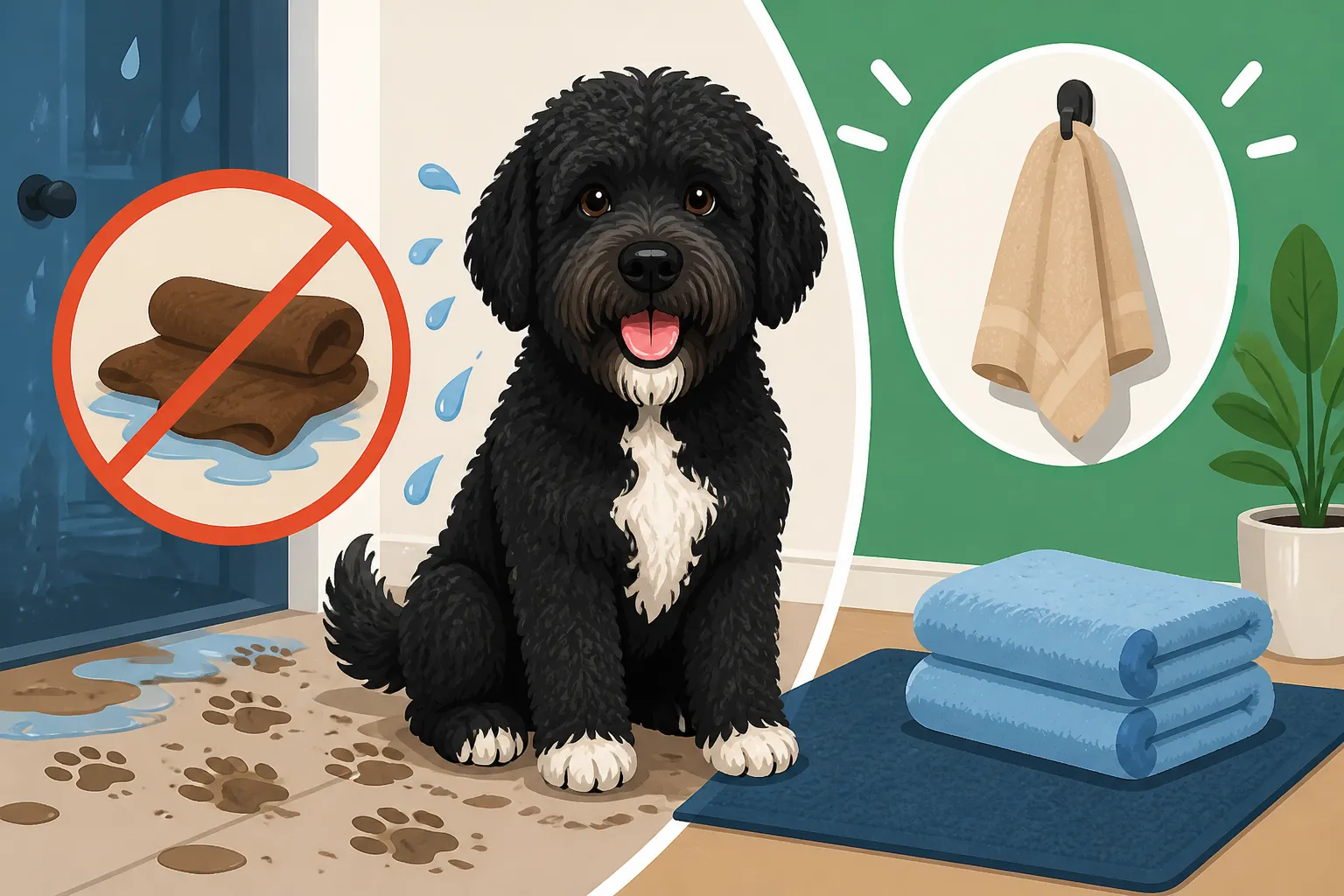
Whether a Portuguese Water Dog Needs a Towel by the Door
Ah, the delightful chaos of a Portuguese Water Dog! If you're wondering whether you truly need a towel by the door with one of these charming, water-loving companions, let me assure you, the answer is a resounding yes, and probably more than one. We've all experienced that moment when our PWD bounds in from a romp in the rain or a quick splash in the pond, leaving a trail of damp paw prints, muddy streaks, and that unmistakable "wet dog" aroma in their wake. This guide is here to walk you through exactly why a robust drying strategy, starting with that towel by the door, is not just a convenience, but a vital part of keeping your home clean, your dog healthy, and your sanity intact.
Understanding the Portuguese Water Dog's Water-Loving Coat
First, let's talk about that amazing coat. It's truly a marvel of nature, perfectly designed for their original job of working with fishermen in the chilly waters off the coast of Portugal. But what makes it so efficient in the water also makes it a bit of a challenge indoors.
The Unique Construction of the PWD Coat
Unlike many breeds with a double coat that might shed water more easily, your Portuguese Water Dog has a single coat. This coat comes in two distinct textures: curly or wavy. Both types are dense and robust, and they excel at insulating your dog in cold water. However, this unique construction means that instead of shedding water off, the coat actually holds onto it. Think of it like a sponge, rather than a raincoat. When your PWD takes a dip, that water gets absorbed and trapped within the tightly packed curls or waves. It's not like a Labrador's oily coat where water beads up and largely runs off. Nope, your PWD's coat is designed to keep them warm by holding that water close. This is why you'll often hear us PWD folks talk about Why a Portuguese Water Dog's Coat Holds Water. And for those wondering, despite the common misconception, while their coat is low-shedding and great for allergy sufferers, it doesn't mean it doesn't get anything on your floors. Whether a Portuguese Water Dog Sheds is a topic in itself, but suffice to say, they can still track plenty of moisture and debris.
Why a Wet PWD Stays Wet for So Long
Because their coat is so adept at holding water, a Portuguese Water Dog doesn't just air dry quickly. Not by a long shot! If you let a PWD simply shake off and wander through the house after a good swim or a rainy walk, you'll be dealing with dampness for hours. The water just clings, nestled deep within the hair shafts. This isn't just about surface moisture; the wetness can penetrate right down to the skin, taking a significant amount of time to evaporate naturally. How a Portuguese Water Dog Takes to Air Dry can be a surprisingly long process, especially if they have a thicker, denser coat. This prolonged dampness is precisely why relying on air drying alone when they come inside isn't a viable strategy for a clean and comfortable home. It's a recipe for damp spots on furniture, wet patches on rugs, and a generally humid indoor environment that no one really enjoys.
The Realities of Living with a Damp PWD: More Than Just Puddles
Okay, so we've established that the PWD coat is a water magnet. Now, let's get real about what that means for your living space and, more importantly, for your dog's health. It's not just a minor inconvenience; it can lead to bigger issues if not managed properly.
The Mess Factor: Water, Mud, and Debris
Anyone who owns a Portuguese Water Dog knows that a simple splash isn't just water. Our dogs are active, adventurous souls who love to explore, whether it's a muddy puddle on a hike, a sandy beach, or a leaf-strewn lake. When they come bounding back inside, their absorbent coats act like a giant, furry mop, collecting everything in their path. You'll find yourself battling not only puddles but also muddy paw prints trailing across your pristine floors, splashes reaching surprisingly high up your walls, and even damp imprints on your sofa if you don't intercept them in time. And let's not forget the delightful bits of nature they bring in – leaves, twigs, grass, and yes, if you're near the coast, plenty of sand. Whether Sand Works Into a Portuguese Water Dog's Coat is a definite yes, and it can linger in those curls for ages, only to appear on your rug later. This isn't just a mild annoyance; it can feel like a constant battle against the elements if you don't have a solid plan in place.
The Unseen Dangers: Skin Issues and Odor
Beyond the visible mess, there are more serious concerns with a consistently damp Portuguese Water Dog. Their dense coat, while wonderful for insulation, can become a breeding ground for bacteria and yeast if not dried thoroughly. Prolonged dampness against the skin can lead to irritation, itchiness, and even uncomfortable skin infections, often manifesting as "hot spots." We want our PWDs to be healthy and happy, and preventing these skin ailments is crucial. Why a Damp Portuguese Water Dog Gets Skin Trouble is a very real concern for this breed.
Then there's the infamous "wet dog" smell. Oh, you know the one! It’s not just a pleasant aroma of fresh rain; it's a distinct, earthy, sometimes pungent odor that can quickly permeate your home, clinging to furniture, carpets, and even your clothes. This smell is actually caused by bacteria and yeast that thrive in a warm, moist environment. So, while a quick rub with a thin towel might get rid of the initial drip, if the coat isn't truly dry down to the skin, that smell will persist. If you've ever wondered Whether a Portuguese Water Dog Smells When Wet, trust me, they do, and a thorough drying routine is your best defense against it becoming a permanent fixture in your home.
Establishing a "Drying Station" Routine for Your Portuguese Water Dog
Given the challenges, it's clear that a proactive approach to drying your PWD is essential. This isn't just about grabbing a towel when they look wet; it's about creating a system that works for both you and your dog.
The Essential "Towel By the Door" Strategy
This is where the humble towel becomes your best friend. But let's be realistic: a towel by the door implies just one, and for a PWD, you'll need a small arsenal! I always recommend having several towels strategically placed. One right inside the main door your dog uses, perhaps another by the backdoor leading to the yard, and definitely a stack in the bathroom or mudroom. The goal is instant access.
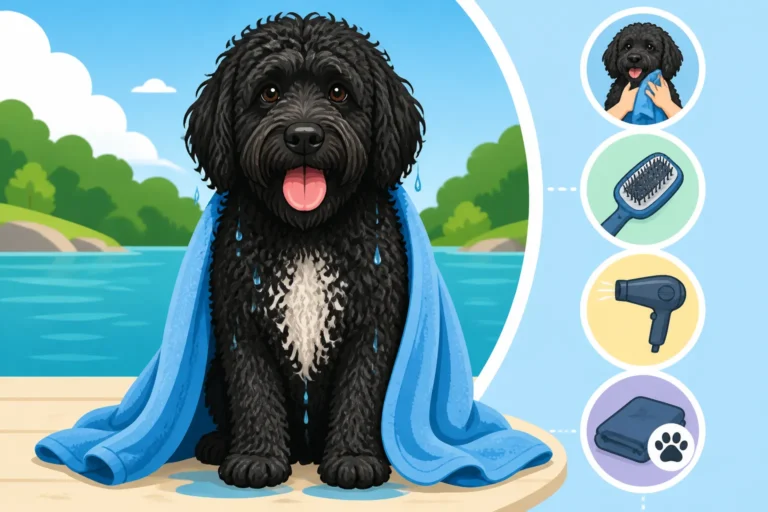
When your PWD comes in, intercept them at the door. This means no dashing through the house to shake off. Make it part of their routine: come in, stop, get towelled. The act of toweling isn't just a quick pat. You need to really work the towel through their coat, squeezing out as much water as possible. For the curly or wavy coat, it’s often more effective to blot and squeeze rather than just rub. Pay special attention to their legs, chest, and belly, which can hold a surprising amount of water. Their feet, with those fantastic webbed toes, are notorious for tracking moisture and debris, so make sure to get in between the pads. Microfiber towels are generally excellent for PWDs because of their high absorbency and quick-drying properties. They can soak up a lot more water than a standard cotton towel, making your job much easier. Consider getting large, dedicated pet towels from places like Chewy or Amazon; they're often designed for maximum absorbency and durability.
Beyond Simple Towel Drying
While toweling at the door is your first line of defense, it’s often not enough for a fully soaked PWD. For a truly bone-dry dog, especially after a full swim, you'll likely need to go a step further. This is where a force dryer becomes an absolute game-changer. These aren't regular human hair dryers; they blow air without heat (or minimal heat) at a high velocity, effectively blasting water out of the coat rather than just evaporating it. What a Force Dryer Does for a Portuguese Water Dog is incredible, dramatically cutting down drying time and ensuring your dog is dry right down to the skin, significantly reducing the risk of skin issues and that pervasive wet dog smell.
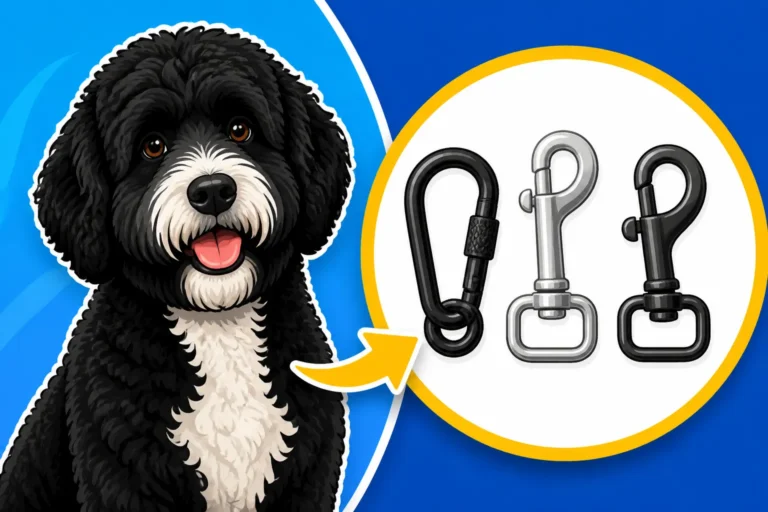
After a particularly dirty swim – think muddy lake or salty ocean – a bath might be in order before the drying process even begins. How Often a Portuguese Water Dog Needs a Bath will vary depending on their activities, but rinsing off mud or salt is always a good idea. Consider a dedicated "drying space" or mudroom where you can do this without worrying about splashes. Some owners even use a large, waterproof mat or a What a Wet Dog Crate Setup Costs a Portuguese Water Dog Owner for the initial drying stages. This contains the mess and gives you a controlled environment. And don't forget to take off their collar or harness before a swim, as these can trap water and cause skin irritation if left on a damp coat. Whether a Portuguese Water Dog's Collar Should Come Off to Swim is a small but important detail.
Integrating Drying into Your Daily PWD Life
The key to success with a Portuguese Water Dog and their water-loving ways isn't just having the right tools, but establishing a consistent routine. It's about making drying a seamless, even enjoyable, part of their day.
Making It a Consistent Habit
Consistency is paramount. Your Portuguese Water Dog thrives on routine, and if every time they come in from being wet, they go through the same drying process, they will learn to anticipate and accept it. Start early when they're puppies, making the drying process a positive experience with treats and praise. They might resist at first, but with patience and gentle handling, most PWDs learn to tolerate, and some even enjoy, the attention. Teach them to stand patiently while you work the towel and later the dryer. Teaching a Portuguese Water Dog to Stand for Grooming is a critical skill not just for drying, but for overall grooming needs.
Involve everyone in the household in this routine. If different family members have different approaches, it can confuse your dog and make the process less effective. A united front ensures consistency and reinforces the habit. Remember, you're not just drying a dog; you're maintaining their health and comfort, and protecting your home. This collective effort will make a huge difference in managing the unique grooming needs of your PWD.
Equipment and Best Practices for Optimal Dryness
Beyond the basic towel, there are a few items that will make your life much easier and ensure your PWD is truly dry:
| Item | Purpose | Why it's Essential for a PWD | Where to Find It (Examples) |
|---|---|---|---|
| High-Quality Microfiber Towels | Super absorbent; quickly wicks away moisture. | Absorbs much more water than cotton, speeding up initial toweling. | Chewy, Amazon |
| Force Dryer | Blasts water out of the coat with high velocity, no heat. | Achieves bone-dry results quickly, preventing skin issues and odor. | Pet specialty stores, Amazon |
| Grooming Table (optional but recommended) | Raises dog to a comfortable working height. | Saves your back, allows for thorough drying of all areas, especially belly and feet. | Amazon |
| Waterproof Mat or Old Rug | Provides a dedicated, easy-to-clean drying area. | Contains shedding hair and water splashes, protects floors. | Home goods stores, Amazon |
| Ear Cleaner & Cotton Balls | Cleans and dries ear canals after water exposure. | Prevents ear infections, a common issue for water dogs. | Chewy, vet offices |
| Good Quality Comb & Slicker Brush | For brushing out any tangles after drying to prevent matting. | Ensures coat is truly dry and helps distribute natural oils, prevents mats. | Chewy, Amazon |
When using a force dryer, always start on a low setting and gradually increase the intensity as your dog becomes accustomed to it. Direct the airflow through the coat, making sure to get down to the skin. Remember, the goal is not just a damp-free exterior but a completely dry dog underneath. Regular grooming and drying are essential for a Portuguese Water Dog's well-being. This investment in time and equipment will pay dividends in a happier, healthier PWD and a cleaner home.
Disclaimer
This article is for general informational purposes only and does not constitute professional advice. Laws, prices and regulations vary by location and change over time. Consult a qualified professional for guidance on your specific situation.