How Tall a Portuguese Water Dog Stands
One of the most common questions new Portuguese Water Dog owners, or those just considering the breed, have is simply, "How big will my dog actually get?" It's easy to look at pictures and see a sturdy, medium-sized dog, but understanding the precise height expectations according to the breed standard can be a little confusing. This guide is here to walk you through exactly how tall a Portuguese Water Dog stands, what the official breed clubs say, and what factors might influence your individual dog's final adult height.
Understanding the Official Breed Standard for Height
When you're looking at a purebred dog, "how tall" isn't just a casual observation; it's a specific measurement defined by the breed's official standard. These standards are developed by breed clubs and recognized by kennel clubs, like the American Kennel Club (AKC), to maintain the breed's distinct characteristics and ensure dogs are bred true to type. For the Portuguese Water Dog, the height standard is quite precise, reflecting their historical working role.
What the Standard Actually States
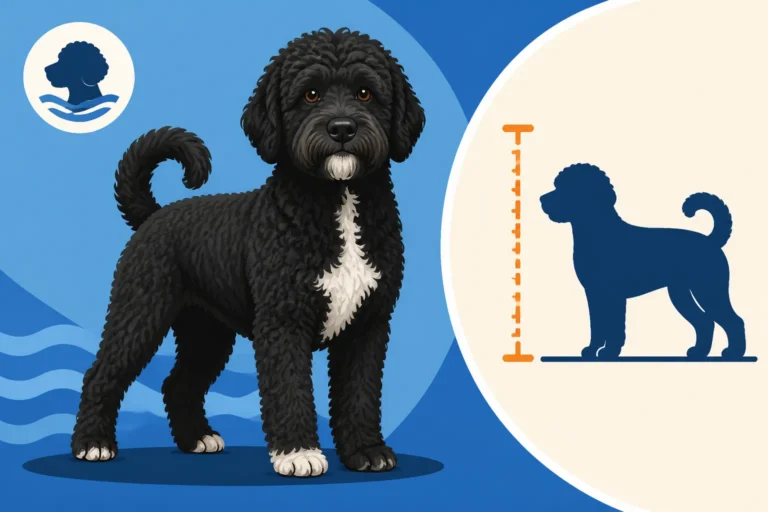
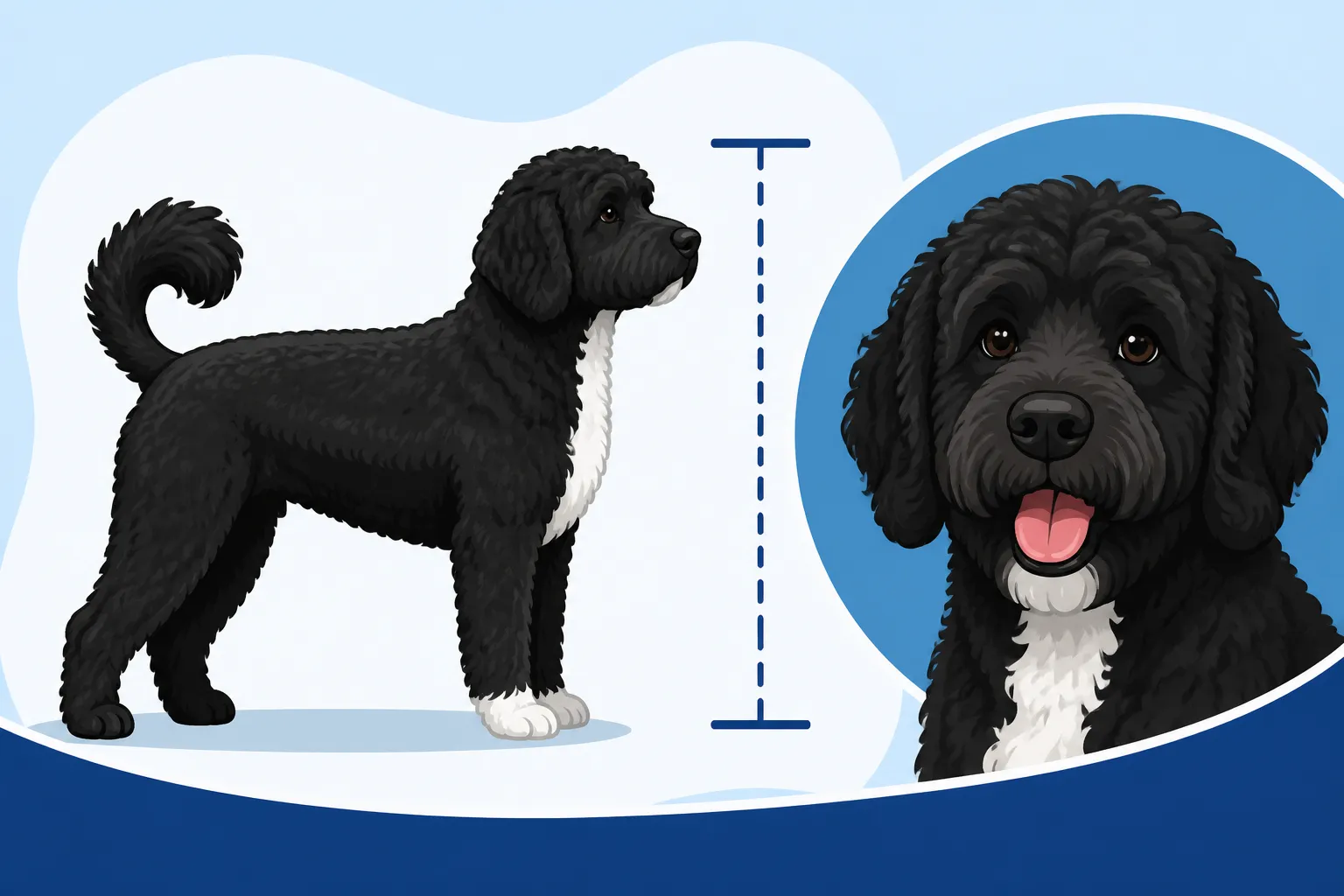
The breed standard for Portuguese Water Dogs specifies a height range for both males and females, measured at the withers. The withers are that spot between a dog's shoulder blades, where the neck meets the back. It's the highest point on their body, excluding their head, and it's considered the most stable point for measuring height accurately. For males, the typical height range is between 20 and 23 inches (50 to 58 cm), with the ideal being 22 inches (56 cm). Females are slightly smaller, standing between 17 and 21 inches (43 to 53 cm), with the ideal being 19 inches (48 cm).
These numbers aren't arbitrary; they reflect the functional size that was historically efficient for working on fishing boats along the coast of Portugal. A dog too tall might have struggled on a bobbing deck, while one too small might not have had the strength or reach for retrieving lines and gear from the water. It’s all about balance and purpose.
Why This Measurement Matters
Knowing the exact height range is crucial for several reasons, especially if you're involved in showing your dog or planning to breed. Judges at dog shows meticulously check a dog's conformation against the breed standard, and being outside the acceptable height range can be a significant fault. Even if you're not planning to show, understanding the standard helps you gauge if a breeder is truly adhering to breed type and producing well-structured dogs. It also gives you a realistic expectation for how large your puppy will become, which is helpful for everything from choosing a crate to understanding their physical capabilities.
Furthermore, this height range helps distinguish the Portuguese Water Dog from other similar breeds. For instance, while often compared to a Standard Poodle, a Portuguese Water Dog has distinct structural differences, including its height. You can learn more about these distinctions in articles like How a Portuguese Water Dog Differs From a Standard Poodle.
Male vs. Female Portuguese Water Dog Height Differences
It's common across many dog breeds for males to be noticeably larger than females, and the Portuguese Water Dog is no exception. While both sexes fall within a medium-to-large size category, there's a distinct difference in their average height and overall build.
Typical Height Ranges for Each Sex
As mentioned, male Portuguese Water Dogs generally stand a bit taller than their female counterparts. A mature male will typically measure between 20 to 23 inches at the withers, often hitting that sweet spot around 22 inches. They tend to have a more substantial and robust bone structure, giving them a generally more powerful appearance. Females, on the other hand, usually range from 17 to 21 inches, with 19 inches being considered ideal. They possess a more refined and feminine look, though they are certainly still sturdy and muscular.
These aren't hard and fast rules, of course. You might encounter a particularly tall female or a slightly shorter male, but these are the general guidelines outlined in the breed standard. Understanding these differences is helpful when considering How Much Male and Female Portuguese Water Dogs Differ overall in size, weight, and even sometimes temperament.
The Role of Genetics in Size Variation
While the breed standard provides a clear framework, genetics play a massive role in where within that range an individual dog will fall. A puppy inherits traits from both parents, and their lineage will heavily influence their ultimate size. Responsible breeders spend years studying pedigrees, not just for health and temperament, but also for conformation, ensuring that their breeding pairs consistently produce puppies that meet the breed standard for size and structure.
It's why choosing a reputable breeder who can show you the parents' health clearances and provide information on their conformation is so important. They can give you a good indication of what to expect in terms of your puppy's adult height. They're trying to maintain the integrity of the breed, which includes consistent sizing.
Factors Influencing a Portuguese Water Dog's Final Height
While genetics lay the foundation, several environmental and care-related factors can influence how a Portuguese Water Dog grows and, ultimately, their final adult height. It's not just about inherited traits; how you raise your puppy also plays a significant role in their development.
Nutrition and Growth Rates
Proper nutrition during puppyhood is absolutely paramount for healthy growth, and this includes reaching their genetic height potential without issues. Feeding a high-quality, balanced diet specifically formulated for large-breed puppies is often recommended. This is because large and medium-sized breeds, like the PWD, mature at a different rate than smaller dogs. They need a carefully controlled calcium-to-phosphorus ratio and appropriate calorie levels to support steady, rather than rapid, growth.
Excessively fast growth in a puppy can sometimes lead to skeletal problems, even if they reach their target height. That's why articles discussing topics like Why a Portuguese Water Dog Puppy Should Grow Slowly are so relevant. Brands like Chewy offer a wide range of premium large-breed puppy foods that can help ensure your PWD gets the right balance of nutrients for optimal development, preventing issues that might arise from improper feeding.
Exercise and Joint Health
Beyond nutrition, the type and amount of exercise a Portuguese Water Dog puppy receives can indirectly affect their skeletal development. While they are an active breed with a strong drive for swimming and retrieving, strenuous, high-impact activities should generally be limited until their growth plates have closed. Growth plates are areas of cartilage in young dogs' bones where growth occurs, and they are vulnerable to injury until they solidify, typically between 12 to 18 months of age.
Over-exercising a puppy with undeveloped joints can lead to stress, inflammation, and potentially long-term orthopedic issues like hip or elbow dysplasia, which might impact their overall skeletal health and how their bones develop, even if it doesn't strictly stunt their height. A good breeder will emphasize careful, age-appropriate exercise to support healthy growth. You'll want to be mindful of how much running, jumping, and hard impact play your young PWD engages in. When a Portuguese Water Dog's Growth Plates Close is a critical piece of information for any owner.
Measuring Your Portuguese Water Dog Correctly
Getting an accurate measurement of your Portuguese Water Dog's height isn't just for show rings; it can be a useful tool for tracking growth, ensuring proper crate sizing, or even just satisfying your curiosity. It’s not as simple as just guessing, though.
The Withers: Your Measuring Point
To measure your Portuguese Water Dog's height, you need to find their withers. As we discussed, this is the highest point on their back, right at the base of their neck where their shoulder blades meet. It's important to differentiate this from the top of their head, which can vary based on how they hold themselves.
A dog should be standing squarely on all four feet, with their head in a natural position – not stretched up or bowed down. If they're moving or slouched, your measurement won't be accurate. You'll want them to be calm and still, which can sometimes be a fun challenge with a high-energy Portuguese Water Dog!
Tools and Techniques for Accuracy
The best way to measure a dog's height at the withers is with a wicket, which is a specialized measuring device used by breeders and show judges. It's essentially a set of adjustable uprights with a horizontal bar that can be lowered until it rests lightly on the dog's withers. If you don't have a wicket, you can improvise with a sturdy ruler or a carpenter's square and a wall.
Have your dog stand against a wall. Use a level or a ruler placed across their withers, extending out to the wall. Mark the wall at the bottom edge of the ruler. Then, measure from the floor to that mark. This method, while not as precise as a wicket, can give you a good estimate. Remember to be gentle and make it a positive experience with treats and praise, especially if your PWD is still a young and wiggly pup.
Why Height Matters Beyond the Show Ring
While the breed standard and show ring might seem like the primary reasons to care about a Portuguese Water Dog's height, these measurements have practical implications for every PWD owner, regardless of whether you ever step into a show ring.
Choosing the Right Equipment and Supplies
Understanding your dog's likely adult height helps immensely when selecting essential equipment. For example, a dog crate needs to be tall enough for your PWD to stand up comfortably without hunching, turn around, and lie down fully stretched out. Getting the wrong size can make travel or confinement uncomfortable, even dangerous. Similarly, dog beds, car ramps, and even food and water bowls can all be chosen more appropriately when you have a good grasp of their adult size.
Think about a dog bed you'd buy from Chewy; if you have a male PWD at the top end of the height range, you'll need a larger bed than if you have a smaller female. The same goes for harnesses and collars – while adjustable, knowing their general proportions helps you pick the right size range from the start, minimizing returns and ensuring a comfortable fit as they grow.
Lifestyle and Living Space Considerations
A Portuguese Water Dog, while not giant, is a substantial dog. Their height (and corresponding weight, which you can read about in How Much a Portuguese Water Dog Weighs) impacts how they fit into your home and lifestyle. If you live in an apartment, knowing their height can help you visualize how much space they'll occupy. A 23-inch male will feel much different in a small living room than a smaller breed.
Their height also influences their reach; tall dogs can often counter-surf or reach items on low shelves. This is less about mischief and more about their natural curiosity and intelligence, as discussed in Why a Portuguese Water Dog Puts Everything in Its Mouth. Understanding their physical dimensions allows you to "dog-proof" your home effectively and consider their daily needs, such as whether they can comfortably jump into your car or onto your furniture.
Common Misconceptions About Portuguese Water Dog Size
There are often a few misunderstandings that crop up when people discuss the size of Portuguese Water Dogs. It's easy to assume things based on their dense coat or their "working dog" label, but the reality is quite specific to the breed.
"They're Just Like a Mini Golden Retriever, Right?"
One common misconception is to compare Portuguese Water Dogs to more universally known breeds like Golden Retrievers or Labradors, often with the assumption that they are simply a "mini" version due to their working dog heritage and love for water. While PWDs are robust and athletic, they are generally smaller in stature than these larger retriever breeds. A male PWD's ideal height of 22 inches is typically a few inches shorter than an average adult male Golden Retriever, which usually stands closer to 23-24 inches, often with significantly more bone and substance.
The PWD's unique build, designed for agility and endurance in the water, means they carry their height differently. Their powerful hindquarters and characteristic "rudder" tail contribute to their unique silhouette, which is distinct from a classic retriever. It's important to appreciate them for their own unique form and function, not just as a scaled-down version of another popular breed.
The "Oversized" or "Undersized" PWD Debate
Sometimes, owners or potential owners worry if their dog is "too big" or "too small" if it falls slightly outside the ideal range. While the breed standard sets specific parameters, a healthy Portuguese Water Dog that's a little taller or shorter than the ideal can still be a wonderful companion. However, significant deviations can be a concern, especially for breeders. An oversized PWD might have issues with joint health due to excessive weight or altered bone structure, while an undersized one might not possess the physical attributes necessary for the vigorous work the breed was designed for.
For show dogs, being significantly outside the standard height is a fault. But for a beloved family pet, slight variations are usually fine as long as the dog is healthy and well-proportioned. It's always best to discuss any significant size concerns with your veterinarian and, if you purchased from a breeder, with them. This helps ensure that you understand what's normal for your specific dog. You might find it useful to explore Whether an Oversized Portuguese Water Dog Can Be Shown for a deeper dive into how height affects conformation in the show world.
| Feature | Male Portuguese Water Dog (PWD) | Female Portuguese Water Dog (PWD) |
|---|---|---|
| Height Range | 20 to 23 inches (50 to 58 cm) at the withers | 17 to 21 inches (43 to 53 cm) at the withers |
| Ideal Height | 22 inches (56 cm) | 19 inches (48 cm) |
| General Build | More robust, heavier bone structure, powerful appearance | More refined, slightly lighter bone structure, feminine appearance |
| Maturity | Typically reaches full height by 12-18 months | Typically reaches full height by 12-18 months |
| Considerations | May require slightly larger crates, beds, and harnesses | Still sturdy, but generally fits into slightly smaller gear |
Disclaimer
This article is for general informational purposes only and does not constitute professional advice. Laws, prices and regulations vary by location and change over time. Consult a qualified professional for guidance on your specific situation.