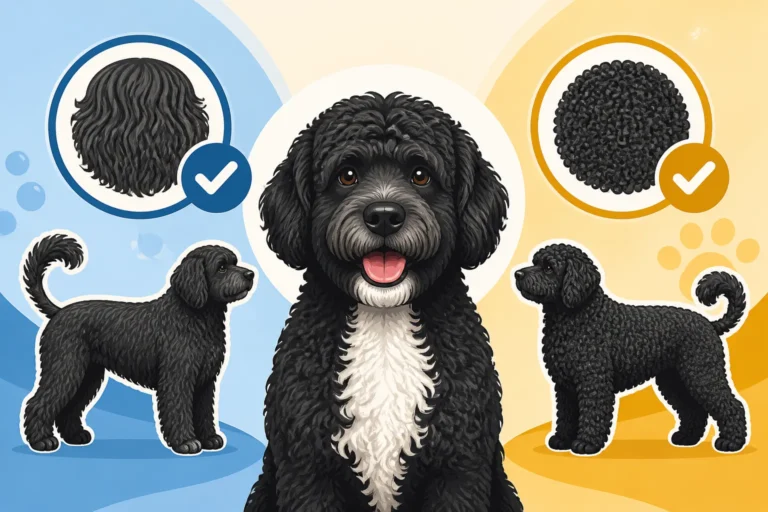
Whether a Brown Portuguese Water Dog Is Standard
It's incredibly common to fall in love with a Portuguese Water Dog's captivating personality and striking appearance, only to later wonder if their particular coat color, especially brown, is considered "standard" within the breed. The world of dog breed standards can feel a bit like navigating a maze, with specific rules and historical precedents that aren't always immediately obvious. This comprehensive guide is here to unravel those mysteries, confirming exactly where a beautiful brown Portuguese Water Dog fits into the breed's recognized color spectrum and what that means for owners and enthusiasts alike.
Understanding the Portuguese Water Dog Breed Standard
When we talk about a dog being "standard," it's not just a casual term; it refers to a detailed blueprint set forth by kennel clubs. For the Portuguese Water Dog, this standard outlines the ideal physical traits, temperament, and overall appearance that breeders strive for and judges evaluate. It's the benchmark that defines the breed's identity.
What "Standard" Truly Means
The breed standard for any purebred dog, including our beloved Portuguese Water Dog, is essentially the written description of the perfect specimen. It covers everything from height and weight to head shape, tail set, and, yes, coat color and texture. These standards are developed by parent clubs, like the Portuguese Water Dog Club of America, and recognized by larger organizations such as the American Kennel Club (AKC). The purpose isn't to create an exclusive club, but to preserve the breed's unique characteristics, ensuring that Portuguese Water Dogs continue to embody the qualities for which they were originally developed.
This detailed standard serves multiple vital functions. For breeders, it's a guide for selecting breeding pairs, aiming to produce puppies that conform as closely as possible to the ideal. For judges in conformation shows, it's the rulebook they use to evaluate and rank dogs, identifying which individuals best represent the breed. For prospective owners, understanding the standard can help them appreciate the nuances of the breed and what to expect in terms of appearance and overall structure. It's a living document, reflecting the breed's history and its future.
The Importance of Physical Traits Beyond Color
While color is often the first thing people notice and inquire about, the breed standard encompasses a holistic view of the Portuguese Water Dog. Traits like the deep chest, robust musculature, and webbed feet are equally, if not more, crucial. These physical characteristics are directly linked to the breed's historical role as a working dog on the fishing boats of Portugal, retrieving gear and herding fish. The breed's unique single coat, whether curly or wavy, is also paramount, providing insulation and shedding minimal hair. You can delve more into What a Portuguese Water Dog Looks Like to appreciate these physical attributes.
A Portuguese Water Dog's athleticism, sturdy build, and intelligent expression are all core components of the standard. Their strong neck, level back, and powerful hindquarters speak to their capability and endurance in the water. Judges look at the dog's overall balance and proportion, how it moves, and its temperament, which should be alert, intelligent, and spirited. A beautiful coat color is certainly a plus, but it's always considered in conjunction with these other fundamental qualities that define the breed's working heritage and overall soundness.
The Official View: Brown in the Breed Standard
Now, let's get to the heart of the matter: is a brown Portuguese Water Dog considered standard? The answer, thankfully for all the brown PWD lovers out there, is a resounding yes! Brown is absolutely an accepted and recognized color within the breed standard.
Specific Shades of Brown and Their Acceptance
The Portuguese Water Dog breed standard doesn't just say "brown"; it acknowledges various shades of this rich color. You might see terms like "chocolate," "liver," or simply "brown," all of which are perfectly acceptable. These shades can range from a lighter, almost café-au-lait tone to a deep, dark liver that can sometimes appear black in certain lighting. The beauty of the brown coat lies in its varying intensity and warmth.
It's important to understand that the specific shade of brown doesn't typically factor into whether a dog meets the standard; the presence of brown as a color is what counts. These dogs can be solid brown, or they can have white markings, which we'll discuss in more detail shortly. What matters is that the pigment is consistently brown where it's supposed to be, without any hints of other unaccepted colors or strange dilutions. Owners of brown PWDs often find their dog's coat color to be incredibly striking, offering a different aesthetic from the more commonly seen black variations.
How Brown Dogs Are Evaluated
When a brown Portuguese Water Dog enters the show ring, it's judged on the same criteria as a black or white PWD. The color itself is not a point of advantage or disadvantage, as long as it falls within the accepted range. Judges are looking for the overall conformation, gait, temperament, and adherence to the breed standard in its entirety. A brown dog with excellent structure, a correct coat texture, and a confident demeanor will always be preferred over a black dog with structural faults.
The main takeaway here is that a brown coat is not a fault. It's simply one of the beautiful, natural color expressions of the breed. What a judge truly wants to see is a healthy, well-conditioned dog that moves with purpose and exhibits the intelligence and spirited nature characteristic of the Portuguese Water Dog. So, if you have a brown PWD, rest assured that their color is a natural and accepted part of their breed identity. If you're wondering Which Colors a Portuguese Water Dog Comes In, brown is definitely on that list!
A Spectrum of Acceptable Colors and Patterns
Beyond brown, the Portuguese Water Dog comes in a fascinating array of colors and patterns, each adding to the breed's unique visual appeal while still adhering to the established standard. Understanding this full spectrum helps appreciate the genetic diversity within the breed.
Solid Colors: Black, White, and the Browns
The primary solid colors recognized in the Portuguese Water Dog breed standard are black, white, and various shades of brown. Black PWDs are perhaps the most frequently seen, ranging from a deep, rich ebony to a slightly faded black that might have a reddish tint in the sun. White PWDs, while less common, are absolutely stunning and fully standard, often with eyes, nose, and lips that are black or brown, depending on their genetic pigment. Then, of course, we have our beautiful browns, from milk chocolate to deep liver.
It's fascinating to observe how these solid colors can present. A solid black dog should have black pigment on its nose, lips, and eye rims. A solid brown dog will have brown pigment on these features, perfectly complementing their coat. White PWDs typically have black pigment, though brown pigment can also occur. The intensity and consistency of these solid colors are part of what makes each Portuguese Water Dog uniquely beautiful, whether you prefer the sleek depth of black, the striking purity of white, or the warm richness of brown.
Parti-Color and White Markings Explained
In addition to solid colors, Portuguese Water Dogs can also be "parti-color" or have distinct white markings. Parti-color means the dog has patches of white on a base of another accepted color (black, brown). So, a black and white parti-color, or a brown and white parti-color, are both standard. These dogs often have very striking patterns, with the white patches breaking up the solid color in interesting ways, sometimes even creating a sort of "Irish spotting" pattern.
White markings are also acceptable on solid-colored dogs. This typically appears as a white chest, white feet, or a white tip on the tail. These aren't considered parti-color if the white is limited to these areas; rather, they are solid dogs with acceptable white accents. The size and placement of these white markings are generally described within the standard, but small patches are often permitted without issue. Whether your PWD is solid brown with a white flash on the chest or a dynamic brown and white parti-color, they are still very much within the breed standard. Keeping their coats clean, especially the white parts, sometimes requires specialized shampoos you can find at pet supply stores like Chewy.
Unacceptable Colors and Misconceptions
While the Portuguese Water Dog has a good range of accepted colors, there are some that fall outside the standard and are considered faults in the show ring. Blue, grey, and fawn are examples of colors that are not recognized. These colors often arise from genetic dilutions of black or brown pigment that are not historically part of the breed's genetic makeup. A dog exhibiting these colors, while perhaps beautiful in its own right, would not be considered standard for showing or breeding purposes.
There's also a common misconception about "rare" colors. Sometimes, breeders might advertise puppies as being a "rare" color, leading prospective owners to believe they are more valuable or special. In most cases, if a color is genuinely "rare" for a purebred dog, it's often because it falls outside the breed standard. While a non-standard color doesn't make a dog any less loving or healthy as a pet, it's important for owners to be aware of the official breed guidelines, especially if they have aspirations for showing or breeding. Always refer to the official breed standard to clarify Whether a Brown Portuguese Water Dog Is Standard and what other colors are accepted.
Why Understanding Color Standards Matters
Understanding the breed standard, including color, is more than just an academic exercise. It has practical implications for breeders, owners, and the overall health and integrity of the Portuguese Water Dog breed.
Navigating the Show Ring and Breeding Decisions
For those involved in conformation showing, adherence to the breed standard is paramount. A dog's color directly impacts its eligibility and performance in the show ring. While a brown Portuguese Water Dog is perfectly standard, a PWD of an unaccepted color would be disqualified or heavily penalized, regardless of its other qualities. Similarly, breeders rely on the standard to guide their breeding programs. They aim to produce dogs that not only have excellent health and temperament but also conform to the accepted physical characteristics, including color.
Breeding decisions involve careful consideration of genetic lineage, health clearances, and conformation. Responsible breeders use genetic testing to avoid passing on hereditary diseases and select breeding pairs whose traits complement each other, all with the goal of improving the breed. The color standard, therefore, helps maintain the breed's distinct appearance. For instance, reputable breeders will openly share information about their dog's lineage and health clearances, which you can often verify through registries and health databases that list Which Health Tests a Portuguese Water Dog Breeder Should Run.
Beyond Aesthetics: Health and Temperament
It's crucial to remember that while color is part of the standard, it's primarily an aesthetic trait. A dog's health, temperament, and genetic soundness are far more important than the specific shade of its coat. A brown Portuguese Water Dog is just as likely to be healthy and have a wonderful temperament as a black or white one, assuming it comes from a responsible breeder who prioritizes these qualities. The breed is generally robust, but like all breeds, it has certain predispositions, which is why health testing is so vital. You can read more about The Twelve to Fifteen Years a Portuguese Water Dog Gets to understand their general lifespan and health considerations.
Focusing too heavily on a particular color, especially a "rare" or non-standard one, without proper attention to health clearances, can inadvertently lead to the propagation of genetic issues. A healthy, happy Portuguese Water Dog, regardless of its color, is the most valuable trait any owner can ask for. Providing a balanced diet, adequate exercise, and regular vet check-ups are key to maintaining their well-being, and you can find many quality food brands and supplements suitable for active dogs on platforms like Chewy.
The Personal Preference of a Portuguese Water Dog Owner
Ultimately, for most pet owners, the decision to bring a Portuguese Water Dog into their home is driven by love for the breed's personality, intelligence, and suitability as a companion, not solely by coat color. Whether you prefer the classic black, the striking white, or the warm, earthy tones of a brown PWD, what truly matters is the bond you form. Your dog's health, happiness, and connection with your family will always outweigh any specific aesthetic detail.
Many people fall in love with a brown Portuguese Water Dog simply because they find the color beautiful and unique. They appreciate the depth and richness it brings, especially in sunlight. While the breed standard offers a framework, it doesn't diminish the joy and companionship a non-show-quality or even non-standard colored PWD can bring. Whether your brown PWD is destined for water trials, agility courses, or simply being the best family dog ever, their color is just one part of their wonderful identity. What's most important is ensuring they are well-cared for, loved, and given the opportunity to thrive in a stimulating environment.
| Portuguese Water Dog Coat Colors | Description | Standard Acceptance | Show Ring Status |
|---|---|---|---|
| Black | Solid black, can range from deep ebony to slightly faded. | Yes | Fully accepted |
| Brown | Solid brown, ranging from light chocolate to dark liver. | Yes | Fully accepted |
| White | Solid white, sometimes with black or brown pigmentation on nose/lips. | Yes | Fully accepted |
| Black & White | Patches of black on a white base, or vice versa. | Yes | Fully accepted |
| Brown & White | Patches of brown on a white base, or vice versa. | Yes | Fully accepted |
| White Markings | Solid color with limited white on chest, feet, or tail tip. | Yes | Fully accepted |
| Grey/Blue | Diluted black, appearing as shades of grey or blue. | No | Disqualification |
| Fawn | Diluted brown, appearing as lighter, yellowish-tan. | No | Disqualification |
Disclaimer
This article is for general informational purposes only and does not constitute professional advice. Laws, prices and regulations vary by location and change over time. Consult a qualified professional for guidance on your specific situation.