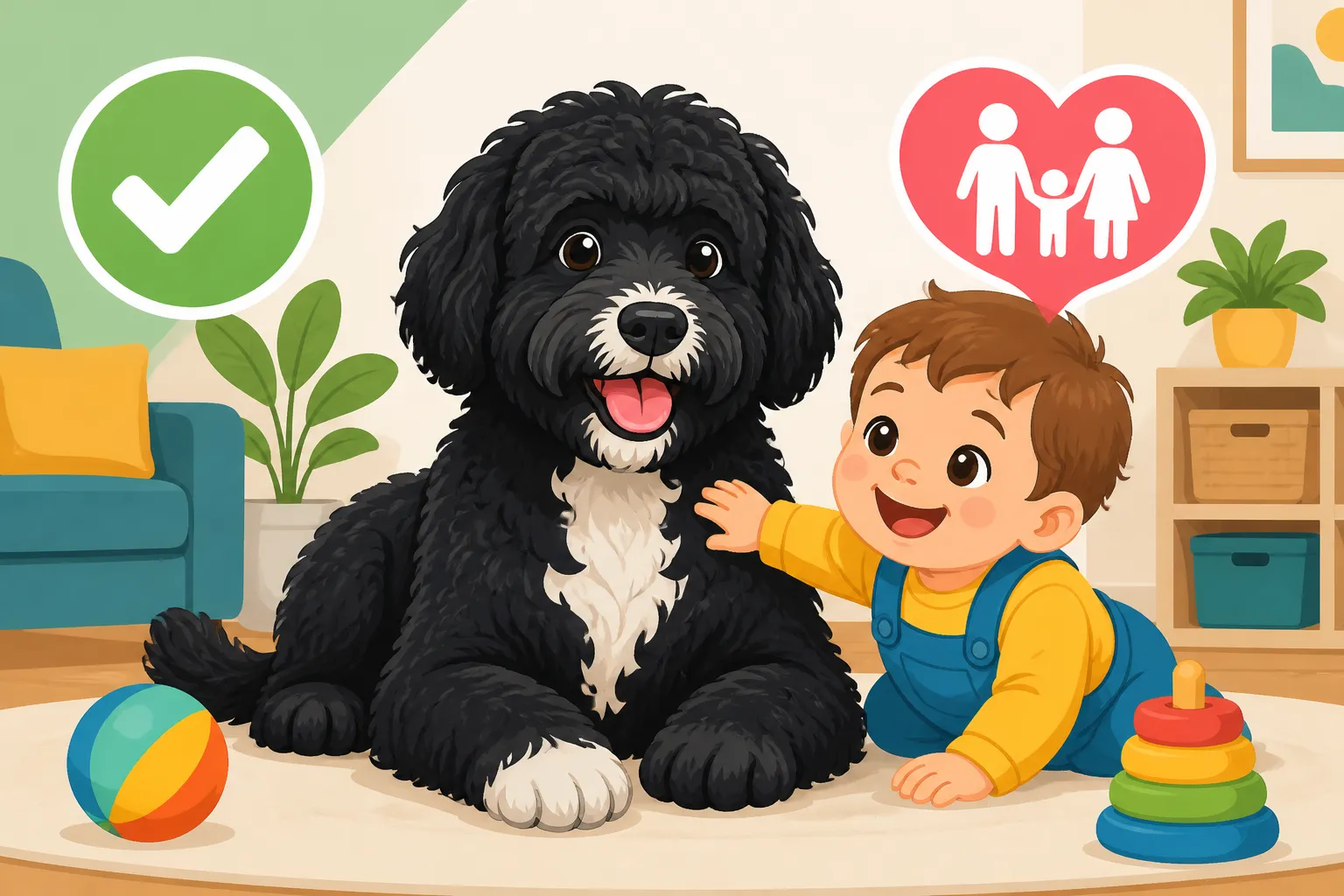
Whether a Portuguese Water Dog Suits a House With Toddlers
A Portuguese Water Dog can be a loving, lively family companion, but life with a toddler asks a lot of both dog and child. The breed’s energy, size, and enthusiasm can turn ordinary moments—like a hallway greeting or a dropped snack—into a safety challenge. This guide explains what to expect and how to make the match work more safely.
Is a Portuguese Water Dog a good fit for a home with toddlers
Portuguese Water Dogs are often affectionate and people-oriented, but no breed comes with a guarantee that an individual dog will be gentle, patient, or comfortable around young children. Toddlers are still learning how to move and behave around dogs, while a young Portuguese Water Dog may be bouncy, mouthy, and quick to investigate anything that moves or smells interesting.
That doesn’t automatically make the breed a poor choice. It means the decision should be based on the adults’ ability to supervise, train, and manage the household—not just on the dog’s reputation as a family pet. If you want a broader picture of the breed’s fit with different households, see Whether a Portuguese Water Dog Suits a Family.
The real challenge is matching two kinds of energy
A toddler’s movement can be unpredictable. A child may squeal, run, drop a toy, or suddenly reach for a dog’s face. A Portuguese Water Dog puppy may respond by bouncing forward, grabbing a sleeve, or trying to join the game. Those behaviors may come from excitement rather than aggression, but a dog’s intentions don’t prevent a fall or a scratch.
The breed also needs more than a quick trip into the yard. Many Portuguese Water Dogs enjoy activity, training, play, and time with their people. On a day when the dog’s needs have gone unmet, it may be harder for them to settle while a toddler toddles around with snacks and toys. Meeting the dog’s exercise and enrichment needs matters; How Much Exercise a Portuguese Water Dog Needs offers more detail on what a typical active routine can involve.
Consider a common scene: one parent is preparing dinner, the toddler is carrying a cracker, and the dog has just come in from a short walk. If the dog is still wound up, the smell and movement may draw their attention. A gate or a planned quiet activity can prevent that moment from becoming a scramble.
The dog’s individual temperament matters more than a breed label
Look at the specific dog in front of you. Does the dog recover calmly after a sudden sound? Can they relax behind a gate? Do they show signs of discomfort when someone approaches their bed or food? Are they able to take treats gently and disengage from play? These observations do not predict every future behavior, but they help you ask better questions.
If you’re considering a puppy, ask the breeder how the litter has been introduced to everyday household sounds, handling, and different people. Ask about the parents’ temperaments and how the breeder matches puppies to homes. A puppy’s behavior at one visit is only a snapshot, so focus on the breeder’s knowledge of the line and the puppy’s ongoing care.
An adult dog may offer a clearer sense of their established habits, but a rescue or rehomed dog still needs time to settle. Ask what is known about the dog’s experience with children, and plan to manage contact cautiously even if the dog has lived with kids before. For a fuller look at child-dog interactions, read How a Portuguese Water Dog Behaves With Children.
What toddler-specific risks should families plan for
A friendly dog can still knock a toddler down, grab a toy, or become uncomfortable when crowded. Toddlers are not able to consistently read a dog’s body language or follow safety rules without close adult help. That’s why household setup and supervision matter as much as training.
Size and exuberance can cause accidental injuries
Portuguese Water Dogs are medium-sized, athletic dogs. A happy greeting may include jumping, spinning, or pawing—more than a toddler can comfortably handle. Even a dog that is trying to play can bump a child off balance, especially in a narrow hallway or near stairs.
Some families are surprised by how quickly normal puppy behavior becomes difficult around a small child. Puppies may nip during play, chew household items, or rush toward a moving toddler. These are manageable behaviors, but they need consistent teaching and active supervision. The concern is not simply whether a dog is “nice”; it’s whether adults can prevent rough, uncontrolled interactions while both child and dog are learning.
If your toddler is frequently knocked over, frightened, or crowded, don’t wait for the dog to “grow out of it.” Use barriers, adjust routines, and seek help from a qualified, reward-based trainer if needed. For a closer look at this specific concern, see Whether a Portuguese Water Dog Knocks Over Small Children.
Toddlers may chase, grab, or interrupt a resting dog
Young children often reach for ears, tails, paws, or collars because they’re curious. They may also approach a dog that is eating, chewing, sleeping, or trying to get away. Even a patient dog can feel trapped when a child ignores their signals or blocks their path.
Teach simple rules early, but don’t depend on a toddler to remember them every time. “Let the dog sleep,” “hands off the food bowl,” and “call an adult” are useful phrases, yet an adult still needs to be close enough to intervene. A dog should have a protected resting place that the child cannot enter.
Some Portuguese Water Dogs may follow or circle active children, especially when excitement is high. Don’t assume this is harmless herding or that the dog is trying to supervise the child. Interrupt the behavior calmly, redirect the dog, and create more space. Whether a Portuguese Water Dog Herds Children discusses how to understand that kind of behavior.
How to set up a safer home and daily routine
A thoughtful setup makes it easier to prevent problems before they start. The goal isn’t to keep the dog and toddler separated all day; it’s to give everyone safe ways to share a home without expecting either one to manage situations they aren’t ready for.
Use barriers and give the dog a child-free retreat
Baby gates, exercise pens, and closed doors can create separate areas for meals, naps, and busy parts of the day. A dog’s retreat should be comfortable and predictable, not a place where the toddler can follow them to continue playing. If the dog walks away, let them leave.
Think about the moments when supervision is hardest: unloading groceries, answering the door, taking a call, or helping the toddler in the bathroom. Decide ahead of time where the dog will be during those tasks. A gate is more dependable than hoping the dog will stay on a mat while the household gets hectic.
For a practical setup, some families use a washable mat, a secure gate, and a rotation of safe chew items to help the dog settle away from toddler activity. Chewy is one place owners may look for pet supplies such as gates or enrichment items; check product details carefully for fit, durability, and safe use with your particular dog. The important part is not the brand—it’s creating a separation plan you can use consistently.
Supervise actively and teach gentle habits in small steps
Active supervision means staying close enough to interrupt an unsafe interaction, not watching from another room. When the toddler is on the floor with food or toys, keep the dog at a manageable distance unless an adult can closely guide the interaction. Avoid leaving a dog and young child together unattended, even for a brief moment.
Teach the dog useful behaviors such as coming when called, settling on a mat, leaving an object, and accepting calm handling. Practice these skills away from the toddler first, then gradually use them in real household situations. Reward the behavior you want—such as choosing to lie down while the child plays—instead of waiting until the dog is overexcited to correct them.
Teach your child to interact gently too. Show them how to toss a treat away from themselves rather than placing fingers near the dog’s mouth, and encourage petting on the shoulder or side instead of the face. Keep sessions short. If the child gets excited or the dog becomes restless, take a break rather than trying to force a sweet family moment.
Questions to ask before bringing a dog home
Before choosing a Portuguese Water Dog, be honest about the adults’ time, energy, and support. A toddler already needs frequent attention. A puppy adds house-training, socialization, grooming, and training to the schedule. An adult dog may be less demanding in some ways, but they still need exercise, care, and a careful transition.
Questions for breeders, rescues, and your household
Ask a breeder or rescue what they know about the dog’s behavior around children, handling, food, toys, and household activity. Ask how they respond to the dog’s needs when the home is busy. You can also ask whether the dog has shown fear, guarding, or difficulty settling, and what management strategies have helped.
Then take an honest look at your own routines. Can one adult supervise the dog and child while the other handles dinner or bedtime? Is there a secure space for the dog? Can you manage training and exercise when a toddler is sick, naps are off schedule, or the weather is unpleasant? If the answer depends on everything going smoothly, reconsider the timing or arrange reliable help.
If you already have a dog and are preparing for a baby or toddler, plan gradual changes before the child’s routine shifts. Set up gates, establish the dog’s rest area, and practice settling skills ahead of time. A new household arrangement can take adjustment, and How a Portuguese Water Dog Adjusts to a New Home explains why predictable routines and patient transitions are helpful.
A practical readiness checklist
Use this table as a starting point for a family conversation. A “not yet” answer doesn’t mean you can never have a Portuguese Water Dog; it may show which parts of the plan need attention first.
| Question | A reassuring sign | A reason to pause and plan |
|---|---|---|
| Can an adult supervise interactions closely? | Adults can stay nearby and step in promptly | The dog and toddler would often be together while adults are distracted |
| Does the dog have a child-free resting place? | Gates or doors protect a quiet retreat | The toddler can reach the dog’s bed or follow the dog everywhere |
| Can the family meet the dog’s daily needs? | Exercise, training, grooming, and rest fit the routine | The plan depends on a toddler-free schedule that rarely exists |
| Is the dog comfortable around children? | The dog can disengage and settle, with gradual introductions | The dog avoids, stiffens, guards, or becomes overexcited around the child |
| Are child and dog rules realistic? | Adults can reinforce simple rules consistently | Safety depends on the toddler remembering rules without supervision |
A household with toddlers can work well with a Portuguese Water Dog when adults actively manage the relationship, protect the dog’s space, and teach both child and dog what to do. But if you’re hoping the dog will instinctively tolerate anything a toddler does, or that the child will reliably follow rules, the setup is not ready yet. For a wider view of common surprises, see What Portuguese Water Dog Owners Wish They Had Known.
Disclaimer
This article is for general informational purposes only and does not constitute professional advice. Laws, prices and regulations vary by location and change over time. Consult a qualified professional for guidance on your specific situation.