How a Portuguese Water Dog Differs From a Labradoodle
It's easy to look at a Portuguese Water Dog and a Labradoodle and think they're cut from the same cloth, especially with their appealing curly or wavy coats. Many families find themselves wondering if they’re essentially getting the same dog, or if one is truly better suited to their lifestyle. This guide will walk you through the distinct differences between these two wonderful breeds, helping you understand their unique traits, needs, and what makes each one special.
Origins and Breed Recognition
Understanding where a breed comes from is often the first step in truly appreciating its characteristics. The history behind the Portuguese Water Dog is deeply rooted in tradition and utility, while the Labradoodle's story is a more modern, intentional creation. These differing origins play a huge role in the inherent traits and instincts you'll see in each dog.
The Portuguese Water Dog's Ancient Lineage
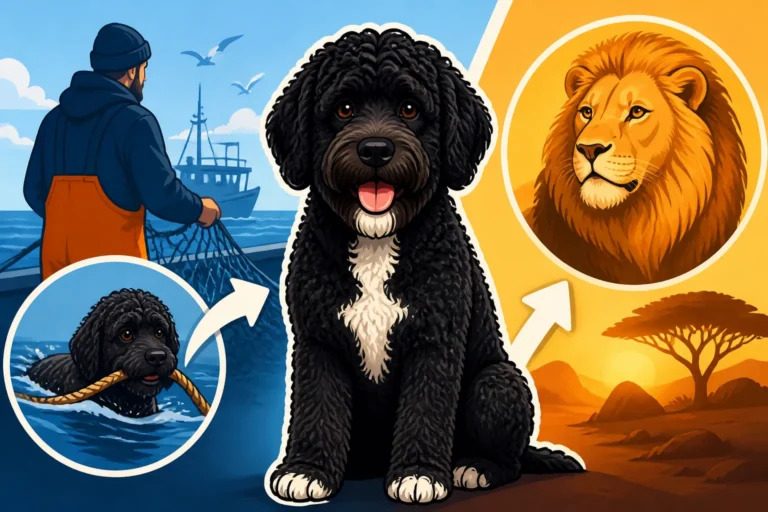
The Portuguese Water Dog, or Cão de Água Português, hails from Portugal's Algarve region, where for centuries they were indispensable companions to fishermen. These were hardy, intelligent dogs bred to perform vital tasks on the open sea, from herding fish into nets to retrieving lost tackle and acting as canine couriers between boats. Their webbed feet, powerful swimming ability, and dense, waterproof coats weren't just for show; they were critical tools for survival and work in a challenging marine environment. They truly earned their keep.
Because they were working dogs for so long, the Portuguese Water Dog developed a strong sense of purpose and an incredible problem-solving intelligence. They weren't just following commands; they were often expected to think for themselves, anticipating the needs of their human partners on the fishing boats. This independent, driven nature is something that still defines the breed today, even though most no longer work on fishing vessels. When you see a PWD, you're looking at a piece of living history, a direct descendant of those ancient mariners. If you want to learn more about their history, you might be interested in reading The Portuguese Water Dog Worked the Algarve Fishing Fleet.
The Labradoodle's Modern Beginnings
In stark contrast, the Labradoodle is a much newer kid on the block, originating in Australia in the late 1980s. The breed was deliberately developed by Wally Conron, a breeding manager for Guide Dogs Victoria, with a specific goal in mind: to create a guide dog for a visually impaired woman whose husband suffered from allergies. Conron crossed a Labrador Retriever, known for its trainability and gentle nature, with a Standard Poodle, famous for its intelligence and low-shedding, hypoallergenic coat. The hope was to combine the best traits of both breeds.
While the original intent was very noble and specific, the Labradoodle quickly gained popularity as a family pet, especially among those seeking a "hypoallergenic" dog with a friendly disposition. However, because it's a crossbreed, not a purebred recognized by major kennel clubs, there's more variability in its traits compared to the PWD. This means that while many Labradoodles excel as family companions, their appearance, coat type, and temperament can differ quite a bit from one dog to another, depending on which parent breed's genes are more dominant.
Physical Characteristics and Coat Differences
Perhaps the most obvious way these two breeds differ is in their physical appearance, particularly their coats. Both are known for their non-shedding qualities, but the texture, maintenance, and overall look can vary significantly. This isn't just about aesthetics; it impacts grooming needs and how well they handle different environments.
Portuguese Water Dog's Distinctive Coat and Build
The Portuguese Water Dog has a single, dense coat with no undercoat, which is why they are often touted as being "hypoallergenic" – although no dog is truly 100% allergy-free. This waterproof coat comes in two distinct types:
- Curly: This coat is made up of cylindrical, compact curls that are often quite tight.
- Wavy: This coat has soft, undulating waves with a slight sheen.
Regardless of the type, the coat is thick and needs consistent grooming to prevent matting. It never stops growing, much like human hair. PWDs are also medium-sized dogs with a robust, athletic build. They possess powerful musculature, particularly in their hindquarters, which is essential for their strong swimming ability. Their famous webbed feet are another unmistakable physical characteristic, perfectly adapted for propulsion in water. Their tails are thick at the base and taper, often carried high or curled over their back, acting as a rudder in the water. For more information on their coat, check out Curly or Wavy: the Two Portuguese Water Dog Coats.
Labradoodle's Variable Coat Types and Size
The Labradoodle, being a hybrid, doesn't have the same strict coat standards as the PWD. Their coats can vary widely, even within the same litter, depending on the generation and whether they lean more towards their Labrador or Poodle ancestry. Generally, Labradoodles come in three main coat types:
- Hair Coat: This is the least desirable for allergy sufferers, as it's more like a Labrador's coat – often straight, prone to shedding, and less "doodle-like."
- Fleece Coat: This is the most common and sought-after coat, soft and wavy or spiraling, giving it that characteristic "shaggy" look. It's low-shedding.
- Wool Coat: This coat is dense and curly, similar to a Poodle's, and is typically non-shedding.
Labradoodles also come in a broader range of sizes, from miniature to standard, making them adaptable to different living situations. Their build is generally athletic but can vary from the stockier Labrador build to the more elegant Poodle build. This variability can be both a blessing and a curse; it offers choices, but also means you need to be very careful when selecting a Labradoodle to ensure you're getting a dog with the coat and size characteristics you desire.
Shedding and Hypoallergenic Qualities
This is often a key consideration for families choosing between these two breeds. Both are frequently chosen by individuals with allergies, but it’s crucial to understand what "hypoallergenic" truly means in this context.
Portuguese Water Dog: Their single coat is a major factor in their low-shedding reputation. Instead of releasing dander and hair into the environment, dead hairs tend to get caught in the growing coat. This means they require regular, thorough brushing to remove these trapped hairs and prevent mats. If not brushed, those hairs will tangle and pull, becoming painful. This regular grooming routine helps to minimize dander and loose hair around the home, which is often what triggers allergies. However, even with rigorous grooming, a PWD will still produce dander and saliva, so severe allergy sufferers might still react.
Labradoodle: Due to their mixed heritage, the "hypoallergenic" quality of a Labradoodle is less predictable. While many Labradoodles, especially those with fleece or wool coats, are indeed low-shedding and well-tolerated by allergy sufferers, those with a more dominant "hair coat" from their Labrador side can shed quite a bit. It’s a roll of the dice unless you specifically choose a multi-generational Labradoodle bred for consistency in coat type. If you have allergies, it's vital to spend time with the specific Labradoodle puppy you are considering, and even its parents, to gauge your reaction. For either breed, regular grooming, including bathing and brushing with quality tools you can find at pet supply retailers like Chewy, is essential for managing their coats and minimizing potential allergens.
Temperament and Personality Traits
Beyond their looks, the real heart of a dog lies in its personality. Both Portuguese Water Dogs and Labradoodles are beloved for their wonderful temperaments, but their historical roles and breeding goals have shaped them into distinctly different companions.
The Driven and Intelligent Portuguese Water Dog
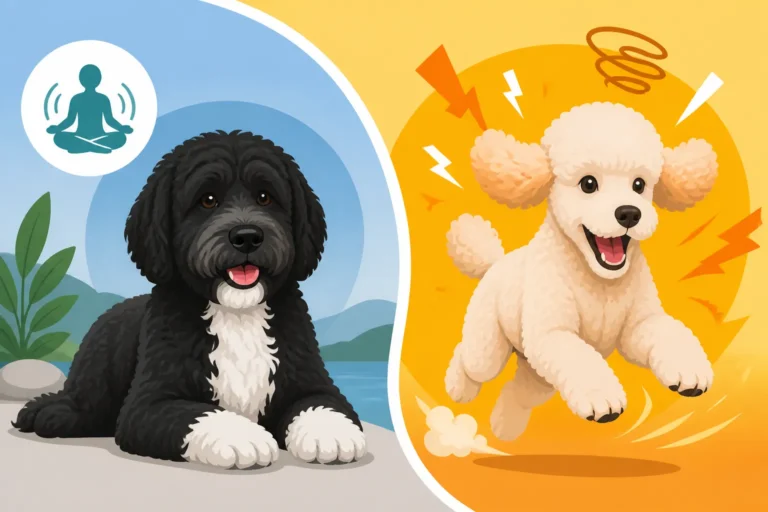
A Portuguese Water Dog is, at its core, a working dog. They were bred to be intelligent, independent thinkers, and partners in a demanding profession. This means they are incredibly bright, often described as having a keen mind that needs to be engaged. They thrive on having a "job" to do, whether that's learning complex tricks, participating in dog sports like agility or dock diving, or simply being an active participant in family life. Boredom is a PWD's worst enemy, and an under-stimulated PWD can easily become destructive or mischievous.
They are known for being affectionate and loyal to their families, often forming strong bonds. However, they can also be wary of strangers until they decide you're okay. Their intelligence means they learn quickly, but it also means they can be a bit stubborn or "improvisational" if they think their way is better than yours. This isn't defiance, but rather a reflection of their history as independent problem-solvers. They need consistent, positive reinforcement training and a clear leader. They're often described as having a "sense of humor" and love to play, especially in water. If you're looking for a dog that will happily spend its days lounging on the couch, a PWD might not be the best fit. They need an active owner who understands their drive and commitment to work. You can explore this further in A Portuguese Water Dog Was Bred to Work a Boat, Not a Yard.
The Affectionate and Adaptable Labradoodle
Labradoodles were bred with companionship in mind, aiming for the best traits of the Labrador Retriever and the Poodle. The result is often an incredibly friendly, outgoing, and affectionate dog that loves to be part of the family. They tend to be very social, eager to please, and generally good with children and other pets, making them excellent family dogs. Their temperament is often described as joyous and playful, and they're usually quite adaptable to different living situations, provided their exercise needs are met.
While intelligent, inheriting brainpower from both parent breeds, Labradoodles typically don't exhibit the same intense, independent drive as a PWD. They are generally more amenable to traditional obedience training and respond well to positive reinforcement. They thrive on attention and being involved in family activities. However, it's important to remember the variability in their temperament due to their hybrid nature. Some Labradoodles might lean more towards the high energy of a working Labrador line, while others might inherit more of the Poodle's refined nature. Most fall somewhere in the middle, offering a balanced mix of playfulness and affection. They often make fantastic therapy or emotional support dogs due to their innate desire to connect with people.
Exercise Needs and Activity Levels
Both breeds are active, but the type and intensity of their exercise needs can be quite different. This is a critical factor for prospective owners, as an under-exercised dog, regardless of breed, can develop behavioral issues.
Portuguese Water Dog's High-Energy Requirements
Let's be blunt: Portuguese Water Dogs are not for the faint of heart when it comes to exercise. They are bundles of energy, stamina, and intelligence, all wrapped up in a curly package. Remember their history on fishing boats? They were expected to work all day, often in and out of the water, retrieving, diving, and herding. That ingrained drive doesn't simply disappear because they're now family pets.
A PWD needs a significant amount of physical exercise and mental stimulation every single day. We're talking multiple long walks, runs, or vigorous play sessions. But more than just physical activity, they absolutely thrive when given a "job" to do. This could be structured activities like dock diving, advanced obedience, agility, rally, or even just complex puzzle toys. They are incredibly well-suited to water sports, and if you have access to safe swimming environments, your PWD will be in heaven. Skipping a day of exercise isn't just a minor oversight for a PWD; it can lead to pent-up energy that manifests as destructive chewing, excessive barking, or general naughtiness. They are truly an active breed for active people. For insights into their boundless energy, consider How Much Exercise a Portuguese Water Dog Needs.
Labradoodle's Moderate to High Energy Needs
Labradoodles are also active dogs, but their energy levels can be more varied than a PWD's, again depending on their genetic inheritance. Generally, they require a good amount of exercise to stay happy and healthy, falling into the moderate to high energy category. This usually translates to at least 60-90 minutes of vigorous exercise daily, which could include brisk walks, jogging, games of fetch, or trips to the dog park.
While many Labradoodles enjoy water, it's not the same innate, historical imperative as it is for the PWD. They are often happy with a good run in the park or a long hike. Their desire to please also makes them excellent candidates for various dog sports, though they might not have the same intense drive as a PWD for some of the more demanding water-based activities. An under-exercised Labradoodle can still develop behavioral problems, such as chewing or digging, but it might not be quite as intense or destructive as with a bored PWD. They need consistent engagement and activity, but often have a slightly more flexible range of acceptable outlets for their energy. If you're looking for ways to keep a Labradoodle busy, you might check out the wide array of durable toys and training aids available from retailers like Chewy.
Training and Intelligence
Both breeds are highly intelligent, but their approach to learning and their responsiveness to training can differ due to their inherent temperamental traits. Understanding these nuances is key to successful training and a harmonious relationship with either dog.
Training the Independent Portuguese Water Dog
The intelligence of a Portuguese Water Dog is undeniable, but it comes with a twist: a strong sense of independence. These dogs were bred to think for themselves, often making decisions in challenging situations on a fishing boat without direct command. This means they are quick learners, capable of mastering complex commands and tricks with ease. However, they can also be quite creative in their interpretations of commands or, shall we say, "offer alternative solutions" if they deem it more efficient or interesting.
Consistency, patience, and positive reinforcement are absolutely essential when training a PWD. Harsh corrections can shut them down or make them even more determined to do things their own way. They thrive on variety and mental challenges, so incorporating puzzle toys, scent work, or rotating training exercises will keep them engaged. Early socialization and puppy classes are vital to channel their intelligence and energy productively. Many PWD owners find that their dogs excel in competitive obedience, agility, or rally, as these activities tap into their working drive and problem-solving abilities. It’s not about breaking their will, but rather guiding their incredible intellect. This independent streak is why they are sometimes described as "opinionated," and if you’re not prepared for a dog that will occasionally challenge your authority with a wagging tail and a glint in its eye, you might find a PWD frustrating. To understand their training needs better, read Training a Portuguese Water Dog That Was Bred to Think for Itself.
Training the Eager-to-Please Labradoodle
Labradoodles generally inherit a strong desire to please from both their Labrador and Poodle parents, which often makes them highly trainable. They are intelligent and eager to learn, and typically respond very well to positive reinforcement methods. Their enthusiasm for interacting with their human companions is a huge asset in training, as they are often more focused on pleasing you than asserting their own independent thoughts.
While they can be excitable, especially as puppies and adolescents, their eagerness makes them receptive to consistent training from a young age. Like PWDs, early socialization and puppy classes are beneficial for Labradoodles to help them become well-adjusted adults. They can excel in a wide range of dog sports and activities, from obedience to therapy work, due to their biddable nature and intelligence. The main challenge with a Labradoodle often lies in managing their exuberance and ensuring they receive enough mental and physical stimulation to prevent boredom, which can lead to unwanted behaviors like excessive barking or chewing. Overall, a Labradoodle is generally a more straightforward training prospect for a first-time dog owner compared to the more independent PWD.
Health Concerns and Lifespan
When bringing any dog into your family, understanding their potential health predispositions is incredibly important. Both Portuguese Water Dogs and Labradoodles are generally healthy breeds, but each has specific concerns that responsible owners and breeders should be aware of.
Common Health Issues in Portuguese Water Dogs
The Portuguese Water Dog is a robust breed, but like all purebreds, they have certain genetic conditions that have been identified within their lineage. Responsible breeders perform extensive health testing on their breeding stock to minimize the incidence of these diseases. Some of the most notable health concerns include:
- Hip Dysplasia and Elbow Dysplasia: These are common orthopedic conditions where the hip or elbow joints don't form correctly, leading to arthritis and pain. Screening via X-rays is standard for breeding dogs. For more on this, check out Hips and Joints in a Portuguese Water Dog.
- Progressive Retinal Atrophy (PRA): There are two main forms found in PWDs, prcd-PRA and Early Onset PRA, both leading to eventual blindness. DNA tests are available for both, allowing breeders to avoid producing affected puppies.
- GM1 Gangliosidosis: A severe neurological storage disease that is fatal in puppies, usually before six months of age. There is a DNA test to identify carriers and affected dogs. GM1 Gangliosidosis and the Portuguese Water Dog Puppy That Never Reaches Six Months delves deeper into this.
- Juvenile Dilated Cardiomyopathy (JDCM): A heart condition that causes sudden death in young puppies. A DNA test is available.
- Addison's Disease: An endocrine disorder affecting the adrenal glands, which can be life-threatening if untreated. While there's no DNA test for Addison's specifically, it's known to run in certain lines. Addisons Disease Is Common in Portuguese Water Dogs provides more detail.
- Improper Coat (IC): While not a health issue, it's a genetic trait where the coat lacks the correct texture and often sheds. A DNA test is available.
The average lifespan for a Portuguese Water Dog is typically 12 to 15 years. Ethical breeders will readily share the results of all these genetic tests for their breeding dogs.
Health Considerations for Labradoodles
As a crossbreed, Labradoodles can inherit health issues from both parent breeds, the Labrador Retriever and the Standard Poodle. While the idea of "hybrid vigor" suggests they might be healthier than purebreds, this isn't always the case, especially if careful health screening isn't done on the parent dogs. Common health concerns that can appear in Labradoodles include:
- Hip and Elbow Dysplasia: Inherited from both Labradors and Poodles, similar to PWDs.
- Progressive Retinal Atrophy (PRA): Both parent breeds can carry genes for PRA, so tests should be done.
- Von Willebrand's Disease (vWD): A bleeding disorder, more commonly associated with Poodles.
- Epilepsy: Can be inherited from either parent.
- Thyroid Issues: Hypothyroidism is a concern in both parent breeds.
- Allergies: Skin and food allergies are quite common in Labradoodles.
Because Labradoodles are a mixed breed, the health guarantee and testing protocols can vary significantly between breeders. A responsible Labradoodle breeder will health-test their parent dogs for conditions common to both Labradors and Poodles, and should be transparent with those results. Their lifespan generally ranges from 10 to 14 years.
Lifespan Comparisons
When considering the longevity of your future companion, both breeds offer a good, long life, often reaching well into their senior years.
| Feature | Portuguese Water Dog | Labradoodle (F1, F1B, etc.) |
|---|---|---|
| Origin | Ancient Portuguese fishing companion | Modern Australian crossbreed |
| Primary Purpose | Working dog (herding fish, retrieving) | Companion dog, guide dog (original intent) |
| Coat Types | Curly or Wavy (single coat) | Hair, Fleece, or Wool (variable) |
| Shedding | Low-shedding (trapped hair) | Variable (low to moderate, depends on coat) |
| Grooming | High (daily brushing, regular clipping) | High (regular brushing, clipping) |
| Size | Medium (consistent range) | Miniature, Medium, Standard (variable) |
| Temperament | Driven, intelligent, independent, loyal | Affectionate, friendly, eager-to-please |
| Energy Needs | Very High (needs a "job," loves water) | Moderate to High (needs regular activity) |
| Trainability | Intelligent but can be opinionated/stubborn | Intelligent, eager-to-please, responsive |
| Known Health Issues | Hip/Elbow Dysplasia, PRA, GM1, JDCM, Addison's | Hip/Elbow Dysplasia, PRA, vWD, Epilepsy, Allergies |
| Average Lifespan | 12-15 years | 10-14 years |
Portuguese Water Dog: These wonderful dogs typically enjoy a robust lifespan, often living for 12 to 15 years, with many reaching or even exceeding that range with good care. Their longevity is often attributed to careful breeding practices focusing on genetic health. Regular veterinary check-ups, a high-quality diet, and consistent exercise contribute significantly to their long-term well-being. Keeping them active and mentally engaged throughout their lives is key, as is preventative care for their teeth and ears, which are common areas of concern for swimming dogs.
Labradoodle: The lifespan of a Labradoodle is generally comparable to its parent breeds, typically ranging from 10 to 14 years. As with PWDs, factors like genetics, diet, exercise, and preventative healthcare play a huge role. Because of the variability in their genetic makeup, ensuring you get a Labradoodle from a breeder who performs all recommended health screenings for both Labrador Retrievers and Poodles is paramount. This can help mitigate the risk of common inheritable diseases that might shorten their lives or impact their quality of life. Regardless of breed, a loving home, proper nutrition, and consistent veterinary care are the best investments you can make in your dog's long and happy life.
Ultimately, both the Portuguese Water Dog and the Labradoodle can make incredible companions, but they are distinct breeds with different histories, temperaments, and needs. Your choice really comes down to matching your lifestyle and expectations with the unique characteristics of each dog. Do you crave an independent, water-loving dynamo that needs a constant challenge? Or are you looking for a more universally friendly, eager-to-please companion that might be a bit more adaptable? Knowing these differences will help you make the best decision for your family.
Disclaimer
This article is for general informational purposes only and does not constitute professional advice. Laws, prices and regulations vary by location and change over time. Consult a qualified professional for guidance on your specific situation.