Why a Portuguese Water Dog’s Tail Is Never Docked
A Portuguese Water Dog’s tail is left natural because it is part of the breed’s characteristic outline and useful equipment in the water. If you have seen a dog with a shortened tail, it may have been docked for a medical reason or altered outside the breed standard. This guide explains what the standard calls for, what the tail does, and how to care for it.
What the Portuguese Water Dog standard says about the tail
The natural tail is part of the breed’s outline
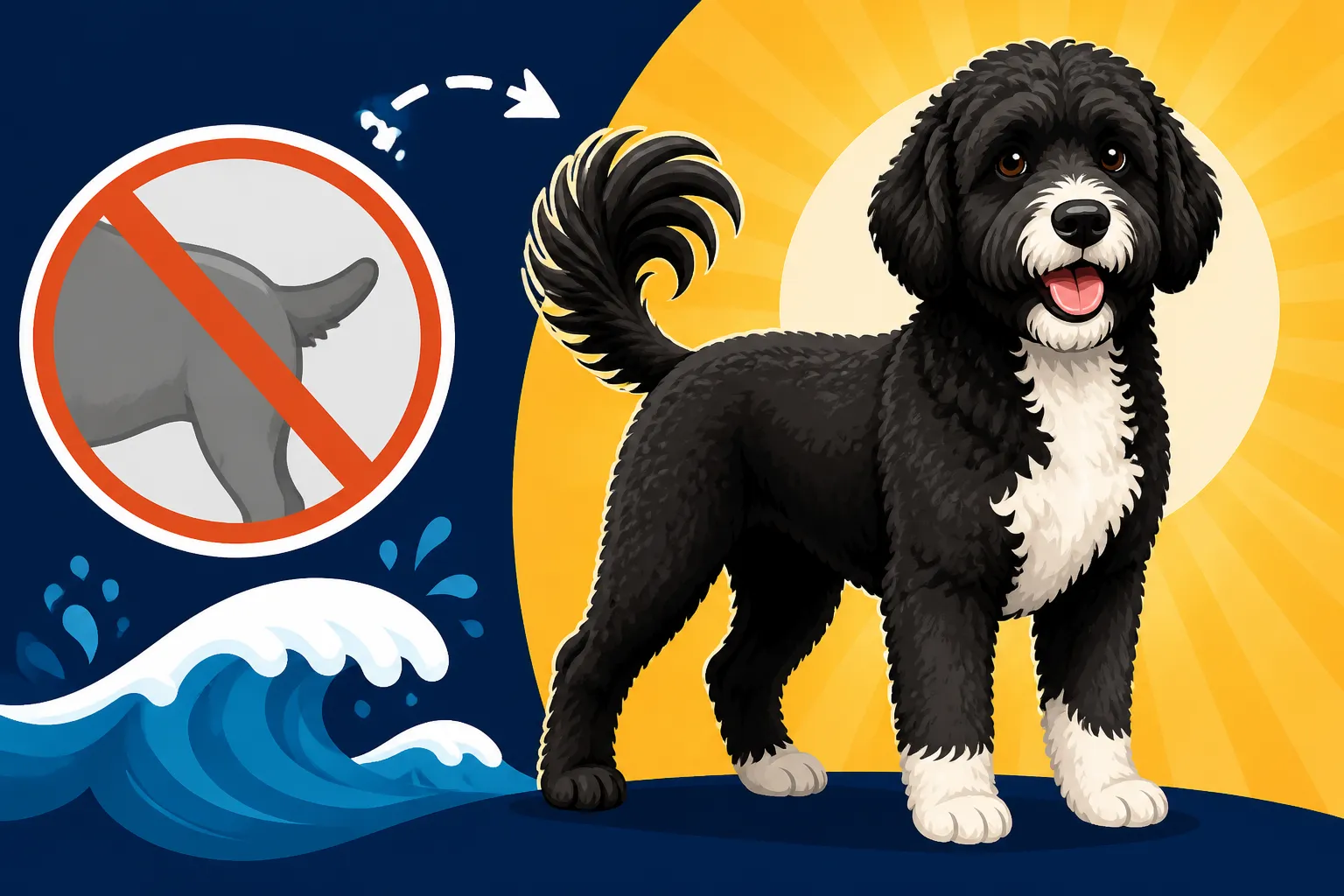
A Portuguese Water Dog is meant to have a natural, undocked tail. It is thick at the base, tapers toward the tip, and is long enough to reach approximately to the hock. The coat forms a plume, giving the tail a distinctive look that complements the dog’s sturdy, athletic shape. The tail is not a separate decorative detail: it is included in the overall picture of a correctly built Portuguese Water Dog.
That natural outline is one reason people notice when a dog’s tail has been shortened. Breed standards describe the expected appearance of the dog, including its tail; they do not call for routine cosmetic docking. For a closer look at the whole-body shape the breed standard describes, see What a Correct Portuguese Water Dog's Outline Looks Like.
A long tail does not mean every individual tail will look identical. Coat length, texture, grooming, posture, and the dog’s own anatomy all affect its appearance. A freshly trimmed plume may look quite different from a long, full one, even though both tails are natural.
Natural carriage changes with the dog’s mood and activity
A Portuguese Water Dog may carry its tail differently depending on what is happening around it. At rest, it may hang lower; when the dog is alert or moving, it may rise and curve. That movement is normal and helps make the tail expressive. For a more focused explanation of these positions, see How a Portuguese Water Dog's Tail Should Be Carried.
A tail held high during an exciting walk is not automatically a problem, just as a tail hanging low does not by itself diagnose illness. Look at the whole dog: Is the tail moving as usual? Is the dog comfortable when sitting, walking, and being touched? Has the posture changed suddenly? A new change, especially one accompanied by pain, deserves attention from a veterinarian.
| Tail feature | What you may notice | Why it matters |
|---|---|---|
| Length | Natural tail extending toward the hock | Fits the breed’s expected outline |
| Base and tip | Strong at the base, narrowing toward the end | Supports shape and movement |
| Plume | Longer hair along the tail | Gives the tail its characteristic appearance |
| Carriage | Position varies with activity and attention | Movement and posture are part of normal communication |
| Docking | Shortening of the tail | Not the routine cosmetic look described for the breed |
Why the tail matters to a water-working dog
It can help with balance and steering
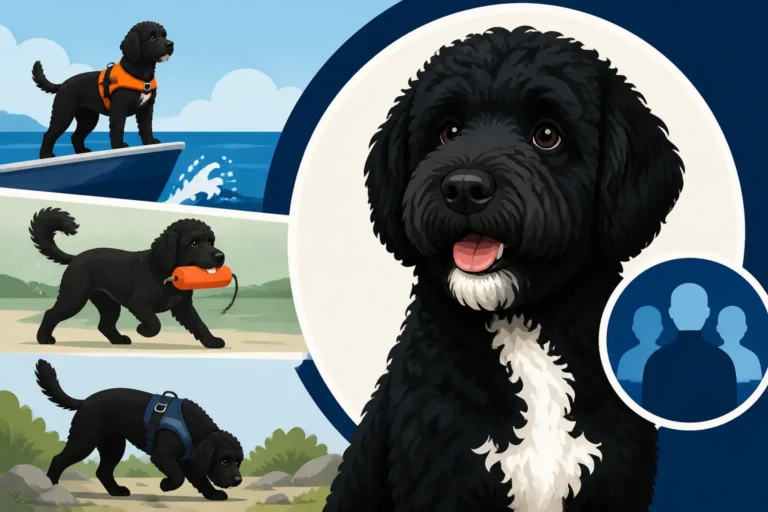
The Portuguese Water Dog’s history is tied to work around fishing boats and the coast of Portugal. In the water, the tail can help a dog adjust its balance and direction as it swims. It is not a motor or a substitute for strong limbs and good conditioning, but it is one part of the body that can contribute to controlled movement. Learn more in Why a Portuguese Water Dog's Tail Works as a Rudder.
Think of a dog turning toward a tossed toy or changing direction in a pool. The tail moves along with the body, helping the dog manage its posture as it changes course. The precise contribution varies with the dog, the speed, and the water conditions, but keeping the tail natural preserves its full length and movement.
The tail also matters outside the water. Dogs use their tails as part of body language, and people often read tail position alongside posture, facial expression, and movement. A natural tail gives the dog its full range of tail motion; it does not make every signal easy to interpret, but it gives you more to observe.
Its historical appearance has a practical story
The breed’s working past helps explain why its tail is not treated as an optional feature. Portuguese Water Dogs were expected to be capable, agile dogs around boats and water, and the tail suited that active build. The familiar plume is also part of the breed’s recognizable silhouette. For another angle on how the tail might have been seen during work, read Why the Tail Tuft Made a Portuguese Water Dog Visible.
It is worth being careful about turning that history into a single dramatic claim. A tail can serve practical functions without every historical detail being perfectly documented or every dog using it in the same way. The straightforward point is that the breed standard preserves the natural tail, and its shape and movement are consistent with a working water dog.
If your dog swims, safety still depends on more than tail length. Choose water that is safe for dogs, supervise closely, and do not assume that breed history means every individual is confident or capable in every swimming situation. The breed’s aquatic heritage is not a substitute for gradual introductions and sensible supervision.
Docking, natural short tails, and medical exceptions
Docking is different from a naturally short or injured tail
Docking means shortening a tail through a procedure. It is different from a tail that is naturally shorter, and it is different again from a veterinarian removing part or all of a tail to treat a serious injury or disease. Those situations should not be confused when someone sees a Portuguese Water Dog with a short tail.
A short tail may prompt questions about the dog’s background, but appearance alone cannot tell you why it is short. If you are considering a puppy, ask the breeder directly whether the tail is natural and whether any procedure has been performed. A responsible conversation should be clear and factual rather than evasive.
Cosmetic docking should also be distinguished from medically necessary treatment. If a tail is badly injured, repeatedly damaged, or affected by disease, a veterinarian can explain the options and likely effects. That decision is about the individual dog’s health, not about creating a particular look.
How to respond if a tail is suddenly painful
A dog with a healthy tail should be able to move and carry it without obvious pain. Contact a veterinarian if your dog suddenly holds the tail unusually low, yelps when it is touched, has swelling or bleeding, or seems reluctant to sit or move normally. Tail injuries can be uncomfortable, and a dog may hide pain until the problem is more noticeable.
Do not try to splint, tightly wrap, or medicate an injured tail on your own. Wrapping can restrict circulation or trap moisture, and medications intended for people can be dangerous for dogs. If there is an open wound or significant bleeding, seek veterinary guidance promptly.
For routine grooming, check the tail while brushing so you can spot tangles, debris, or skin irritation early. If you are assembling grooming basics, a comb and dog-safe brush are commonly available through pet retailers such as Chewy; choose tools suited to your dog’s coat and follow your groomer’s guidance. The tail plume may mat like other longer-coated areas, particularly if it stays damp or collects burrs outdoors.
Caring for a Portuguese Water Dog’s natural tail
Keep the plume clean and free of tangles
The tail’s longer hair can catch leaves, mud, and small tangles. Work through the coat gently with a suitable comb or brush, checking close to the skin rather than only smoothing the surface. If you find a tight mat, do not yank it; pulling can hurt the dog and irritate the skin. A groomer can help with mats that are difficult or close to the skin.
After swimming, rinse away salt, chlorine, or lake residue when appropriate, then dry the coat thoroughly. Damp hair can tangle and may leave the skin uncomfortable. A towel and grooming supplies can be found through retailers such as Chewy, but the important part is using products made for dogs and drying without rough rubbing.
The tail can be trimmed as part of a practical pet clip, but trimming the coat is not the same as shortening the tail itself. If you like the plume, tell your groomer you want to preserve it while keeping the coat manageable. For more on the grooming choice, see Whether a Portuguese Water Dog's Tail Plume Is Left.
Make tail care part of a calm handling routine
Some dogs are sensitive about having their tails handled, especially if they have had a painful tangle or injury. Start with brief, gentle checks when your dog is relaxed. Touch the tail lightly, reward calm behavior, and stop if the dog becomes worried. Over time, this can make brushing and veterinary examinations less stressful.
Keep an eye on the skin under the plume, where moisture and knots can be harder to spot. If you notice persistent redness, odor, discharge, or repeated scratching, ask your veterinarian rather than assuming it is only a grooming issue. If an ear or coat-care routine also needs refreshing, keep dog-safe supplies together; Chewy can be one place owners look for basic grooming items, while advice about irritation or infection should come from a veterinary professional.
A natural tail is part of what makes the Portuguese Water Dog look and move like itself. Leaving it intact fits the breed’s expected appearance and preserves its full range of movement. Good routine care—gentle brushing, checking for tangles, and paying attention to sudden changes—helps keep that tail comfortable throughout the dog’s life.
Disclaimer
This article is for general informational purposes only and does not constitute professional advice. Laws, prices and regulations vary by location and change over time. Consult a qualified professional for guidance on your specific situation.