Which Portuguese Water Dog Color Is Rarest
A Portuguese Water Dog’s color can look very different in a puppy photo than it does after a few years of sun, swimming, and coat changes. If you are trying to figure out which color is genuinely rarest, the honest answer is that no reliable breed-wide color census settles the question. This guide explains which shades are least often seen, what the breed standard accepts, and what color can—and cannot—tell you about a dog.
Which Portuguese Water Dog color is rarest
Solid white is often considered the rarest-looking color
Solid white Portuguese Water Dogs are often described as the least commonly seen color, especially compared with black dogs. But “rarest” is not an official breed statistic: there is no widely accepted count that ranks every color across all Portuguese Water Dogs. A breeder’s experience, regional availability, and which dogs are shown or bred can all shape what people think is rare.
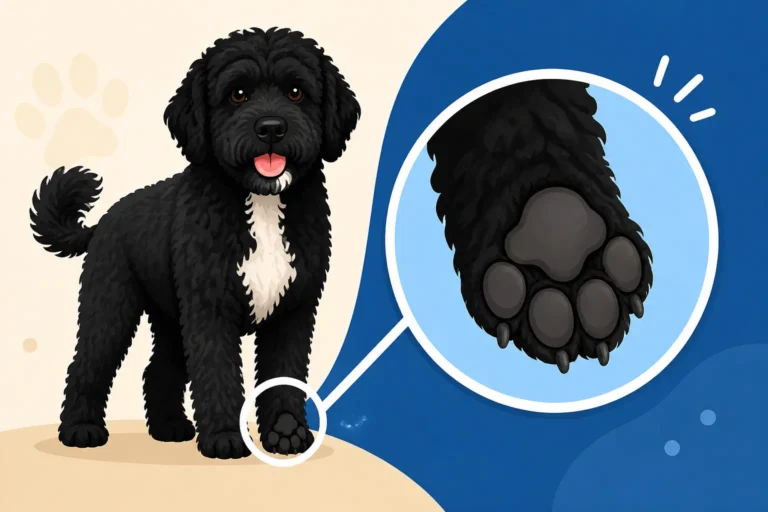
White is an accepted coat color, not automatically a sign of albinism or poor health. A properly pigmented white dog has normal coloring around features such as the eyes, nose, and lips. The distinction matters because a white coat color and a lack of pigment are not the same thing. If you are considering a white puppy, ask the breeder to explain the puppy’s pigmentation and share the same health and parent information they provide for puppies of other colors.
It also helps to separate a solid white dog from a black-and-white or brown-and-white dog. A dog with a white chest or paws may look strikingly pale in a photo without being a solid white PWD. For a broader look at the accepted shades and combinations, see Which Colors a Portuguese Water Dog Comes In and Which Colors the Portuguese Water Dog Standard Accepts.
Brown may be uncommon, but rarity depends on what you count
Brown PWDs are less familiar to many people than black ones, so owners may describe them as rare. Brown appears in different shades, and it can occur as a solid coat or alongside white. Depending on the breeder population someone knows, brown or brown-and-white dogs may seem harder to find than white dogs.
That does not establish a definitive national ranking. A local breeder may have several brown dogs in a short time, while a prospective owner elsewhere may wait longer to meet one. The number of litters available, the colors represented in a breeder’s lines, and buyer demand all affect what is easy to find. For more detail on the breed’s brown coats, see Whether a Brown Portuguese Water Dog Is Standard.
| Color or pattern | What you may see | How to think about its rarity |
|---|---|---|
| Black | Solid black, sometimes with white markings | Commonly encountered; often treated as the familiar PWD color |
| Brown | Solid brown in a range of shades, sometimes with white | Often considered less common than black, but no universal ranking is available |
| White | Solid white with appropriate pigmentation | Often described as rare or least frequently seen, though not proven by a comprehensive count |
| Black and white | Black coat with white markings or a combination of the two colors | Accepted combination; availability varies by breeder |
| Brown and white | Brown coat with white markings or a combination of the two colors | Accepted combination; may be less familiar in some areas |
The practical takeaway is that solid white is a reasonable answer if someone asks which PWD color is often thought to be rarest. It is more accurate, though, to describe white and some brown combinations as less commonly encountered than to claim that one color is definitively the rarest everywhere.
What colors and markings are accepted
The breed includes black, brown, white, and combinations
The Portuguese Water Dog’s recognized coat colors include black, white, and various shades of brown. Black or brown coats may also have white markings, and black-and-white or brown-and-white combinations are accepted. A dog’s pattern can make its coat look much more distinctive than a simple label such as “black” or “brown” suggests.
Owners sometimes use informal descriptions such as “parti” for a dog with large areas of white and another color. That term may help describe the appearance, but it is not a substitute for checking the breed standard’s color language. The useful questions are whether the dog’s colors fall within the accepted range and whether its overall coat and conformation meet the relevant standard. See Whether a Parti Colored Portuguese Water Dog Is Standard for more on the distinction.
White markings can occur on otherwise black or brown dogs, so a white chest does not make a dog a solid white PWD. The size and placement of markings vary. A little white on the chest, feet, muzzle, or tail can change the overall impression without changing the dog’s main coat color. How a Portuguese Water Dog Can Have a White Chest explains why these markings are part of the breed’s appearance.
Color names can be less clear than they sound
Coat color is not always easy to classify from a puppy listing. Lighting, camera settings, wet fur, clipping, and the dog’s age can all affect how a coat looks in a photograph. A dark brown coat may appear nearly black in a dim room, while bright sunlight can make brown fur look lighter or warmer.
Ask a breeder to describe the puppy’s color in person and, if possible, show photos of the parents and older relatives. Those examples can give you a better idea of the range of shades in that line, though they cannot guarantee exactly how a puppy’s coat will look as an adult. Be cautious if a seller makes an unusual color sound like proof of superior health, temperament, or quality. Color alone cannot establish any of those things.
A rare-looking coat is also not necessarily a separate breed variety. Portuguese Water Dogs come in two coat types, curly and wavy, and either type can appear in accepted colors. If you are comparing the texture as well as the shade, Which Coat Types a Portuguese Water Dog Comes In can help clarify what you are seeing.
Why a Portuguese Water Dog’s color may change
Puppy coats can look different as the dog matures
A puppy’s coat is not always a reliable preview of its adult appearance. As the coat grows and changes, the color may seem to deepen, soften, or become less uniform. Hair length and grooming can change the impression, too: a freshly clipped dog can look different from a shaggy dog whose coat has grown out.
That is one reason to avoid choosing a puppy based on a single carefully lit photo. Ask whether the breeder has pictures of older dogs from the same family and what changes owners commonly notice in that line. Even then, treat those pictures as examples, not guarantees. For more on this process, see Whether a Portuguese Water Dog Puppy's Color Changes.
Color changes do not necessarily signal illness. A changing shade can be part of ordinary coat development, while sudden skin changes, bald patches, irritation, or a coat that becomes brittle deserve a conversation with a veterinarian. The difference between gradual color variation and a health concern is easier to judge when you know what is normal for that particular dog.
Sun, swimming, and grooming affect how color appears
Sun exposure can make some coats look lighter or faded, particularly at the ends of the hair. A black PWD may develop a warmer or brownish cast in areas that get more sun, while brown coats can also appear lighter over time. This is usually an appearance change, not evidence that the dog’s underlying color has become a different standard color. For a closer look, see Whether a Black Portuguese Water Dog Fades and Whether a Brown Portuguese Water Dog Fades in Sun.
A swimming routine brings its own coat-care considerations. Rinsing away pool or salt water, drying the dog thoroughly, and brushing as needed help keep the coat in good condition. These habits are about comfort and coat health—not preserving a particular shade. If you are buying grooming supplies, compare gentle dog shampoos and coat-care products through retailers such as Chewy, and choose based on your dog’s needs rather than claims that a product will restore a specific color.
Clipping can also make color seem different simply because the coat is shorter or the exposed hair has a different appearance from the longer coat. There is no need to chase a particular shade with harsh products or frequent cosmetic treatments. If you have questions about discoloration, skin irritation, or an abrupt change, a veterinarian can help distinguish ordinary fading from a medical issue. Chewy may be one place to browse routine bathing supplies, but a retailer’s product listing is not a diagnosis or a substitute for veterinary advice.
Choosing a puppy without overvaluing rarity
Put health, temperament, and breeder transparency first
It is understandable to be drawn to a color you do not see every day. A white or brown-and-white PWD can be beautiful, and a family may have a clear preference. Still, rarity does not make a puppy a better fit. The more meaningful questions concern the breeder’s care, the parents’ health information, the puppy’s early experiences, and whether the dog’s energy and grooming needs work for your household.
Ask to review the health testing relevant to the breed and to see documentation rather than relying on a verbal assurance. Discuss how the breeder evaluates temperament, socializes puppies, and matches them with homes. A responsible breeder should be able to talk about these subjects without turning coat color into a promise of health or personality.
If you are comparing puppies, make a short checklist before visiting or placing a deposit. Include the health records you want to review, questions about the parents, and practical details such as coat maintenance and the puppy’s routine. Chewy can be useful for browsing ordinary care supplies after you bring a dog home, but buying supplies is the easy part; choosing a well-matched, responsibly bred puppy deserves more time.
Treat “rare color” claims with care
A claim that a puppy is rare may be a description, a sales tactic, or both. Ask what the seller means by rare and whether they can support any claim about the color’s prevalence. A striking coat is not, by itself, evidence that a dog is unusually valuable, healthier, or more suitable for a particular home.
Also ask whether the color is accepted under the standard you care about, especially if you hope to show the dog. Breed standards and show rules are specific, and informal color labels do not always match official terminology. If showing is not a goal, the standard may matter less to your household—but clarity about the dog’s actual color and expected coat care still helps prevent surprises.
For most families, the best match is not necessarily the rarest Portuguese Water Dog. It is the dog whose health background, temperament, exercise needs, grooming demands, and personality fit the life you can provide. Enjoy the color you love, but make the bigger decision around the whole dog.
Disclaimer
This article is for general informational purposes only and does not constitute professional advice. Laws, prices and regulations vary by location and change over time. Consult a qualified professional for guidance on your specific situation.