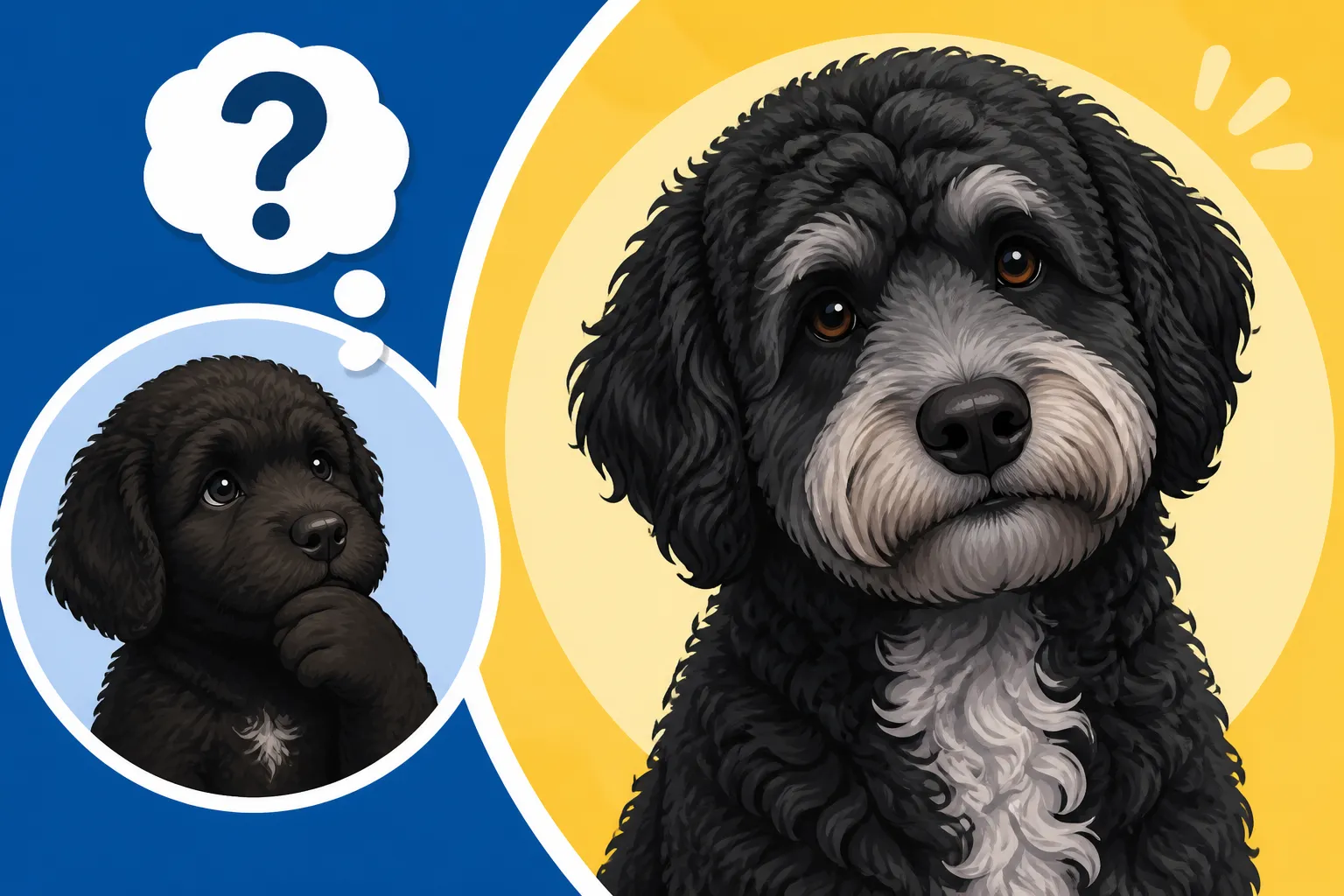
Whether a Portuguese Water Dog Goes Gray Early
A Portuguese Water Dog can develop gray hairs around the muzzle or eyes, and a dark coat may look lighter over time. That can be normal aging—or simply sun fading, clipping, or a changing coat. This guide explains how to tell those changes apart, what may be typical at a young age, and when a new color change deserves a veterinary check.
Does a Portuguese Water Dog go gray early
Gray hairs can appear before a dog looks old
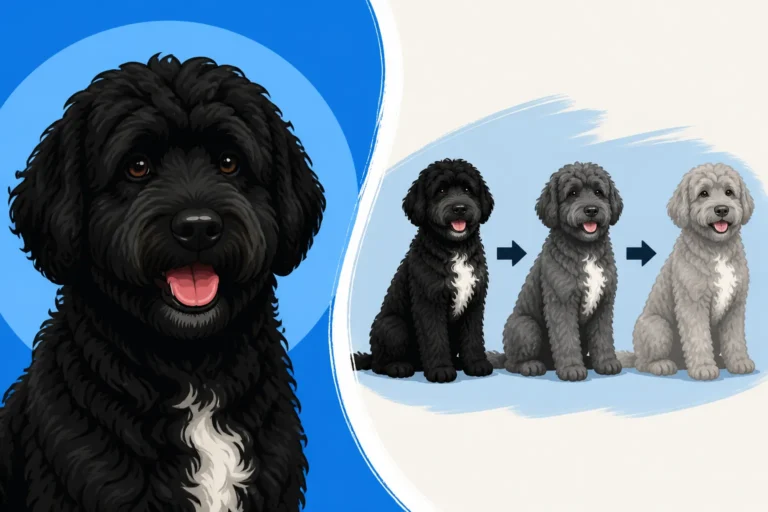
Some Portuguese Water Dogs develop a few pale hairs on the chin or around the muzzle while they are still active, healthy adults. Like people, individual dogs can show changes in coat pigment on different schedules. There is no single age when every dog of this breed should start going gray, so a handful of light hairs does not, on its own, mean that something is wrong.
The location and pattern matter. Gradual, scattered light hairs around the face are different from a sudden change across large areas of the body. It also helps to look at photographs taken under similar lighting. A black coat can appear charcoal in bright sun or after a close clip, and a brown coat can look notably lighter in some seasons or photos.
If your dog is young and you have noticed a few gray hairs, take a calm, practical approach: note when you first saw them, whether the area is changing, and whether the skin and coat otherwise look healthy. A slow change without discomfort, hair loss, or skin irritation is less concerning than a rapid change accompanied by other symptoms. A veterinarian can help assess the whole picture if you are unsure.
“Going gray” and coat fading are not the same thing
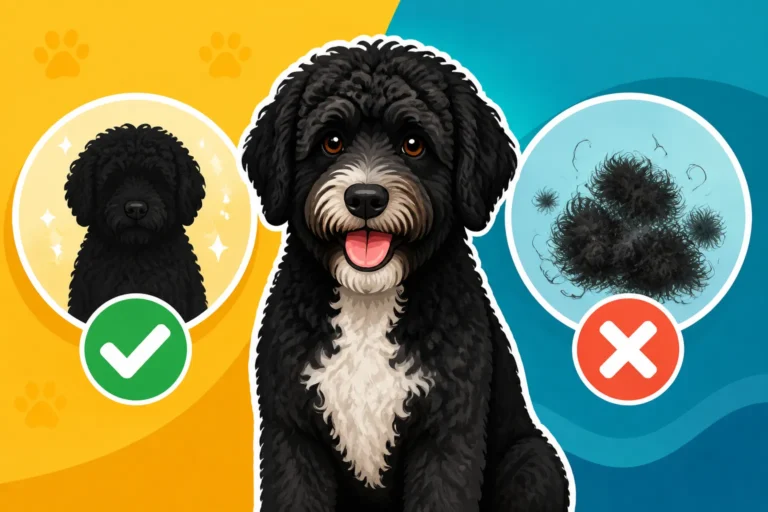
A dog may look grayer without actually developing age-related gray hairs. Black or brown hair can become sun-faded, and the effect can be more noticeable on a dog that spends long hours outdoors or swims often. The coat may also look lighter or less uniform after grooming, especially when clipped short and viewed in a different light.
Portuguese Water Dogs have continuously growing hair that is regularly brushed, bathed, and clipped. That routine changes how the coat looks from month to month. A freshly clipped dog may appear lighter than the same dog in a longer coat; a damp coat can look darker, while a dry coat exposed to strong daylight can look washed out. Changes in coat texture and color can also happen as a dog matures. For more on that transition, see Whether a Portuguese Water Dog's Coat Changes Texture With Age.
A useful first check is to part the hair and look closely at the individual strands. If the lighter color is mainly at the tips, sun exposure or wear may be contributing. If you see distinct pale hairs emerging from the skin, that may be true graying. This is only a clue, not a diagnosis: coat patterns overlap, and your veterinarian is the right person to consult about unexplained changes.
What can look like early gray
Several ordinary factors can make a Portuguese Water Dog’s coat seem gray or faded. Comparing the same area over time is more helpful than judging from one quick glance.
| What you notice | What it may look like | What to check |
|---|---|---|
| Scattered pale hairs on the muzzle | Gradual face graying | Whether the hairs are increasing slowly and the skin looks normal |
| Overall lighter color after sunny months | Sun fading or coat wear | Whether the change is strongest on exposed areas or hair tips |
| A lighter appearance after grooming | Shorter hair or different lighting | Whether the coat looks different again as it grows |
| Patchy color change with thinning hair | A skin or coat problem may be involved | Redness, itching, odor, scaling, or bare patches |
| A young dog’s coat changing as it matures | Normal coat development may contribute | Whether the change is gradual and the dog otherwise seems well |
Why a Portuguese Water Dog’s coat may look lighter
Sun, swimming, and grooming can change the appearance
Sunlight can bleach hair, particularly on areas exposed to the elements. A dog that spends time at the beach, on a sunny deck, or swimming in open water may develop a lighter-looking coat without actually “going gray.” Salt, pool chemicals, frequent washing, and rough handling can also affect how the coat feels and reflects light. Rinsing after a swim and drying the coat thoroughly can help keep it clean and comfortable, though it will not prevent every color change. The practical routine is covered in Drying a Portuguese Water Dog After Every Swim.
Grooming makes a difference, too. When a coat is clipped shorter, the color may look different because the hair length, texture, and lighting have changed. A close trim can reveal lighter portions of the hair or make the overall coat appear less rich. If you groom at home, take a quick photo before and after clipping so you can compare the same dog under similar conditions rather than relying on memory.
If you are trying to protect the coat from dryness or irritation, keep products simple and ask your veterinarian or groomer what is appropriate for your dog. Retailers such as Chewy can be a convenient place to browse basic grooming supplies, but a product marketed for color or shine is not a substitute for finding out why a coat has changed. Avoid using human hair dye or whitening products on your dog.
Brown and black coats can fade differently
A brown Portuguese Water Dog may gradually appear lighter, especially where sunlight reaches the coat. Black coats can also look faded, rusty, or charcoal-toned under certain conditions. These shifts do not necessarily mean that the dog is developing white or gray hairs. They can be subtle and may vary with coat length, season, and the camera or lighting used to take a photograph.
If your dog is brown, it can help to compare the coat at the roots with the ends. If the roots remain darker while the tips look lighter, that pattern may point toward fading or wear rather than a change in the newly growing hair. For more detail on this particular appearance, read Whether a Brown Portuguese Water Dog Fades in Sun.
A color change by itself does not tell you whether a dog is healthy, unhealthy, or suitable for breeding or showing. Coat color and coat health are separate questions. If you are researching how a particular coat is classified, What a Portuguese Water Dog's Coat Is Made Of and Curly or Wavy: the Two Portuguese Water Dog Coats offer useful background on the breed’s coat.
Puppy coat changes can be mistaken for gray
A young Portuguese Water Dog’s coat can change as the puppy coat gives way to an adult coat. During this stage, the texture, length, and overall appearance may shift, and the color can seem less even than it did when the puppy first came home. That does not automatically mean the dog is going gray early.
Coat changes can also make brushing more challenging. Loose or changing hair can tangle, particularly behind the ears, under a harness, and in areas where the coat rubs against itself. A consistent, gentle grooming routine helps you notice what is changing while preventing small tangles from turning into painful mats. See When a Portuguese Water Dog's Puppy Coat Changes for a closer look at that transition.
For routine tools such as a suitable comb or brush, Chewy may be one place to compare options. Choose tools based on your dog’s coat and your groomer’s advice rather than assuming that a color change needs a special shampoo or supplement. If a young dog’s coat change comes with hair loss, itching, or skin irritation, schedule a veterinary appointment instead of treating it as a normal puppy coat transition.
How to tell normal graying from a coat or skin concern
Look at the pattern, skin, and speed of change
Gradual changes are generally easier to interpret than sudden ones. Take a well-lit photo of the affected area, note the date, and repeat the photo later from roughly the same angle. This simple record can show whether the change is stable, slowly spreading, or progressing quickly.
Also look beyond color. Is the skin red, flaky, thickened, or irritated? Is your dog scratching, licking, or rubbing the area? Is the hair breaking or falling out? A color shift alongside skin changes or hair loss deserves more attention than a few pale hairs on otherwise normal skin.
A coat can hide changes that are easier to spot by touch. Run your fingers gently over the area and part the hair to see the skin. Do not scrape, pull, or try to remove unusual hairs. If you find a lump, wound, sore, or painful area, contact your veterinarian rather than waiting to see whether the coat grows back differently.
When to call your veterinarian
A routine appointment is sensible if a color change is unexplained, persistent, or worrying you. Contact your veterinarian sooner if the change comes with sudden hair loss, significant itching, sores, odor, redness, or discomfort. A veterinarian can examine the skin and coat and decide whether further evaluation is appropriate. Changes to the coat alone cannot identify a specific illness.
Pay attention to the dog’s general condition as well. A new coat change paired with low energy, changes in appetite, weight changes, or other unusual behavior should be discussed with a veterinarian. Those signs do not prove that the coat change is related, but they are useful context for an examination. If you are tracking a broader health change, Whether a Portuguese Water Dog's Coat Thins With Illness may help you understand what to observe and report.
When booking an appointment, bring your photos and a short timeline: when you noticed the change, whether it spread, recent grooming or bathing, and any new symptoms. Mention changes in food, supplements, shampoo, outdoor activity, or swimming, too. Those details can make it easier to distinguish a cosmetic change from a problem that needs attention.
Caring for a Portuguese Water Dog with a changing coat
Keep grooming gentle and consistent
Regular brushing helps you see the skin and coat more clearly, and it reduces the chance that tangles will disguise a change. Work in manageable sections, use a comb to check that you have reached through the coat, and be especially careful around friction points such as the collar, harness, and behind the ears. If you are not sure which tools suit your dog, ask a professional groomer to demonstrate a routine you can maintain at home.
Bathing should focus on getting the coat clean and rinsing thoroughly, not trying to restore a particular shade. Use a dog-appropriate product, and ask your veterinarian before trying medicated shampoos or supplements. Chewy can help you browse ordinary grooming supplies, but check the product instructions and consult your veterinarian if the skin is irritated or the coat change is sudden.
Keep a record of grooming dates and coat changes. It can be hard to remember whether a dog looked lighter before or after a clip, particularly when coat length changes seasonally. A few dated photos can be more useful than buying several products in the hope that one will reverse the color.
Set realistic expectations about coat color
Gray hairs may remain, increase slowly, or appear only in a small area. Sun-faded tips may grow out as the coat is clipped and regrows, but the result depends on the dog and its routine. There is no reliable home treatment that guarantees a Portuguese Water Dog will keep its original puppy color indefinitely.
Most importantly, color is only one small part of coat care. Comfort, healthy skin, manageable mats, and a grooming routine your dog tolerates matter more than keeping the coat dark. If the change is gradual and your dog feels well, you can monitor it and mention it at the next wellness visit. If it is sudden or accompanied by skin or health changes, arrange an examination rather than guessing at the cause.
For additional context on changes over a dog’s lifetime, see What Changes in an Aging Portuguese Water Dog's Coat. A few gray hairs do not define your dog’s health or personality, and they do not make the coat any less worth caring for.
Disclaimer
This article is for general informational purposes only and does not constitute professional advice. Laws, prices and regulations vary by location and change over time. Consult a qualified professional for guidance on your specific situation.